

Executive Overview
In the modern digital economy, the landscape of freelance writing has undergone a profound structural shift. Gone are the days when sourcing high-paying clients relied solely on scouring saturated online job boards or sending out hundreds of cold emails with microscopic response rates. Today, the most successful independent creators and writers are tapping into a much more lucrative pipeline: inbound lead generation. And right now, one platform reigns supreme above all others for this exact purpose—LinkedIn.
As the premier business-to-business (B2B) social networking ecosystem, LinkedIn offers direct access to the decision-makers who hold corporate budgets: marketing directors, content managers, founders, and agency owners. These individuals do not log onto the platform looking for casual entertainment; they are actively seeking thought leadership, actionable ideas, strategic insights, and industry expertise.
For the freelance writer willing to transition from a passive consumer to an active authority figure, LinkedIn functions as a 24/7 digital storefront. However, succeeding on the platform requires abandoning outdated tactics and aligning strictly with what the modern algorithm demands. This comprehensive playbook outlines five actionable strategies to optimize your presence, overcome posting anxiety, engage strategically, and build a sustainable freelance writing business in 30 minutes a day.
Detailed Chronology: The Evolution of Freelance Lead Generation
To understand why LinkedIn has become the ultimate hunting ground for high-paying freelance writing gigs, it is helpful to look at how the industry has evolved over the past decade.
Phase 1: The Wild West of Job Boards (Early 2010s)
Years ago, launching a freelance writing career meant camping out on job boards, bidding against hundreds of international applicants for low-paying content mills, and racing to the bottom on platforms that commoditized writing down to fractions of a cent per word. Work was unstable, and client relationships were transactional at best.
Phase 2: The Cold Pitching Era (Mid-to-Late 2010s)
As competition intensified, freelancers shifted toward cold outreach. Writing personalized email pitches to startup founders and marketing executives became the gold standard. While this method yielded better-paying clients than job boards, it remained grueling, high-volume work characterized by low conversion rates and perpetual feast-or-famine cycles.
Phase 3: The Inbound Revolution & Platform Shift (Present Day)
Today, the paradigm has flipped entirely. Rather than chasing clients down, successful freelancers position themselves so that clients come looking for them. Because modern hiring managers, editors, and corporate recruiters routinely vet candidates through LinkedIn before ever reaching out via email, your digital profile serves as your primary resume, portfolio, and sales page rolled into one. The platform rewards niche authority and consistent, relevant value creation, making inbound client acquisition the most efficient growth engine available to modern writers.
Supporting Context & Metrics: Decoding the LinkedIn Algorithm
Before diving into the core strategies, you must understand how LinkedIn operates under the hood. The platform’s underlying algorithm has undergone significant revisions over the years, eliminating many of the old growth hacks that used to clutter user feeds.
What the Modern Algorithm Rewards
- Niche Relevance and Topical Authority: LinkedIn values creators who consistently publish content within a specific domain over broad generalists. If the algorithm recognizes you as an expert in a specific vertical (e.g., B2B SaaS, fintech, or healthcare compliance), it will proactively amplify your reach to professionals operating within that exact space.
- Engagement Quality over Vanity Metrics: Meaningful, multi-line commentary, genuine peer discussions, and thoughtful discourse carry significantly more weight than simple "likes."
- Native Dwell Time: Content that encourages readers to pause their scroll, click "see more," and genuinely absorb text-based value signals high quality to the platform’s distribution filters.
What the Modern Algorithm Penalizes
- External Link Dumping: Dropping outbound links directly into the body of a post traditionally caused the algorithm to suppress reach, as LinkedIn prefers to keep users on its platform. (Best practice: place links in the comments or edit them in after publishing).
- Engagement Pods and Artificial Boosting: Inauthentic coordination loops and automated engagement networks are routinely flagged and penalized by automated spam filters.
- Over-reliance on Low-Value Buzzwords: Generic self-promotion without substantive value or actionable insights quickly loses traction in an increasingly sophisticated professional environment.
Five Core Strategies to Master LinkedIn for Freelance Writers
Strategy 1: Write Exclusively to Potential Clients, Not Other Freelancers
One of the most common traps new freelance writers fall into is building an echo chamber. They log onto LinkedIn, join writing communities, connect exclusively with other copywriters, and spend their time exchanging tips on how to pitch.
While peer networking is beneficial for camaraderie, it will never pay your bills. Marketing directors do not hire copywriters to write about copywriting; they hire copywriters to solve their own brand-specific business challenges.
How to Execute This Strategy:
- Audit Your Recent Feed: Look at your last ten posts. Count how many are focused on freelance writing tips for an audience of peers versus topics that directly interest your ideal B2B clients. If the scale tips toward writing advice, a pivot is mandatory.
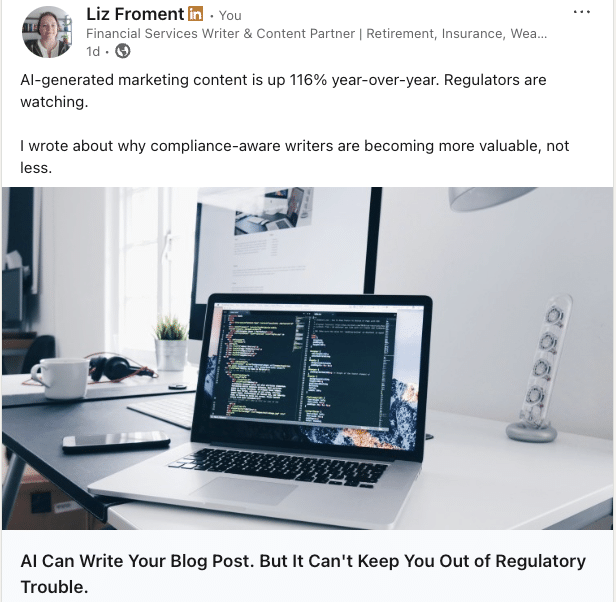
- Identify Three to Four Core Vertical Topics: Narrow down your niche. If you are a medical writer, your pillars might include FDA compliance updates, digital health trends, or common content bottlenecks in the pharmaceutical industry. If you write for financial services, focus on fintech innovation, regulatory changes, or consumer banking experience.
- Publish Authority-Building Insights: Share lessons learned from recent projects (maintaining strict confidentiality), deconstruct why a major brand’s content strategy is succeeding, or offer a bold, well-reasoned perspective on an emerging industry trend. When a corporate decision-maker lands on your page, they should instantly realize you understand their exact world.
Strategy 2: Overcome Posting Anxiety Through Sustainable Cadence
Conventional advice often demands daily publishing to achieve visibility. For most busy freelancers balancing client work, administrative overhead, and life outside of work, this relentless pace leads straight to burnout and imposter syndrome—ultimately resulting in zero online presence.
The truth is much more forgiving: consistency beats frequency every single time. Publishing one or two exceptional, thoughtful posts per week over several months yields vastly superior results compared to erratic daily bursts of low-effort content.

How to Execute This Strategy:
- Establish a Realistic Cadence: Commit to a schedule you can maintain indefinitely. Every Monday and Thursday, or simply every Wednesday, is entirely sufficient.
- Batch Your Production: Block out 30 minutes on Sunday afternoon to outline and draft your content for the upcoming week. Use LinkedIn’s native scheduling tool to queue your posts so you can set them and forget them.
- Lean Into High-Performing Formats: Avoid the pressure of producing complex graphics or professional video production. Cleanly formatted text posts featuring strong, curiosity-driven hooks and scannable paragraphs consistently dominate reach metrics.
Strategy 3: Focus on Intentional Engagement (The "Marketing Dog" Method)
Publishing content is only half the battle. If you want to accelerate your client acquisition timeline, proactive engagement is far more powerful than waiting for inbound traffic to find you.
As content strategist Sarah Greesonbach famously calls it, this is akin to "walking your marketing dog"—a daily, non-negotiable routine designed to keep your business moving forward. Similarly, B2B expert Ed Gandia advocates for structured daily habits to maintain momentum.
How to Execute This Strategy:
- Curate a Prospect Wishlist: Compile a targeted list of 20 to 30 marketing directors, content leads, managing editors, and startup founders at companies you dream of working with. Follow every single one of them.
- Execute Daily Interaction: Spend 15 to 20 minutes a day scrolling through their activity feeds. When they publish something insightful, leave a substantive, high-value comment. Discard empty phrases like "Great post!" or "So true!" Instead, add a unique data point, ask an intelligent follow-up question, or expand upon their thesis.
- Adopt a Micro-System: Implement a daily operating rhythm—such as sending three targeted connection requests, leaving two thoughtful comments, and publishing one high-value post. Over weeks and months, your name will become instantly recognizable in your prospects’ notification centers.
Strategy 4: Transform Your Profile Into a High-Converting Sales Page
Your content attracts attention, but your profile closes the deal. When a hiring manager sees your content and clicks through to your profile, they should not encounter a standard, passive resume. They should land on a finely tuned landing page engineered to sell your writing services.
How to Execute This Strategy:
- Craft a Benefit-Driven Headline: Erase the generic title "Freelance Writer" immediately. Replace it with a clear value proposition: "I write high-converting case studies and blog content for B2B SaaS brands" or "Financial Services Content Writer | Trusted by [Client A], [Client B], and [Client C]."
- Rewrite Your About Section in the Second Person: Speak directly to the reader. Outline the exact pain points you solve, the specific types of clients you serve, measurable results you have delivered, and a clear call to action directing them to your contact form.
- Leverage the Featured Section: Pin your two or three highest-performing portfolio pieces, comprehensive case studies, or glowing client testimonials right at the top of your profile.
- Detail Concrete Experience: Instead of vague descriptions like "Wrote articles for various clients," specify your impact: "Authored 50+ deep-dive articles covering artificial intelligence applications in commercial banking and payment gateway security."
Strategy 5: Build a Systematic "Idea Brain"
Writer’s block is the perennial enemy of content creators. Staring at a blank screen wondering what to post will quickly paralyze your marketing efforts. The antidote to this friction is establishing a systematic method for capturing inspiration before you actually need it.

How to Execute This Strategy:
- Commit to Daily Volume: Set a recurring daily alarm on your phone. Every morning during your coffee break, open a dedicated notes app and quickly jot down 10 raw ideas. They can range from recurring client frustrations and industry news items to burning questions you encountered while researching an article.
- Embrace Bad Ideas: Do not judge your thoughts during the capture phase. The objective is pure volume. By the end of a single week, you will have accumulated 70 raw concepts—out of which 5 to 10 will naturally stand out as worth developing.
- Leverage AI as a Launchpad: When you experience severe creative fatigue, use modern AI writing tools like ChatGPT to break the friction barrier. Prompt the tool to generate 10 unique angles for LinkedIn posts within your specific vertical, then use those AI-generated prompts as foundational springboards for your own authentic voice and industry experience.
Future Outlook: The Compounding Value of a Professional Network
The digital economy moves fast, but the underlying psychology of business remains anchored in trust, authority, and relationships. Spending just 20 to 30 minutes a day executing a deliberate, structured LinkedIn strategy is no longer a passive extracurricular activity for freelance writers—it is a core business operation.
While traditional job boards and cold pitches offer temporary fixes, building a powerful presence on LinkedIn creates a compounding asset. Beyond generating consistent, high-paying inbound leads, an active professional network unlocks peer referrals, collaborative partnerships, and long-term income stability that shields your freelance business against economic volatility.
The platform has shifted irrevocably. The opportunity is wide open, and the tools are accessible to anyone willing to put in the deliberate effort. Stop delaying your digital presence, optimize your profile, and start building the writing business you deserve today.