

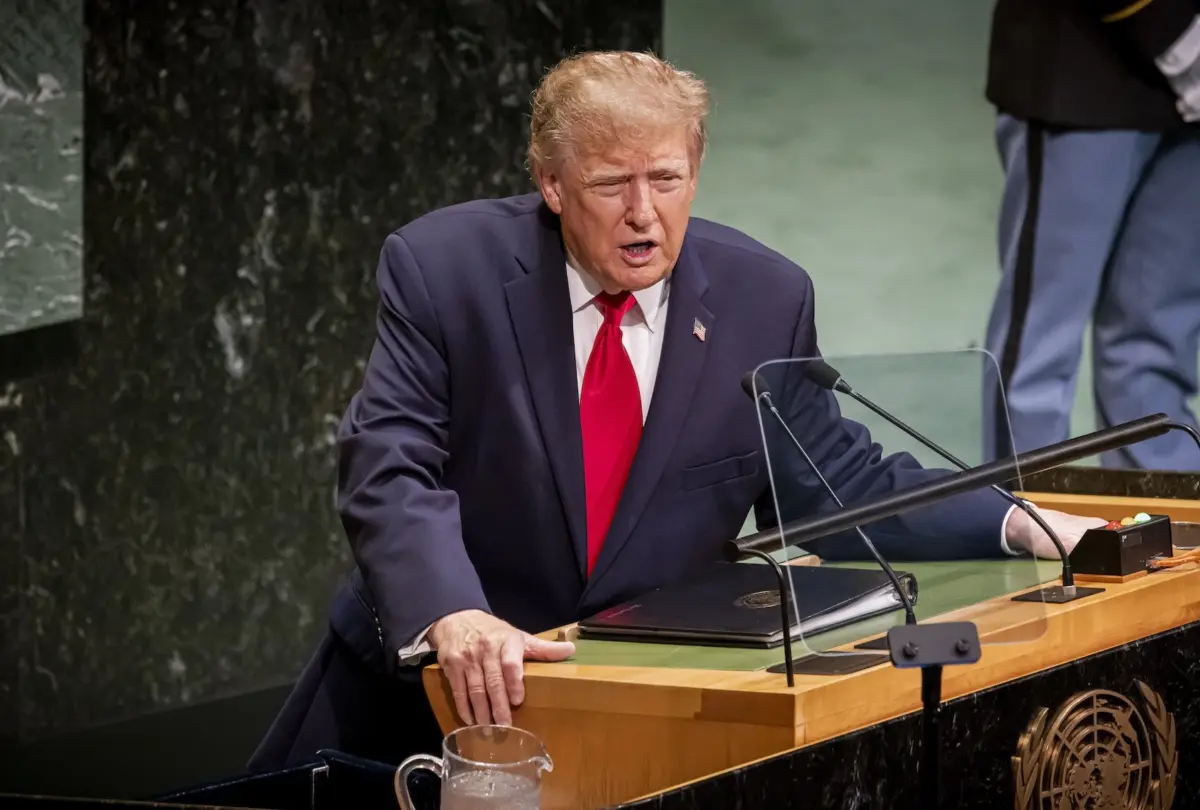
WASHINGTON — Seven months after U.S. and Israeli forces launched a joint military campaign against Iran, President Donald Trump remains steadfast in his defense of a conflict that has come to define his second term. Yet, as the war grinds into its eighth month, a profound chasm has opened between the administration’s stated objectives and the sentiments of the American electorate.
With midterm elections looming next month, new polling data underscores a nation deeply skeptical of the protracted engagement. Plagued by rising domestic prices, mounting economic pessimism, and widespread disapproval of the military strategy in the Middle East, the White House faces a critical political reckoning. Despite these domestic headwinds, the administration is doubling down, deploying thousands of additional troops and signaling that the campaign is far from over.
Executive Overview
The military intervention in Iran, initiated in late February 2025, has transformed the geopolitical landscape of the Middle East while simultaneously straining domestic political cohesion. President Trump continues to frame the conflict as an existential necessity aimed at preventing Tehran from acquiring a nuclear weapon—a justification complicated by the existing nuclear arsenals of the United States and its regional allies.
However, public fatigue has reached unprecedented levels. According to an extensive survey published Thursday by the Associated Press and the NORC Research Center, 71% of American adults disapprove of the president’s handling of the war, and 69% believe the conflict is not worth fighting.
Compounding these foreign policy anxieties is a broader economic discontent. Majorities of Americans report that the national and local economies have deteriorated since Trump took office for his second term. With control of both chambers of Congress hanging in the balance, Republican strategists are increasingly worried that voter dissatisfaction with the war and the economy could trigger a severe legislative backlash in the upcoming midterms.
Detailed Chronology: From February Offensive to October Standoff
Phase 1: The Outbreak of War (Late February 2025)
The conflict began abruptly in late February 2025, when U.S. and Israeli forces initiated a coordinated wave of airstrikes against strategic military and nuclear infrastructure inside Iran. The administration heralded the opening salvos as a decisive preventive measure against a rogue regime on the threshold of a nuclear breakout. Initially, the intervention enjoyed a traditional "rally-around-the-flag" bump, but structural cracks quickly appeared as the operation transitioned from targeted strikes to a prolonged campaign.
Phase 2: Escalation and Economic Fallout (Spring and Summer 2025)
By mid-summer, the economic ramifications of the war began to reverberate globally and domestically. Supply chain disruptions, spikes in oil prices, and inflationary pressures hit American consumers hard. Critics pointed out that while the administration targeted Iranian capabilities, the domestic cost of living soared, tying the foreign conflict directly to kitchen-table issues. Despite mounting international calls for restraint and domestic demands for an exit strategy, the White House maintained its hardline posture.
Phase 3: The Diplomatic Deadlock and the Midterm Shadow (September – October 2026)
As the conflict crossed the seven-month mark in late September 2026, diplomatic channels remained frozen. Reports surfaced indicating that President Trump had rejected proposed ceasefire frameworks, opting instead for a calculated political pause in active bombing campaigns to mitigate immediate electoral damage ahead of the November midterms.
In a wide-ranging interview with Time magazine published on October 1, 2026, the president defended the administration’s trajectory without reservation. "Because by annihilating Iran, we’ve created peace in the world," Trump asserted, adding, "With Iran, I don’t think you could ever have peace."
Supporting Context & Metrics: The AP-NORC Survey and Pentagon Strain
The political vulnerability of the White House is laid bare in the latest statistical indicators. The AP-NORC Research Center poll released in October 2026 paints a grim picture of public sentiment:
- Disapproval of the Iran War: 71% of U.S. adults disapprove of the administration’s management of the conflict.
- Perceived Utility: 69% state explicitly that the war has not been worth fighting.
- Economic Pessimism: More than half of all adults surveyed report that the national economy, their local economy, and the country as a whole are worse off since Trump’s reelection in 2025.
- Direction of the Country: A decisive 73% of Americans believe the nation is heading in the wrong direction. This sentiment spans party lines, drawing criticism from 92% of Democrats and 47% of Republicans.
Military Strain and Force Posture
Beyond the political and economic metrics, the logistical weight of the war is placing severe pressure on the United States military, particularly the U.S. Navy.
According to reports from the Wall Street Journal on Thursday, October 1, 2026, the Pentagon is actively preparing to send a third aircraft-carrier strike group, alongside additional Marine Corps amphibious ships, to the Middle East. Scheduled to arrive by the end of November, this deployment will introduce approximately 10,000 fresh troops to the region.
Defense analysts note that this mobilization exacerbates existing strains on naval personnel and assets. Years of near-record deployments, combined with lingering supply chain vulnerabilities, have left the fleet grappling with extended operational tempos and diminished maintenance windows.
Official Statements and Political Realities
Confronted with the stark reality of the polling data, President Trump has acknowledged the potential political cost to his party. When questioned by reporters outside the White House on Thursday regarding whether voter frustration over the war could jeopardize Republican majorities in the House and Senate, the president tersely acknowledged: "It’s possible."
Yet, this acknowledgment has not translated into a softening of policy. Instead, the administration continues to frame the conflict in absolute terms, dismissing domestic political fallout as a temporary obstacle in the pursuit of long-term security goals. By emphasizing the theoretical prevention of a nuclear-armed Iran, the White House seeks to maintain ideological cohesion among its base, even as nearly half of Republicans surveyed express deep reservations about the nation’s current trajectory.
Meanwhile, national security officials emphasize that the military campaign remains dynamic. While active large-scale aerial bombardments have experienced tactical pauses—strategically aligned by observers with the domestic electoral calendar—the reinforcement of troops signals that the military infrastructure in the theater is expanding rather than contracting.
Future Outlook: The Midterms and Beyond
The convergence of an unpopular foreign war, stubborn domestic inflation, and a deeply polarized electorate sets the stage for one of the most consequential midterm elections in modern American history.
If the polling accurately reflects voter intent, the Republican Party faces severe headwinds in defending its congressional majorities. A shift in control of either the House or the Senate—or both—would fundamentally alter the balance of power in Washington, likely triggering aggressive congressional oversight, demands for formal investigations into the initiation and conduct of the war, and renewed legislative battles over war powers and funding.
Conversely, if the administration successfully navigates the electoral cycle, President Trump may feel emboldened to resume full-scale military operations against Tehran without the immediate pressure of domestic ballot boxes. Reports indicating that the White House expects to resume intensive bombing campaigns immediately following the midterms suggest that the strategic calculus in Washington remains focused on military escalation rather than diplomatic resolution.
As the deployment of the third carrier strike group moves forward and the November elections draw closer, the United States stands at a critical crossroads. The outcome will not only determine the legislative fate of the current administration but will also dictate whether America remains entangled in a distant, costly war that a clear majority of its citizens reject.