

Executive Overview
In the contemporary American political landscape, political power is often measured by volume. Federal leaders, lawmakers, and pundits frequently crowd the airwaves, trading barbs, weaponizing social media, and broadcasting policy visions in real time. Yet, true institutional transformation often happens away from the glaring lights of public discourse—in the shadows of backrooms, executive boardrooms, and through the strategic deployment of legal instruments designed to silence dissent and obscure accountability.
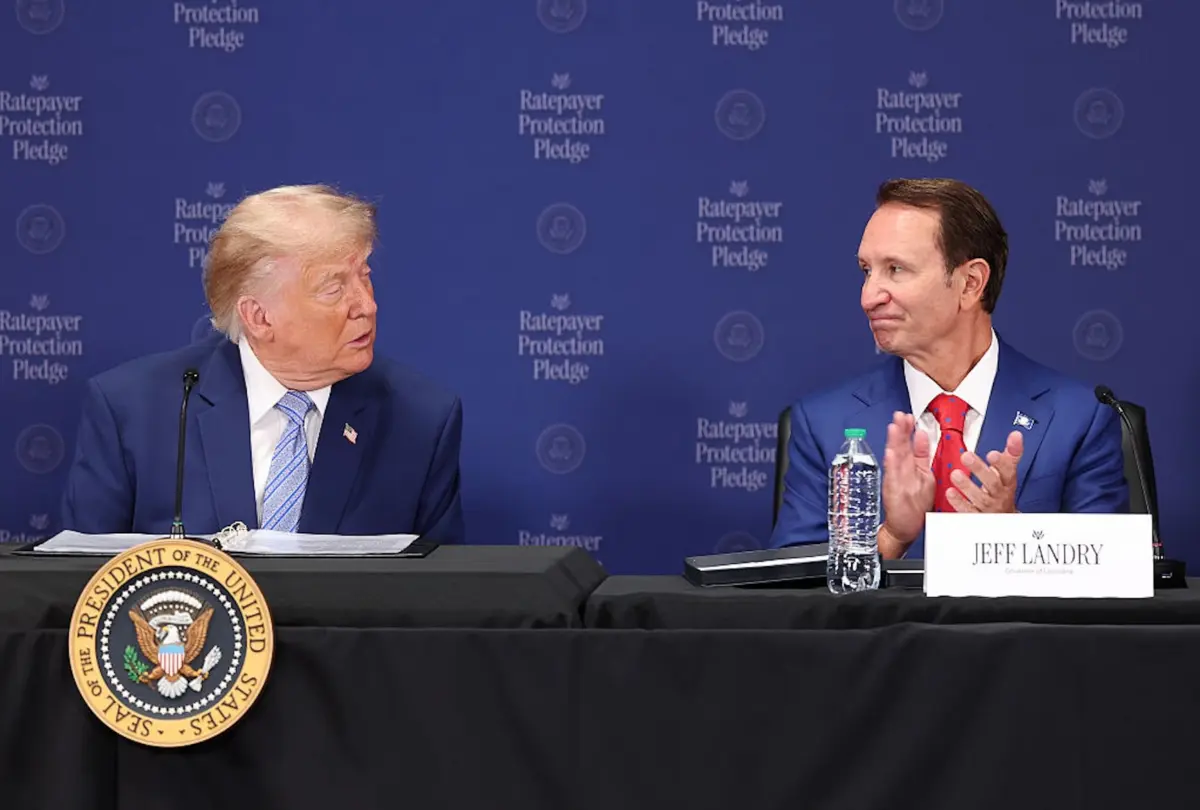
In Louisiana, Republican Governor Jeff Landry has quietly pioneered a masterclass in administrative opacity. Hailed by conservative commentators as a next-generation hero of the MAGA movement, Landry has combined traditional populist posturing with an unprecedented reliance on non-disclosure agreements (NDAs) and sweeping executive secrecy. While the governor commands headlines through culturally conservative crusades—such as mandating the display of the Ten Commandments in public school classrooms and deploying National Guard troops to the U.S.–Mexico border—his administration has quietly engineered some of the most consequential, high-dollar public-private economic deals in modern state history.
Behind a fortress of nearly 300 non-disclosure agreements signed since taking office in 2024, the Landry administration has fundamentally reshaped Louisiana’s fiscal and geographic landscape. Most notably, these secretive maneuvers facilitated a staggering $24 billion tax break package for Elon Musk’s SpaceX to construct a sprawling coastal spaceport, alongside a $3 billion tax subsidy for Meta’s massive "Hyperion" data center in Richland Parish.
To achieve these triumphs of industrial development, Landry’s office bypassed traditional channels of public engagement, enacted sweeping legislative exemptions protecting aerospace and tech operations from public records requests and nuisance liabilities, and bound over 100 state employees to unprecedented gag orders. As critics sound the alarm over eroded transparency, Landry’s playbook offers a chillingly efficient blueprint for post-Trump governance: utilize populist rhetoric to capture the base, weaponize executive secrecy to bypass public scrutiny, and present citizens with irreversible faits accomplis.
Detailed Chronology: From Backroom Pacts to Public Edicts
The mechanics of the Landry administration’s closed-door governance model did not emerge overnight; they were systematically constructed through a series of legislative and executive maneuvers designed to systematically dismantle transparency protections.
Early 2024: The Machinery of Secrecy Takes Shape
Upon assuming the governorship in January 2024, Jeff Landry inherited a state economy desperately seeking modernization, yet historically plagued by institutional corruption and economic underperformance. Rather than leaning into open-government initiatives, the new administration immediately pivoted toward unprecedented confidentiality measures.
Investigative reports published by The New Orleans Times-Picayune and the Gulf States Newsroom revealed that Landry’s office embarked on an aggressive campaign of internal and external secrecy. Within his first two years in office, the administration executed nearly 300 NDAs with outside corporate and political entities. More alarmingly, the governor’s office required more than 100 state employees to sign sweeping employment-related NDAs. Veteran state workers and ethics watchdogs noted that such broad gag orders applied to career public servants were entirely unprecedented in Louisiana history. Drew Hawkins, a regional investigative journalist, interviewed officials from multiple prior gubernatorial administrations who confirmed they had never encountered anything resembling the scale or restrictiveness of Landry’s employee gag orders.
Late 2025: The Hyperion Data Center Blueprint
The practical application of this administrative secrecy first became acutely visible in rural Northeast Louisiana. Rumors of a massive technological development had swirled for months, but local residents and municipal leaders were kept in the dark as state officials negotiated directly with representatives from Meta and Blue Owl Capital.
The project—officially dubbed the Hyperion data center—was slated to cover an astounding six square miles of Richland Parish. By the time the project was formally announced through corporate press releases rather than local legislative debate, the public learned that the Landry administration had quietly engineered a package of tax exemptions and subsidies totaling more than $3 billion. Crucially, these sweeping financial concessions were negotiated entirely without public input, protected by a latticework of non-disclosure agreements that prevented local stakeholders from evaluating the environmental, infrastructural, and fiscal impacts until the agreements were fully cemented.
Mid-2026: The $24 Billion SpaceX Spaceport Surrender
If the Meta deal established the framework for tech-sector development in the Bayou State, the SpaceX agreement shattered all previous benchmarks for corporate welfare and administrative evasion.
During the spring and summer of 2026, working entirely behind closed doors, the Landry administration coordinated with Elon Musk’s aerospace firm to select a coastal Louisiana site for a massive new rocket-launching spaceport, strategically positioned between two vital wildlife refuges. While negotiations were shrouded in strict confidentiality, the governor’s legislative allies systematically cleared the runway. The Louisiana Legislature quietly passed laws specifically engineered to exempt aerospace operations from local property taxes, nuisance liabilities, and—most critically—public records requests.
The final culmination of this shadow diplomacy occurred in breathtakingly rapid fashion. A newly formed state development board announced a public meeting with a mere 24-hour window, posting the notice on a courthouse door. During that hastily convened session, the board rubber-stamped a staggering $24 billion tax break for SpaceX. Local residents, environmental advocates, and local lawmakers woke up to find that a monumental industrial footprint had been authorized in their backyards without a single substantive public hearing.
Supporting Context & Metrics: The Scale of the New Secrecy
To fully grasp the magnitude of Governor Landry’s governance model, one must examine the raw numbers and structural changes that underpin these multi-billion-dollar arrangements. The following metrics illustrate the unprecedented nature of the administration’s reliance on non-disclosure agreements and corporate subsidies:
- 300+ External NDAs: The total number of non-disclosure agreements executed by the Landry administration with outside corporate entities, tech giants, and defense contractors since taking office in January 2024.
- 100+ Internal Employee Gag Orders: The number of state government employees forced to sign restrictive non-disclosure agreements regarding their daily duties and departmental operations—a practice deemed completely unprecedented by career civil servants.
- $24 Billion in Aerospace Subsidies: The historic tax break package handed to SpaceX to construct a coastal rocket-launching facility, authorized via a development board meeting noticed just 24 hours in advance.
- $3 Billion in Tech Subsidies: The financial incentive package granted to Meta for the development of the Hyperion data center, spanning six square miles in Richland Parish without local community consultation.
- Zero Public Hearings: The number of open, participatory forums held prior to the finalization of both the SpaceX and Meta development agreements, substituting grassroots democracy with top-down executive fiat.
The Legislative Enablers
The success of Landry’s strategy relied not merely on executive willpower, but on preemptive statutory changes. By utilizing his political capital within the Republican-controlled Louisiana Legislature, Landry secured tailored legal shields. The passage of laws exempting corporate aerospace and data-center partners from public records requests effectively short-circuited Louisiana’s traditionally robust public records laws, rendering open-government advocates legally toothless.
Furthermore, by shielding corporate partners from nuisance liabilities and property taxation, the administration created a frictionless environment for megacorporations at the direct expense of municipal tax bases and environmental protections.
Official Statements and Perspectives
The friction between administrative efficiency and democratic accountability has sparked intense debate across Louisiana and the broader American political ecosystem. Defenders of the governor argue that aggressive tactics are necessary to jolt a stagnant regional economy into the 21st century, while critics decry the systematic dismantling of transparency.
Governor Jeff Landry Defends the Process
Unabashed by the growing outcry over his closed-door negotiations, Governor Landry has aggressively defended his administration’s methods, framing his confidentiality agreements as the pragmatic cost of economic competitiveness in a high-stakes global market.
In an interview with The New Orleans Times-Picayune, Landry dismissed concerns regarding transparency, arguing that the ultimate metric of success is the result, not the raw sausage-making process.
"I have no problem letting the people in the state of Louisiana decide whether what we put together was worth it," Landry asserted, defending his administration’s reliance on executive discretion.
Emphasizing a posture of decisive leadership, the governor added:
"You don’t do these deals in the public. At some point, you have to give the people elected to lead this state the opportunity to lead."
Critics and Ethics Watchdogs Sound the Alarm
Conversely, government accountability watchdogs, legal scholars, and local journalists view Landry’s NDA-heavy approach as a dangerous subversion of the public trust. Critics argue that shrouding multi-billion-dollar tax giveaways in secrecy deprives citizens of their fundamental right to understand how public resources are distributed.
Drew Hawkins, the Gulf States Newsroom reporter who uncovered the extensive web of internal state employee gag orders, highlighted the chilling effect such policies have on institutional integrity. In interviews with local television network WWL, Hawkins noted that career civil servants—some of whom had served through multiple gubernatorial changes—expressed profound shock at the breadth of the nondisclosure requirements.
"They’ve never seen anything like this," Hawkins reported, noting that experienced state attorneys reviewing the gag orders remarked on how legally extreme and difficult to enforce they were, yet profoundly effective at silencing internal whistleblowers.
Environmental advocates and local community organizers have similarly condemned the SpaceX and Meta agreements. By weaponizing NDAs, the administration effectively neutralized local resistance, preventing communities in Richland Parish and coastal marshlands from mounting legal or political challenges before bulldozers broke ground.
Future Outlook: A Blueprint for Post-Trump Governance
For decades, political analysts have debated how the populist political movement catalyzed by Donald Trump would evolve once the original firebrand era gave way to institutional consolidation. During Trump’s first term, administrative chaos, constant media feuds, and internal executive branch resistance often blunted the most sweeping policy ambitions of the administration.
However, Governor Jeff Landry’s tenure in Louisiana offers a striking preview of what the post-Trump MAGA movement looks like when married to administrative discipline and absolute secrecy. While Donald Trump routinely dominates the news cycle through public bravado, unscripted rallies, and headline-grabbing proclamations, figures like Landry demonstrate how disciplined right-wing populism can operate effectively in the dark.
The implications extend far beyond the borders of the Bayou State. As artificial intelligence infrastructure, mega-scale data centers, and private aerospace ventures demand massive tracts of land, water, and electrical power, state governors across the country face immense pressure to secure these projects. Landry’s playbook—combining populist cultural red meat to rally the base with an aggressive, NDA-fortified corporate recruitment strategy—provides a compelling operational blueprint for ambitious governors nationwide.
By burying public-private partnerships under mountains of non-disclosure agreements, bypassing open records laws, and presenting taxpayers with irreversible multi-billion-dollar commitments, political leaders can effectively sideline democratic oversight. If Louisiana’s recent trajectory serves as a precursor, the future of American industrial policy may not be decided by open debate in legislative halls, but rather whispered behind closed doors and enforced by the formidable silence of the NDA.