

Executive Overview
In the current landscape of American politics—one increasingly defined by hyper-partisan hostility, performative outrage, and the weaponization of cultural grievances—Kentucky Governor Andy Beshear has carved out a distinct and highly scrutinized political identity. Often dubbed "Kentucky’s Mister Rogers" for his steady, empathetic demeanor, Beshear represents a rare political anomaly: a twice-elected Democratic governor thriving in a deeply conservative, red state.
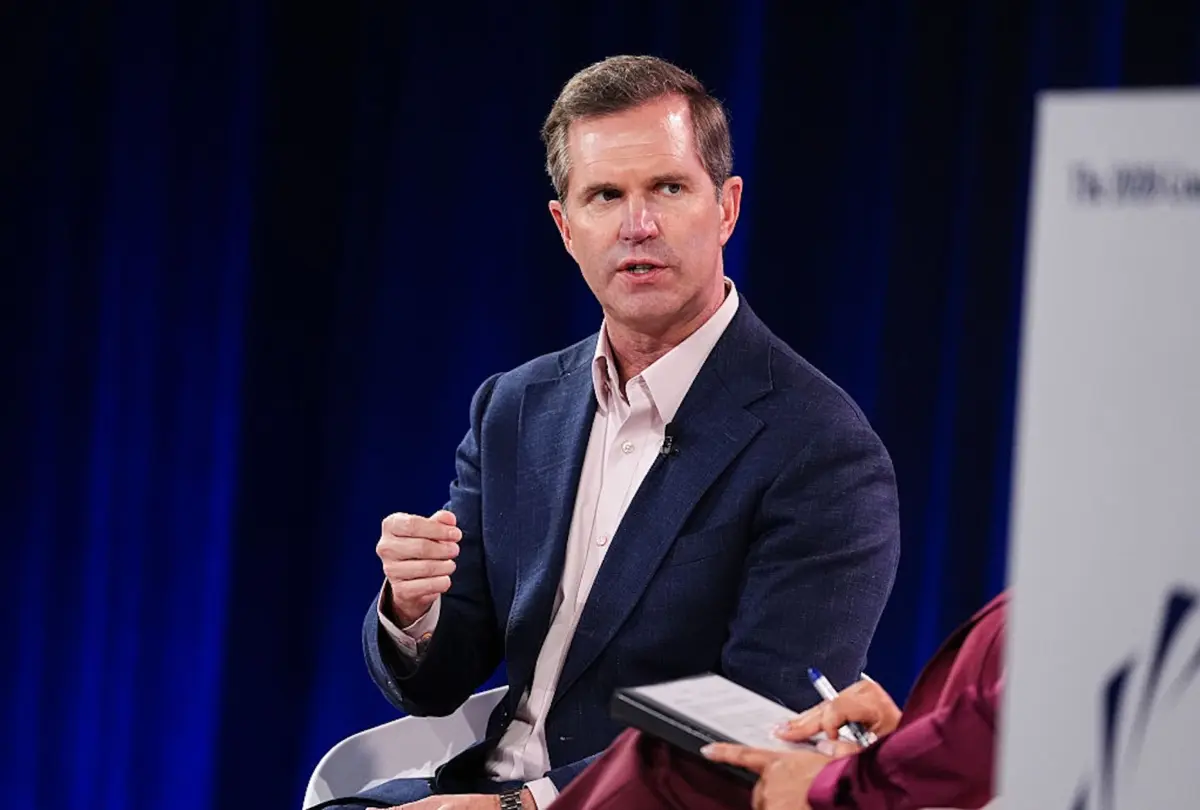
Fresh off the publication of his new book, Go and Do Likewise: How We Heal a Broken Country, Beshear sat down for an exclusive interview on the sidelines of the Bourbon & Beyond music festival in Louisville, Kentucky. Grounded deeply in the biblical parable of the Good Samaritan, the book serves as both a moral critique of contemporary conservative politics and a personal manifesto on how inclusive faith can underwrite effective governance.
During the wide-ranging conversation, Beshear addressed the contentious question of whether Donald Trump should be considered a Christian, laid bare the economic failures of the current presidential administration, defended his pragmatic approach to governance, and notably refused to rule out a potential bid for the 2028 Democratic presidential primary. As the Democratic Party grapples with its identity ahead of the midterms and searches for leaders capable of cutting through the noise, Beshear’s message of muscular, compassionate pragmatism offers a compelling—and perhaps prophetic—blueprint for the national stage.
Detailed Chronology: From Kentucky’s Statehouse to the National Stage
Andy Beshear’s political trajectory has been defined by his willingness to navigate high-stakes environments without abandoning his core principles. The timeline of his political ascent highlights a leader tested by crises and national polarization:
- November 2019: Beshear narrowly defeats incumbent Republican Governor Matt Bevin in a fiercely contested election, capitalizing on public fatigue over Bevin’s combative rhetoric and attacks on public school teachers.
- March 2020 – 2022: Facing the unprecedented global COVID-19 pandemic, Beshear institutes daily televised briefings. By prioritizing data-driven public health measures and transparent, empathetic communication, his approval ratings surge, earning him national acclaim for crisis leadership.
- November 2023: Beshear triumphs in a "nasty" reelection campaign against state Attorney General Daniel Cameron, who was hand-picked and heavily backed by Senate Minority Leader Mitch McConnell. The decisive victory solidifies Beshear’s status as a formidable electoral force in a deep-red state.
- September 2026: Beshear publishes Go and Do Likewise: How We Heal a Broken Country, drawing intense media speculation regarding his political ambitions. Later that month, he outlines his vision for a "Great American Reset" during an appearance at the Concordia Annual Summit in New York and an interview in Louisville.
- Late 2026: With midterms approaching, Beshear’s national profile continues to rise, positioning him as a leading voice for a revitalized religious left and a potential contender for the 2028 Democratic presidential nomination.
Supporting Context & Metrics: Faith, Economics, and the "Great American Reset"
To understand Beshear’s political philosophy, one must examine the intersection of his personal faith and his pragmatic approach to economic policy. In Go and Do Likewise, Beshear argues that the American political right has "hijacked" Christianity, using religion as a tool to exclude and judge rather than to uplift.
The Re-emergence of the Religious Left
Beshear is part of a growing contingent of Democratic politicians—such as Texas state legislator James Talarico and Kansas Senate candidate Adam Hamilton, a Methodist minister—who are reclaiming public expressions of faith. During his interview, Beshear expressed frustration with media narratives that frame this shift merely as a political tactic:
"The media will always try to take something as a tactic… instead of asking, ‘Why are people of faith running as Democrats right now?’ And I think it’s because there is such a manipulation and a hijacking of faith going on… that people of faith are saying, ‘I’ve had enough.’"
Economic Realities on the Ground
Beshear grounds his criticism of the current administration not just in abstract moral terms, but in the tangible economic pain experienced by everyday Americans. Citing figures impacting rural and working-class communities, the governor highlighted how federal policies are actively harming constituents:
- Tariffs and Trade: Unilateral tariff decisions against China have crippled the agricultural sector, prompting the world’s largest soybean purchasers to pivot toward Brazil and Argentina.
- Inflationary Pressures: Federal policies and shifting global conflicts have driven the cost of diesel—essential for running farm equipment—to historic highs, threatening the survival of family farms.
- Cost-of-Living Strains: Beshear notes that federal policies are costing average American families thousands of dollars extra annually in tariffs, skyrocketing gas prices, and inflated medical bills.
Official Statements and Excerpts
The interview captured Beshear in a candid and reflective mood, addressing everything from presidential morality to his own political future.
On Donald Trump and Christianity
Beshear did not mince words when evaluating the current president’s alignment with Christian teachings, contrasting the biblical call to care for the vulnerable with the administration’s policy decisions:
"Jesus, in a time of scarcity, makes sure everybody has enough. Donald Trump has repeatedly tried to take food off kids’ and seniors’ tables [and] was willing to use starving Americans as leverage during a government shutdown. That is not living or governing like a Christian."
He further contrasted the administration’s rhetoric of division—exemplified by characterizations of political opponents as "the enemy from within"—with the foundational Christian ethos of loving one’s neighbor.
On Kindness Versus Weakness
Responding to critics who argue that the Democratic Party needs aggressive "fighters" who drop profanities rather than leaders who model civility, Beshear firmly rejected the notion that kindness is synonymous with weakness:
"Don’t mistake kindness for weakness. If I’m Kentucky’s ‘Mister Rogers’—he went up against Trump before Trump. He went up against a Republican incumbent governor that attacked him every day for four years, and the ‘Mister Rogers’ is the one still standing."
On 2028 and the Future
While stopping short of a definitive campaign announcement for the 2028 presidential race, Beshear admitted that his post-gubernatorial plans have evolved:
"When I walked off the stage in 2023… I looked at Britainy [his wife] and I said, ‘Hoo, I’ll never have to run for anything ever again.’ As I’m here today, I’m not sure that’s the case anymore… I can’t watch a country slide back. I can’t see progress that folks in Selma marched for 60 years ago, undone by a rogue Supreme Court. So I don’t know exactly what my role will be in the future, but I just will not leave a broken country to my kids or anyone else’s."
Future Outlook: Navigating the Road Ahead
As the United States looks toward the 2026 midterms and the looming horizon of the 2028 presidential election, Andy Beshear’s brand of politics offers a stress-test for the Democratic Party.
By emphasizing pragmatism over rigid ideological purity, Beshear has demonstrated that progressive outcomes—such as protecting LGBTQ+ rights, expanding healthcare access, and investing in public infrastructure—can be achieved and sustained even within conservative strongholds. His call for a "Great American Reset" challenges both political parties to step back from the brink of perpetual retribution, focusing instead on economic dignity, institutional restoration, and basic human decency.
Whether Beshear takes his message to the national presidential stage in 2028 remains to be seen. However, his ability to win over skeptical voters without compromising his moral foundation positions him as one of the most compelling figures in modern American politics—a leader proving that conviction and compassion are not mutually exclusive, but rather the essential tools needed to heal a fractured nation.