In the high-stakes world of search engine optimization (SEO), one question continues to baffle site owners, digital marketers, and enterprise strategists alike: “How many backlinks do I need to rank?”
For years, the conventional wisdom dictated an aggressive, often blind pursuit of link acquisition. Teams would churn out content and scramble to secure hundreds—sometimes thousands—of inbound links, operating under the assumption that raw volume was the ultimate ticket to the coveted top positions of Google’s search engine results pages (SERPs).
However, a closer analytical inspection of competitive SERPs reveals a counterintuitive reality: you rarely need as many backlinks as you think.
Unlocking page-one rankings is not about chasing arbitrary numerical quotas; it is a surgical exercise in efficiency, relevance, and competitive benchmarking. Blindly building links without a premeditated framework often leads to squandered marketing budgets, exhausted outreach teams, and minimal movement in the rankings.
To solve this inefficiency, top-tier SEO professionals rely on data-driven methodologies to dissect competing backlink profiles. By conducting precise upfront analysis, marketers can calculate the exact quantity and quality of backlinks required to propel high-converting assets into the top three to five positions. This comprehensive guide outlines a proven, 5-step process designed to eliminate the guesswork, optimize resource allocation, and ensure your link-building campaigns yield maximum return on investment (ROI).
Detailed Chronology: The Evolution of Link Building Metrics and the Shift Toward Precision Analysis
To understand the necessity of a modern, step-by-step backlink evaluation framework, it is vital to examine how the SEO industry arrived at this crossroads.
The Era of Raw Volume (Early 2010s)
In the earlier days of search algorithms, quantitative metrics dominated strategy rooms. Domain Authority (DA) and PageRank (PR) were treated as absolute gospel. If a competitor ranked at the top of a high-value keyword with 500 backlinks, the standard operating procedure was to build 501. Little attention was paid to the topical relevance of those links, the health of the referring domains, or the contextual format of the content. This volume-first mindset spawned widespread directory spam, low-quality guest post networks, and aggressive link-farming tactics.
The Algorithmic Crackdown and Quality Shift (Mid-2010s to 2020)
With the rollout of major algorithmic updates—most notably Google’s Penguin update—the rules of engagement shifted dramatically. Search engines grew increasingly sophisticated at evaluating the context, authority, and authenticity of inbound links. Suddenly, raw volume became a liability rather than an asset. Websites burdened with thousands of low-quality, unnatural links experienced devastating algorithmic penalties. The industry was forced to pivot from quantity to quality, giving rise to editorial outreach, digital PR, and relationship-driven link acquisition.
The Modern Era of Data-Driven Efficiency (Present Day)
Today, modern SEO tools like Ahrefs, Semrush, and Moz provide granular insights into competitor link profiles, traffic potential, and historical link velocity. Despite these technological advancements, many marketers still fall into the trap of analyzing top-line metrics—such as a competitor’s total referring domains—without filtering out the noise.
Modern search dominance requires an investigative, forensic approach. By systematically filtering out irrelevant domains, analyzing domain rating distributions, and evaluating historical link velocity, today’s top practitioners can pinpoint the exact threshold of authority required to break into the top five search results, ensuring every dollar and hour spent on link building is fully accounted for.
Supporting Context & Metrics: The 5-Step Framework to Calculate Backlink Requirements
To accurately determine how many backlinks your content needs to rank right now—and how many you will need to maintain your position over time—you must execute a rigorous, repeatable workflow.
Step 1: Identify Your Highest-Priority Backlink Targets
Before calculating link requirements, you must identify which assets on your site warrant the investment. You should focus your link-building resources exclusively on high-converting content that drives tangible leads, revenue, and affiliate commissions for your business. Specifically, target assets currently idling on the bottom half of page one (positions 4 through 10) that need an extra authority push to break into the top three.
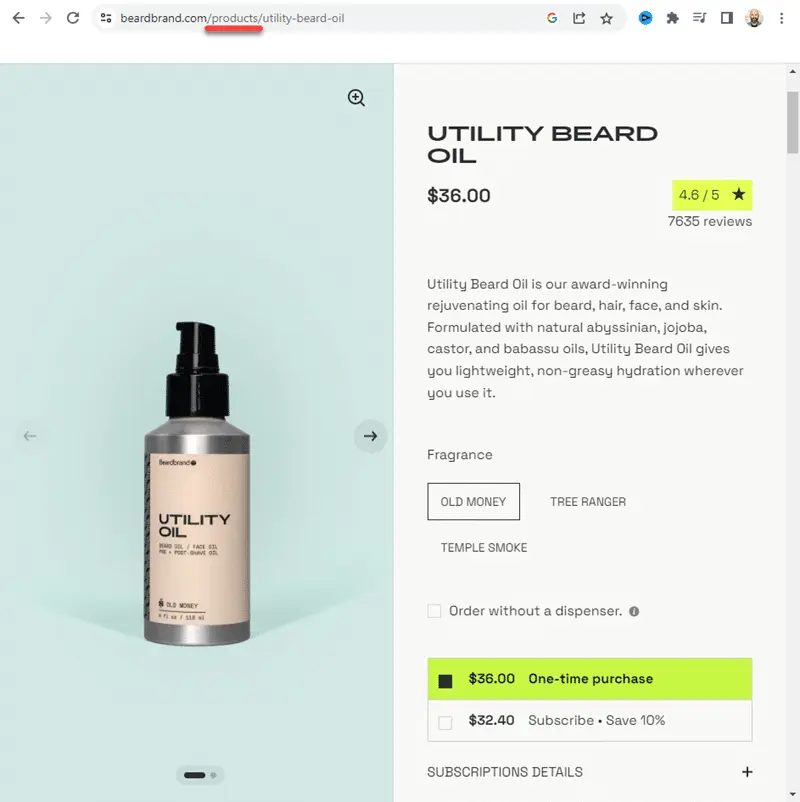
Analyzing Subfolders: Many structured websites house their most critical conversion assets within specific subfolder paths, such as /products, /features, /industries, /reviews, or /services. You can quickly identify these paths by auditing your main navigation and footer menus, or by entering your domain into an SEO platform like Ahrefs Site Explorer, navigating to the Subfolders report, and checking your Top Pages report filtered by positions 4–10.
Using Keyword Modifiers: If your site does not rely on rigid subfolder categorization, you can leverage keyword modifiers in your Top Pages report. Apply a filter containing commercial intent modifiers such as “Best,” “Software,” “Tools,” “Platform,” “Solutions,” “Alternatives,” or “vs.” This will instantly isolate high-intent money pages ripe for optimization and link acceleration.
Step 2: Review SERP Data and Competitor Baselines
Once you have selected a target page and its primary keyword, it is time to inspect the competitive landscape.
Open the Keyword Explorer overview report for your primary keyword and scroll down to the SERP overview. Here, you will see a comprehensive breakdown of the URLs currently dominating the top 10 positions.
Evaluating Traffic Potential: Moving from position 8 or 9 into the top three positions can easily triple or quadruple your organic traffic, multiplying your referral and conversion potential.
The "Apples-to-Apples" Comparison: Look closely at the Referring Domains (RD) column. Crucial warning: The top-line referring domain count of a competitor can be deeply misleading. Do not simply look at the highest-ranking site and assume you need to match their total. Instead, identify a competitor that shares a similar Domain Rating (DR) score to your website and utilizes an identical content type and format (e.g., a blog post in a listicle format). Select the competitor within that cohort with the lowest referring domain count to establish a realistic, achievable benchmark.
Step 3: Review Competitor Backlink Profiles (And Filter the Noise)
After isolating your benchmark competitor, click through to their Referring Domains report. Raw numbers often include low-quality, spammy, or irrelevant links that do not contribute to the page’s actual ranking power.
Apply advanced filters to strip away the noise:
Filter out low-authority or irrelevant domains.
Isolate links originating from content categories that match your niche.
For example, a competitor might show 85 total referring domains, but after applying strict filters for contextual relevance and domain strength, you may find that only 22 domains are actually moving the needle. Skim the remaining list to ensure topical relevance (such as SaaS blogs or industry agencies) and arrive at your refined target number.
Step 4: Assess Domain Rating (DR) Distributions
Knowing how many links you need is only half the battle; you must also understand the quality required. Assess the Domain Rating distributions of your competitor’s backlink profile.
If a competitor’s profile is heavily saturated with high-tier links (e.g., multiple DR80+ and DR70–79 placements acquired via guest posting or strategic industry collaborations), closing that authority gap will require a long-term, high-caliber outreach campaign. By inspecting individual links via your SEO tool’s dropdown menus, you can reverse-engineer your competitors’ acquisition methods—identifying whether they rely on guest blogging, digital PR, or resource page link building—and tailor your strategy accordingly.
Step 5: Determine Link Velocity Targets
Securing a top-five ranking is only the first phase of the battle; maintaining that position requires vigilance. Competitors constantly monitor their rankings and build new links to defend their turf.
To determine how aggressive your ongoing link-building campaign needs to be, check the historical data for New backlinks over the past 30 days, 3 months, and 6 months. If your benchmark competitor has generated zero new referring domains matching your quality filters over the last quarter, you can deduce that ongoing maintenance will require minimal effort—perhaps just one or two strategic links per quarter—once you have bridged the initial authority gap.
Official Statements & Industry Insights
Industry analysts and veteran search engine optimization experts consistently emphasize the danger of treating link building as a volume game.
"The biggest mistake marketers make is looking at a competitor’s total referring domain count and panicking," notes leading SEO educator Robbie Richards. "When you clean up the data, filter out irrelevant noise, and match yourself against true peers in terms of content format and domain authority, the actual link gap is almost always much smaller than you think. Precision beats brute force every single time."
Furthermore, search engine representatives have repeatedly reinforced that the qualitative value of links far outweighs quantitative accumulation. Algorithms are explicitly designed to discount manipulative, low-relevance mass link acquisition. Industry consensus dictates that a handful of topically relevant, high-authority editorial placements will consistently outperform hundreds of low-tier directory or comment links.
Future Outlook: The Next Frontier of Link Building Efficiency
As search engine algorithms continue to evolve with the integration of machine learning, semantic search, and AI-driven content evaluation (such as Google’s Search Generative Experience), the role of backlinks is undergoing a subtle transformation.
While inbound links remain a foundational pillar of authority and crawl efficiency, the emphasis is shifting heavily toward topical authority and contextual depth. In the near future, acquiring links from sites that share a profound semantic and topical alignment with your brand will become even more critical. General, out-of-niche guest posting will experience diminishing returns as algorithms become increasingly adept at identifying unearned or unnatural editorial placements.
For digital marketers and business owners, this means that the 5-step auditing framework outlined above will only grow in importance. By focusing resources exclusively on high-conversion assets, accurately calculating true link gaps, and matching competitor link velocity with surgical precision, organizations can future-proof their organic growth strategies. Moving forward, sustainable SEO success will not belong to those with the deepest pockets or the largest link-building teams, but to those who wield their resources with uncompromising analytical precision.


![How Many Backlinks Do I Need To Rank? [Answered]](https://www.robbierichards.com/wp-content/uploads/2023/07/How-many-backlinks-are-needed-to-rank.jpg)
![How Many Backlinks Do I Need To Rank? [Answered]](https://www.robbierichards.com/wp-content/uploads/2023/07/image19.png)
![How Many Backlinks Do I Need To Rank? [Answered]](https://www.robbierichards.com/wp-content/uploads/2023/07/image6.png)
![How Many Backlinks Do I Need To Rank? [Answered]](https://www.robbierichards.com/wp-content/uploads/2023/07/image24.png)
![How Many Backlinks Do I Need To Rank? [Answered]](https://www.robbierichards.com/wp-content/uploads/2023/07/image10.png)
![How Many Backlinks Do I Need To Rank? [Answered]](https://www.robbierichards.com/wp-content/uploads/2023/07/image5.png)
![How Many Backlinks Do I Need To Rank? [Answered]](https://www.robbierichards.com/wp-content/uploads/2023/07/image16.png)
![How Many Backlinks Do I Need To Rank? [Answered]](https://www.robbierichards.com/wp-content/uploads/2023/07/TSP-Banner.jpg)
![How Many Backlinks Do I Need To Rank? [Answered]](https://www.robbierichards.com/wp-content/uploads/2023/07/image2.png)
![How Many Backlinks Do I Need To Rank? [Answered]](https://www.robbierichards.com/wp-content/uploads/2023/07/image8.png)
![How Many Backlinks Do I Need To Rank? [Answered]](https://www.robbierichards.com/wp-content/uploads/2023/07/image9.png)
![How Many Backlinks Do I Need To Rank? [Answered]](https://www.robbierichards.com/wp-content/uploads/2023/07/image3.png)
![How Many Backlinks Do I Need To Rank? [Answered]](https://www.robbierichards.com/wp-content/uploads/2023/07/image4.png)
![How Many Backlinks Do I Need To Rank? [Answered]](https://www.robbierichards.com/wp-content/uploads/2023/07/image20.png)
![How Many Backlinks Do I Need To Rank? [Answered]](https://www.robbierichards.com/wp-content/uploads/2023/07/image13.png)
![How Many Backlinks Do I Need To Rank? [Answered]](https://www.robbierichards.com/wp-content/uploads/2023/07/image11.png)
![How Many Backlinks Do I Need To Rank? [Answered]](https://www.robbierichards.com/wp-content/uploads/2023/07/image18.png)
![How Many Backlinks Do I Need To Rank? [Answered]](https://www.robbierichards.com/wp-content/uploads/2023/07/image23.png)
![How Many Backlinks Do I Need To Rank? [Answered]](https://www.robbierichards.com/wp-content/uploads/2023/07/image14.png)
![How Many Backlinks Do I Need To Rank? [Answered]](https://www.robbierichards.com/wp-content/uploads/2023/07/image15.png)
![How Many Backlinks Do I Need To Rank? [Answered]](https://www.robbierichards.com/wp-content/uploads/2023/07/image21.png)
![How Many Backlinks Do I Need To Rank? [Answered]](https://www.robbierichards.com/wp-content/uploads/2023/07/image7.png)
![How Many Backlinks Do I Need To Rank? [Answered]](https://www.robbierichards.com/wp-content/uploads/2023/07/image22.png)
![How Many Backlinks Do I Need To Rank? [Answered]](https://www.robbierichards.com/wp-content/uploads/2023/07/image25.png)
![How Many Backlinks Do I Need To Rank? [Answered]](https://www.robbierichards.com/wp-content/uploads/2023/07/image17.png)
![How Many Backlinks Do I Need To Rank? [Answered]](https://www.robbierichards.com/wp-content/uploads/2023/07/image12.png)