


Executive Overview
Content marketing has evolved far beyond its origins as a basic corporate blogging strategy. Today, it serves as a primary driver of organic user acquisition, brand authority, and customer conversion. However, as generative artificial intelligence, search engine algorithm overhauls, and social media dynamics redefine the industry, the educational programs designed to train marketers are facing unprecedented scrutiny.
On the surface, the market for content marketing courses appears highly commoditized. Dozens of platforms offer visually polished video modules, downloadable worksheets, and basic action items. Yet, the real-world utility of these programs varies wildly. Many legacy courses rely on outdated pre-pandemic strategies, ignoring the profound impact of AI-assisted writing, Search Generative Experience (SGE), and the rise of founder-led personal branding.
To assist marketing professionals, business founders, and agency owners in identifying high-value training, this investigative review evaluates eight of the industry’s most prominent content marketing courses. Using a strict rubric that measures instructor credibility, format diversity, advice recency, feedback accessibility, community strength, and pricing structures, we analyze the strengths and limitations of each offering to determine which programs deliver true career-accelerating ROI.
Detailed Chronology & Comparative Analysis of Industry Offerings
To understand the current state of content marketing education, we must examine how these courses are structured, who teaches them, and whether their curriculums have adapted to the demands of the modern digital landscape.
[Legacy Era: ~2020] ------------> [Transition Era: ~2022-2023] ------------> [Modern Era: 2024-Present]
- Ahrefs (Blogging for Business)   - Semrush (Brian Dean Frameworks)         - Copyblogger Academy (Cohort & Multi-Format)
- HubSpot (Foundational Free Cert) - Udemy (Broad Generalist Masterclasses)  - Grow & Convert (Conversion Agency Blueprint)
                                                                             - Superpath (B2B SaaS Peer Networks)
                                                                             - CXL (Shopify-Led Strategy Briefings)
1. Copyblogger Academy: The Multi-Format, Practitioner-Led Ecosystem
Co-founded and operated by serial digital marketing entrepreneurs Tim Stoddart and Charles Miller, the Copyblogger Academy departs from the static, video-only educational model. Instead, it combines structured self-paced learning with a dynamic, community-driven feedback loop.

- Instructor Credibility: Stoddart is the owner of the iconic Copyblogger brand and runs Quantum Leads, a healthcare-focused marketing agency built entirely on organic lead generation. Miller is a prominent personal branding strategist who has amassed over 220,000 followers on X (formerly Twitter) and 140,000 followers on LinkedIn, helping numerous executive clients monetize their social media presence. Crucially, both instructors remain active practitioners in the marketing industry.
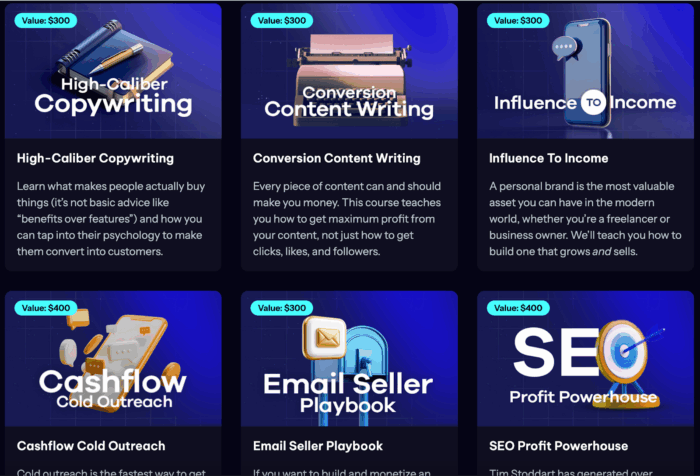
- Curriculum & Format: Recognizing that modern content marketing requires a multi-channel approach, the Academy provides six hyper-specific courses covering copywriting, search engine optimization (SEO), email marketing, personal branding, and client acquisition.
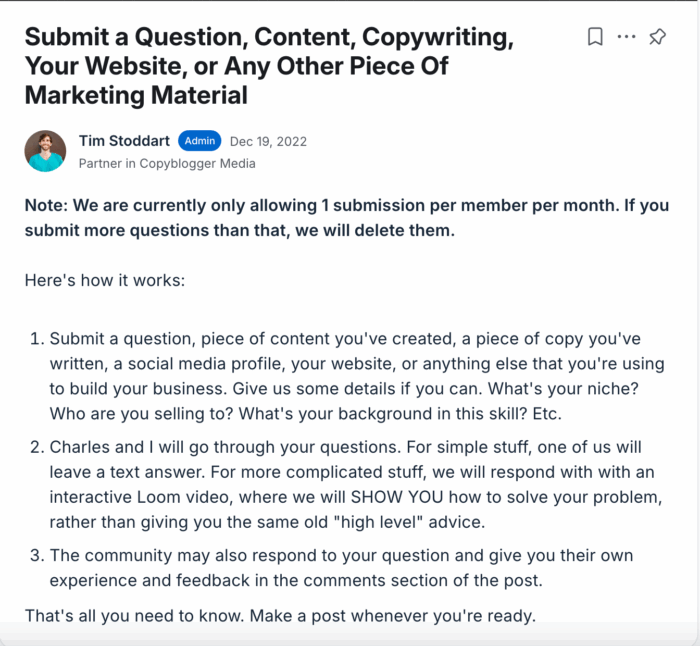
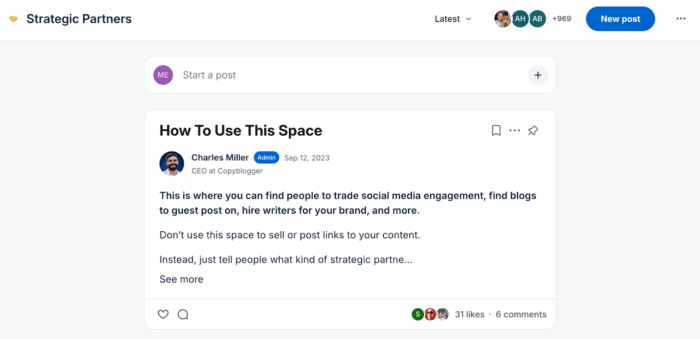
- Feedback & Community: Unlike passive video libraries, the Academy features an interactive platform where students can submit copy, content strategies, and landing pages for direct critique from Stoddart, Miller, and peer members. Regular monthly mini-courses and collaborative forums keep the advice aligned with current algorithm shifts and AI integrations.
- Pricing: The platform offers a low-barrier entry point of $1 to test the community, followed by a recurring monthly membership fee.
2. HubSpot Content Marketing Certification: The Free Foundational Benchmark
HubSpot Academy has long served as the default entry point for junior marketers. Its Content Marketing Certification is an 8.5-hour, free educational program designed to establish a baseline understanding of inbound marketing methodologies.
- Instructor Credibility: The primary instruction is delivered by Justin Champion, HubSpot’s Global Head of Surround Sound Growth (SEO + AEO). The course also features guest lectures from prominent industry figures like Andy Crestodina (co-founder of Orbit Media) and Matthew Howells-Barby (former VP of Marketing at HubSpot).
- Curriculum & Format: Spanning 14 lessons, 54 videos, and 11 quizzes, the course covers the fundamentals of content creation, guest blogging, and promotional strategy. However, the curriculum lacks coverage of email marketing, paid distribution, or personal branding—channels that are critical for modern startups and solopreneurs.
- The Recency & Feedback Gap: Because the course is pre-recorded and updated infrequently, it lacks strategies for navigating generative AI tools like ChatGPT or Google’s Search Generative Experience. Furthermore, as a free, self-paced program, it offers no instructor feedback or peer community.
3. Grow and Convert’s "Customers From Content": The Bottom-of-Funnel Blueprint
Created by agency founders Benji Hyam and Devesh Khanal, "Customers from Content" is designed for marketers who want to connect content directly to revenue metrics rather than vanity traffic goals.
- Instructor Credibility: Hyam and Khanal run Grow and Convert, an elite B2B content marketing agency that has managed organic growth strategies for major brands such as Leadfeeder, Patreon, CrazyEgg, and CognitiveFX.
- Curriculum & Format: The course is structured around the exact processes the agency uses to drive conversions. It is divided into five core modules:
- Ideation and Bottom-of-Funnel (BOFU) content strategy.
- User research and search intent analysis.
- Writing high-converting content.
- Content promotion and link building.
- Attribution modeling and tracking ROI.
- Ecosystem & Recency: Hosted inside a private discussion forum, the program operates like an agency apprenticeship. The material is continuously updated as the founders test new tactics within their agency, and members receive direct feedback on their assignments via the forum and monthly live Q&A calls.
- Pricing: Lifetime access is available for a one-time payment of $699, or through a six-month payment plan of $135 per month.
4. Superpath: The Peer-Led Graduate School for B2B SaaS Marketers
Superpath, founded by former Animalz content lead Jimmy Daly, is a professional community and educational hybrid tailored specifically for B2B and Software-as-a-Service (SaaS) content creators.
- Instructor Credibility: While Daly provides foundational guidance, the primary value of Superpath comes from its network of active content directors, managers, and strategists working at companies like Shopify, HubSpot, Clearscope, Podia, and Intercom.
- Curriculum & Format: Rather than a single linear course, Superpath offers a library of advanced resources, including strategic templates, content teardowns, and masterclasses focusing on career progression, content operations, and budgeting.
- Community & Support: The program’s core strength is its Slack community of over 400 active professionals. Members can access peer feedback, participate in AMAs with industry leaders, and utilize a dedicated job board.
- Pricing: Superpath offers a free tier, with a Pro membership starting at $50 per month (or $500 per year) and an Advanced tier priced at $1,000 per year.
5. Ahrefs’ "Blogging for Beginners": The Classic SEO Playbook
Ahrefs’ "Blogging for Business" (now titled "Blogging for Beginners") is a free, five-hour course hosted by Tim Soulo, the Chief Marketing Officer of Ahrefs.
- Instructor Credibility: Soulo has led the organic marketing strategies that helped turn Ahrefs into a dominant SaaS brand. The course also features insights from guest entrepreneurs such as Noah Kagan (AppSumo) and Bryan Harris (Growth Tools).
- Curriculum & Format: Consisting of 40 lessons across 11 modules, the course covers keyword research, search intent, on-page optimization, and link building. It provides a highly tactical blueprint for growing organic search traffic.
- The Obsolescence Risk: The course was recorded in 2020. Consequently, it does not address the modern search landscape, including AI-generated content, conversational search queries, and recent Google core updates. It also offers no interactive community or direct feedback.
6. Semrush Academy: Brian Dean’s High-Traffic Frameworks
Semrush Academy offers two prominent, free courses hosted by Brian Dean, the founder of Backlinko and Exploding Topics.
- Instructor Credibility: Brian Dean is widely recognized as one of the world’s leading SEO practitioners, famous for popularizing the "Skyscraper Technique" and other high-yield backlink strategies.
- Curriculum & Format: The "Advanced Content Marketing" course (4 hours) and "Content-Led SEO" course (6 hours) provide practical instruction on link-building campaigns, conversion rate optimization, and advanced blogging frameworks. Each module includes downloadable worksheets and templates.
- Recency & Support: Recorded in 2022, these courses are highly structured but do not reflect the post-AI shift in search engine indexing. Like other free platforms, Semrush Academy operates on a self-paced, zero-feedback model with no community support.
7. CXL Content Marketing Research: The High-Level Strategy Briefing
The CXL Institute is known for its rigorous, conversion-focused training. Its "Content Marketing Research" course is a concise, one-hour strategic program designed for senior marketing professionals.
- Instructor Credibility: The course is taught by Derek Gleason, the SEO and Content Lead at Shopify. Gleason manages a massive editorial calendar and a content library of over 700 long-form posts for one of the world’s largest e-commerce platforms.
- Curriculum & Format: Spanning six lessons, the course bypasses basic writing advice to focus on strategic execution, including competitive analysis, search landscape research, and content distribution.
- Ecosystem & Pricing: Published in 2024, the course is highly current but does not offer direct instructor feedback or a peer community. It can be purchased individually for $299 or accessed via a CXL subscription, which ranges from $289 to $449 per month.
8. Udemy’s "Content Marketing Masterclass": The Broad-Spectrum Overview
Taught by Brad Merrill, CEO of Merrill Media, this course is a popular, generalist program hosted on the Udemy platform.
- Instructor Credibility: Merrill is an experienced media entrepreneur and the founder of VentureBreak. His courses have trained students across 180 countries.
- Curriculum & Format: With nearly four hours of video lectures across 14 sections, this course covers a wide range of marketing topics, including cognitive biases, copywriting frameworks (such as AIDA), email marketing, and basic website design.
- Strategic Depth: Because the course is highly generalized, it lacks the deep, platform-specific strategies found in channel-specific courses. It was last updated in July 2023, offering limited coverage of AI tools, and relies on Udemy’s standard Q&A forum for student-instructor interaction.
Supporting Context & Metrics: The Evaluation Rubric
To provide an objective comparison of these eight programs, the following matrix rates each course against key operational criteria:
| Educational Program | Instructor Credibility | Content Formats Covered | Advice Recency | Feedback & Support | Peer Community | Pricing Model |
|---|---|---|---|---|---|---|
| Copyblogger Academy | Exceptional (Active 7-figure founders) | Multi-channel (SEO, Email, Copywriting, Social, Branding) | Current (Updated monthly with AI & social insights) | High (Direct feedback from instructors in forum) | Active (Engaged community forum) | $1 trial, then monthly subscription |
| HubSpot Academy | Strong (In-house experts & guests) | Inbound blogging, video, guest posting | Moderate (Updated periodically) | None (Self-paced) | None | Free |
| Grow and Convert | Exceptional (Active B2B agency owners) | Bottom-of-funnel SEO, conversion tracking, copywriting | Current (Updated with agency test results) | High (Monthly Q&A calls & forum feedback) | Active (Private forum) | $699 one-time or $135/mo for 6 months |
| Superpath | Strong (Industry veterans & SaaS directors) | SaaS-focused content strategy, career growth | Current (Real-time peer discussions) | High (1:1 sessions & AMAs) | Exceptional (400+ active Slack members) | Free tier; Pro starts at $50/mo; Advanced at $1,000/yr |
| Ahrefs Academy | Strong (CMO of leading SEO tool) | Blogging & SEO only | Outdated (Recorded in 2020; pre-AI) | None (Self-paced) | None (YouTube comments only) | Free |
| Semrush Academy | Exceptional (Brian Dean) | Advanced SEO & blogging frameworks | Moderate (Recorded in 2022) | None (Self-paced) | None | Free |
| CXL Institute | Exceptional (Shopify Content Lead) | Strategic research & high-level distribution | Current (Published in 2024) | None (Self-paced) | None | $299 one-time or $289–$449/mo subscription |
| Udemy Masterclass | Moderate (Media entrepreneur) | Broad marketing, design, & storytelling overview | Moderate (Updated July 2023) | Low (Basic Q&A text support) | None | $109.99 (or included in Udemy subscription) |
Official Perspectives: The Philosophies of Leading Content Pioneers
Analyzing the public statements and strategic approaches of these course creators reveals two distinct educational philosophies: the Algorithmic/SaaS Model and the Practitioner/Ecosystem Model.
The Algorithmic/SaaS Model (HubSpot, Ahrefs, Semrush)
These platforms treat content marketing primarily as a technical discipline governed by search engine algorithms. Their courses focus heavily on search volume, domain authority, and technical optimization. As Tim Soulo (CMO of Ahrefs) has frequently emphasized, the goal of content is to build a compounding engine of organic search traffic.
While this model is highly effective for technical SEO, it can leave students unprepared for shifts in user behavior, such as the transition from search engines to social platforms and AI assistants for information discovery.
The Practitioner/Ecosystem Model (Copyblogger, Grow and Convert, Superpath)
This approach views content marketing as an exercise in human persuasion, conversion design, and relationship building. Founders Tim Stoddart and Charles Miller argue that traffic is a vanity metric if it does not convert into leads and sales.
        Traditional SEO Funnel                     Modern Ecosystem Model
     ┌───────────────────────────┐              ┌───────────────────────────┐
     │      Organic Search       │              │    Multi-Format Content   │
     └─────────────┬─────────────┘              │ (SEO, Social, Email, Pod) │
                   │                            └─────────────┬─────────────┘
     ┌─────────────▼─────────────┐                            │
     │     Informational Post    │              ┌─────────────▼─────────────┐
     └─────────────┬─────────────┘              │   Trust & Direct Rapport  │
                   │                            └─────────────┬─────────────┘
     ┌─────────────▼─────────────┐                            │
     │      Cold Conversion      │              ┌─────────────▼─────────────┐
     └───────────────────────────┘              │  Engaged Lead Conversion  │
                                                └───────────────────────────┘
In public discussions, Benji Hyam of Grow and Convert has noted that many brands waste resources targeting high-volume, low-intent keywords. Instead, he advocates for targeting bottom-of-funnel search terms that reach users who are ready to buy.
Similarly, Jimmy Daly of Superpath emphasizes that modern content strategy must look beyond Google, utilizing peer communities, newsletter distribution, and social platforms to build brand authority.
Future Outlook: The Evolution from Static Curricula to Dynamic Ecosystems
The content marketing industry is undergoing a structural shift driven by three major forces:
- The Commoditization of Basic Writing: Generative AI has made producing standard, mid-tier written content nearly free. Consequently, informational blog posts that lack original research or unique perspectives are losing search visibility.
- The Rise of Information Retrieval Engines: As search engines transition to AI-generated answers (such as Google’s AI Overviews), click-through rates for informational queries are declining. Marketers must adapt by optimizing for Brand-Led SEO and Answer Engine Optimization (AEO).
- The Dominance of Personal Brands: Modern audiences increasingly seek out authentic, human-led content. Personal branding on platforms like LinkedIn and X has become a critical channel for generating business leads.
The Death of the Static Video Course
These trends explain why static, pre-recorded video courses are losing ground to dynamic learning communities. A video recorded in 2020 or 2022 cannot prepare a marketer for the realities of an AI-driven landscape.
Educational models like the Copyblogger Academy and Grow and Convert point toward the future of professional training: a hybrid approach that combines foundational courses with real-time industry updates, direct instructor feedback, and peer-to-peer networking. For marketing professionals looking to stay competitive, choosing a program that offers active industry engagement is no longer optional—it is essential for long-term career growth.