

Executive Overview
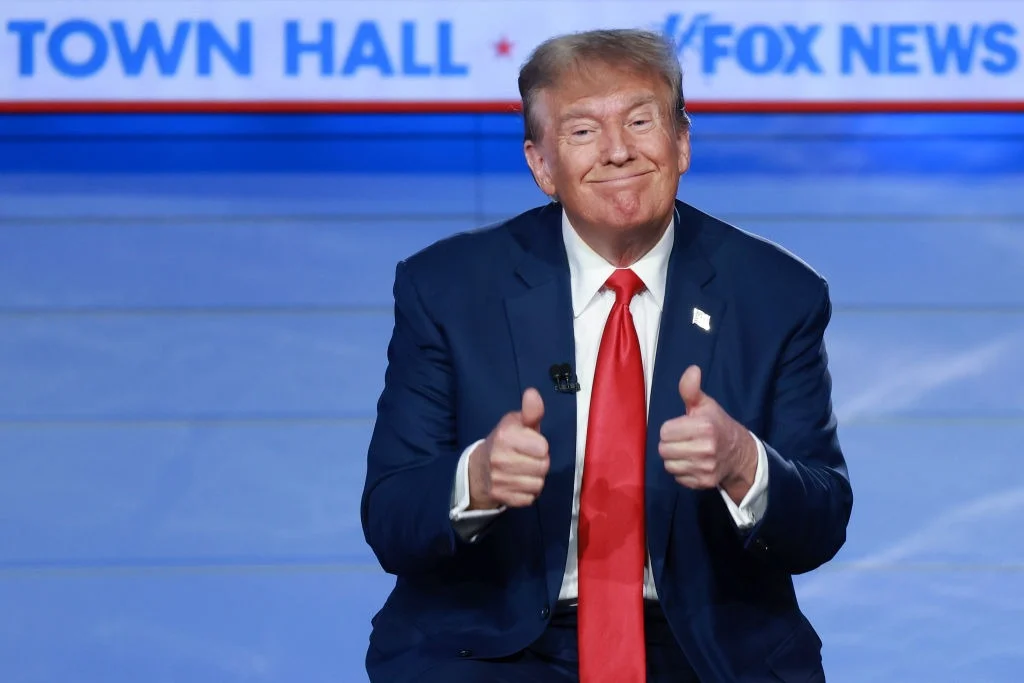
In the complex and often tempestuous marriage of convenience between Donald Trump and conservative media, few institutions have played as pivotal a role as Fox News. Yet, a striking paradox unfolded on a Sunday morning, exposing the underlying friction that continues to define the relationship between the former president and his once-unwavering television sanctuary.
In a blistering social media tirade broadcast across Truth Social, Donald Trump lashed out at the network, specifically targeting Fox & Friends Sunday. His grievance? An alleged lack of coverage regarding his packed-house campaign rallies in Ohio, Alabama, Texas, and Oklahoma.
The outburst, however, was marred by a glaring irony: just moments before Trump published his fiery critique, the very program he was condemning had aired a substantial segment dedicated to his Ohio rally, complete with analysis of his commentary on artificial intelligence data centers.
This latest confrontation is far more than a mere social media grievance; it serves as a revealing diagnostic of the modern conservative media ecosystem. Trump’s demands for totalizing, uncritical coverage highlight an escalating tension within right-wing media: the struggle between maintaining journalistic pretense—however slight—and appeasing a populist base that demands complete, adulatory alignment.
Furthermore, Trump’s warnings of viewer boycotts, his explicit attacks on network co-hosts like Jessica Tarlov, and his conspiratorial reframing of Maria Bartiromo’s high-profile departure from Fox Business underscore a deepening paranoia. As Trump attempts to dictate programming choices from his digital pulpit, the episode raises critical questions about the future autonomy of conservative media and whether Fox News can continue to balance mainstream revenue interests with the insatiable demands of the MAGA movement.
Detailed Chronology: A Sunday Morning Meltdown
The sequence of events on that Sunday morning mapped out a textbook study in modern political media feedback loops. It began in the early hours, with the former president consuming morning cable news—ostensibly tuning into the very network he would soon accuse of betrayal.
The Truth Social Screed
At roughly the same time Fox & Friends Sunday was preparing to transition through its morning rundown, Trump took to Truth Social to air his grievances. In a lengthy and animated post, he castigated the morning broadcast team for ignoring what he termed his "packed house and incredibly enthusiastic (beyond!) Rally last night in Ohio."
The complaint was not isolated to the Buckeye State. Trump broadened his critique to include recent appearances across the Sunbelt, specifically citing Alabama, Texas, and Oklahoma. In his view, the network was purposefully sidelining the geographic lifeblood of his political momentum in favor of institutional compromise.
[Timeline of Events]
 ├── Morning (Prior to Broadcast): Trump consumes morning cable news on Truth Social.
 ├── Morning Broadcast: "Fox & Friends Sunday" airs a dedicated segment on Trump’s Ohio rally.
 ├── Concurrent with Broadcast: Trump publishes a lengthy screed claiming zero coverage.
 ├── Midday: Trump attacks "The Five" co-host Jessica Tarlov and invokes Maria Bartiromo.
 └── Afternoon: Media analysts highlight the irony of active coverage vs. active complaints.
The Broadcast Reality
The core factual disconnect of Trump’s tirade quickly became apparent to media monitors and casual viewers alike. Shortly before the former president hit "publish" on his digital broadside, Fox & Friends had featured a dedicated segment dissecting his Saturday night rally in Ohio. The coverage even zeroed in on his specific policy assertions regarding the infrastructure requirements of artificial intelligence data centers—a notable policy pivot for a campaign rally.
Yet, facts on the ground did little to temper the narrative. Instead of acknowledging the segment, Trump doubled down on his alienation, writing:
"Sad to see that Fox & Friends (Sunday) is not covering our packed house…"
Escalating Threats and Personal Attacks
As the morning progressed, Trump’s screed expanded from an institutional critique to a direct assault on network personnel. He accused Fox News of granting too much airtime to "Communists, Socialists, and Democrats," explicitly taking aim at The Five co-host Jessica Tarlov, who serves as a prominent liberal voice on the network.
"We don’t like stupid Jessica Tarlov, and all of the others, that are forced down MAGA’S throats," Trump wrote, signaling his intolerance for even the token ideological opposition that Fox occasionally deploys to maintain a veneer of balance and drive panel-show conflict.
Trump then turned his attention to Maria Bartiromo, the longtime financial journalist and anchor whose recent departure from Fox Business sent shockwaves through the conservative media landscape. Rather than acknowledging the network’s official stances or the reported internal friction regarding confidential White House communications, Trump offered a starkly different narrative. He claimed Bartiromo was forced out "because she complained about not being allowed to cover ‘TRUMP.’"
Supporting Context & Metrics: The Fragile Ecosystem of Right-Wing Media
To understand the weight of Trump’s Sunday morning outburst, one must examine the delicate financial and ideological symbiosis that has bound Fox News and Donald Trump together for nearly a decade.
The Ratings Tightrope
Fox News has long dominated the cable news ratings war, regularly outpacing CNN and MSNBC combined during prime-time hours. However, this dominance is built upon a fiercely loyal, highly mobilized viewer base that demands constant validation.
Trump’s warning that his supporters would "very quickly stop watching. Like I am doing right now!" points to a genuine vulnerability for the network. On multiple occasions—most notably following the 2020 presidential election, when Fox accurately called Arizona for Joe Biden—segments of the MAGA audience abandoned the network in droves, briefly defecting to hyper-partisan upstart channels like Newsmax and One America News (OAN).
[Fox News Viewership Dynamics]
 ├── Core Demographic: Highly loyal, populist MAGA base.
 ├── Vulnerability: Threat of audience defection to alternative platforms (e.g., Newsmax, OAN).
 ├── Management Challenge: Balancing mainstream advertiser appeal with populist ideological purity.
 └── Historical Precedent: Post-2020 election viewer backlash over early election calls.
Trump explicitly weaponized this history in his closing remarks, reminding network executives of their past vulnerabilities:
"Remember, Fox tried this act once before, and almost went out of business. That can happen again!"
While financial metrics indicate Fox is in no immediate danger of insolvency—anchored by robust cable carriage fees and a profitable digital footprint—the psychological leverage Trump holds over the network’s executive suite remains formidable. Network leadership is perpetually caught between two imperatives:
- Appeasing corporate advertisers and institutional investors who prefer a degree of journalistic separation.
- Satisfying an audience that views uncritical, wall-to-wall pro-Trump coverage not as a preference, but as an ideological imperative.
The Bartiromo Fallout and Institutional Strain
The backdrop of Maria Bartiromo’s departure adds significant context to Trump’s frustration. Bartiromo, who spent over a decade at Fox, became a central figure in the intersection of Trumpworld and financial journalism, frequently pushing unverified claims regarding election integrity and administrative overreach.
When Fox announced it was parting ways with her following reports that she shared confidential internal editorial guidance with the White House, it signaled to the MAGA faithful that the corporate brass at Fox was attempting to claw back a modicum of editorial independence. For Trump, framing Bartiromo’s exit as a punitive measure for pro-Trump advocacy is a strategic effort to delegitimize any internal resistance at the network and to warn other anchors against straying from absolute fealty.
Official Statements and Industry Reactions
The fallout from Trump’s social media outburst prompted swift reactions across the media landscape, though official channels at Fox News maintained a cautious public posture.
The Network’s Silence
In keeping with a long-standing corporate strategy designed to avoid getting dragged into protracted, daily public squabbles with the former president, Fox News leadership declined to issue a formal press statement addressing Trump’s specific claims. Behind closed doors, however, network insiders expressed exasperation at the public dressing-down—particularly given that the network had indeed featured his Ohio rally moments before his post went live.
Media Criticism and Analysis
Media watchdogs and industry analysts were quick to point out the cognitive dissonance of Trump’s critique. Programs like Mediaite and independent journalism outlets dissected the timeline, highlighting how the episode demonstrates the impossibility of satisfying a populist media consumer who measures network loyalty not by actual output, but by perpetual, uncritical adulation.
+-------------------------------------------------------------------------+
|                  THE MEDIA-POLITICS FEEDBACK LOOP                       |
+-------------------------------------------------------------------------+
|  1. Trump hosts rally -> 2. Fox covers rally -> 3. Trump claims zero    |
|  coverage -> 4. Base demands network compliance -> 5. Ratings pressure. |
+-------------------------------------------------------------------------+
Furthermore, commentators focused on the personal attacks directed at Jessica Tarlov. Tarlov, who has carved out a high-profile role as the resident liberal foil on The Five, represents the precise type of controlled opposition that allows Fox to claim balance while retaining its conservative identity. Trump’s demand for her removal underscores a broader ideological intolerance: the insistence that conservative media spaces must be entirely purged of dissenting voices, regardless of their utility in generating panel-show ratings.
Future Outlook: The Road Ahead for Trump and Cable News
As the political calendar moves deeper into the election cycle, the relationship between Donald Trump and conservative media will continue to serve as a critical barometer for the state of American political discourse.
Several key trajectories emerge from this latest confrontation:
1. The Normalization of Media Intimidation
Trump’s successful leveraging of his social media following to browbeat mainstream and conservative media alike has permanently altered how politicians interact with press infrastructure. Network executives know that a single Truth Social post can trigger a wave of subscriber cancellations, social media harassment, and coordinated boycotts. Consequently, the incentive structure for producers and anchors bends steadily toward self-censorship and over-indexing on favorable coverage.
2. The Radicalization of Expectations
As demonstrated by the Ohio rally incident, reality and perception do not need to align for a grievance to be weaponized. Even when Fox News actively covers his events, the threshold for what constitutes "sufficient" loyalty has become nearly impossible to meet. This suggests that future flashpoints are not only likely, but guaranteed, as Trump pushes for total, unfiltered access akin to a state broadcaster.
3. Fragmentation of the Right-Wing Audience
Should Fox News ever attempt to draw a firmer line against editorial interference or aggressive bullying from the MAGA wing, the risk of audience fragmentation remains real. Alternative platforms waiting in the wings—platforms eager to position themselves as more ideologically pure than Fox—stand ready to absorb any disaffected viewers. This competitive pressure ensures that Fox management will likely continue to absorb Trump’s public insults rather than risk a mass defection of its core demographic.
Ultimately, the Sunday morning meltdown over the Ohio rally is a microcosm of modern political media: a hyper-accelerated cycle where facts are secondary to narrative, personal loyalty is continuously audited, and the boundary between news organization and political megaphone grows thinner by the day.