

Executive Overview
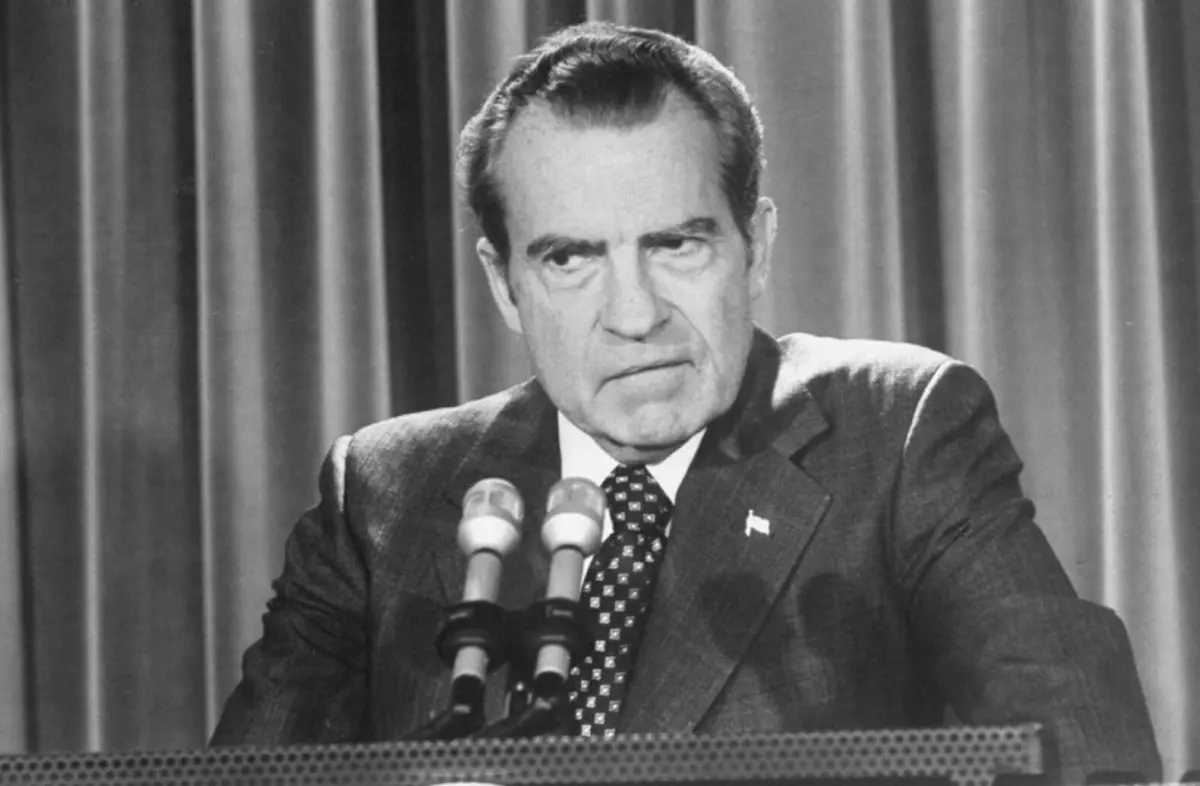
As the political landscape looks toward a post-Donald Trump horizon, the architects and beneficiaries of the Make America Great Again (MAGA) movement face a monumental existential crisis. To retain their grip on the Grand Old Party (GOP) and shield themselves from future electoral reckonings, right-wing strategists, media figures, and elected officials have embarked on an extraordinary ideological rescue mission. Their unlikely vehicle for this historical rehabilitation? The 37th president of the United States, Richard Milhous Nixon.
Once universally acknowledged as the modern benchmark for executive corruption and abuse of power, Nixon is undergoing a radical, state-sanctioned and media-driven reinvention. Across social media platforms, through cultural artifacts, and via high-level federal reviews, the Watergate scandal is being systematically reframed not as a constitutional crisis triggered by presidential lawbreaking, but as the original casualty of the "deep state"—a precursor to the modern "lawfare" allegedly deployed against Donald Trump.
This calculated historical revisionism is far more than a passing internet meme or a nostalgic nod to mid-century realpolitik. It serves as an indispensable blueprint for the future of the American right. By rewriting the legacy of Watergate, ambitious Republican leaders—most notably Vice President JD Vance—are laying the intellectual and political groundwork necessary to excuse their own complicity in Trump-era norm-shattering. If Nixon was merely the first victim of a hostile administrative state, then Trump’s actions, and the unyielding loyalty demanded of his followers, can be recast as righteous resistance.
However, this high-stakes narrative gambit faces severe friction. While right-wing think tanks, podcasters, and institutional actors attempt to codify the "unitary executive" theory and normalize near-total presidential immunity, the broader American electorate is increasingly waking up to the structural damage inflicted upon democratic institutions. As the air slowly exits the balloon of the populist-conservative coalition, the GOP’s reliance on historical revisionism may prove to be a fragile shield against accountability.
Detailed Chronology: From Watergate to "Nixonmaxxing"
To understand how Richard Nixon evolved from a disgraced executive into a digital icon for Generation Z conservatives, one must trace a multi-decade arc of right-wing institutional strategizing and modern media manipulation.
The Post-Watergate Backlash and the Birth of the Unitary Executive
In the immediate aftermath of Nixon’s August 1974 resignation—spurred by the revelation of the Oval Office audio tapes and the realization that he had lost his Senate majority—Congress enacted a wave of reforms designed to curb unchecked executive power. Campaign finance laws were tightened, intelligence agencies faced stricter congressional oversight, and the independence of the Department of Justice was reinforced.
However, these developments were met with profound bitterness within conservative intellectual circles. Right-wing think tanks, smarting from what they perceived as a partisan coup executed by hostile bureaucrats, the media, and congressional investigators, began cultivating an alternative legal philosophy. Born from these ideological corridors was the aggressive iteration of the "unitary executive theory"—the proposition that Article II of the Constitution vests absolute, unfettered control of the entire executive branch solely in the president, theoretically placing the commander-in-chief beyond the reach of standard statutory constraints.
The Evolution of Presidential Accountability
- 1982: The Supreme Court rules in Nixon v. Fitzgerald, granting presidents absolute immunity from civil damages stemming from official actions taken while in office.
- The 1980s–1990s: Conservative legal scholars steadily advance expansionist views of executive authority, setting the stage for future judicial battles over administrative state power.
- July 2024: The Supreme Court issues its landmark ruling in Trump v. United States, establishing near-total criminal immunity for official acts committed by a president—a massive legal victory that crowns decades of right-wing legal theory.
- July 2026: The Wall Street Journal reports a surge of interest in Richard Nixon among young conservatives, a phenomenon dubbed "Nixonmaxxing," characterized by viral social media content and retro political merchandise.
- August 2026: Reports emerge that the Department of Justice is officially reviewing historical Watergate prosecutions, prompted by conspiracy theories alleging that Nixon was the victim of early-era "lawfare."
The Digital Rehabilitation Campaign
The modern resurgence of Nixon is not merely an organic cultural shift; it is the product of sustained public relations campaigns. In 2018, leveraging the 50th anniversary of his presidency, The Nixon Foundation began deploying short-form video content across platforms like TikTok and Instagram. By pairing iconic archival footage—such as Nixon’s defensive assertion, "I am not a crook"—with contemporary gangster rap audio and dramatic cultural touchstones like Mad Men, the foundation helped humanize and mythologize a deeply controversial figure.
By 2026, this digital normalization had entered mainstream right-wing commentary. Prominent media personalities, including Joe Rogan and Tucker Carlson, began amplifying revisionist takes on Watergate, openly characterizing the scandal as a setup orchestrated by entrenched institutional adversaries.
Supporting Context & Metrics: The Mechanics of Revisionism
The rehabilitation of the 37th president relies heavily on drawing direct conceptual and political parallels between the downfall of Nixon and the modern legal challenges faced by Donald Trump. This intellectual bridge-building is vital for maintaining ideological cohesion within the MAGA base.
The Numbers Behind the Base
Public opinion data from the Watergate era reveals a striking historical precedent for the unwavering loyalty observed in modern politics. Even as Richard Nixon’s overall national public approval rating plummeted to a dismal 24% during the final week of his presidency, 62% of self-identified Republicans still maintained their support for him.
This resilient partisan bedrock mirrors the dynamics of the Trump era, where Republican voters and lawmakers repeatedly stood by the 45th president through two historic impeachment trials and numerous criminal indictments. The primary catalyst for this enduring loyalty lies in the development of a robust right-wing media ecosystem—an infrastructure that Nixon crucially lacked in 1974, but which has since been perfected to shield modern conservative leaders from accountability by popularizing narratives of a partisan "deep state."
Legal Milestones and Departmental Reviews
The revisionist project has recently infiltrated federal institutions themselves. According to The Wall Street Journal, the Justice Department undertook a formal review of historical Watergate records. This inquiry was heavily influenced by Geoff Shepard, a former Nixon administration aide turned conspiracy theorist, who delivered a comprehensive presentation at DOJ headquarters titled "Watergate As Lawfare."
Shepard’s thesis attempts to rebrand the Watergate special prosecutors as partisan actors who utilized dirty tricks to unseat a duly elected president—an argument designed to directly validate contemporary conservative grievances regarding federal law enforcement and the judicial system.
Official Statements and Political Rhetoric
The ideological alignment between Nixonian governance and the future of the MAGA movement was laid bare during high-profile public appearances by key administration figures.
In June, Vice President JD Vance spoke at the Richard Nixon Presidential Library and Museum while promoting his bestselling memoir. Drawing explicit parallels between his own trajectory and that of Nixon, Vance remarked:
"Young senator, vice president, writes some bestselling books, is hated by the media… I’ve always liked Richard Nixon."
Praising Nixon’s foreign policy achievements—such as opening relations with China and navigating the Vietnam peace process—Vance minimized the gravity of the constitutional crisis that brought him down. He explicitly dismissed the historical significance of the Watergate hearings, asserting:
"If Watergate happened tomorrow, it would be a 12-hour news story. The idea that it would have taken down a presidency is crazy."
This rhetoric directly echoes Nixon’s own infamous post-presidency declaration during his televised interviews with British journalist David Frost, where he famously asserted:
"When the president does it, it’s not illegal."
While Nixon subsequently attempted to temper this authoritarian gaffe in a 2,500-word essay for The Washington Post—insisting that the executive is not technically above the law while simultaneously arguing that the nation’s leader must be granted "some faith in his judgment" and "room for maneuver"—the core premise remains unchanged. The modern right has weaponized this philosophical justification to enshrine expansive executive powers into constitutional law, culminating in the immunity jurisprudence that protects contemporary leaders.
Future Outlook: Navigating the Post-Trump Era
As the political horizon shifts past the Trump administration, the Republican Party faces a stark reckoning. The populist energy that fueled the MAGA movement cannot be sustained indefinitely on grievance politics and historical revisionism alone.
Ambitious GOP figures, including Vice President Vance and other prospective 2028 presidential contenders, recognize that their political survival depends entirely on their ability to justify their past complicity in norm-breaking behavior. If they cannot successfully convince the electorate that Trump’s legal battles and executive overreaches were righteous acts of resistance against a corrupt administrative state, they risk facing a severe voter backlash once the populist fever breaks.
The strategy of "Nixonmaxxing" and reframing Watergate as the genesis of the deep state is designed to construct a protective narrative cocoon. By normalizing the abuse of presidential power as a historical necessity forced upon conservatives by hostile institutional forces, the architects of this movement hope to preserve the MAGA framework long after its original standard-bearer has left the scene.
Yet, this gambit carries profound risks. Attempting to rewrite the history of America’s most definitive constitutional crisis may temporarily satisfy the party’s die-hard base, but it alienates the broader coalition of independent and moderate voters necessary to win national elections. As the institutional air slowly leaks out of the populist movement, the GOP’s reliance on historical revisionism may ultimately reveal itself not as a bridge to a durable majority, but as a desperate attempt to outrun an inevitable day of political reckoning.