

Executive Overview
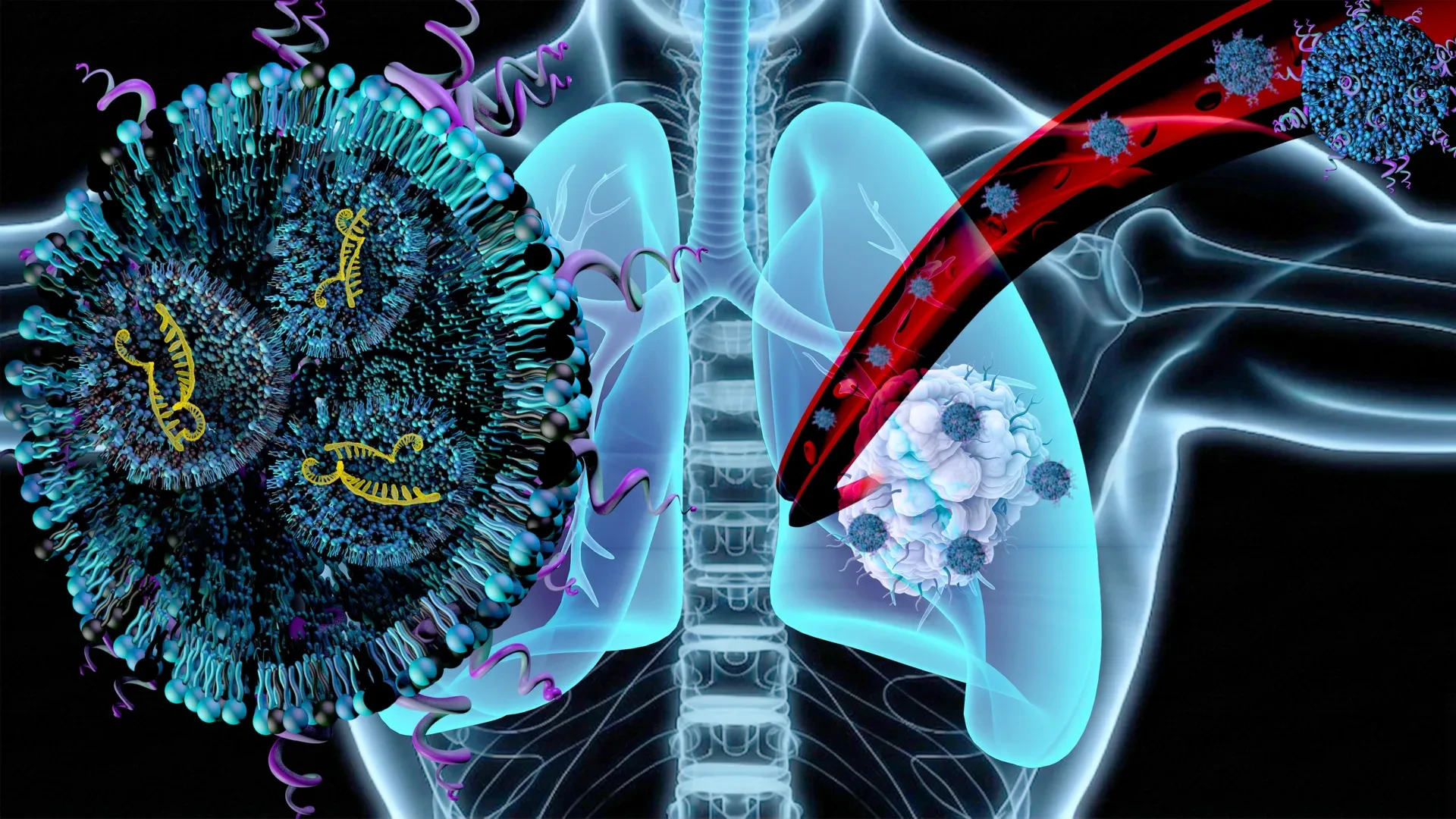
In a significant advance for targeted oncology and biotherapeutic delivery, researchers at the Oregon State University (OSU) College of Pharmacy have engineered an experimental nanotherapy capable of simultaneously combatting lung cancer and its debilitating systemic complication, cancer cachexia. Published in the Journal of Controlled Release, the breakthrough details a novel lipid nanoparticle (LNP) delivery system designed to transport therapeutic messenger RNA (mRNA) directly to pulmonary tumors via the bloodstream.
Led by researchers Oleh Taratula and Yoon Tae Goo, the scientific team successfully utilized these specialized nanocarriers to deliver follistatin mRNA in preclinical mouse models. The genetic payload instructs tumor-infiltrated cells to synthesize follistatin—a specialized protein known to suppress cancer cell proliferation while simultaneously stimulating the hypertrophy and development of skeletal muscle tissue.
This dual-action approach directly confronts two of the most formidable obstacles in modern oncology. Systemic administration of mRNA therapies has historically been bottlenecked by biological clearance mechanisms, with conventional lipid nanoparticles predominantly accumulating in the liver rather than reaching distal tumor sites. By harnessing a natural biochemical interaction involving blood serum proteins and cellular receptors, the OSU team bypassed this delivery barrier, achieving a roughly 2.5-fold greater reduction in tumor burden compared to standard LNP formulations.
Simultaneously, the intervention addresses cancer cachexia, a wasting syndrome characterized by profound, involuntary loss of skeletal muscle and adipose tissue. Accounting for up to 30% of all cancer-related deaths, cachexia often resists conventional nutritional support and significantly impairs a patient’s tolerance to aggressive chemotherapy and radiation. By neutralizing the tumor while reversing muscle atrophy without observed adverse side effects, this dual-purpose nanotherapeutic heralds a promising new paradigm in comprehensive cancer care. Although the research remains strictly in the preclinical phase, the findings lay a robust foundation for future translational investigations and eventual human clinical trials.
Detailed Chronology of the Research
The path toward this dual-action therapeutic began with identifying a persistent logistical failure in nanomedicine: the systemic delivery of genetic payloads to non-hepatic tissues. For years, scientists attempting to leverage mRNA for pulmonary malignancies confronted a biological wall. When introduced intravenously, conventional lipid nanoparticles—fatty acid assemblies utilized to shield fragile genetic material from enzymatic degradation in the bloodstream—invariably sequestered in the liver.
To overcome this hurdle, the OSU researchers initiated a granular investigation into how lipid nanoparticles interact with circulating blood components. Their inquiry centered on vitronectin, a glycoprotein naturally abundant in blood serum. Through empirical observation, the team discovered that their custom-engineered LNPs exhibited a high affinity for binding vitronectin upon entering the circulatory system.
This protein-corona formation proved to be the key to targeted cellular homing. Once coated with vitronectin, the nanoparticles were actively directed toward lung cancer cells through precise molecular binding interactions with integrin receptors—transmembrane proteins that are frequently overexpressed on the surface of pulmonary tumors. Because integrins act as structural and signaling bridges between cells and their extracellular environments, they served as an ideal homing beacon, anchoring the LNPs precisely where intervention was required.
Upon docking with the tumor cells, the nanoparticles underwent cellular internalization, releasing their cargo of follistatin messenger RNA directly into the intracellular environment. The host cells successfully translated the mRNA instructions, producing high levels of the follistatin protein locally. This biochemical cascade initiated a two-pronged counteroffensive: suppressing the proliferative signaling pathways within the tumor mass while simultaneously signaling surrounding or at-risk muscle tissues to initiate growth and repair protocols.
Supporting Context & Metrics: The Dual Threat of Lung Cancer and Cachexia
To fully appreciate the scope of the Oregon State University research, it is essential to examine the epidemiological weight of lung cancer and the devastating physiological mechanics of cancer cachexia.
The Epidemiological Landscape of Lung Cancer
According to data compiled by the American Cancer Society, lung cancer remains one of the most pervasive and lethal malignancies in the United States. Excluding non-melanoma skin cancers, it ranks as the third most common cancer overall. It stands as the leading cause of cancer-related mortality nationwide, surpassing breast, prostate, and colorectal cancers in total lives claimed annually.
Current health projections estimate that approximately 230,000 new cases of lung cancer will be diagnosed within the United States this year alone. Compounding this incidence rate is the grim mortality metric: roughly 125,000 individuals are projected to succumb to the disease over the same timeframe. Statistically, approximately 5% of the general population will receive a lung cancer diagnosis during their lifetime, with tobacco smokers facing a drastically escalated statistical risk. Because early-stage lung cancer frequently presents with subtle or absent symptoms, a vast majority of patients are diagnosed at advanced, metastatic stages, underscoring the critical need for systemic therapies that can navigate the circulatory system to hunt down disseminated cancer cells.
Understanding Cancer Cachexia
While eradicating the primary tumor is the foundational goal of oncology, systemic comorbidities frequently dictate patient survivability and quality of life. Among these, cancer cachexia represents one of the most distressing and lethal syndromes.
Cachexia is fundamentally distinct from standard caloric-deficit weight loss. It is a multifactorial metabolic syndrome characterized by an ongoing loss of skeletal muscle mass—with or without the loss of fat mass—that cannot be fully reversed by conventional nutritional support. Even when patients consume adequate calories and protein, their hyper-metabolic state and systemic inflammation drive relentless tissue catabolism.
The clinical consequences are severe. Muscle wasting compromises respiratory function, diminishes physical mobility, and induces profound fatigue. Most critically, cachexia reduces a patient’s physiological reserve, rendering them incapable of enduring standard-of-care chemotherapeutic regimens or surgical interventions. Medical literature indicates that cachexia is directly responsible for up to 30% of all cancer-related deaths, either as the primary cause of mortality or as the compounding factor that renders the body too weak to fight the underlying malignancy.
By integrating follistatin delivery into the nanotherapeutic framework, the OSU researchers addressed this physiological emergency. Follistatin is a naturally occurring glycoprotein known primarily as an antagonist of myostatin, a member of the transforming growth factor-beta (TGF-beta) superfamily that acts as a negative regulator of skeletal muscle growth. By neutralizing myostatin and related proteins, follistatin removes the biological brakes on muscle hypertrophy, offering a direct pharmaceutical mechanism to reverse cachexia while simultaneously battling the tumor burden that triggered the wasting state in the first place.
Official Statements and Research Insights
The development of this advanced nanotherapy represents a collaborative, multidisciplinary achievement involving multiple departments within the OSU College of Pharmacy, alongside strategic external partnerships. Lead researchers have articulated both the technical breakthroughs achieved and the cautious optimism governing the next phases of development.
Oleh Taratula, co-lead author of the study and professor at the OSU College of Pharmacy, emphasized the magnitude of overcoming systemic mRNA delivery barriers:
"Systemic delivery of mRNA therapeutics to lung cancer tumors has been a significant challenge in our field, and this work offers a promising solution. Compared to conventional LNPs, which tend to accumulate in the liver upon systemic administration, our approach achieved an approximately 2.5-fold greater reduction in tumor burden."
Addressing the dual-threat nature of the disease, Taratula highlighted the unique pharmacological profile of the engineered nanocarriers:
"By loading our LNPs with follistatin mRNA, we developed a therapy that simultaneously targets lung cancer and cancer cachexia, all without adverse effects. More preclinical work is necessary, but we’re very encouraged by what we’ve seen so far and hope that testing in humans is down the road."
Elaborating on the mechanics of cellular targeting, Taratula pointed to the unexpected advantage discovered during blood-serum analysis:
"We found that these LNPs bind vitronectin in the bloodstream, which then directs them to lung cancer tumors by interacting with integrin receptors that are overexpressed on the tumor surface."
The research team also featured significant contributions from co-lead Yoon Tae Goo, alongside academic colleagues Vladislav Grigoriev, Tetiana Korzun, Ammar Salem, Kongbrailatpam Shitaljit Sharma, Prem Singh, Chrissa Kioussi, and Olena Taratula. The study further benefited from cross-sector collaboration with Daniel Marks of Endevica Bio, a specialized biotechnology firm focused on the development of innovative peptide and metabolic therapies.
Financial and institutional backing for the project was provided by prestigious federal and international science organizations, underscoring the high-priority nature of the research within the broader scientific community. Support was officially rendered by:
- The National Cancer Institute (NCI)
- The Eunice Kennedy Shriver National Institute of Child Health and Human Development (NICHD)
- The National Research Foundation of Korea (NRFK)
Future Outlook and Translation Path to Human Trials
Despite the overwhelmingly positive preclinical outcomes observed in murine models, the research team and independent medical observers maintain a rigorous, methodologically sound outlook regarding the timeline for clinical application.
At present, the data is strictly preclinical. Before the formulation can be cleared for human clinical trials, a comprehensive battery of additional safety, pharmacokinetic, and pharmacodynamic studies must be executed. Regulatory bodies such as the U.S. Food and Drug Administration (FDA) will require exhaustive toxicological profiles to ensure that the lipid nanoparticles do not induce unintended immune responses, off-target accumulation, or cumulative tissue toxicity over extended dosing schedules.
Key milestones for the immediate research horizon include:
- Expanded Preclinical Validation: Replicating the therapeutic efficacy of the vitronectin-binding LNPs in larger animal models to better simulate human vascular dynamics and physiological scale.
- Dosing Optimization: Refining the concentration of follistatin mRNA loaded into the lipid carriers to establish the optimal therapeutic index—maximizing tumor suppression and muscle preservation while minimizing systemic exposure risks.
- Manufacturability and Scale-Up: Developing standardized, Good Manufacturing Practice (GMP)-compliant protocols for producing the lipid nanoparticles at scale to prepare for investigational new drug (IND) applications.
- Clinical Trial Design: Drafting phase I clinical trial protocols to evaluate safety, dosage tolerance, and initial efficacy parameters in human patients suffering from advanced lung cancer complicated by cachexia.
Should these developmental steps proceed successfully, this OSU-pioneered platform could fundamentally reshape how systemic oncology drugs are engineered. By proving that endogenous blood proteins like vitronectin can be co-opted to act as biological GPS systems for synthetic nanocarriers, the research opens new avenues for treating not only lung cancer, but a wide spectrum of metastatic solid tumors that have historically eluded targeted genetic medicines.