

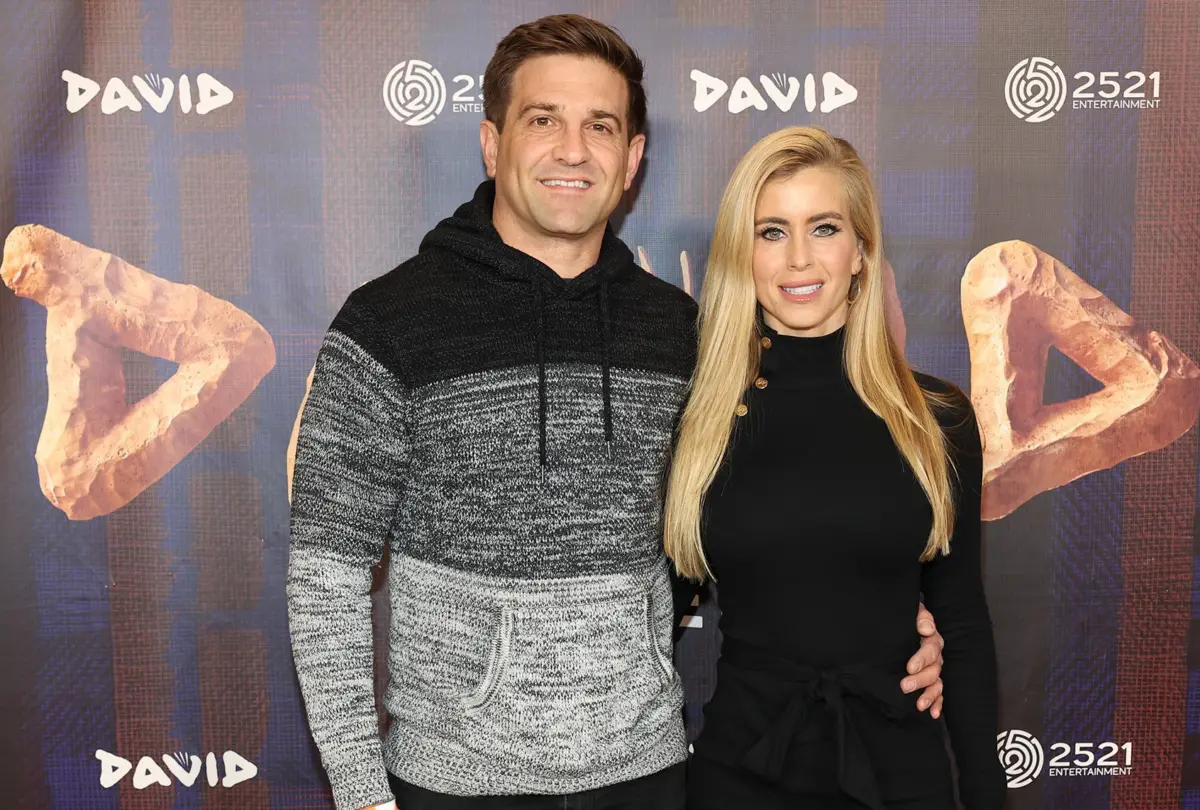
WASHINGTON — In a political landscape defined by perpetual turbulence and high-stakes media warfare, the White House has announced a major transition in its communications department. Conservative commentator, public relations strategist, and Trump Media & Technology Group insider Katie Zacharia has been tapped to serve as the next White House Press Secretary.
Zacharia, 42, steps into the role following the high-profile departure of Karoline Leavitt. Leavitt—who made history as the youngest person ever to hold the prestigious and grueling position at just 28 years old—resigned from her post in August. While initial rumors swirling through Washington attempted to tie Leavitt’s sudden exit to an elaborate presidential travel decoy stunt during a NATO summit in Turkey, sources close to the administration confirmed her desire to prioritize her young family ultimately drove the decision. Far from retreating into the quiet life of a traditional homemaker, Leavitt has already pivoted to the private sector, securing an upcoming role as an on-air contributor for Fox News starting next month.
The selection of Zacharia underscores President Donald Trump’s continued reliance on loyalists forged in the crucible of right-wing media and the MAGA ecosystem. Yet, Zacharia assumes command of the White House podium at an exceptionally precarious political moment. The administration faces an uphill battle heading into the November midterms, weighed down by historically low approval ratings, stubbornly high energy prices, and deep entanglement in an ongoing military conflict with Iran.
With a background steeped in conservative media, a brief and controversial stint at the Department of Homeland Security (DHS), and the personal endorsement of Donald Trump himself, Zacharia’s appointment signals that the administration has no intention of softening its confrontational posture toward the mainstream press.
Detailed Chronology: From Leavitt’s Exit to Zacharia’s Arrival
To fully understand the weight of Katie Zacharia’s new appointment, it is necessary to examine the turbulent sequence of events that emptied the White House press room over the summer and autumn of 2026.
The Leavitt Era and the Turkey Decoy Controversy
Karoline Leavitt’s tenure as White House Press Secretary was nothing if not aggressive. Embracing a sharp, uncompromising media strategy, she routinely dismissed political opponents as "terrorists," deployed "your mom" baroquely in public discourse, and orchestrated the infamous White House "media offender" list. However, her aggressive defense of the administration was periodically overshadowed by internal administration drama.
In July 2026, a diplomatic trip to a NATO summit in Turkey erupted into a logistical farce when President Trump executed a dramatic security ruse. Reportedly seeking to evade a perceived Iranian security threat, Trump allegedly abandoned the former Air Force One and hid inside a catering truck before boarding a decoy plane (a C-32A transport). Traveling with him on the decoy were loyalist aides like Natalie Harp, body man Walt Nauta, and Defense Secretary Pete Hegseth.
Meanwhile, unaware of the operational switch, high-ranking officials including Secretary of State Marco Rubio, Treasury Secretary Scott Bessent, White House Deputy Chief of Staff Stephen Miller, and the entire White House press pool boarded the actual primary aircraft. When The Washington Post and The New York Times exposed the disappearing act, rumors immediately spread that Leavitt had resigned in protest or fallout from the debacle. Although evidence indicates Leavitt was not even on the trip, the timing of her August resignation—coming mere days after the scandal broke—fueled weeks of speculation before she officially announced her transition to Fox News.
The Search for a Successor and Zacharia’s Rapid Rise
For nearly two months, the White House press secretary role remained vacant in an acting capacity, leaving reporters to wonder who could possibly match Leavitt’s fierce brand of partisan combat. According to reports from CNN, President Trump personally sought Leavitt’s counsel before making his final choice.
The nod ultimately went to Katie Zacharia. A veteran public relations liaison and frequent guest on conservative networks like Fox News and Newsmax, Zacharia brings deep institutional ties to the MAGA media apparatus. Most recently, she served as a communications advisor for the Trump Media & Technology Group, the parent company of Truth Social.
However, her return to the executive branch is not without baggage. Earlier in the year, Zacharia experienced a remarkably brief tenure as a deputy assistant secretary of Homeland Security for Public Affairs, a post she assumed in February 2026 before abruptly resigning just weeks later in March.
Supporting Context & Metrics: Navigating a Political Minefield
Zacharia’s appointment comes at a moment of profound vulnerability for the Trump administration. As she steps behind the White House podium, she inherits a complex matrix of domestic and foreign policy crises that threaten the Republican Party’s electoral prospects in the upcoming November midterms.
Economic and Foreign Policy Headwinds
- Approval Ratings: The administration is currently grappling with record-low national approval ratings, driven largely by public frustration over cost-of-living pressures.
- Energy Costs: American households continue to face record-high energy prices, severely undercutting the administration’s economic talking points.
- Foreign Entanglements: The ongoing U.S. military involvement in Iran has deeply polarized the electorate, creating a daily barrage of difficult national security questions for the press office to field.
The Shadow of DHS and the Noem Legacy
Zacharia’s brief history at the Department of Homeland Security introduces additional political friction. Her rapid departure from DHS in March was reportedly precipitated by her close association with Corey Lewandowski, the then-chief of staff to Homeland Security Secretary Kristi Noem. At the time, Lewandowski and Noem faced intense scrutiny over allegations of a romantic affair.
Secretary Noem herself became a lightning rod for national scandal, earning the satirical moniker "Concentration Camp Barbie" amid aggressive, high-profile immigration sieges across major American cities. Public outrage boiled over when federal ICE officers shot and killed two protesters, Renée Good and Alex Pretti, in Minneapolis.
The resulting fallout forced Noem to testify before Congress regarding these fatalities, as well as separate allegations that she misused taxpayer funds on television advertisements and private luxury jets. Trump ultimately removed Noem from her cabinet post, reassigning her as a "special envoy" for the Shield of the Americas before installing Markwayne Mullin to head DHS. Noem subsequently filed for divorce in late September, leaving a trail of institutional wreckage that Zacharia’s brief stint at the agency closely brushed against.
Official Statements: The Truth Social Announcement
President Trump formally announced his selection of Katie Zacharia on Friday via a statement posted to his preferred communications platform, Truth Social. Highlighting her absolute loyalty to the movement, Trump wrote:
"She has an unblemished record of support, and has been a loyal and brilliant supporter, right from the beginning. She is, likewise, a devoted fan and member of MAGA! I am confident that Katie will deliver strong results for our country as the next White House Press Secretary, as she has the respect of, and will work fantastically with, the media, the American People, and my administration."
The glowing endorsement signals that Trump expects Zacharia to maintain the combative, unyielding style that characterized Leavitt’s tenure, while leveraging her extensive media background to effectively manage hostile questioning from the White House press corps.
Zacharia, who is married to film producer Tyler Zacharia and shares four children with him, enters the role with a clear understanding of the digital-first, high-visibility demands of modern political communication.
Future Outlook: What Zacharia’s Appointment Means for the Midterms
As Katie Zacharia prepares to take her place at the podium, political analysts are closely watching to see how her operational style differs—or aligns—with her predecessor’s.
With the November midterm elections rapidly approaching, the White House press secretary will serve as the chief architect of the administration’s defensive messaging. Zacharia’s background within the Trump Media & Technology Group and her extensive experience as a conservative media commentator suggest she will lean heavily into digital media spaces, alternative platforms, and direct-to-consumer messaging rather than relying solely on traditional White House press briefings.
However, the challenges before her are formidable. Defending an administration grappling with low approval ratings, foreign military intervention, and lingering questions from past agency scandals will test even her considerable public relations skills. Whether Zacharia can successfully shift the national narrative and unite a fractured electorate—or whether she will simply double down on the fierce partisan combat that defined the Leavitt era—will become clear in the explosive weeks leading up to the ballot box.