

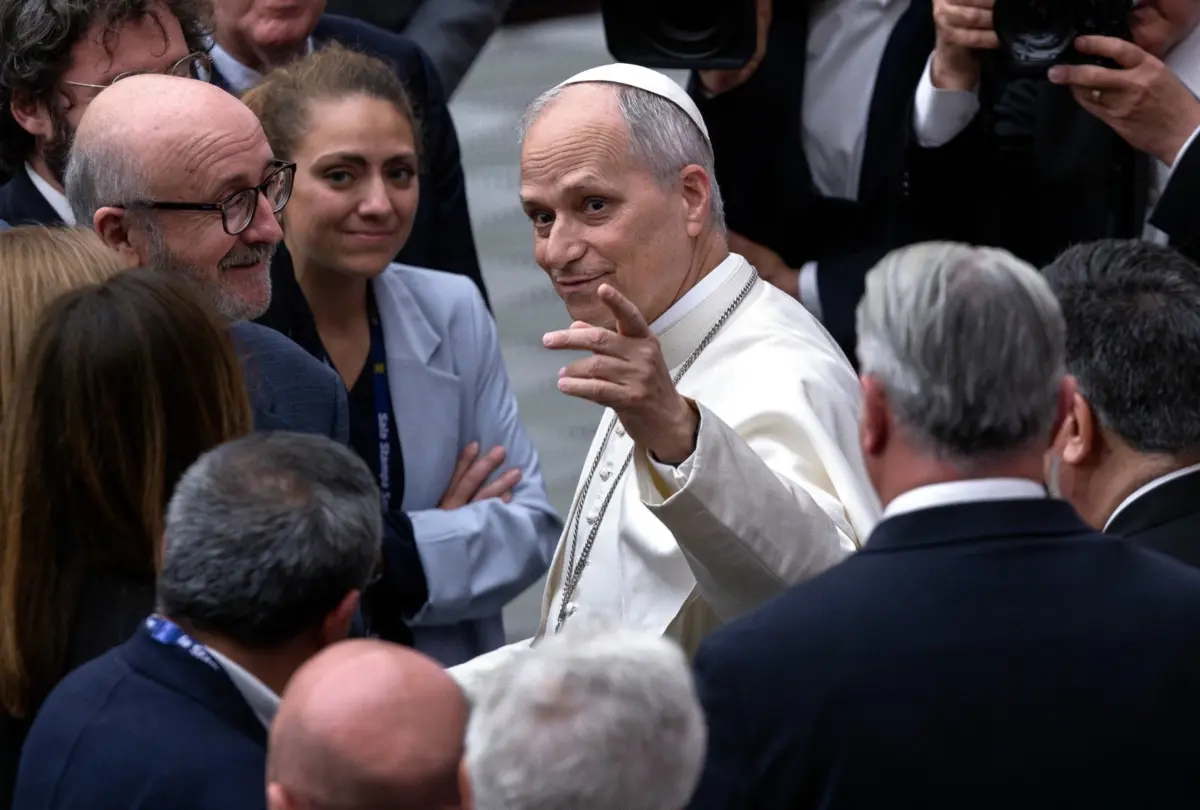
VATICAN CITY — In a development that has sent ripples of concern across the global Catholic community and the geopolitical landscape alike, the Vatican announced on Tuesday that 71-year-old Pope Leo XIV has been diagnosed with lung cancer. The diagnosis follows a major surgical procedure earlier this week—marking the first significant medical intervention of his pontificate—during which doctors successfully removed a localized malignant nodule and the lower lobe of his right lung.
While the Holy See has emphasized that the pontiff experienced no immediate post-operative complications, the revelation of a cancer diagnosis at the highest level of the Roman Catholic Church introduces profound questions regarding the health and future stability of the papacy. Coming barely a year and a half into his historic tenure as the first American pontiff, Pope Leo’s health crisis unfolds against a backdrop of intense international friction, particularly involving his vocal opposition to U.S. foreign policy and domestic immigration stances under the Trump administration.
Executive Overview
The medical timeline released by Vatican officials indicates that the condition was discovered serendipitously during a routine health checkup. Physicians identified a small nodule in the pontiff’s lung, which subsequent biopsies and pathological analysis confirmed to be adenocarcinoma, a common form of non-small-cell lung cancer.
Acting swiftly to prevent the spread of the disease, a specialized surgical team performed a targeted resection, removing both the cancerous mass and the lower lobe of the pope’s right lung. Medical experts outside the Vatican have expressed cautious optimism regarding the prognosis, highlighting that early detection remains the single most critical factor in treating thoracic malignancies of this nature. Nevertheless, the physical toll of major pulmonary surgery on a 71-year-old world leader cannot be understated, prompting an inevitable reassessment of the pope’s demanding travel, diplomatic, and pastoral schedules in the months to come.
Detailed Chronology of Events
The Discovery and Diagnostic Phase
The sequence of events leading to Tuesday’s announcement began during a scheduled, routine medical evaluation for the pontiff. Given the demanding physical and psychological rigors of the papacy, the Vatican’s health services routinely monitor the physical well-being of the Holy Father. During this comprehensive checkup, diagnostic imaging revealed a suspicious pulmonary nodule in the right lung of Pope Leo XIV.
Medical specialists immediately ordered further diagnostic testing to determine the nature of the lesion. Minimally invasive biopsies confirmed the presence of adenocarcinoma, a malignant epithelial tumor originating in glandular structures of the lung. While non-small-cell lung cancer (NSCLC) accounts for the vast majority of lung cancer diagnoses globally, its detection in a sitting pontiff immediately elevated the urgency of medical interventions.
The Surgical Intervention
Given the localized nature of the nodule and the absence of apparent metastasis during initial staging evaluations, the pontiff’s medical team recommended surgical resection as the primary curative strategy. Earlier this week, Pope Leo XIV was admitted to a specialized medical facility equipped for thoracic oncology.
The procedure involved a lobectomy—specifically, the surgical removal of the lower lobe of the right lung—alongside the complete excision of the localized adenocarcinoma. According to official bulletins issued by the Holy See Press Office, the operation proceeded without intraoperative complications. Following the procedure, the pontiff was transferred to a recovery ward, where he successfully regained consciousness, experienced an uneventful immediate recovery phase, and was soon able to return to his residential quarters to begin the arduous rehabilitation process.
Medical Perspectives and Oncological Prognosis
In the wake of the Vatican’s disclosures, international medical experts have weighed in on the feasibility of recovery following major pulmonary resections in septuagenarians.
Dr. Lorenzo Spaggiari, a renowned thoracic surgical oncologist at the European Institute of Oncology in Milan who is not directly involved in the pope’s medical care, offered an encouraging perspective in an interview with The New York Times.
"You can heal from a lung tumor," Dr. Spaggiari stated, emphasizing that advanced surgical techniques and early intervention have drastically transformed the prognosis for patients with localized non-small-cell lung cancer. "The important thing is to catch it at an initial stage."
Dr. Spaggiari noted that modern thoracic surgery allows many patients to regain a remarkable degree of physical endurance following the removal of a lung lobe. To illustrate the potential for post-operative recovery, he pointed to clinical cases where patients have resumed strenuous athletic endeavors, such as distance running, post-lobectomy.
However, geriatric oncologists caution that while biological age does not strictly preclude successful recovery, the pace of rehabilitation for a 71-year-old patient requires careful physiological management. Pulmonary rehabilitation, respiratory therapy, and close monitoring for potential post-surgical complications—such as persistent air leaks, infection, or cardiac arrhythmias—will form the cornerstone of Pope Leo XIV’s recovery protocol over the coming weeks.
Official Statements and Vatican Communications
The Holy See has maintained a policy of relative transparency regarding the pope’s health, releasing detailed bulletins through the official Vatican news portal, Vatican News. The primary statement, published on the afternoon of October 13, 2026, outlined the pathological findings and confirmed the completion of the pulmonary resection.
"The Holy See announces that following routine medical evaluations, a pulmonary nodule was identified and surgically addressed earlier this week," the official communique read. "Histological examination confirmed a diagnosis of adenocarcinoma. The lower lobe of the right lung was successfully resected. His Holiness experienced no surgical complications and has returned to his room, where he is currently recuperating under the care of his medical team."
The measured tone of the Vatican’s communications is designed to reassure the global faithful while managing expectations regarding the pace of the pontiff’s convalescence. Vatican officials have not yet released a definitive timeline for when Pope Leo XIV will resume public audiences, though insiders suggest that a modified schedule prioritizing rest is inevitable for the remainder of the autumn liturgical calendar.
Broader Context: A Pontificate Defined by Geopolitical Friction
The health crisis facing Pope Leo XIV occurs against a backdrop of an unusually turbulent and politically charged pontificate. Elected in May 2025, Leo made history as the first American-born pontiff to lead the Roman Catholic Church. From the outset, his tenure has been characterized by an unyielding moral voice on global issues, frequently placing him at direct odds with major geopolitical powers, including the United States government.
Clashes with the Trump Administration
In the short span of a year and a half, Pope Leo has engaged in a series of high-profile diplomatic and rhetorical clashes with members of the Trump administration. His outspoken criticisms of U.S. foreign policy—particularly regarding military escalations and the war against Iran—have drawn sharp rebukes from American officials.
Tensions reached a boiling point earlier this year when Pentagon officials and administration surrogates publicly criticized the pontiff’s positions on crime, justice, and immigration. President Donald Trump himself went so far as to publicly accuse Pope Leo of being "soft on crime," a rare and pointed attack by an American president on the head of the Catholic Church.
Moral Imperatives on Immigration and Peace
Undeterred by political pressure, Pope Leo has used his global platform to champion humanitarian causes, most notably the ethical treatment of refugees and migrants. Echoing traditional Catholic social teaching, the pontiff has repeatedly urged Western nations to "welcome the stranger" with compassion, directly challenging the restrictive border policies championed by nationalist and conservative leaders worldwide.
Observers note that the intersection of the pope’s progressive moral agenda and his newly emergent health challenges creates a complex dynamic for the Vatican. While a period of enforced physical rest may temporarily lower the pontiff’s public visibility, history suggests that papal illness often amplifies the symbolic weight of a leader’s enduring moral authority.
Future Outlook: Navigating the Intersection of Health and Governance
As Pope Leo XIV embarks on his recovery, the Vatican faces a dual challenge: ensuring the complete physical restoration of the Bishop of Rome while maintaining the administrative governance of a global institution comprising over 1.4 billion Catholics.
Pastoral Responsibilities and Delegation
In the immediate term, routine Vatican operations will continue under the direction of the Secretariat of State, led by the Cardinal Secretary of State, in consultation with the heads of the various Dicasteries. However, major liturgical events, international apostolic journeys, and high-level diplomatic engagements will likely be postponed or delegated to trusted curial officials depending on the speed of the pontiff’s convalescence.
Global Reactions and Prayers
Cathedrals and parish churches around the world have begun organizing special prayer vigils and Masses for the health and recovery of Pope Leo XIV. From Rome to New York, faithful and secular observers alike are watching closely as the pontiff confronts the most significant personal challenge of his papacy.
Whether this health crisis will prompt a re-evaluation of his outspoken diplomatic stances remains to be seen. What is certain, however, is that the resilience of Pope Leo XIV—both physically in the operating room and morally on the world stage—will remain a focal point of global attention as he navigates this delicate chapter of his historic pontificate.