

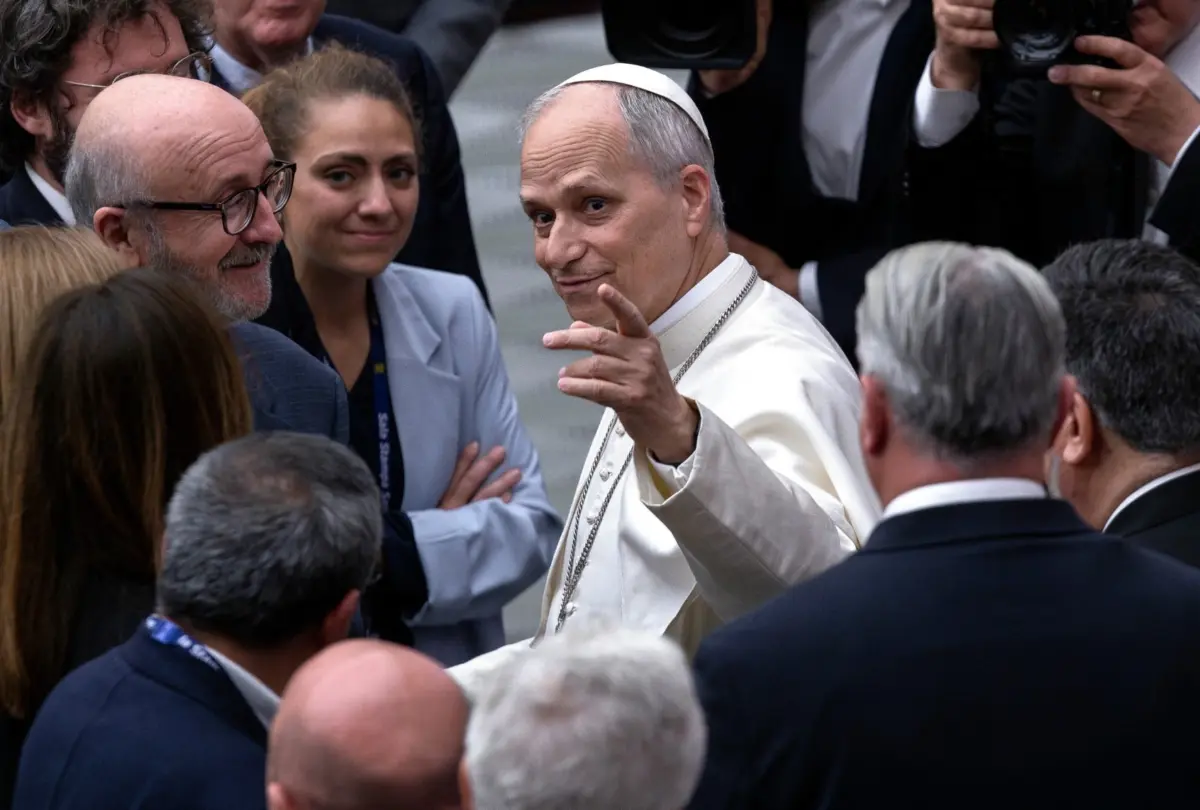
VATICAN CITY — In a medical development that has immediately reverberated across the globe, the Holy See announced on Tuesday that Pope Leo XIV has been diagnosed with lung cancer. The diagnosis follows a major surgical intervention earlier in the week—marking the first significant medical procedure of the 71-year-old pontiff’s papacy.
According to official bulletins released by the Holy Press Office, physicians discovered a small pulmonary nodule during a routine health screening. Subsequent pathological examination identified the growth as adenocarcinoma, a prevalent form of non-small-cell lung cancer. The surgical team successfully excised the malignancy, but the procedure required the removal of the lower lobe of the pope’s right lung.
Despite the invasive nature of the operation, Vatican officials report that the pontiff navigated the procedure without acute surgical complications and has since returned to his residential quarters within the Domus Sanctae Marthae to recuperate.
The revelation introduces an unprecedented layer of complexity to the pontificate of Leo XIV, who was elected in May 2025 as the first American to lead the Roman Catholic Church. Beyond the immediate pastoral and administrative concerns of the Vatican, the diagnosis arrives during a period of intense geopolitical engagement and public friction between the Holy See and the current U.S. presidential administration.
Executive Overview
The disclosure of Pope Leo XIV’s cancer diagnosis represents a critical juncture for the global Catholic Church. At 71 years old, the pontiff faces a formidable health challenge just over a year into his historic tenure.
- The Diagnosis: Adenocarcinoma, a common subtype of non-small-cell lung cancer (NSCLC).
- The Procedure: Surgical resection involving the complete removal of the lower lobe of the right lung.
- Prognosis & Recovery: Medical experts emphasize that early-stage detection significantly improves survival metrics and long-term recovery prospects, though rigorous post-operative monitoring remains mandatory.
- Geopolitical Backdrop: The health crisis coincides with a tense diplomatic climate, marked by vocal disagreements between the Vatican and the Trump administration over U.S. foreign policy, military action in Iran, and domestic immigration enforcement.
Detailed Chronology of Events
The unfolding medical emergency began quietly during routine preventative health evaluations before transitioning rapidly into acute surgical intervention and public disclosure.
Pre-Operative Discovery
During a scheduled medical evaluation in early October 2026, attending physicians identified a localized pulmonary nodule in the right lung of Pope Leo XIV. Advanced diagnostic imaging and subsequent biopsy protocols were initiated to evaluate the cellular composition of the lesion. Medical specialists confirmed the presence of adenocarcinoma—a malignant tumor originating in the glands that line the inside of the airways.
Surgical Intervention
Recognizing the localized nature of the mass and the necessity of proactive treatment, the pope’s medical team scheduled a thoracic surgical procedure earlier in the week. The operation, performed by a specialized team of oncological surgeons, required a lobectomy—specifically, the surgical excision of the lower lobe of the right lung, where the cancerous tissue was concentrated.
Post-Operative Status and Tuesday Disclosure
By Tuesday, post-surgical pathology confirmed the initial findings, prompting the Vatican to issue a formal press statement. The Holy See assured the faithful and the international community that the pontiff experienced no intraoperative or immediate post-operative complications. Following a brief observation period in the intensive care unit, Pope Leo XIV was transferred back to his private suite to begin the rehabilitation process.
Medical Context, Expert Perspectives, and Prognosis
The removal of a lung lobe is a major physiological intervention, particularly for a septuagenarian. However, advancements in thoracic oncology have drastically improved outcomes for patients diagnosed with early-stage non-small-cell lung cancer.
Medical specialists not directly involved in the papal care team have offered cautiously optimistic assessments regarding the pope’s recovery trajectory.
"You can heal from a lung tumor," noted Dr. Lorenzo Spaggiari, a renowned thoracic surgical oncologist at the European Institute of Oncology in Milan, in an interview with The New York Times.
Dr. Spaggiari emphasized that anatomical resection, when performed before metastasis occurs, can yield long-term remission. Highlighting the resilience of patients post-lobectomy, he remarked that active individuals have successfully resumed high-endurance athletic pursuits, such as marathon running, following similar procedures.
"The important thing is to catch it at an initial stage," Dr. Spaggiari added, underscoring the vital role that routine diagnostic screenings played in intercepting the disease before it advanced to systemic stages.
Understanding Adenocarcinoma
Adenocarcinoma is the most common type of lung cancer diagnosed in non-smokers, though it also affects smokers. It typically begins in the outer peripheral areas of the lung tissue, originating in cells that secrete mucus. Because these peripheral tumors often grow without immediately obstructing major airways, early symptoms can be entirely absent, making incidental discovery during routine checkups or unrelated scans a common diagnostic pathway.
Post-operative management for early-stage adenocarcinoma typically involves close radiological surveillance, pulmonary rehabilitation to maximize remaining lung capacity, and, depending on final pathology staging, a determination regarding the utility of adjuvant therapies.
Official Statements and Vatican Protocol
The Vatican’s handling of the health crisis reflects a commitment to transparency while managing the stability of the Holy See. The Holy Press Office released a concise bulletin detailing the medical findings, the nature of the surgery, and the successful post-operative transition.
+-------------------------------------------------------------+
|               HOLY SEE PRESS OFFICE STATEMENT               |
+-------------------------------------------------------------+
| "The Holy See announces that following routine health       |
| evaluations, a pulmonary nodule was detected and diagnosed  |
| as adenocarcinoma. The Holy Father underwent surgical       |
| resection on the lower lobe of the right lung earlier this  |
| week. The procedure concluded without complications, and    |
| the Supreme Pontiff has returned to his residential         |
| quarters to commence the post-operative recovery phase."    |
+-------------------------------------------------------------+
Historically, the Vatican has navigated papal health disclosures with varying degrees of openness. In the modern era, particularly under Popes John Paul II and Francis, the global dissemination of medical updates has become more direct, reflecting the expectations of a hyper-connected international public and the realities of modern media.
Geopolitical Landscape and Tensions with the U.S. Administration
The timing of Pope Leo XIV’s health crisis places his recovery against a backdrop of significant international friction. Since his historic election in May 2025 as the first American pontiff, Leo XIV has cultivated an independent and often assertive moral platform that has frequently brought him into direct conflict with secular political powers, most notably the administration of U.S. President Donald Trump.
Clashes Over Domestic and Foreign Policy
Over the past year and a half, the relationship between the Vatican and Washington has grown increasingly strained. Members of the Trump administration have publicly sparred with the Holy See over divergent philosophies regarding governance, human rights, and international diplomacy.
- The War in Iran: Pope Leo XIV has been an unyielding critic of escalating military conflicts, using his platform to decry military interventions in the Middle East. His outspoken commentary on the Trump administration’s foreign policy maneuvers in Iran has drawn sharp rebukes from U.S. officials and conservative commentators.
- Immigration and Humanitarianism: Central to Leo XIV’s pontificate has been a passionate defense of migrants and refugees. Echoing the themes of his predecessors, he has consistently urged Western nations—including the United States—to "welcome the stranger" with compassion. These appeals have frequently collided with the hardline immigration policies enacted by the White House.
- Rhetorical Escalations: The friction reached notable public heights when President Trump publicly accused the pope of being "soft on crime," a remark that underscored the deep ideological chasm separating the progressive moral priorities of the Vatican from the nationalist agenda of the U.S. executive branch. Pentagon officials and administration surrogates have also repeatedly pushed back against papal critiques, leading to a diplomatic climate characterized by mutual distrust.
Future Outlook: Governance, Continuity, and Recovery
As Pope Leo XIV transitions from acute care to convalescence, questions naturally arise regarding the governance of the universal Church and the pacing of his public engagements.
Administrative Continuity
The Roman Curia operates as a vast, institutional bureaucracy designed to maintain administrative continuity during periods of papal illness or travel. While major public audiences, international apostolic journeys, and high-profile diplomatic meetings will inevitably face rescheduling or cancellation during the initial weeks of recovery, routine governance of the Vatican will proceed under the direction of the Secretariat of State and the heads of the respective Dicasteries.
The Road Ahead
For the global community of 1.4 billion Catholics, the news of the pope’s cancer diagnosis has prompted an outpouring of prayer and solidarity. Medical experts reiterate that while a lobectomy demands a disciplined recovery protocol, patients of advanced capability frequently regain significant functional independence.
The coming weeks will be crucial as the Holy See provides further updates on the pontiff’s physical rehabilitation, his return to administrative duties, and the eventual resumption of his vocal presence on the world stage—a platform he has utilized to challenge global powers on matters of peace, human dignity, and moral responsibility.