

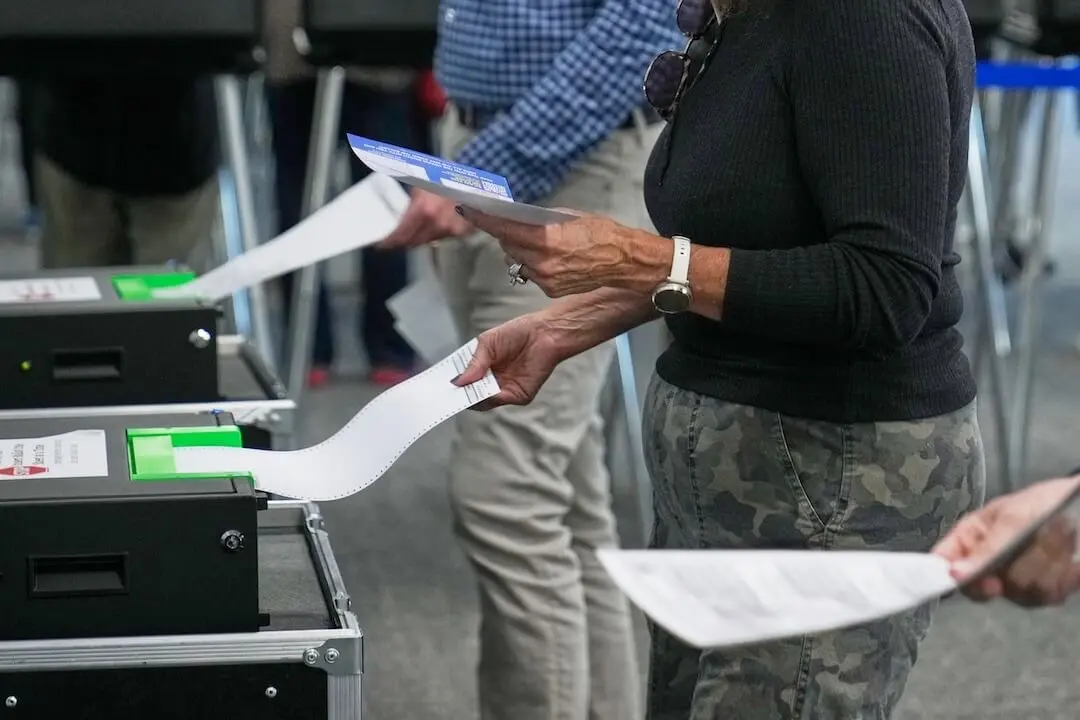
Understanding the modern American electorate has transitioned from a routine journalistic challenge into an existential crisis for the profession. As the nation plunges deeper into political polarization, voters across the aisle are increasingly defined by a palpable, pervasive anger. Yet, decoding the exact catalysts behind this fury—or identifying the precise variables capable of shifting a national election—has become exponentially difficult.
Modern political campaigns no longer rely solely on broad, mass-market appeals. Instead, they deploy highly micro-targeted messaging tailored to hyper-specific voter segments through opaque channels. Concurrently, the information diet of the average citizen is curated by social media algorithms and hyper-partisan news outlets. This fractured informational ecosystem has eroded a once-shared baseline of facts, leaving voters entering the same neighborhood polling place to participate in what feel like entirely different elections.
For journalists tasked with chronicling these shifts and explaining election outcomes to the public, the traditional toolkit is broken. The pre-election "horse race" poll captures fleeting voting intentions but offers scant depth regarding underlying motivations and anxieties. Final election returns reveal who won and where the ballots were cast, but they remain utterly silent on why. Meanwhile, rigorous academic surveys capable of unpacking these complex psychological and sociological drivers often sit unanalyzed for months, emerging long after the political momentum has dissipated.
This persistent information gap carries a severe democratic toll. When no one can definitively explain the motivations behind an election result, victors are free to claim an expansive mandate for any agenda they choose. Simultaneously, in the vacuum of credible explanations, half the country is left to conclude that the other half has fundamentally lost touch with reality. A vote is never merely a superficial opinion; it is a consequential, often begrudging choice. The complex human calculus behind it demands more than a cursory glance at cross-tabulations. To fix political journalism, the industry requires a new class of data—one designed from the ground up to illuminate the "why" before the narrative hardens into mythology.
Detailed Chronology: From the 2016 Blind Spot to the Present Data Deficit
To understand how modern journalism reached this critical juncture, one must examine the watershed moment that exposed the fragility of contemporary election reporting: the 2016 presidential election.
The 2016 Paradigm Shift
For millions of citizens, journalists, and political scientists, the outcome of the 2016 election was nothing short of unbelievable. It felt unbelievable because the established mechanisms used to make sense of American democracy—mainstream polling and predictive journalism—failed spectacularly. The press miscalculated because it relied on thin, lagging indicators and spent insufficient time listening to the lived realities of everyday voters.
In the lead-up to November 2016, traditional metrics completely missed the profound undercurrents of the public mood. Particularly ignored was the deep-seated malaise, economic anxiety, and systemic distrust among working-class white voters. While coastal newsrooms focused on traditional campaign mechanics, this demographic was deeply engaged and intensely motivated by Donald Trump’s disruptive messaging. The failure to capture these signals demonstrated a fatal flaw in how news organizations evaluated the electorate: treating complex human grievances as mere statistical noise.
The Post-2016 Scramble and Persistent Blind Spots
In the years following 2016, newsrooms attempted to recalibrate. Reporters were dispatched to rural diners in the Rust Belt and post-industrial towns across the Midwest to capture the "soul of the voter." While these human-interest stories added color, they lacked systematic scale. They offered anecdotes rather than empirical depth, often substituting broad stereotypes for genuine sociological insight.
The fundamental structural dilemma remained unaddressed: how to bridge the gap between rapid, superficial polling and slow, academic post-mortems. As election cycles accelerated in 2018, 2020, and 2022, the pressure on newsrooms intensified. Reporters were routinely forced to operationalize complex state and local results using blunt-force instruments. A 15-point swing in a legislative district was frequently met with a simplistic, pre-packaged narrative: suburban flight, rural consolidation, or economic anxiety, applied as a blanket explanation regardless of local nuance.
This historical trajectory reveals an industry perpetually playing catch-up. Without timely, granular data that bridges the gap between what voters did and why they did it, journalism remains vulnerable to repeating the blind spots of the past.
Supporting Context & Metrics: The Anatomy of a New Research Paradigm
Recognizing that doing better requires data that has historically been unavailable in a usable format, the nonpartisan, not-for-profit research organization NORC at the University of Chicago developed a groundbreaking intervention: the Civic Health & Elections Project (CHEP).
Methodology and Scale
The Civic Health & Elections Project represents a quantum leap forward in pre-election and immediate post-election analytics. Designed to bypass the traditional limitations of horse-race polling, CHEP deploys an unprecedented operational scale:
- Massive Sample Size: During the critical window leading up to Election Day, NORC surveys more than 85,000 registered voters.
- Geographic Equity: The project guarantees a minimum threshold of at least 750 respondents in every single U.S. state.
- National Comprehensiveness: By refusing to focus exclusively on traditional swing states and competitive battlegrounds, CHEP generates a holistic portrait of the entire American republic, bringing overlooked deep-red and deep-blue states into sharp focus.
Crucially, the architecture of the project is built for speed. The core dataset, paired with sophisticated interactive dashboards and mapping tools, is engineered for public release within hours of the polls closing.
Unlocking Granular Insights
The structural breadth of CHEP transforms how journalists can interrogate election results. Rather than settling for a binary win/loss narrative, reporters gain the ability to cross-examine complex voter sentiment across localized geographies and demographic subgroups.
For example, a journalist working in a traditionally deep-red state like Oklahoma or a securely deep-blue state like Vermont can move past the superficial reality of a 15-point partisan blowout. Instead of accepting the implied, monolithic explanation typically assigned to such regions by national media, local reporters can dive deep into the data:
- Do voters who backed the winning candidate in their state genuinely believe the local economy is improving?
- Do they harbor trust in the specific state and federal institutions tasked with executing the incoming administration’s agenda?
- What are their precise expectations regarding government intervention in healthcare, immigration, and civil rights—and how do those expectations diverge from neighboring states?
Because the sample size is exceptionally robust across every jurisdiction, these probing questions retain their statistical validity even when filtered down to specific regional cohorts or demographic subgroups. The national press can no longer afford to treat non-battleground states as ideological monoliths; CHEP provides the empirical keys to unlock the distinct political cultures thriving within them.
Official Statements & Expert Perspectives
The rollout of the Civic Health & Elections Project has drawn widespread attention from researchers, methodologists, and media critics who view real-time behavioral data as essential to restoring public trust in journalism.
In briefings detailing the project’s architecture, senior researchers at NORC emphasized that the initiative was explicitly constructed to combat the erosion of shared factual baselines in American politics. "A vote is not merely an opinion expressed in a vacuum," a lead researcher noted during the project’s technical rollout. "It is a deliberate, highly constrained choice—often a complicated and deeply begrudging one. The motivations and sacrifices underlying that choice deserve rigorous, timely analysis, not reductionist cross-tabulations that vanish into the news cycle."
Media analysts and newsroom ethics boards have similarly praised the initiative’s democratization of data. Historically, deep statistical dives were restricted to major metropolitan networks, wealthy campaigns, or super PACs with massive data budgets. By making the CHEP core dataset, interactive dashboards, and mapping tools universally accessible at civichealth.norc.org, NORC has leveled the playing field for local newsrooms.
Furthermore, digital training initiatives—including comprehensive video tutorials designed specifically for newsrooms—ensure that reporters do not need an advanced degree in statistics or a dedicated data-journalism desk to extract compelling, defensible stories from the numbers. Editors across the country have hailed the project as a vital corrective to the "parachute journalism" that frequently dominates national election coverage, empowering local journalists to define the narratives within their own backyards.
Future Outlook: Rebuilding Democratic Accountability Through Data-Driven Journalism
As the media landscape prepares for future electoral cycles, the implications of tools like the Civic Health & Elections Project extend far beyond immediate scoop-chasing. Understanding the American electorate is not a transient, five-day assignment that begins in October and concludes the moment the final race is called on cable news. Rather, it is the foundational precondition for holding elected officials accountable to the actual desires and needs of their constituents.
Moving Beyond the 24-Hour Cycle
The traditional news cycle treats elections as discrete sporting events. Once the clock runs out and a winner is declared, the coverage pivots immediately to legislative horse-trading and cabinet appointments, often abandoning any sustained inquiry into why the electorate voted the way it did.
Real-time, granular data disrupts this superficial cycle. When reporters have immediate access to comprehensive motivational data within hours of the polls closing, the post-election narrative is anchored in empirical reality rather than partisan spin. A single, well-reported data-driven story naturally generates the critical follow-up questions that form the bedrock of investigative accountability journalism.
A Call to Action for Modern Newsrooms
To maximize the utility of these advanced datasets, news organizations must adopt a proactive methodological posture. The most successful journalists will not simply wait for the data portal to open; they will prepare their investigative framework in advance.
As outlined by project coordinators, journalists are encouraged to complete a vital preparatory exercise before the data goes live:
- Identify Blind Spots: Write down at least two persistent questions about the electorate in your specific state or district that you have never been able to definitively answer using traditional reporting tools.
- Define the Hunt: Know precisely what hypotheses you are testing before the data release at 12:01 AM Eastern time.
- Interrogate the Findings: Utilize the public dashboards at civichealth.norc.org and consult the newsroom video tutorials to translate raw numbers into compelling, human-centered narratives.
Conclusion: Making America Comprehensible Again
The ultimate promise of this data revolution is not merely to help newsrooms predict or explain outcomes faster, but to heal the fracture in our national self-understanding. When journalists are equipped with the tools to look past broad national generalizations and examine the nuanced, state-by-state realities of the American voter, the country slowly begins to become comprehensible to itself again. In an era defined by deep divisions and profound public cynicism, that clarity is the ultimate public service.