

Executive Overview
The global music community continues to grapple with an immeasurable void following the passing of country music titan and cultural luminary Dolly Parton, who died on August 25 at the age of 80 following a private, courageous battle with cancer. For decades, Parton served as the undisputed North Star of American music—a rare bridge connecting traditional bluegrass, mainstream pop culture, and philanthropic trailblazing. Her departure has triggered an unprecedented wave of grief and reflection across the entertainment landscape.
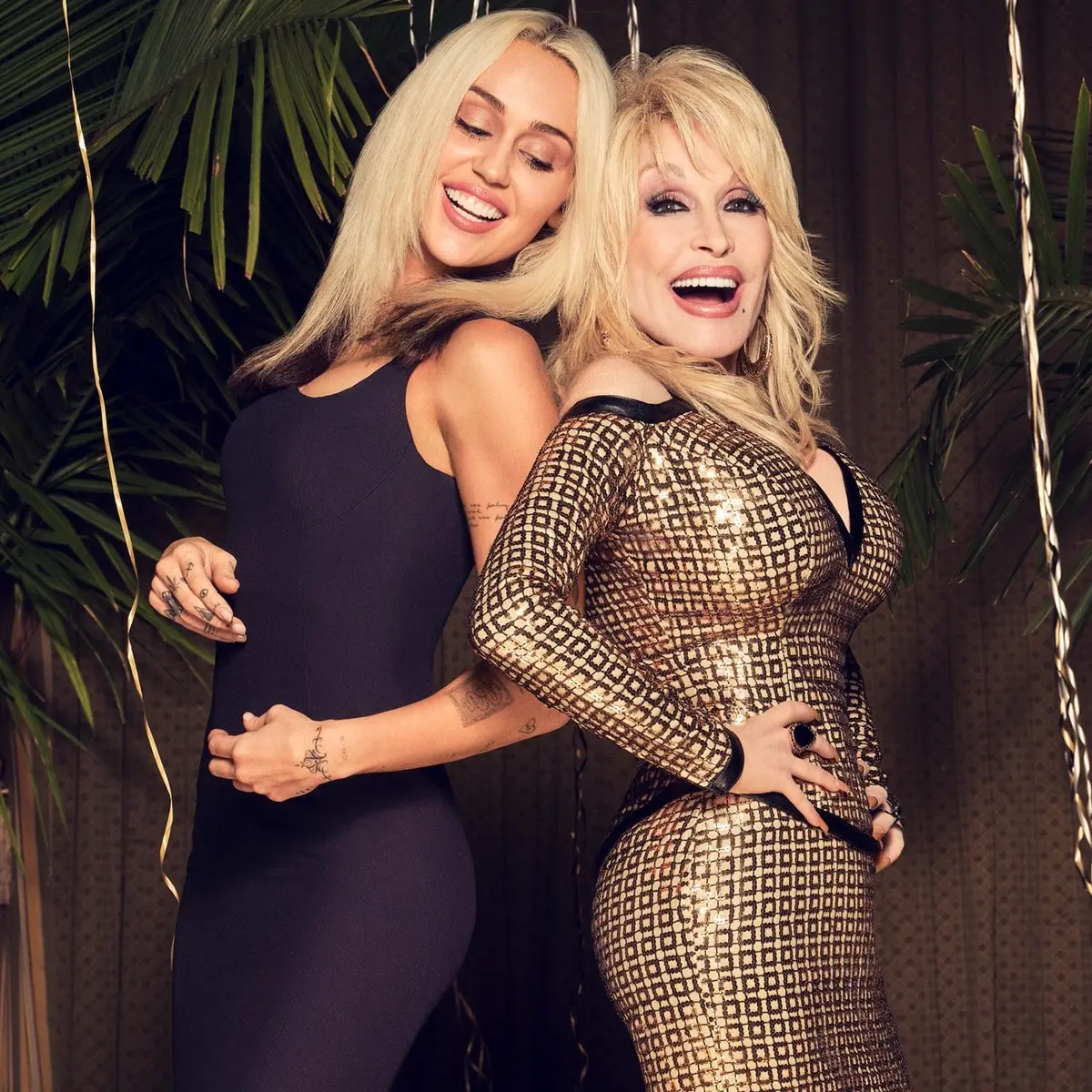
Nowhere has this profound loss been felt more deeply or expressed more vividly than in the words of her goddaughter, Grammy-winning superstar Miley Cyrus. Taking to the stage at the historic Hollywood Bowl on October 16, Cyrus delivered a breathtaking, tear-soaked tribute that encapsulated not only the private depth of their relationship, but the eternal nature of Parton’s creative and spiritual footprint.
From intimate memories shared on early morning phone calls by family members to expansive, reverent tributes penned by global icons like Taylor Swift, Beyoncé, Oprah Winfrey, and Jane Fonda, the collective mourning of Dolly Parton highlights a life lived on a scale rarely witnessed in modern history. This report provides a comprehensive examination of Cyrus’s emotional Hollywood Bowl homage, the rich history of their unbreakable bond, and the sweeping global chorus of tributes honoring a woman who fundamentally altered the cultural fabric of our time.
Detailed Chronology: The Hollywood Bowl Tribute and Final Memories
The Hollywood Bowl has played host to countless legendary performances over the decades, but few moments in the venue’s storied history carry the emotional weight of Miley Cyrus’s October 16 concert. Standing beneath the iconic white band shell, Cyrus, 33, paused her set to honor her late godmother, breaking down in tears as she laid bare the reality of navigating life after Parton’s passing.
"Sitting here with you all right now, feeling her all around me, knowing that she’s right here beside me, every day, more than she could be when she was here; I feel her more now than ever," Cyrus told the capacity crowd, her voice wavering with emotion. "Me and Dolly, we are eternal. Nothing in this life could ever tear us apart."
Cyrus’s grief is inextricably linked to a profound sense of awe for Parton’s artistic output. Before launching into a soaring, poignant rendition of Parton’s timeless 1973 masterpiece "Jolene," Cyrus reflected on the sheer magnitude of her godmother’s songwriting catalog. "I’m gonna see her again," Cyrus said through tears. "And I can’t f–king wait because I miss her. Some of the greatest music that we have today was written, produced, performed by my aunt Dolly. This is one of those songs."
The "Hannah Montana" Hijinks: A Look Back at Shared Humor
During the emotional evening, Cyrus also treated the audience to lighter anecdotes that underscored the playful, mischievous dynamic that defined their relationship. Cyrus revealed that the only time she had ever witnessed Parton perform live as a spectator was at that very same historic Hollywood Bowl venue.
Hoping for a rare night of anonymity where she could simply absorb her godmother’s artistry as a fan rather than a fellow performer, Cyrus recalled asking Parton for a night off from the spotlight. Parton agreed with a simple, "Okay, Miley"—a phrase Cyrus quickly learned "never means okay."
True to her theatrical flair, Parton opened the concert by performing "The Best of Both Worlds," Cyrus’s iconic theme song from her Disney Channel breakout series Hannah Montana. Parton then addressed the massive crowd like a proud family member.
"I don’t know if y’all know this, but my goddaughter is Hannah Montana, and she’s actually here tonight, but she’s sitting out in her seat. She didn’t want anyone to bug her," Parton announced from the stage, much to Cyrus’s dismay.
"She said she just wanted to watch the show, which defeated the entire purpose of the conversation that we had just had," Cyrus quipped to the audience, noting that "absolutely no one was aware that I was at the concert until she drew an obnoxious amount of attention to it." Reflecting on the moment with the wisdom of hindsight, Cyrus added, "Like so many things Dolly did, I didn’t understand at the time."
Supporting Context & Metrics: The Architecture of an Icon
To understand the seismic shockwaves of Dolly Parton’s passing is to understand an entertainment career that spanned over six decades, shattering glass ceilings while wearing rhinestones and stilettos. Parton’s achievements are staggering by any metric:
- Discography & Writing: Parton penned over 3,000 songs during her career, including timeless anthems like "Jolene," "I Will Always Love You," and "9 to 5." Her songs have been recorded by hundreds of artists across multiple genres, most notably Whitney Houston’s legendary pop-soul rendition of "I Will Always Love You," which dominated global charts.
- Commercial and Critical Success: With 25 RIAA-certified gold, platinum, and multi-platinum awards, Parton amassed 26 songs reaching Number 1 on the Billboard country charts—a record for a female artist that stood for decades. She was inducted into the Country Music Hall of Fame in 1999 and the Rock and Roll Hall of Fame in 2022.
- Philanthropic Impact: Beyond her commercial success, Parton’s Imagination Library—founded in 1995—has mailed over 200 million free books to children worldwide, fundamentally transforming early childhood literacy. Her contributions to disaster relief, medical research (including funding for COVID-19 vaccine research), and Appalachian economic development cemented her status as a generational philanthropist.
- The Special Bond with Cyrus: The godmother-goddaughter relationship between Parton and Cyrus was built on a mutual respect for reinvention, artistic independence, and Appalachian roots. Parton frequently appeared alongside Cyrus during her Disney era—most memorably guest-starring on Hannah Montana as Aunt Dolly—and remained a steadfast counselor as Cyrus navigated the treacherous waters of transitioning from child stardom to an avant-garde pop auteur.
Official Statements: A Global Chorus of Tributes
The outpouring of grief following Parton’s August 25 death transcended the boundaries of country music, drawing tributes from the highest echelons of pop, rock, film, and television.
Family Reflections
Parton’s younger sister, Stella Parton, offered a moving glimpse into their lifelong sisterly routine. "Every Tuesday about this time, before the sun came up and the world was still asleep, she and I, for many years, had our coffee together over the phone," Stella wrote on social media. "As she liked to say: ‘Shoot Tedda, we get more work done before the sun comes up than most folks do all day long!’"
Billy Ray Cyrus, who shared decades of friendship with Parton and collaborated with her extensively, posted a poignant farewell. "Dolly recently sent me a beautiful message, telling me she loved me with her whole heart," he shared. "I will always love her in the same way… with my whole heart… and I always will."
Pop Royalty and Cultural Icons
The cultural weight of Parton’s influence was perhaps best articulated by music’s biggest contemporary stars.
Taylor Swift released a comprehensive statement to E! News, praising Parton’s complex blend of vulnerability and strength:
"A world without Dolly doesn’t feel possible, real, or right… She was true grace and true grit, all in one dazzling person. She possessed the softest heart when it came to the struggles of others, and a backbone of steel to defend her own self-worth as an artist… For the tightropes she walked so that young girls like me could grow up dreaming of joining the circus too, Dolly, I’ll think of you each step of the way."
Beyoncé, who collaborated with Parton on a reimagined version of "Jolene" for her Grammy-winning album Cowboy Carter, shared her reverence on her website:
"Dolly, you were the barometer. The North Star. Bold and brilliant. Talented and tenacious. You taught so many lessons on how to be uniquely oneself. I am grateful for your art, your heart, your generosity, your humor, your entrepreneurship."
Katy Perry highlighted Parton’s subversive brilliance:
"For me, she was an example of a woman who defied the stereotypes for decades. She proved that big boobs, big brains, and a big voice can all exist in one tiny body! If there’s someone you wanna look up to and model your life after, it’s Dolly. Dolly was glam, funny, and kind as f–k."
Hollywood and Entertainment Legends
Silver screen icons also stepped forward to honor their peer. Jane Fonda, Parton’s iconic 9 to 5 co-star, reminded fans to celebrate her vibrant spirit rather than yield solely to sorrow:
"More than anyone I have ever known, Dolly will always be with us because she was so present, so powerful, so generous and playful that she is woven into all our lives and hearts forever… To her gay and trans fans, I want you to know that she loved you… Dress up and celebrate her spirit."
Comedic and television icons shared similar sentiments. Oprah Winfrey remembered her time sharing the stage with Parton in Bob Mackie gowns, writing: "This girl from the Smoky Mountains of Tennessee dreamed a life and then lived a life bigger than she could have ever imagined… No one like her. She brought the light, and we are all better because she was here."
Future Outlook: Preserving the Eternal Legacy
As the dust settles on an emotional autumn of mourning, the cultural apparatus built around Dolly Parton’s legacy is pivoting toward preservation and continuation. Cultural institutions, academic researchers, and entertainment executives are already designing permanent exhibits, tribute albums, and archival projects to ensure that future generations understand the breadth of her contributions.
For Miley Cyrus, the path forward involves carrying that torch directly into her own artistry. As Cyrus noted in her post-loss reflections, Parton’s final conversations with her centered heavily on "music and metamorphosis." In channeling her grief into live performances of Parton’s catalog—such as her unforgettable Hollywood Bowl rendition of "Jolene"—Cyrus is proving that the artistic lineage shared between them is unbreakable.
Ultimately, Dolly Parton’s physical absence leaves an undeniable vacuum in American culture, but her blueprint remains intact. She taught millions how to dream without boundaries, how to laugh in the face of adversity, and how to maintain an unwavering sense of self in an industry designed to mold artists into conformity. As her friends, family, and adoring fans continue to heal, one overarching sentiment remains clear, perfectly summarized by Wynonna Judd:
“From one mountain woman to another, I will always love you.”