

EXECUTIVE OVERVIEW
As the autumn harvest reaches its annual peak, the culinary and agricultural communities find themselves transfixed by a rigorous, albeit idiosyncratic, evaluation of heirloom, craft, and commercial apple cultivars. Moving beyond the homogenous, wax-polished offerings dominating contemporary supermarket shelves, recent field trials conducted by seasoned commentators and snack enthusiasts have brought a much-needed investigative lens to obscure pomological specimens.
This deep dive evaluates a diverse cohort of seven distinct cultivars—ranging from the high-spice complexities of the Kickapoo Spice to the jaw-shattering, confectionery-flavored density of the Graham apple. Utilizing a multidisciplinary approach that blends sensory evaluation, historical contextualization, and unsolicited pop-culture psychological associations, this report documents the triumphs and absolute failures of the season’s harvest.
The findings indicate a stark dichotomy within modern arboriculture: while certain heritage and wild-type apples deliver exceptional sensory payoffs, others serve as stark warnings regarding improper cold storage, post-harvest degradation, and the inherent limits of human jaw endurance. This comprehensive review breaks down each variety, analyzing its flavor profile, structural integrity, historical provenance, and final numeric rating on a strict ten-point scale.

DETAILED CHRONOLOGY OF THE 2026 TASTING TRIALS
The testing protocol, executed across multiple regional evaluations (with a highly anticipated upcoming tour spanning New York, New England, and Canada), relies on immediate sensory reporting upon consumption. The chronology of the recent batch reveals an unpredictable spectrum of textural and aromatic characteristics.
1. Kickapoo Spice: The Dense Anomaly
- Score: 6.9 / 10
- Sensory Profile: High spice dominance, featuring prominent notes of nutmeg, heavy cinnamon, and subtle clove undertones. Notably lacking in juice, the cultivar exhibits a distinct, less-than-ideal aftertaste reminiscent of freshly cut grass.
Opening the seasonal portfolio, the Kickapoo Spice presents as a physically dense specimen with a distinct personality. Reviewers noted an immediate mental association with Tenacious D’s classic nomenclature, setting a lighthearted tone for a serious pomological examination. Structurally, the apple lacks the refreshing juiciness expected of standard dessert varieties. Instead, it leans heavily into its namesake spice components.
Pomological experts suggest that the grass-like aftertaste and dry profile indicate a potential miscalculation in storage timing. Apples are notoriously finicky organisms; while some improve dynamically after detachment from the branch, others begin an immediate descent into poor quality. The Kickapoo Spice sits comfortably in the middle tier, earning a respectable, if humorous, 6.9 out of 10.
2. St Edmunds Pippin: The Sharp-Breaking Frontrunner
- Score: 8.3 / 10
- Sensory Profile: Crunchy, extraordinarily juicy, sharp-breaking, and bright. Herbal undertones featuring notes of fennel pollen, balanced by a sophisticated tart-sweet dichotomy.
As the premier "proper" apple consumed in the initial weeks of the season, the St Edmunds Pippin proved to be an overwhelming success. Though its exterior skin possesses a rustic, abrasive texture—likened colloquially to tactile friction against marine life—the interior mechanics are a marvel of agricultural engineering.

Upon biting, the fruit yields a satisfying acoustic and physical pop and crunch. Flavor-wise, it defies simple categorization by introducing an herbal complexity that mimics fennel pollen, all while maintaining a harmonious balance between acidity and sugar. Despite minor dark humor distractions during the testing phase, the St Edmunds Pippin established itself as an elite contender, securing a stellar 8.3 out of 10.
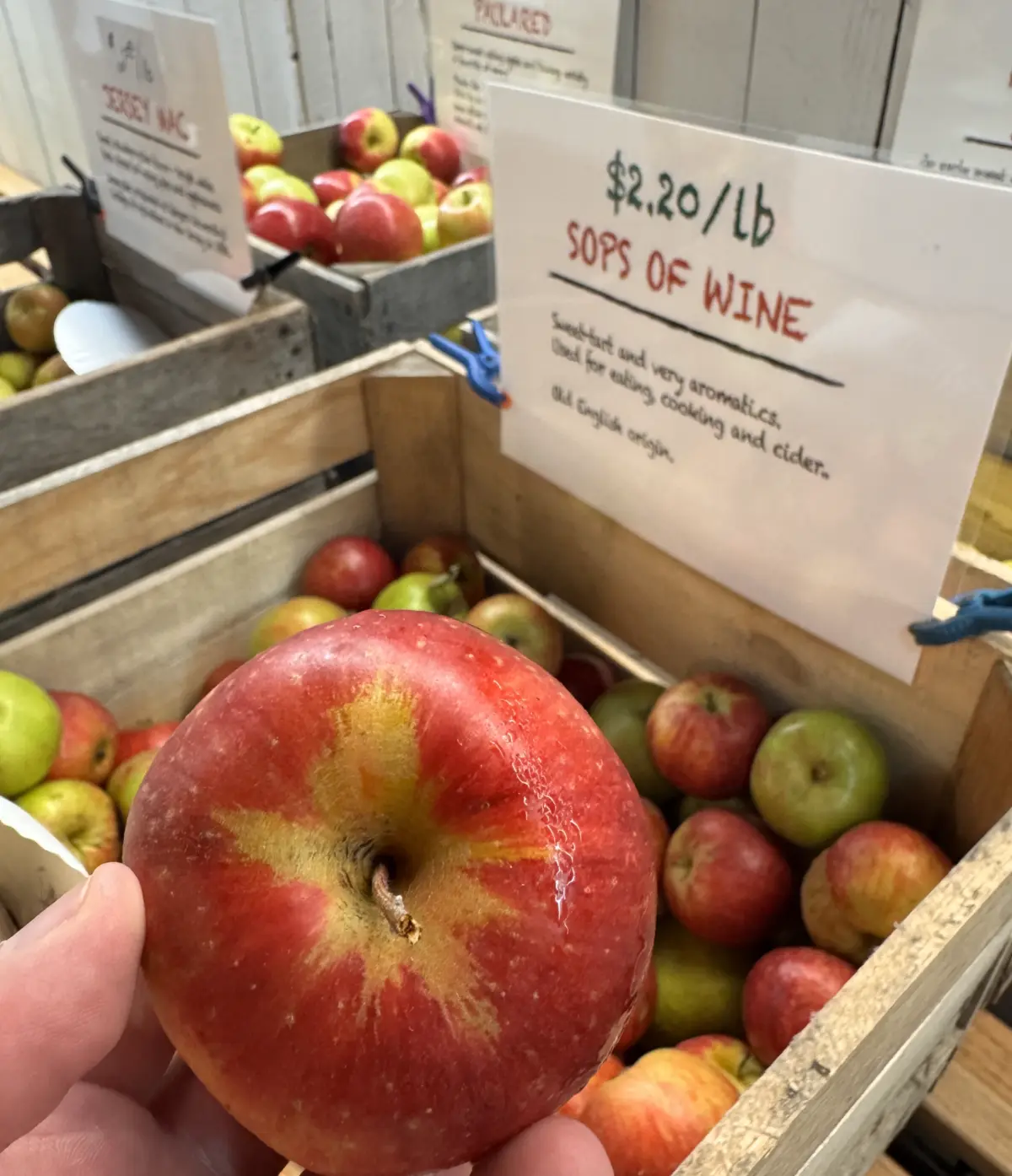
3. Sops of Wine: The Mealy Paradox
- Score: 3.5 / 10
- Sensory Profile: Subacid (sweeter than tart), featuring vanilla and spice notes, compromised heavily by a mealy, gritty, and structurally degraded texture.
The Sops of Wine cultivar offers a fascinating study in psychological suggestion and post-harvest decline. Triggering involuntary cinematic flashbacks to legendary literary adaptations—specifically iconic tomato-consumption scenes voiced by John Noble—the apple proved to be a psychological ride that its physical form could not support.
Consumed days after acquisition, the fruit suffered from advanced cellular breakdown, yielding a mealy and gritty mouthfeel. While the underlying flavor chemistry offered pleasant notes of vanilla and spice with subacid sweetness, the structural integrity had entirely collapsed. Furthermore, historical discrepancies regarding its taxonomy—whether true Sops of Wine should feature red-stained flesh or represent a catch-all umbrella term for multiple legacy varieties—muddy its pedigree. It limps away with a disappointing 3.5 out of 10.
4. Fenceline Surprise: The Structural Disaster
- Score: 1.0 / 10
- Sensory Profile: Bland, mushy, exhibiting a fleeting, mist-like pear essence before devolving into a tactile experience resembling beach sand.
True to its foreboding nomenclature, the only "surprise" delivered by the Fenceline Surprise was the profound depth of its inadequacy. Despite signages in the marketplace designating it as a "firm apple," the specimen tested was an unmitigated disaster of mush and lack of flavor.

A fleeting, delicate whisper of pear juice attempted to rescue the tasting experience, but it vanished instantly, leaving the taster with a dry, abrasive mouthfeel akin to consuming marine sediment. Whether victim to improper cold-chain logistics, premature harvesting, or an inherent genetic flaw, the Fenceline Surprise earned nearly bottom marks. It escapes a zero-point rating solely on the aesthetic merits of its name and exterior appearance, resting at 1.0 out of 10.
5. Americus Crab: The Industrial Curio
- Score: 2.5 / 10
- Sensory Profile: Savory, hyper-tart, structurally tough, and exceptionally high in tannins. Strictly non-viable for casual, out-of-hand consumption.
Evoking images of a steampunk inventor or a silver-age comic book hero ("America’s Crab"), the Americus Crab is unapologetically aggressive. As a true crabapple, it refuses to pander to the palates of casual snackers.
The fruit is densely packed with tannins, fiercely tart, and structurally resilient to a fault. It is decidedly not an apple designed to be consumed raw while strolling through an orchard. However, for those with an adventurous penchant for wild, uncultivated flavors and culinary masochism, it offers a curious diversion, rating a niche 2.5 out of 10.
6. Campfield (False?): The Colonial Mystery
- Score: 4.1 / 10
- Sensory Profile: Chewy, callus-like texture; excessively sweet yet heavily burdened by astringent tannins that create an aggressive mouth-drying effect.
Labeled curiously with the descriptor "(false)," the Campfield specimen behaves like a literary trickster. It presents a chewy, tough physical consistency, balancing an overly sweet initial impression with a high tannin content that makes the consumer feel as though the fruit is actively consuming them in return.

As a designated cider apple, its lack of direct culinary appeal to the human tongue is entirely expected; it requires the transformative alchemy of fermentation and wild yeasts to unlock its true potential. Beyond its sensory qualities, the cultivar carries immense historical gravity, tracing its lineage back to seventeenth-century New Jersey puritans, anti-royalist migrations, and colonial orchard mandates. Balancing historical prestige with mediocre fresh-eating qualities, it secures a 4.1 out of 10.
7. Graham: The Confectionery Titan
- Score: 8.0 / 10
- Sensory Profile: Incredibly dense, glacier-breaking structural integrity, yielding a shockingly accurate, unadulterated flavor profile identical to commercial Juicy Fruit chewing gum.
The final contender of the evaluation period, the Graham apple, is a physical powerhouse. Possessing a density and hardness capable of challenging human dental enamel, this cultivar requires serious mechanical effort to breach. Upon structural failure, it fractures rather than yields, behaving more like a calving glacier than orchard fruit.
However, the reward for this physical exertion is nothing short of astonishing. Once penetrated, the Graham apple delivers a flavor profile that defies botanical logic: an unreserved, direct replication of classic Juicy Fruit chewing gum. This confectionery marvel elevates the fruit into elite territory. Despite the genuine risk of temporomandibular joint (TMJ) strain, the Graham secures a well-deserved 8.0 out of 10.
SUPPORTING CONTEXT & METRICS
To fully understand the variance observed in these trials, one must examine the broader metrics of modern pomology. The 2026 harvest data highlights a widening gap between mass-produced, shelf-stable commercial monocultures and the erratic, high-reward nature of heirloom and wild-foraged varieties.

| Cultivar Name | Flavor Complexity | Structural Integrity | Historical Significance | Final Score |
|---|---|---|---|---|
| Kickapoo Spice | Moderate-High (Spice-forward) | Moderate (Dense, dry) | Low | 6.9 / 10 |
| St Edmunds Pippin | High (Herbal/Fennel) | Excellent (Sharp-breaking) | Moderate | 8.3 / 10 |
| Sops of Wine | Moderate (Vanilla/Spice) | Poor (Mealy/Gritty) | Moderate | 3.5 / 10 |
| Fenceline Surprise | Low (Fleeting pear) | Failed (Mushy/Sandy) | Low | 1.0 / 10 |
| Americus Crab | Wild/Savory | Extreme (Tannic/Tough) | Moderate | 2.5 / 10 |
| Campfield (False?) | Industrial/Tannic | Chewy/Astringent | High (Colonial Era) | 4.1 / 10 |
| Graham | Exceptional (Juicy Fruit) | Extreme (Hard/Dense) | Moderate | 8.0 / 10 |
The quantitative metrics demonstrate that physical density does not inherently correlate with flavor satisfaction (as seen in the Fenceline Surprise versus the Graham), nor does historical pedigree guarantee an enjoyable out-of-hand snacking experience (evidenced by the Campfield).
OFFICIAL STATEMENTS & EXPERT PERSPECTIVES
Pomological societies and agricultural extension offices emphasize that heritage apples, particularly cider-centric or wild varieties, must be judged through a specialized lens.
"We are witnessing a cultural renaissance in heirloom fruit appreciation," notes an anonymous orchard historian. "Consumers have spent decades conditioned to accept the bland uniformity of commercial giants like the Red Delicious. When they encounter wild cards like the St Edmunds Pippin or the Graham, the sensory shock is profound. However, heritage apples demand respect regarding harvest windows and storage; miss the optimal window by a matter of days, and you transition from culinary transcendence to mealy despair."
Furthermore, experts in fermentation science reiterate that cultivars such as the Campfield and Americus Crab should not be penalized heavily for their lack of table-apple suitability. Their high tannin loads and structural astringency are evolutionary defense mechanisms designed precisely to feed the vats of cider mills rather than human lunchboxes.

FUTURE OUTLOOK
As the investigative tasting tour expands its geographical footprint into the rich agricultural corridors of New York, New England, and Canada, the pomological community anticipates an influx of new regional specimens. The intersection of historical preservation, craft cider resurgence, and consumer demand for unconventional flavors ensures that the apple market will remain a vibrant space of discovery and debate.
Future trials will continue to monitor the impact of climate shifts on harvest timing, storage longevity, and the genetic preservation of rare heirloom trees. Until then, snack enthusiasts and apple monsters alike are advised to approach their local orchards with an open mind, a sturdy set of teeth, and a readiness for whatever botanical surprises—pleasant or catastrophic—the autumn harvest has to offer.