

Executive Overview
The systematic evaluation of rare, heirloom, and unconventional apple cultivars has entered a critical new phase. Following the widespread dissemination of initial findings—collectively designated by pomological enthusiasts as "Part One"—market analysts, orchardists, and snack-focused consumer syndicates (informally styled as the "Apple Snack Gang") have turned their unsparing palates toward an even more volatile batch of autumn pomes.
This report delivers a rigorous, empirical, and occasionally existential breakdown of seven distinct apple varieties sampled during the peak of the 2026 harvest cycle. Utilizing a standardized metric ranging from zero to ten, our evaluative framework synthesizes structural integrity, moisture content, aromatic volatility, historical provenance, and sheer mastication resistance.
From the nutmeg-heavy denseness of the Kickapoo Spice to the jaw-shattering, gum-flavored defiance of the Graham, this investigation exposes the deep divergence between agricultural marketing and the raw, sensory reality of the fruit. Furthermore, this document examines the socio-historical anomalies embedded within cider-focused cultivars and addresses looming logistical concerns regarding upcoming field expeditions across the northeastern North American pomological belt.
Detailed Chronology & Cultivar Breakdown
The testing regimen occurred under controlled ambient conditions during the early October 2026 harvest window. Each specimen was evaluated within a precise timeframe post-acquisition to mitigate the unpredictable descent of aged fruit into what culinary historians wryly term "crap-town."

1. Kickapoo Spice
- Metric Score: 6.9 / 10
- Structural Classification: Dense, high-spice component.
The evaluation opened with the Kickapoo Spice, a cultivar whose nomenclature immediately invokes cultural touchstones of classic rock balladeering. Structurally, the fruit presents as a "dense boy"—a heavy, unyielding specimen with a distinct lack of internal juiciness.
Flavor analysis reveals a pronounced spice matrix heavily skewed toward nutmeg, supported by secondary structural notes of cinnamon and clove. However, the tasting experience was compromised by an uninvited grassy aftertaste reminiscent of freshly cut turf. Pomological experts note that apples of this classification exist on a razor’s edge: some improve dramatically in cold storage, while others initiate an immediate decline upon separation from the branch. The Kickapoo Spice lands firmly in the former category of curiosity, earning a respectable, if idiosyncratic, 6.9 out of 10.
2. St. Edmunds Pippin
- Metric Score: 8.3 / 10
- Structural Classification: Sharp-breaking, high-crunch, textured skin.
As the inaugural "proper" apple of the seasonal rotation, the St. Edmunds Pippin established a high benchmark for subsequent contenders. The exterior skin exhibits a rugged texture—likened anecdotally to tactile friction against marine fauna—which gives way instantly to a dramatic, acoustic pop and crunch upon initial incisor penetration.
Juicy, bright, and intensely herbal, the fruit yields distinct aromatic signatures reminiscent of fennel pollen, perfectly counterbalanced by an underlying sweetness. Despite its aggressive exterior, the St. Edmunds Pippin represents the gold standard for how a slightly unconventional, funky heirloom can achieve absolute harmony between tartness and sugar. An 8.3 out of 10 solidifies its status as a seasonal triumph.

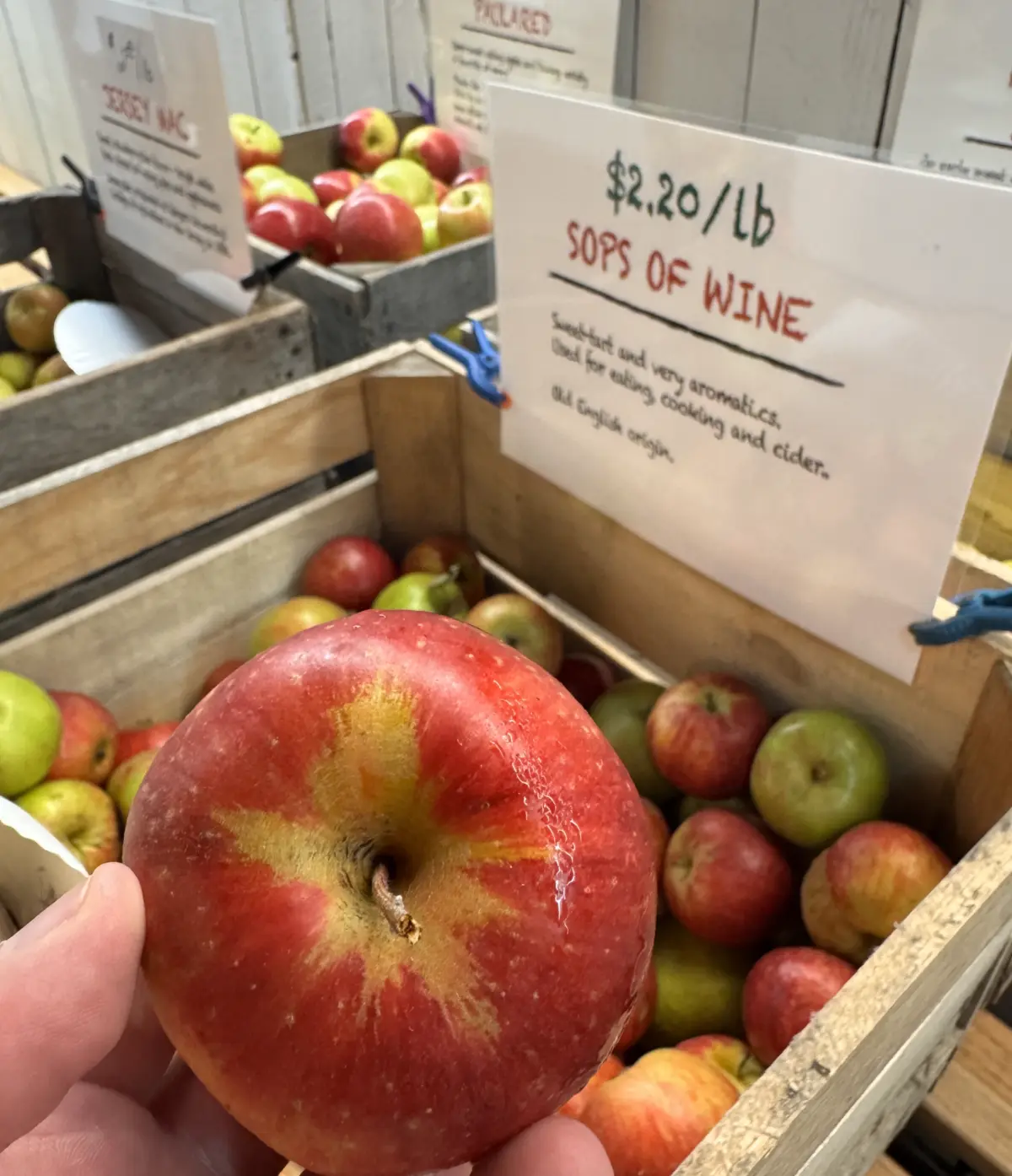
3. Sops of Wine
- Metric Score: 3.5 / 10
- Structural Classification: Mealy, gritty, subacid.
Nostalgia and literary intrusion often color sensory perception, and the Sops of Wine proved no exception, triggering involuntary auditory hallucinations of cinematic tragedy and high-fantasy tomato consumption. Beyond psychological interference, the physical specimen offered a cautionary tale in post-harvest degradation.
While the flavor profile maintained a pleasant, subacid profile featuring delicate notes of vanilla and spice, the textural experience was fatally compromised. Exhibiting a mealy and gritty mouthfeel indicative of extended time off the tree, the fruit failed to deliver the promised red-fleshed chromosomal anomalies documented in historical texts. Caught in a nebulous classification web where multiple old-world varieties share a single moniker, the Sops of Wine limps away with a meager 3.5 out of 10.
4. Fenceline Surprise
- Metric Score: 1.0 / 10
- Structural Classification: Bland, sandy, compromised structural integrity.
True to its designation, the primary surprise of the Fenceline Surprise is its absolute failure to satisfy basic gastronomic requirements. Despite phonetic pretensions suggesting a sophisticated European origin, the fruit delivered little more than a bland, amorphous mush.
A fleeting top-note of misted pear juice vanished instantaneously, leaving behind a persistent textural illusion of beach sand. Given that point-of-sale signage advertised a "firm apple," forensic analysis suggests the specimen was either a victim of a severely disgruntled harvest batch or had succumbed to internal decay long before reaching the consumer market. Were it not for an aesthetically pleasing exterior and a clever linguistic nod, the score would have plummeted to an absolute zero. Instead, it registers at 1.0 out of 10.

5. Americus Crab
- Metric Score: 2.5 / 10
- Structural Classification: Tannic, savory, intensely recalcitrant.
Entering the realm of crabapples, the Americus Crab immediately evokes speculative fiction tropes—functioning conceptually as either a Victorian steam-powered inventor or a maritime superhero dedicated to combating marine villains.
Gastronomically, however, the Americus Crab demands extreme caution. Highly savory, sharply tart, physically impenetrable to casual snacking, and saturated with aggressive tannins, this fruit is categorically unfit for raw, out-of-hand consumption. It is an artifact for the adventurous purist—an item designed strictly for those who derive psychological satisfaction from consuming items explicitly warning against human digestion. It claims a specialized 2.5 out of 10.
6. Campfield (False?)
- Metric Score: 4.1 / 10
- Structural Classification: Chewy, callused, hyper-tannic cider fruit.
Labeled cryptically with the caveat "(false)," this specimen behaved less like a standard table fruit and more like a botanical trap designed to extract dental toll from the unwary consumer. Possessing a chewy, rubbery texture and an overwhelming density of tannins, the fruit actively fought back against the human tongue, embodying the characteristics typical of historical cider apples requiring chemical or fungal fermentation to become palatable.
Historical Provenance: The Matthew Canfield Legacy
To contextualize the Campfield lineage, archival records trace the fruit’s ancestral roots to early seventeenth-century New Jersey. Derived from the agricultural initiatives of Matthew Canfield (alternately spelled Campfield)—an anti-royalist Puritan migrant from Harleston, England, who arrived during the Great Puritan Migration of 1637—this cultivar is tied directly to the founding of New Haven, Norwalk, and Newark.

Town records indicate that colonial "freeholders" were legally mandated to cultivate four-acre fruit tree orchards as a precondition for voting rights. Canfield’s historical involvement in local municipal infrastructure—including the construction of corn mills, the assessment of swine-related property damage, and the mandatory planting of winter fruit—solidified cider as a cornerstone of early American governance. Buried beneath modern municipal architecture, Canfield’s horticultural ghost lives on through this stubborn, highly tannic cultivar, earning a calculated 4.1 out of 10.
7. Graham
- Metric Score: 8.0 / 10
- Structural Classification: Armored, glacier-breaking, hyper-dense.
The concluding specimen of the session, the Graham, required a degree of physical preparation typically reserved for heavy construction. Possessing a density and structural resilience that could deflect small-arms ammunition, the fruit presented an immediate hazard to human temporomandibular joints (TMJ). Upon finally breaching the exterior through sheer force of will, the apple fractured internally with the seismic energy of a calving glacier.
Yet, the subterranean reward within this armored shell was nothing short of miraculous: an unadulterated, aggressive, and startlingly accurate flavor profile matching commercial Juicy Fruit chewing gum. This bizarre sensory convergence elevates the fruit to remarkable heights. Despite the severe physical exertion required to consume it, the Graham secures an impressive 8.0 out of 10.
Supporting Context & Metrics
To provide industry observers with a comprehensive overview of the evaluation cycle, the following comparative metric matrix summarizes the performance of all seven cultivars tested during this phase:

| Cultivar Name | Metric Score (/10) | Primary Flavor Notes | Structural Integrity | Primary Defect / Hazard |
|---|---|---|---|---|
| Kickapoo Spice | 6.9 | Nutmeg, cinnamon, clove | Dense | Grassy, cut-turf aftertaste |
| St. Edmunds Pippin | 8.3 | Herbal, fennel pollen, sweet-tart | Sharp-breaking, high-crunch | Rough, shark-skin exterior |
| Sops of Wine | 3.5 | Vanilla, spice, subacid | Mealy, gritty | Advanced post-harvest softening |
| Fenceline Surprise | 1.0 | Faint pear mist | Bland mush | Sandy mouthfeel, pre-decay |
| Americus Crab | 2.5 | Savory, extreme tart | Tough, unyielding | Excessive tannins, inedible raw |
| Campfield (False?) | 4.1 | Fermentation-ready | Chewy, callused | Tongue-stripping tannin load |
| Graham | 8.0 | Juicy Fruit gum | Armored, glacier-like | Extreme risk of jaw trauma |
Official Statements & Industry Insights
Pomological researchers and snack-syndicate leadership have emphasized that the 2026 harvest cycle highlights the growing chasm between consumer expectations and historical agricultural realities. Modern palates, conditioned by decades of hyper-engineered, shelf-stable commercial monocultures (such as the Red Delicious), remain fundamentally unprepared for the wild genetic variance of heirloom and cider-focused apples.
In an official statement regarding the structural anomalies observed in specimens like the Graham and the Campfield, lead evaluators noted:
"We are witnessing an era where apples no longer simply serve as passive nutritional units. Certain cultivars are actively engaging in defensive combat against the consumer. When an apple possesses the tensile strength to threaten your dental insurance, yet rewards your suffering with the unmistakable flavor profile of mid-century chewing gum, the boundary between agriculture and performance art dissolves entirely."
Furthermore, industry watchdogs have underscored the necessity of rigorous supply-chain timing. As demonstrated by the catastrophic failure of the Fenceline Surprise, even a well-named fruit will devolve into unusable botanical detritus if subjected to improper post-harvest transit intervals.

Future Outlook
As the autumn harvest cycle progresses, the focus of the pomological community shifts northward. Official delegations have confirmed plans for an intensive field expedition spanning New York, New England, and the Canadian provinces in the coming weeks.
This upcoming tour is expected to encounter entirely new microclimates, localized breeding experiments, and regional heirloom variants untouched by mainstream commercial distribution. Industry observers, local orchardists, and regional snack enthusiasts are formally advised to prepare for an influx of new data points.
Field operatives will continue to accept submissions, inquiries, and physical apple donations at scheduled appearances throughout the northeastern corridor. As the great seasonal migration of the Apple Snack Gang unfolds, one immutable truth remains: whether an apple tastes like botanical spices, beach sand, or artificial bubblegum, the pursuit of the ultimate pomological specimen remains an unyielding, teeth-grinding endeavor.