

Executive Overview
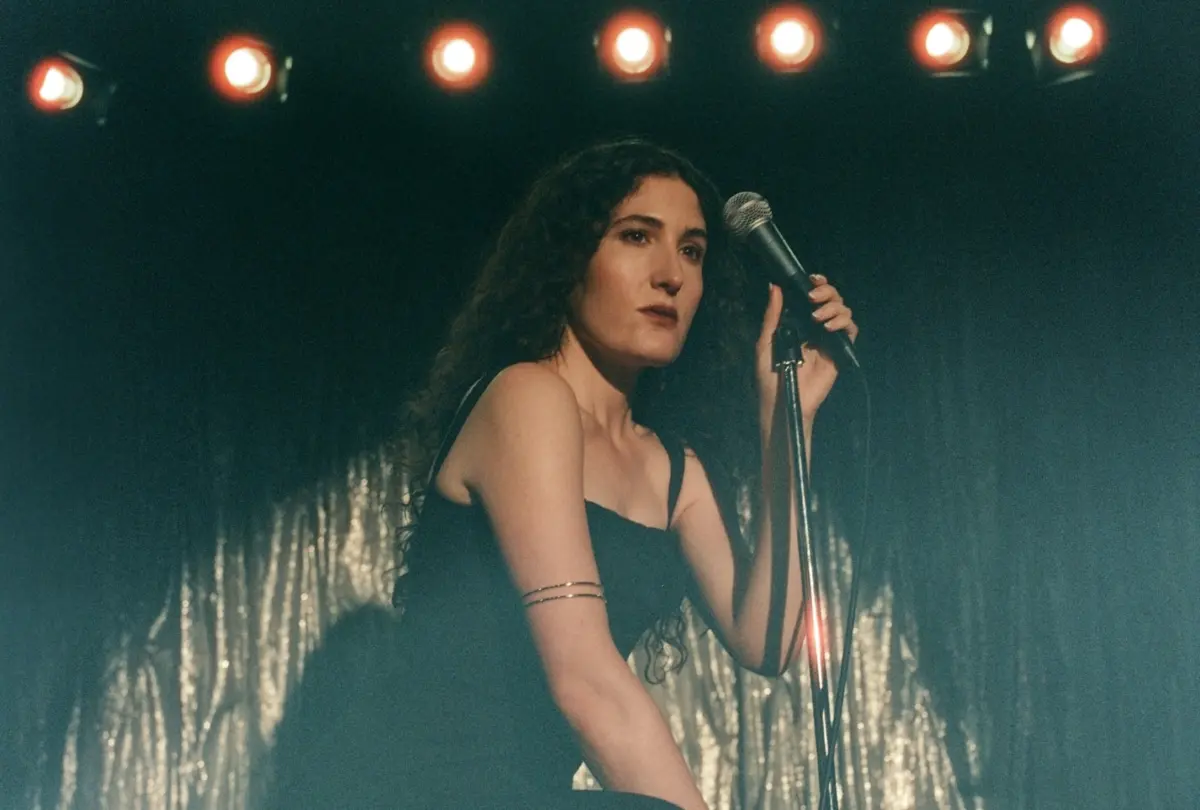
In an era dominated by algorithmic conformity, comfort-zone streaming, and self-conscious stand-up that reads more like a TED Talk with punchlines, Kate Berlant remains an exhilarating anomaly. With her brilliant new HBO comedy special, Parmesan—directed, performed, and delivered with the precision of a master watchmaker—Berlant does not merely entertain; she deconstructs the very mechanics of performance.
Long celebrated by comedy nerds, cinephiles, and discerning television audiences for her fearless collaborations with John Early and her tour-de-force off-Broadway show KATE, Berlant has officially stepped into the pantheon of history’s great comics. Parmesan captures an artist operating at the absolute zenith of her powers. Straddling the line between a refined intellectual humorist and a go-for-broke, unhinged court jester, Berlant uses the special to hold up a distorting mirror to a society obsessed with branding, isolation, and performative existence.
This article explores the cultural and artistic triumph of Parmesan, analyzing how Berlant’s unique blend of physical comedy, existential dread, and vulnerable self-discovery has redefined modern stand-up. Through an examination of her comedic philosophy, structural innovations, and critical reception, we trace how a simple question posed on a digital flyer—"HAVE YOU SEEN THIS CLOWN?"—has blossomed into one of the most defining cultural texts of the decade.
Detailed Chronology: From Underground Darling to HBO Titan
To understand the monumental cultural weight of Parmesan, one must examine the meticulous trajectory that led Kate Berlant to the HBO stage. Berlant’s ascent was never a product of overnight virality; rather, it has been a decade-long masterclass in avant-garde endurance.
The Experimental Foundations (Early 2010s – 2018)
Emerging from the vibrant alternative comedy scenes of Los Angeles and New York, Berlant quickly differentiated herself from her peers. While traditional stand-up relied on setup-punchline structures anchored in observable reality, Berlant introduced audiences to characters wrapped in nesting dolls of irony. She played neurotic, self-deluded acting students, pretentious art snobs, and hyper-caffeinated Los Angeles wellness gurus who spoke in a cadence of pure psychological panic.
Her work with frequent collaborator John Early—culminating in their critically acclaimed Vimeo/Prime Video special The Characters (2016) and their stellar Hulu series Thus Spake Earl and Some More News stylistic offshoots—proved that Berlant possessed a rare theatricality. She treated the stage not as a pulpit for confession, but as a black box theater where human insecurity could be stretched, distorted, and played for maximum discomfort and hilarity.
The Theatrical Leap: KATE (2022–2023)
If the 2010s established Berlant as an underground comedy darling, the 2020s transformed her into a theatrical force. Directed by fellow visionary Bo Burnham, Berlant’s one-woman stage show KATE was a watershed moment. Running off-Broadway, the show was an immersive, hallucinatory therapy session crossed with a stand-up set. Berlant played an exaggerated, deeply narcissistic version of herself fielding questions from an imaginary audience while experiencing a full psychological unravelling.
KATE proved that Berlant could sustain a high-wire, conceptual performance for an entire hour without ever losing the narrative thread or the audience’s empathy. It laid the technical and emotional groundwork for what would eventually become Parmesan.
The Road to Parmesan and the HBO Premiere (2025–2026)
Leading up to the release of Parmesan, Berlant blanketed social media with brilliantly unsettling promotional material. A standout digital flyer featured a side-by-side dichotomy: on one side, a glamorous, sultry portrait fit for a high-fashion magazine; on the other, her face contorted into a rascally, anarchic grin with her eyes half-crossed.
When Parmesan finally dropped on HBO in October 2026, it immediately polarized and mesmerized viewers. Rather than resting on the laurels of her previous character work, Berlant brought her unhinged theatricality directly into the traditional stand-up format, bridging the gap between surreal performance art and accessible, razor-sharp observational humor.
Supporting Context & Metrics: The Anatomy of Parmesan
What makes Parmesan a masterclass in comedy is its refusal to offer the audience cheap escapism. As cultural critics have noted, many contemporary comedians market their specials as a "night off" from the bleak realities of modern life. Berlant takes the opposite approach: she locks the doors, turns up the heat, and forces the audience to laugh directly into the abyss.
The Mundane Meets the Surreal
Everyday life in the "Berlantian" universe is governed by a simultaneous affection for the mundane and the deeply surreal. In the signature bit that gives the special its title, Berlant zeroes in on a completely worthless, zero-engagement Instagram comment, expanding it into a sweeping philosophical critique of digital validation. She lampoons the cartoonish, hive-mind nature of our endless algorithmic scroll, capturing the quiet desperation of modern parasocial existence.
Radical Vulnerability and Late-In-Life Queerness
Crucially, Parmesan features some of the most personal material Berlant has ever brought to the stage. Breaking away from her traditional armor of high-concept character work, she explores her relatively recent realization and embrace of her queerness later in life.
Rather than turning this into a sentimental, after-school-special monologue, Berlant filters her self-discovery through her signature lens of acute self-awareness. She details how embracing queerness later in life can be simultaneously breathtakingly beautiful and uniquely mortifying. This vulnerability anchors the special’s absurdist flights of fancy, giving the audience an emotional core to cling to as the comedy swings wildly from high-art critique to low-brow physical gags.
Physicality and Rhythm as Comedic Architecture
Berlant’s genius has always relied as much on physics as it does on linguistics. Her timing is orchestral; she uses silence, heavy breathing, darting eye movements, and sudden shifts in posture to manipulate the room. In Parmesan, her physical vocabulary is fully realized. Whether she is slithering across the stage or freezing mid-sentence with an expression of existential terror, she proves that she is a tenured professor at the figurative "Make- ’Em-Laugh Institute."
Official Statements and Critical Reception
The critical response to Parmesan has been nothing short of rapturous, solidifying Berlant’s status not just as a prominent voice in contemporary comedy, but as a historical figure in the art form.
"Berlant’s work sits halfway between refined humorist and go-for-broke court jester… What begins as an honest account of modern life’s bleak state is distorted alongside Berlant’s malleable expressions, slowly blossoming into something life-affirming, like a diamond among the rubble."
— Coleman Spilde, Salon
Industry peers and veteran comedians have similarly lauded the special for its daring structural integrity. In various post-release interviews, critics have drawn comparisons to legendary performance artists and absurdist titans such as Andy Kaufman, Lily Tomlin, and Maria Bamford. Yet, Parmesan firmly establishes that Berlant belongs to no lineage other than her own. She has invented a comedic dialect entirely native to the anxieties of the mid-2020s.
Executives at HBO have noted that Parmesan outperformed streaming engagement metrics for alternative comedy specials within its first opening weekend, signaling a growing appetite among audiences for sophisticated, risk-taking art that refuses to pander to the lowest common denominator.
Future Outlook: The Post-Parmesan Landscape
As the cultural dust settles on the release of Parmesan, the comedy world is left asking a pressing question: Where does Kate Berlant go from here?
Having conquered underground video shorts, off-Broadway theatrical runs, and premium cable stand-up specials, Berlant has effectively proven that she can bend any medium to her idiosyncratic artistic will. The success of Parmesan signals a broader shift in consumer appetite. Audiences—exhausted by homogenized content and predictable joke structures—are increasingly hungry for comedy that challenges, disorients, and ultimately heals through radical laughter.
For Berlant, Parmesan is not a peak, but a new baseline. As she continues to expand her footprint in film, television, and live performance, her status as one of America’s greatest living artists is no longer up for debate. She remains our most essential clown—reminding us, time and time again, that there is no bad mood, political crisis, or existential dread that a brilliant, uncompromising artist cannot improve.