

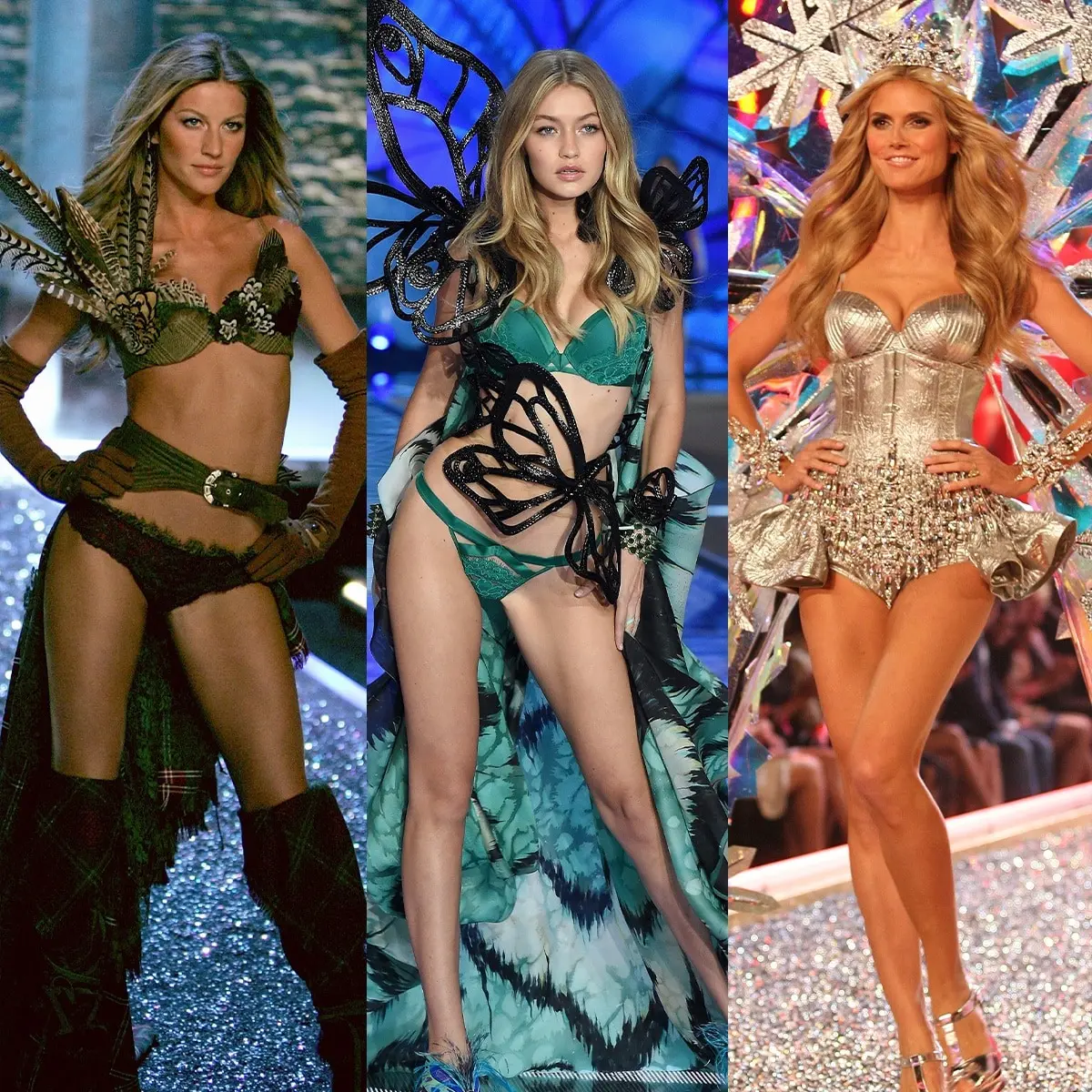
The global fashion landscape has spent the better part of a decade reckoning with the shifting cultural definitions of desirability, body inclusivity, and commercial accountability. Few institutions within this paradigm underwent as dramatic a public unraveling—and subsequent resurrection—as the Victoria’s Secret Fashion Show. Once criticized for clinging to an archaic, narrow-minded standard of femininity, the multi-million-dollar spectacle has executed one of the most calculated corporate image rehabilitations in modern retail history.
This transformation reached a critical juncture with the return of the iconic runway production, anchoring its legacy not in nostalgia, but in a modernized ethos. Central to this reinvention are the multi-generational icons who built the brand’s golden era—ranging from pioneering trailblazers like Tyra Banks to modern fixtures like Gigi and Bella Hadid—who continue to define the cultural footprint of the brand. As the Victoria’s Secret Fashion Show looks toward its upcoming iterations at Los Angeles’ Sony Pictures Studios, including the highly anticipated return of the legendary handcrafted Fantasy Bra in collaboration with Jacob & Co., the brand is attempting a delicate tightrope walk: honoring its high-octane theatrical past while institutionalizing a progressive, inclusive future.
Detailed Chronology: The Rise, Fall, and Resurrection of an Empire
The Formative Decades and the Birth of the "Angel" (1995–2010s)
The modern trajectory of the Victoria’s Secret Fashion Show began in the mid-1990s, transforming what was once a mail-order lingerie catalog into a global pop-culture phenomenon. In 1995, Tyra Banks made history by stepping onto the runway, eventually becoming the first Black Victoria’s Secret contract model and cover star. Banks later reflected on the isolating nature of being a trailblazer, noting that while "first is lonely," it was a necessary catalyst to open doors for future generations.
As the late ’90s rolled into the new millennium, the brand introduced its marquee tier of models: the "Angels." Supermodels such as Gisele Bündchen, Heidi Klum, Adriana Lima, and Alessandra Ambrosio became household names, largely propelled by the visibility of the annual televised runway. Bündchen signed a record-breaking $25 million contract in 2000, a financial milestone that cemented the immense commercial power of the brand. For Heidi Klum, whose 13-year run as an Angel concluded in 2010, the show served as the definitive rocket fuel for her transition into a mainstream global celebrity and host of Project Runway.
During this era, the runway was defined by hyper-theatricality. Elaborate feathered wings, Swarovski-crystal-encrusted lingerie, and live musical performances by global pop icons became staples of the holiday-season broadcast, drawing tens of millions of viewers worldwide.
The Crackdown and Cultural Reckoning (2018–2019)
By the late 2010s, societal expectations surrounding body image, intersectional representation, and female empowerment had fundamentally shifted. Critics increasingly targeted Victoria’s Secret for its rigid adherence to homogenous beauty standards—a homogeneity that stood in stark contrast to the inclusive ethos being championed by contemporary lingerie labels like Rihanna’s Savage X Fenty.
Internal controversies, declining television ratings, and a mounting wave of public backlash culminated in a decisive blow: the official cancellation of the 2019 fashion show. The brand was widely perceived as being stuck in a bygone era, unable or unwilling to evolve with the modern consumer. Former Angels, including Bündchen and Miranda Kerr, had already begun stepping away from the brand years prior, citing personal evolution, motherhood, and a desire to pivot toward entrepreneurial endeavors and family life.
The Corporate Overhaul and Triumphant Return (2024–Present)
Recognizing the existential threat to the brand, corporate leadership initiated a sweeping image rehab. The "Angels" era was officially retired in favor of a diverse advisory board and a renewed focus on multi-dimensional representation.
When the fashion show made its triumphant return in late 2024, it arrived with a radically transformed lineup. Longtime fan-favorites—such as Gigi and Bella Hadid, Adriana Lima, Alessandra Ambrosio, Irina Shayk, and Candice Swanepoel—shared the stage with an intentionally diverse cohort of modern icons and newcomers. The 2024 runway featured trailblazers like Ashley Graham, fashion royalty Kate and Lila Moss, and former French First Lady Carla Bruni, alongside the monumental return of Tyra Banks to close out the show.
Supporting Context & Metrics: The Business of Wings
To understand the cultural footprint of the Victoria’s Secret Fashion Show, one must examine the economic and media machinery that sustained it for decades. At its peak, the television broadcast was a multi-million-dollar marketing engine that directly influenced retail sales, driving millions of consumers to stores ahead of the critical holiday shopping quarter.
| Era / Milestone | Key Models Involved | Cultural & Business Impact |
|---|---|---|
| The Trailblazer Era (1995–1999) | Tyra Banks, Gisele Bündchen, Adriana Lima | Establishment of the "Supermodel Angel" archetype; transition of catalog brand to global media event. |
| The Golden Era (2000–2010) | Heidi Klum, Alessandra Ambrosio, Miranda Kerr | Peak television viewership; introduction of multi-million dollar contracts and the iconic Fantasy Bra. |
| The Transition & Cancellation (2011–2019) | Lily Aldridge, Elsa Hosk, Martha Hunt | Growing disconnect with modern consumer values; mounting criticism leading to the 2019 hiatus. |
| The Modern Renaissance (2024–Present) | Gigi Hadid, Bella Hadid, Ashley Graham, Kate Moss | Corporate restructure prioritizing body inclusivity, diverse representation, and multigenerational appeal. |
Beyond the runway, the economic implications of the brand’s pivot are profound. By integrating diverse body types, ages, and backgrounds, Victoria’s Secret has successfully recaptured market share among Gen Z and Millennial consumers who previously alienated themselves from the brand’s exclusionary messaging of the 2000s.
Official Statements and Personal Reflections
The emotional resonance of walking the Victoria’s Secret runway remains a unifying thread among the women who wore the wings, regardless of the era. Despite the brand’s past criticisms, the models themselves often emphasize the deep personal bonds and professional milestones forged during the shows.
Reflecting on her journey, Gigi Hadid—who first auditioned two or three times before securing her debut in 2015 at age 20—noted the profound emotional weight of the experience. Ahead of her sixth appearance, Hadid pushed back against simplistic reductions of the brand, remarking, "It’s not what people think. It’s not just about lingerie and looking hot."
Similarly, veteran supermodels have offered candid assessments of their tenures. Gisele Bündchen, who famously walked her first runway in 1999 at age 19, detailed in her memoir Lessons: My Path to a Meaningful Life and subsequent interviews that the productions were theatrical marvels: "It was always like a production… there was always someone singing, there was always something happening. It was a fun experience."
Heidi Klum echoed this sentiment on an episode of Call Her Daddy, declaring, "I loved it always. I always wanted to wear the big wings." Klum has also been vocal about the necessity of the brand’s recent evolution, noting during an appearance on The Project that the shift toward diverse representation was long overdue: "Looking at this now, I’m like, ‘About time, good.’ Because things do need to change and they have been changing and it’s been taking too long."
For pioneers like Tyra Banks, the runway represented a platform for systemic change. In reflection on her historic milestones, Banks emphasized: "First is lonely. But first is necessary. First is crucial so that a door can be opened for others to fit through… After a first, must come a flow of more. A flow of different. A flow of unique."
Future Outlook: The 2026 Evolution and Beyond
As Victoria’s Secret prepares for its upcoming showcases—including the October 18 production at Los Angeles’ Sony Pictures Studios—the brand stands at a fascinating crossroads of heritage and innovation.
The strategic reintroduction of foundational elements, most notably the resurrection of the handcrafted Fantasy Bra in collaboration with high-end jeweler Jacob & Co., signals a deliberate nod to the high-fantasy theatrics of the past. However, this is paired with an uncompromising commitment to contemporary values. The curation of the upcoming casts demonstrates that the brand no longer relies on a singular, rigid archetype of beauty, but rather embraces a spectrum of womanhood across generations, body types, and cultural backgrounds.
Ultimately, the enduring allure of the Victoria’s Secret Fashion Show lies in its ability to reinvent its own mythology. By acknowledging the criticisms of its past while uplifting the multi-generational voices of the women who built its legacy, the brand has transformed its wings from a symbol of exclusion into an enduring emblem of evolution, resilience, and modern female empowerment.