

Executive Overview
As organizations globally scramble to integrate generative artificial intelligence into their daily workflows, a familiar and concerning pattern is emerging. According to digital strategist and author Paul Boag, the current corporate rush toward AI implementation resembles a tragicomedy—a modern-day corporate farce where the human element is routinely sacrificed at the altar of technological novelty.
Drawing striking parallels to the digital transformation boom of the early 2010s, Boag argues that businesses are repeating the exact same foundational errors they made a decade ago. Chief among these missteps is treating a profound cultural and behavioral shift as a mere IT upgrade. When senior leadership views AI adoption through a purely technical lens—handing out enterprise licenses for generic tools and expecting organic, frictionless integration—they invite disengagement, systemic fear, and perilous workarounds like "Shadow AI."
This comprehensive analysis revisits Boag’s foundational principles from his seminal work, Digital Adaptation, mapping them directly onto the modern AI era. By examining the human costs of poorly managed technological rollouts, the necessity of psychological safety, and the pitfalls of heavy-handed governance, organizations can pivot from top-down coercion to adaptive, employee-driven adoption.
Detailed Chronology: From the CMS Boom to the AI Era
To understand the systemic failures plaguing modern AI deployments, one must look backward to the tumultuous era of digital transformation. The historical trajectory of enterprise technology reveals a recurring cycle of organizational amnesia.
The 2014 Digital Transformation Echo
Back in 2014, when Boag published Digital Adaptation through Smashing Magazine, organizations were grappling with a sudden imperative to "go digital." IT departments across industries embarked on massive, top-down initiatives to roll out Content Management Systems (CMS), Customer Relationship Management (CRM) platforms, and sprawling intranets. Concurrently, customer-facing divisions rushed to launch mobile applications and early web personalization engines.
Yet, these multi-million-dollar projects frequently collapsed under their own weight. The core issue was not the technology itself, but the glaring disconnect between deployment and application. IT departments configured internal systems with little regard for user experience, while customer-facing teams built digital assets based on executive assumption rather than consumer demand. Staff members were handed unfamiliar, clunky tools, ordered to use them, and left to navigate the operational disruption on their own.
The 2024 AI Déjà Vu
Fast forward to the present day, and the corporate script remains virtually unchanged. Leadership teams, heavily influenced by breathless media headlines and vendor hype, view artificial intelligence as a mandatory silver bullet.
Rather than developing a nuanced strategy, executive leadership often delegates the responsibility to IT. The standard playbook involves purchasing enterprise-wide licenses for tools like Microsoft’s Copilot Studio, organizing a generic, one-size-fits-all training webinar, and considering the job complete.
Employees, once again, find themselves stranded. They are pressured to extract immediate productivity gains from complex, rapidly evolving systems without clear guidance on how these tools fit into their specialized daily workflows. The technology has evolved from the static databases of 2014 to autonomous, generative models, but the organizational blindness remains entirely intact.

Supporting Context & Metrics: The Human Element and Cultural Shift
Technology adoption fails or succeeds not on the elegance of the software, but on the willingness of human beings to integrate it into their habits. AI is not merely a productivity enhancer; it is a profound cultural disruption that touches the core of professional identity.
The Motivation Deficit
A fundamental flaw in executive thinking is the assumption that employees naturally share management’s enthusiasm for productivity. From an organizational perspective, AI increases output—allowing a worker to complete tasks in less time. However, in traditional corporate structures, this does not translate into shorter working hours or higher compensation for the employee.
Instead, the baseline expectation shifts. Staff members are still tethered to a rigid nine-to-five schedule, but now they are expected to produce exponentially more work within those same hours. Under such conditions, why would an employee willingly embrace a technology that feels designed to maximize their labor while offering no personal benefit—and potentially threatening their job security?
To overcome this motivation deficit, organizations must reframe the narrative. AI must be introduced not as an enterprise efficiency metric, but as an antidote to workplace misery. By encouraging staff to identify the most tedious, hated aspects of their jobs and demonstrating how AI can eliminate those friction points, organizations can position technology as an ally rather than an overseer.
The Burden of Procedural Knowledge
Adopting AI requires individuals to dismantle and rebuild procedural knowledge structures that may have taken decades to construct. This cognitive restructuring is exhausting under optimal circumstances; against a backdrop of chronic overwork and endless to-do lists, it becomes nearly impossible.
True adoption requires time, sustained consideration, and dedicated space for experimentation. Formal, generalized training courses fall critically short. Organizations must implement tailored, role-specific educational programs and cultivate peer-to-peer learning ecosystems. Highlighting internal champions—those naturally curious employees already experimenting with AI on the fringes—harnesses the power of social proof far more effectively than any top-down corporate memo.
Official Perspectives: Navigating Safety, Governance, and Shadow IT
As organizations grapple with the realities of generative AI, the tension between control and innovation has reached a breaking point. Leadership must radically reevaluate how they manage governance, institutional risk, and technical constraints.
Cultivating Psychological Safety
Learning a new technology inherently involves trial, error, and failure. Yet, most modern corporations operate under a pervasive culture of fear where mistakes are penalized during performance reviews.
During the digital transformation era, management demanded digital agility while simultaneously enforcing rigid Key Performance Indicators (KPIs) that punished any misstep. Today, this contradiction is magnified. Employees are reprimanded for exceeding token limits or misusing prompts just weeks after being commanded to embrace AI.

"If management wants staff to adopt AI, then they need to make staff feel safe to experiment. They need to adjust KPIs, change how staff are reviewed, and relax some of the governance while staff are learning."
Without psychological safety, risk aversion paralyzes the workforce. Employees rationally conclude that the safest course of action is to ignore the new tools and continue utilizing legacy methods.
The Governance Trap and the Rise of Shadow AI
Governance is necessary, but it is frequently mishandled. Organizations often respond to the unpredictable nature of AI by erecting bureaucratic fortresses—issuing endless pages of restrictive policies that prohibit employees from sharing sensitive data with external models.
When official enterprise tools are too heavily locked down, unresponsive, or incapable of solving specialized problems, employees inevitably bypass them. Just as workers once deployed unauthorized cloud storage solutions like Dropbox during the early days of SaaS, today’s workforce is turning en masse to Shadow AI.
Staff members open personal accounts on ChatGPT, Claude, or specialized mobile apps to accomplish their daily tasks. This behavior creates an invisible, unmonitored vector for corporate data leakage.
Rather than reacting with draconian crackdowns and disciplinary threats, progressive organizations view Shadow AI as a diagnostic tool. When employees seek out unauthorized tools, it signals precisely where official enterprise systems are failing. Management should analyze these workarounds to inform future technological rollouts rather than trying to suppress them through intimidation.
Future Outlook: The Adaptive Enterprise
The path forward requires a fundamental shift in executive mindset. Organizations must abandon the illusion that AI adoption can be centrally planned, rigidly controlled, and flawlessly executed from the top down without operational friction.
- Prioritize Culture Over Code: Recognize that AI implementation is a change-management challenge, not an IT procurement milestone. Success is measured by human adaptation, not license deployment rates.
- Design for Experimentation: Establish fault-tolerant environments where mistakes are treated as data points for learning rather than grounds for reprimand. Adjust short-term metrics to accommodate the cognitive load of learning new workflows.
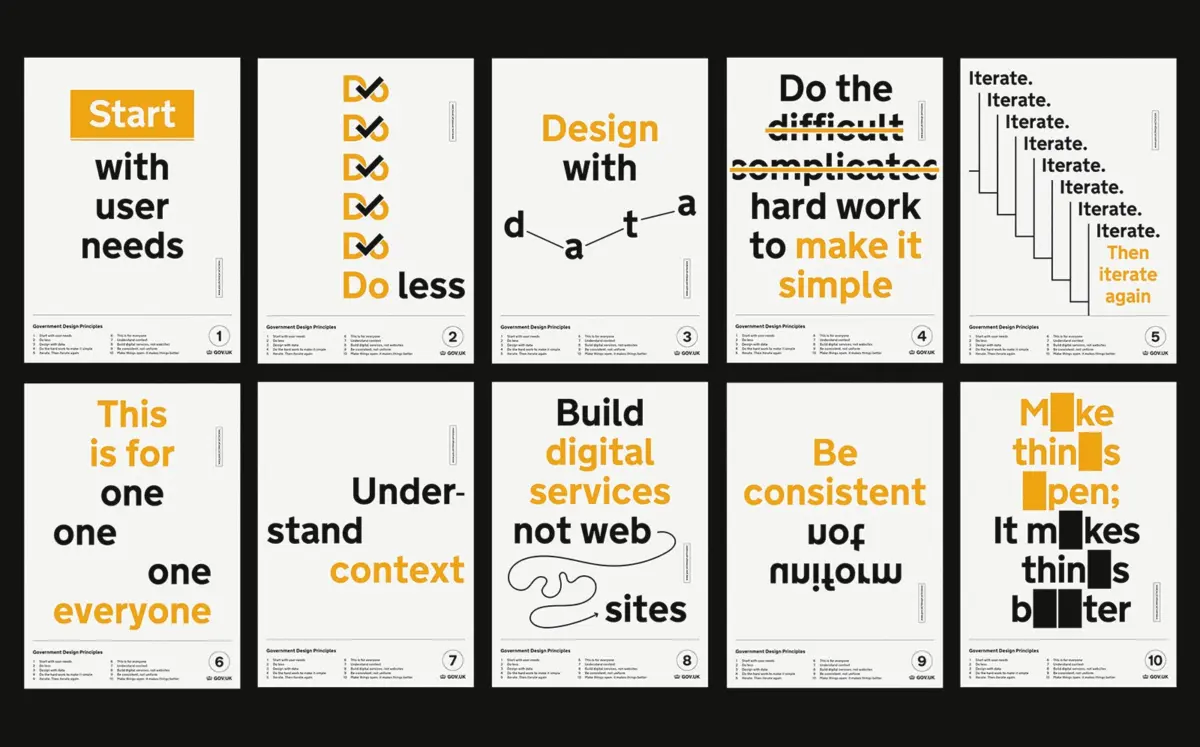
- Streamline Governance: Replace restrictive rulebooks with concise, principles-based governance models that empower employees to exercise common sense, drawing inspiration from successful frameworks like the UK Government Digital Service design principles.
- Embrace Adaptive Infrastructure: Allow for a transitional period of technological messiness. Give teams the autonomy to explore diverse toolsets that suit their distinct operational needs before attempting enterprise-wide standardization.
Ultimately, the greatest danger facing modern organizations is not the risk of moving too fast with artificial intelligence, but the catastrophic risk of treating a revolutionary human and cultural evolution as a simple software installation. The lessons of digital transformation were written a decade ago; the organizations that survive the AI era will be those wise enough—and humble enough—to finally read them.