

Executive Overview
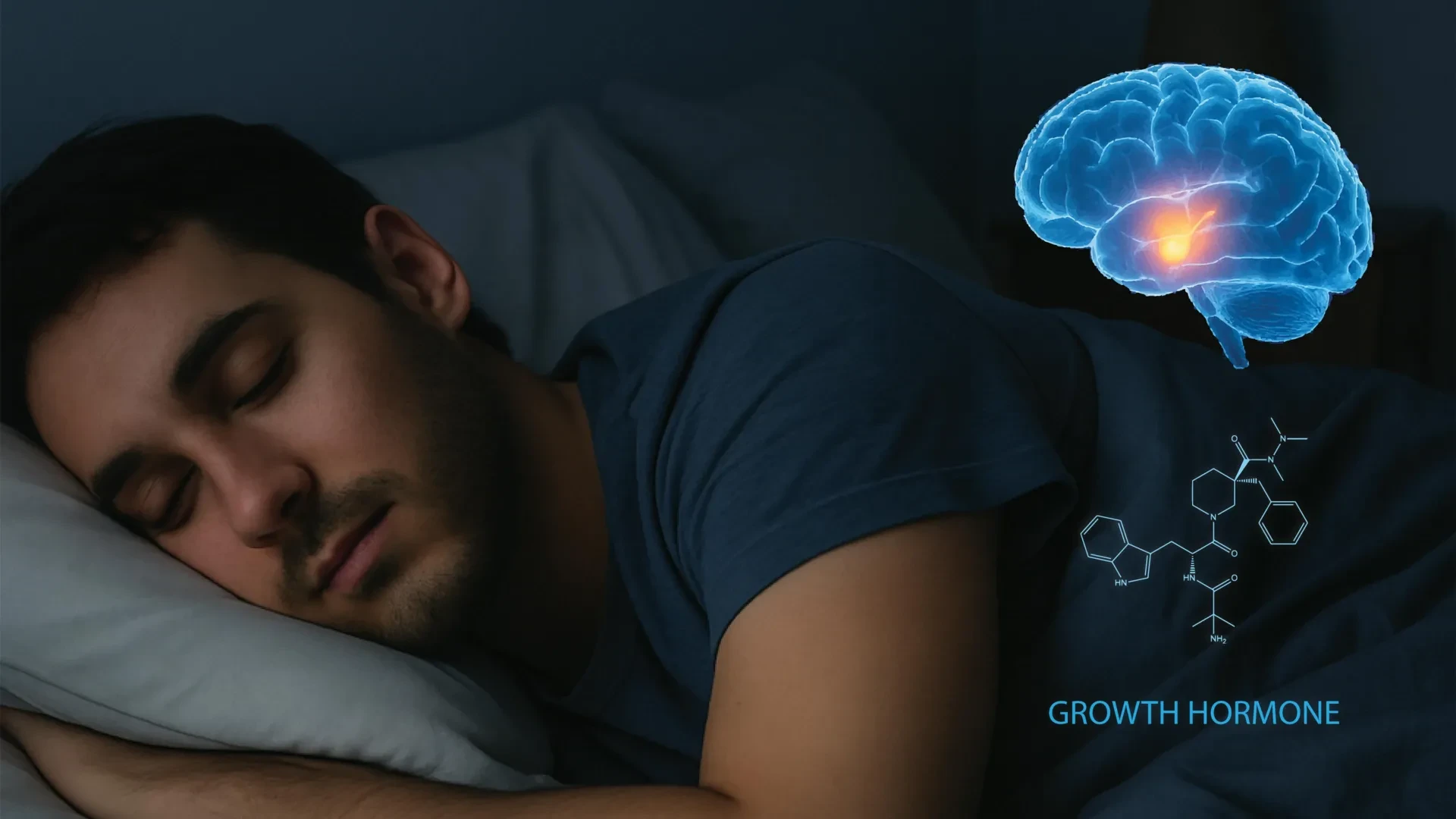
For generations, humanity has understood that a restorative night of slumber is foundational to human health, tissue repair, and vitality. Beyond the subjective feeling of being well-rested, deep sleep triggers a cascade of internal biological maintenance protocols, chief among them the pulsatile release of human growth hormone (HGH). This potent chemical messenger orchestrates muscle hypertrophy, bone mineralization, lipid metabolism, and, critically for adolescents, the realization of full genetic height potential. Yet, while physiologists have long documented the inverse correlation between sleep disruptions and hormonal deficits, the precise intracranial machinery governing this relationship remained a black box.
Now, groundbreaking research originating from the University of California, Berkeley, has successfully mapped the neural circuitry underlying this intricate dance. Published in the prestigious journal Cell, a team led by renowned neuroscientist Yang Dan has not only identified the exact populations of neurons regulating growth hormone secretion during distinct sleep stages, but has also uncovered an entirely novel biological feedback loop. This discovery reveals that the physiological relationship is inherently bidirectional: while deep sleep stimulates growth hormone production, growth hormone reciprocally signals back to the central nervous system to modulate the transition from slumber to alertness.
This milestone in neurobiology moves the scientific community past decades of indirect observation—traditionally reliant on invasive nocturnal blood draws—and into the realm of direct, real-time neural recording in mammalian models. By pinpointing the specific cellular drivers within the hypothalamus and their downstream targets in the brainstem, this study provides a crucial roadmap. The implications extend far beyond basic physiology, offering a theoretical framework for developing targeted interventions for metabolic disorders such as type-2 diabetes, neurodegenerative conditions including Parkinson’s and Alzheimer’s diseases, and chronic sleep architecture pathologies.
Detailed Chronology of the Discovery
Probing the Hypothalamus: The Brain’s Master Control Center
To unravel how the brain synchronizes endocrine release with behavioral states, the UC Berkeley investigative team focused their efforts on the hypothalamus. Situated deep within the mammalian forebrain, this compact yet extraordinarily complex structure acts as the body’s ultimate homeostasis regulator. It oversees core autonomic functions, including thermoregulation, circadian rhythms, appetite, and the precise orchestration of sleep-wake cycles. Because these ancient neural systems have been heavily conserved through millions of years of mammalian evolution, discoveries made at this level carry profound translational potential for human medicine.
Within the hypothalamus, the researchers zeroed in on specific cellular populations responsible for manufacturing chemical messengers with opposing actions:
- GHRH-producing neurons: Growth hormone-releasing hormone (GHRH) acts as an accelerator, driving the secretion of growth hormone into the bloodstream.
- Somatostatin-producing neurons: Comprising two distinct classes, these cells act as the physiological brakes, suppressing growth hormone release.
These opposing forces act largely upon the pituitary gland—the master endocrine gland nestled at the base of the brain—dictating the volume and timing of growth hormone pulses. However, the exact choreography of these cells across shifting sleep architectures remained unmapped until the Berkeley team deployed advanced intracranial instrumentation.
Illuminating the Neural Circuitry in Real Time
Led by study first author Xinlu Ding and co-author Daniel Silverman, both postdoctoral fellows in UC Berkeley’s Department of Neuroscience and the Helen Wills Neuroscience Institute, the laboratory undertook an ambitious methodology. Utilizing murine models, the team implanted high-resolution micro-electrodes directly into the neural tissue of the hypothalamus while employing optogenetic techniques—using light pulses to activate or silence genetically modified neurons.
Mice serve as exceptionally valuable models for sleep research due to their distinct ultradian sleep architecture. Unlike humans, who typically experience consolidated, monophasic sleep spanning several continuous hours, mice cycle through sleep and wake states in rapid, minutes-long episodes scattered across the 24-hour circadian cycle. This unique physiological trait provided the Berkeley researchers with an accelerated experimental landscape, allowing them to observe hundreds of transitions between wakefulness, rapid eye movement (REM) sleep, and non-REM (NREM) sleep in real time.
Decoding the Sleep-Stage Dynamics
Through advanced viral tracing and real-time electrical recording, the team uncovered that the behavior of GHRH and somatostatin neurons shifts dramatically depending on the specific phase of sleep:
- During REM Sleep (The Dreaming Phase): Classically associated with vivid cognitive activity and emotional processing, REM sleep paradoxically triggers an upsurge in the activity of both GHRH and somatostatin neurons. Even though these two chemical messengers possess opposing regulatory functions, their coordinated, simultaneous activation during REM states drives an elevation in growth hormone secretion.
- During NREM Sleep (Deep, Restorative Sleep): Dominating the earlier thirds of a normal nocturnal rest period, NREM sleep exhibits a different neural signature. Here, the inhibitory grip of somatostatin neurons recedes significantly, while GHRH neuronal activity experiences a moderate, sustained rise. This dual shift optimizes the physiological environment for profound growth hormone liberation.
This structural mapping solved a long-standing paradox in neuroendocrinology: how distinct stages of sleep could utilize overlapping neural populations to achieve the same systemic hormonal output.
Supporting Context & Metrics: Metabolism, Homeostasis, and the Brainstem
The Systemic Reach of Growth Hormone
While cultural perception frequently relegates growth hormone to childhood skeletal elongation, its physiological mandate persists across the entire human lifespan. HGH operates as a critical metabolic regulator, influencing:
- Musculoskeletal Integrity: Stimulating amino acid uptake and protein synthesis to repair micro-tears in skeletal muscle and preserve bone mineral density.
- Lipid Metabolism: Directing adipose tissue mobilization, determining how the body stores and burns dietary fats.
- Glucose Homeostasis: Interacting directly with insulin signaling pathways to maintain stable blood sugar concentrations.
When sleep architecture is chronically fragmented—whether through sleep apnea, shift work, or voluntary sleep restriction—the tightly regulated nocturnal pulses of growth hormone flatten. Because HGH is deeply intertwined with lipid and carbohydrate metabolism, sustained sleep deprivation acts as a primary catalyst for systemic metabolic dysregulation. Epidemiological and clinical data consistently correlate chronic sleep debt with heightened risks for obesity, insulin resistance, type-2 diabetes mellitus, and accelerated cardiovascular disease.
The Locus Coeruleus Feedback Loop
Perhaps the most paradigm-shifting aspect of the Berkeley study was the identification of a reverse signaling mechanism. The researchers discovered that growth hormone does not merely act as a passive downstream recipient of sleep signals; it actively dictates future behavioral states by targeting the locus coeruleus.
Located within the brainstem, the locus coeruleus is the principal site for brain synthesis of norepinephrine, the neurotransmitter driving vigilance, autonomic arousal, attentional focus, and cognitive exploration. Structural disruptions or neurodegenerative pathologies affecting this region are hallmark precursors to psychiatric disorders and dementias, including Parkinson’s and Alzheimer’s diseases.
The UC Berkeley team mapped how accumulating levels of growth hormone during sleep stimulate receptors within the locus coeruleus. As HGH levels peak toward the latter stages of the sleep cycle, they progressively excite these brainstem neurons, effectively nudging the central nervous system toward the physiological threshold of awakening.
This establishes a classical homeostatic feedback loop:
- Step 1: Consolidated sleep drives hypothalamic networks to release growth hormone.
- Step 2: Growth hormone accumulates and circulates back to the brainstem.
- Step 3: Interaction with the locus coeruleus progressively elevates alertness, facilitating the transition to wakefulness.
The Paradox of Overexcitation
Intriguingly, the study highlighted a delicate threshold within this feedback system. While moderate activation of the locus coeruleus promotes clear-headed alertness, excessive stimulation can trigger a paradoxical neurochemical response. In complementary research published by Daniel Silverman earlier the same year, data demonstrated that when locus coeruleus neurons are hyper-stimulated, they can induce profound lethargy and paradoxical sleepiness rather than wakefulness.
This delicate equilibrium underscores the broader biological principle of homeostasis: the central nervous system must continuously balance competing excitatory and inhibitory pressures to preserve both metabolic health and cognitive clarity.
Official Statements and Expert Insights
The implications of mapping this foundational neuroendocrine circuit have drawn praise and analysis from the broader scientific community, anchored by commentary from the principal architects of the research at UC Berkeley.
"People know that growth hormone release is tightly related to sleep, but only through drawing blood and checking growth hormone levels during sleep," explained Xinlu Ding, study first author and postdoctoral fellow in the Department of Neuroscience and the Helen Wills Neuroscience Institute. "We’re actually directly recording neural activity in mice to see what’s going on. We are providing a basic circuit to work on in the future to develop different treatments."
Highlighting the therapeutic potential of targeting this newly mapped neural architecture, study co-author Daniel Silverman elaborated on the intersection of genetic engineering and neuropharmacology:
"Understanding the neural circuit for growth hormone release could eventually point toward new hormonal therapies to improve sleep quality or restore normal growth hormone balance. There are some experimental gene therapies where you target a specific cell type. This circuit could be a novel handle to try to dial back the excitability of the locus coeruleus, which hasn’t been talked about before."
Silverman further emphasized the systemic integration of the findings:
"This suggests that sleep and growth hormone form a tightly balanced system: Too little sleep reduces growth hormone release, and too much growth hormone can in turn push the brain toward wakefulness. Sleep drives growth hormone release, and growth hormone feeds back to regulate wakefulness, and this balance is essential for growth, repair and metabolic health."
Detailing the broader cognitive advantages that may stem from this hormonal feedback loop, Xinlu Ding noted:
"Growth hormone not only helps you build your muscle and bones and reduce your fat tissue, but may also have cognitive benefits, promoting your overall arousal level when you wake up."
The overarching research initiative was conducted under the direct supervision of Yang Dan, professor of neuroscience and of molecular and cell biology at UC Berkeley, whose laboratory provided the infrastructural and methodological rigor required for the study. Financial and institutional backing was generously provided by the Howard Hughes Medical Institute (HHMI)—which supported Dan as an investigator through the year of publication—alongside the Pivotal Life Sciences Chancellor’s Chair fund, held by Dan.
The collaborative effort included significant contributions from UC Berkeley co-authors Peng Zhong, Bing Li, Chenyan Ma, Lihui Lu, Grace Jiang, Zhe Zhang, Xiaolin Huang, Xun Tu, and Zhiyu Melissa Tian, alongside cross-institutional partnerships featuring Fuu-Jiun Hwang and Jun Ding from Stanford University.
Future Outlook & Translational Medicine
As the global healthcare landscape grapples with escalating rates of metabolic syndrome, sleep disorders, and aging-associated neurodegeneration, the UC Berkeley discovery opens transformative avenues for translational medicine.
Targeting Metabolic and Sleep Pathologies
Traditional pharmacological approaches to sleep disorders—such as exogenous melatonin, GABA receptor agonists, or orexin antagonists—frequently fail to address the underlying neuroendocrine dysfunction associated with metabolic disease. By identifying the precise hypothalamic GHRH and somatostatin circuits, biomedical engineers now possess a cellular blueprint. Future drug development can theoretically focus on creating selective modulators capable of pharmacologically mimicking the restorative neural firing patterns of NREM sleep, potentially restoring endogenous growth hormone pulses in patients suffering from metabolic stagnation, obesity-induced sleep apnea, or age-related growth hormone decline (somatopause).
Neurological and Psychiatric Interventions
The revelation that growth hormone acts directly upon the locus coeruleus to modulate wakefulness bridges two previously disconnected fields of study: endocrinology and neuropsychiatry. Because the locus coeruleus is ground zero for noradrenergic signaling involved in attention deficit disorders, anxiety, post-traumatic stress, and early-stage neurodegenerative diseases like Parkinson’s and Alzheimer’s, the circuit offers a novel therapeutic target. Experimental gene therapies designed to safely modulate the excitability of locus coeruleus neurons via growth hormone receptor pathways could yield unprecedented treatments for cognitive fatigue and arousal regulation disorders.
Caveats and the Path to Human Trials
Despite the monumental nature of the findings, the researchers urge a measured approach. Because the empirical data were gathered using murine models, significant translational hurdles remain. Human sleep architecture, while sharing homologous hypothalamic controls, is vastly more complex and protracted than the ultradian cycles of rodents. Subsequent research must determine whether identical feedback topologies govern human neuroendocrinology and whether targeted gene or pharmacological therapies can be safely administered without disrupting systemic endocrine balance.
Ultimately, this study serves as a definitive empirical reminder that slumber is not a passive neurological shutdown. Rather, sleep represents a high-level, intensely coordinated active state—a masterclass in biological engineering where neural networks and endocrine messengers maintain an uninterrupted dialogue to secure our physical growth, cellular repair, metabolic equilibrium, and mental awakening.