In the modern landscape of digital freelancing, the rules of client acquisition have undergone a radical transformation. For years, independent writers relied heavily on public job boards, cold pitching via email, and low-paying content mills to secure their livelihoods. Today, those methods are increasingly taking a back seat to a much more lucrative, organic avenue: LinkedIn.
Far beyond its origins as a digital resume repository, LinkedIn has evolved into the premier global ecosystem for B2B networking, thought leadership, and inbound client generation. According to industry surveys and independent career coaches, a vast majority of successful modern freelancers now source their primary pipeline of high-paying clients directly from the platform.
However, mastering LinkedIn requires far more than merely creating a profile and waiting for work to roll in. As platform algorithms shift to prioritize community relevance, niche expertise, and conversational engagement over sheer reach, writers must adapt their strategies. This comprehensive guide investigates the fundamental shifts in LinkedIn’s architecture and outlines five actionable, authoritative strategies designed to help freelance writers conquer posting anxiety, optimize their profiles, and build a sustainable inbound client engine.
Detailed Chronology: The Evolution of Freelance Client Acquisition
To understand why LinkedIn holds such supreme dominance in the current freelance market, one must examine the chronological shift in digital job-hunting over the past decade.
Phase 1: The Wild West of Job Boards (Early 2010s)
In the early days of modern content marketing, freelance writers found their work primarily through aggregate job boards, Craigslist postings, and content platforms. While these avenues offered high volume, they also fostered a race to the bottom. Writers competed against a global pool of labor, often driving word rates down to pennies. Client vetting was minimal, and long-term business relationships were rare.
Phase 2: The Cold Pitching Era (Mid-to-Late 2010s)
As the digital space matured, freelance mentors taught the art of the cold email pitch. Writers spent hours researching company decision-makers, crafting personalized letters of introduction, and sliding into corporate inboxes. While effective for those with thick skin and high-volume persistence, cold pitching suffered from low conversion rates and immense psychological friction, often leading to rapid burnout.
Phase 3: The Rise of the Professional Social Web (Present Day)
Today, corporate decision-makers—including Chief Marketing Officers, content directors, and startup founders—spend their working hours embedded in professional social networks. They are actively seeking industry insights, thought leadership, and verified subject matter experts. LinkedIn recognized this behavioral shift and optimized its algorithm to reward niche authority. For freelance writers, this means the traditional sales funnel has inverted: instead of hunting for clients, writers can now position themselves so that clients hunt for them.
Supporting Context & Metrics: Decoding the LinkedIn Algorithm
Before executing any outreach strategy, freelancers must understand the mechanics behind the platform they are trying to conquer. LinkedIn’s underlying code has evolved significantly, heavily punishing outdated tactics while rewarding hyper-specific behaviors.
What the Algorithm Rewards Now:
Niche Consistency: Accounts that consistently post about a singular, well-defined industry or topic are systematically flagged by the algorithm as authoritative sources, resulting in expanded distribution within that specific niche.
Conversational Engagement: Posts that spark genuine dialogue—measured by thoughtful comments and back-and-forth replies—receive prolonged algorithmic lifespans compared to static announcements.
Dwell Time: Content that forces a reader to stop scrolling, expand the post, or consume embedded text-based frameworks signals high user value to LinkedIn’s backend systems.
What the Algorithm Penalizes:
Outbound Link Dumping: Dropping external blog or website links directly into the body of a post traditionally results in reduced organic reach, as LinkedIn prefers to keep users inside its native ecosystem.
Engagement Bait: Explicitly asking users to "Like and share" or employing cheap growth hacks is increasingly suppressed by machine learning filters designed to maintain platform integrity.
Generic Broadcasting: Posting broad, unfocused platitudes that appeal to "everyone" ultimately appeals to no one, rendering the content invisible in a sea of corporate noise.
Five Essential Strategies to Master LinkedIn as a Freelance Writer
With a firm grasp of the algorithmic landscape, independent writers can implement five core strategies designed to maximize time efficiency and secure high-value contracts.
1. Write Exclusively to Potential Clients, Not Other Freelancers
One of the most common traps for emerging writers is falling into the "peer echo chamber." It is entirely natural to connect with fellow writers to share commiseration, writing tips, and industry camaraderie. However, networking exclusively with peers will never generate client revenue.
When a prospective B2B marketing director lands on your LinkedIn feed, they should not see a tutorial on how to use punctuation or a debate on freelance tax deductions. They should see a masterclass in the specific industry you serve.
Execution Steps:
Audit Your Content: Review your last ten posts. Calculate how many are aimed at other freelancers versus how many address the pain points of your target audience.
Identify Core Themes: Select three to five pillars that your ideal clients care deeply about. For instance, a freelance medical writer might focus on regulatory hurdles, clinical trial updates, and healthcare content compliance. A fintech writer might discuss open banking trends, cross-border payments, and regulatory tech.
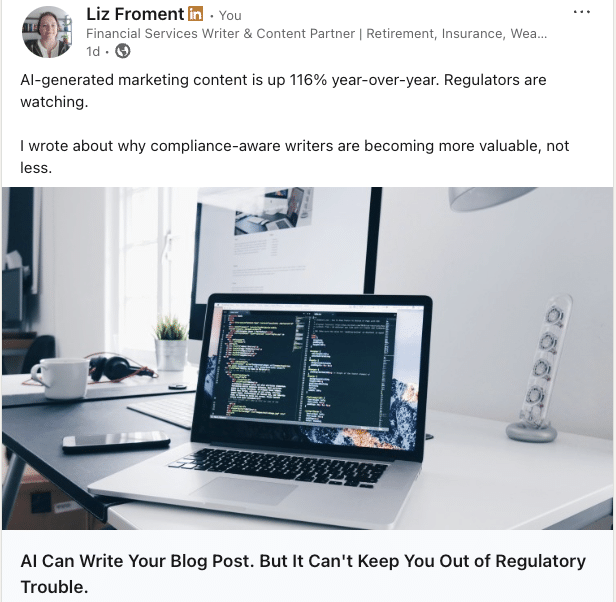
Demonstrate Domain Expertise: Publish micro-case studies, project insights (stripped of confidential client data), and strategic breakdowns of why certain corporate content campaigns succeed or fail.
2. Overcome Posting Anxiety Through Strategic Cadence
The conventional advice handed down to digital creators often demands daily posting, endless video production, and round-the-clock engagement. For a working freelance writer juggling client deadlines, this advice is not only unrealistic—it is paralyzingly overwhelming.
The truth is far more forgiving: publishing one or two exceptionally high-quality posts per week, consistently over several months, yields exponential results.
Execution Steps:
Choose a Sustainable Cadence: Commit to a frequency you can maintain indefinitely. Every Monday and Thursday, or simply every Wednesday morning, is entirely sufficient.
Batch Your Content: Dedicate 30 minutes on the weekend to outline and draft your posts for the upcoming week. Utilize LinkedIn’s native post scheduler to automate delivery, removing daily decision fatigue.
Prioritize Text-Based Formats: Do not feel pressured to produce fancy graphics or polished videos. Cleanly formatted text posts featuring a powerful hook, scannable spacing, and a clear takeaway consistently achieve high organic reach.
3. Focus Relentlessly on "Walking the Marketing Dog"
Building a thriving LinkedIn presence is a marathon, not a sprint. While waiting for inbound leads to materialize, you can dramatically accelerate the process through targeted outbound engagement. Industry experts often refer to this daily maintenance as "walking the marketing dog"—a non-negotiable daily routine that keeps your brand active and visible.
Execution Steps:
Curate a Prospect List: Compile a targeted list of 20 to 30 decision-makers—such as content managers, marketing VPs, and startup founders—at companies you aspire to write for.
Engage Thoughtfully: Spend 15 to 20 minutes daily reviewing their content. Avoid empty platitudes like "Great post!" or "So true!" Instead, add genuine value by sharing a counter-insight, expanding on their point with data, or asking a probing follow-up question.
Adopt a Daily Routine: Consider adopting frameworks like the popular 3-2-1 method: send three intentional connection requests, leave two thoughtful comments, and publish one original post daily.
4. Optimize Your Profile to Function as a High-Converting Sales Page
Your LinkedIn profile is not a static digital CV; it is a dynamic sales landing page designed to convert casual profile visitors into paying clients. Every element of your profile must be engineered to answer one fundamental question from the prospect’s perspective: "What can this writer do for my business?"
Execution Steps:
Craft a Benefit-Driven Headline: Erase generic titles like "Freelance Writer." Replace them with specific value propositions, such as: "I write high-converting SaaS content that turns complex software features into enterprise revenue" or "Financial Services Copywriter | Trusted by [Client A], [Client B], and [Client C]."
Rewrite Your About Section: Address the reader directly in the second person. Outline the specific pain points you solve, the industry sectors you understand, and the measurable results you have delivered. Conclude with a crystal-clear call to action pointing to your portfolio website.
Leverage the Featured Section: Pin your two or three best-performing writing samples, along with client video testimonials or verifiable case studies, directly to the top of your profile.
Detail Your Experience Section: Move past vague descriptions. Instead of writing "Wrote articles for various clients," detail specific scope and impact: "Authored 50+ in-depth technical guides covering artificial intelligence integration in modern banking infrastructure."
5. Build an "Idea Brain" to Eliminate Writer’s Block
The greatest enemy of consistency is creative paralysis. Staring at a blank screen wondering what to publish guarantees inaction. The antidote is systematic idea capture.
Execution Steps:
Log Ten Ideas Daily: Dedicate a daily recurring reminder on your smartphone. Open your notes app during your morning coffee and rapidly jot down ten raw ideas, client questions, industry frustrations, or recent learnings.
Embrace Volume Over Quality: Do not judge the ideas as you write them. At the end of the week, review your list of 70 raw concepts and select the top 5 to develop into full posts.
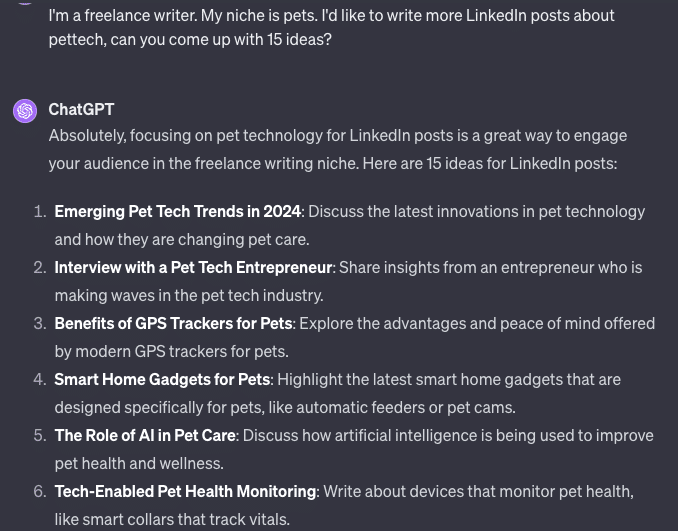
Leverage AI as a Collaborative Sparring Partner: When severe writer’s block strikes, utilize generative AI tools such as ChatGPT. Prompt the system to brainstorm content angles for your specific niche, then apply your unique voice, anecdotes, and professional insights to refine the output.
Official Statements & Industry Perspectives
Industry leaders and seasoned digital entrepreneurs agree that the window of opportunity on professional networking platforms is widening for specialized independent contractors.
Sean Ogle, founder of Location Rebel and a veteran mentor in the digital business space, emphasizes the long-term career security built through networking platforms:
"Getting clients from LinkedIn is fantastic, but the hidden superpower of the platform is the peer-to-peer network you build with other professionals. A larger, active network multiplies your referral streams and builds unmatched income stability in an unpredictable economy."
Similarly, B2B content strategists stress that modern hiring managers routinely bypass traditional resume submissions, turning instead to a candidate’s social footprint to evaluate communication skills, industry comprehension, and professional reliability before ever extending an invitation to interview.
Future Outlook: The Resilient Freelancer
As artificial intelligence continues to reshape the landscape of basic content creation, the value of human strategic insight, authentic niche experience, and relationship-driven marketing has never been higher. Generic commodity writing is losing its market value, but specialized subject matter experts who understand how to build trust online are thriving.
By treating LinkedIn not as a social distraction, but as a systematic, twenty-minute-a-day business development channel, freelance writers can future-proof their operations. The tools are accessible, the audience is actively searching for solutions, and the pathway to sustainable, high-income freelancing is open to anyone willing to put in the consistent, strategic effort.