

Executive Overview
After years of exhaustive brand reclamation, image rehabilitation, and a strategic pivot away from archaic ideals of exclusivity, Victoria’s Secret is once again transforming its cultural footprint. The culmination of this multi-year metamorphosis is the reinvention of its most storied marketing engine: the Victoria’s Secret Fashion Show.
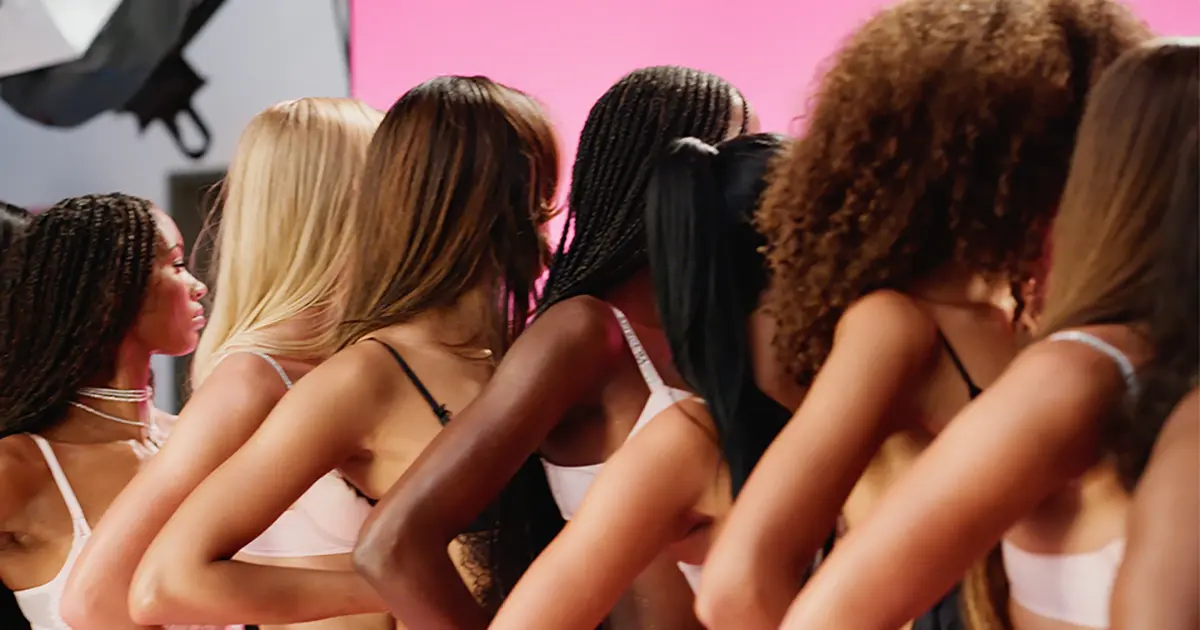
Long criticized for perpetuating narrow, unattainable beauty standards—a misstep that ultimately led to the suspension of the televised spectacle in 2018—the lingerie giant is executing a carefully calculated comeback. This year’s production, taking place in Los Angeles on Sunday, October 18, represents a sharp departure from the opulent, gatekept extravaganzas of the past. Instead, the brand is leaning heavily into community, interactivity, and modern digital ecosystems.
Under the leadership of Chief Marketing and Customer Officer Elizabeth Preis, who assumed the role in May 2025, the brand is shifting from a top-down broadcasting model to a participatory, multi-platform cultural moment. By integrating public ticket drops, a nationwide casting search for a new generation of "Angels," and an unprecedented post-show TikTok Live, Victoria’s Secret is attempting a difficult balancing act: retaining the high-glam fantasy that built its empire while making its universe feel accessible, inclusive, and attuned to the demands of modern consumers.
This report provides a comprehensive analysis of the renewed Victoria’s Secret Fashion Show, evaluating the strategic shifts under Elizabeth Preis, the mechanics of its digital-first rollout, and the broader implications for fashion marketing in an era dominated by social media integration and consumer democratization.
Detailed Chronology: The Fall, Rebuilding, and Reemergence of a Cultural Titan
To understand the structural significance of the October 18 fashion show in Los Angeles, one must examine the turbulent timeline that brought the brand to this juncture.
The Zenith and Collapse of the Traditional Show (1995–2018)
For over two decades, the Victoria’s Secret Fashion Show was an unassailable holiday-season television event. Broadcast to millions of households worldwide, the show was a pop-culture juggernaut, featuring multi-million-dollar "Fantasy Bras," musical performances by the world’s biggest pop stars, and the coveted roster of supermodels known as "Angels."
However, by the late 2010s, cultural attitudes toward body image, representation, and the male gaze shifted dramatically. Critics increasingly rejected the homogeneous, ultra-slim archetype championed by the brand. Coupled with declining television ratings, controversies surrounding executive leadership, and rising competition from body-inclusive direct-to-consumer startups like Rihanna’s Savage X Fenty, Victoria’s Secret hit a wall. In 2019, the company officially canceled the annual fashion show, signaling the end of an era and forcing a profound corporate soul-searching.
The Strategic Rebranding Era (2020–2024)
Following the cancellation, parent company L Brands (subsequently split into Victoria & Co. and Bath & Body Works) initiated a massive structural overhaul. The board appointed new leadership, replaced the male-dominated executive ranks with women-led teams, and retired the "Angel" moniker in favor of the "VS Collective"—a group of diverse change-makers, athletes, and activists, including Naomi Osaka, Priyanka Chopra, and Megan Rapinoe.
In 2023, the brand attempted its first major structural reinvention with The Victoria’s Secret World Tour, a documentary-style fashion film that prioritized independent global artists and designers over the traditional runway format. While critically praised for its artistic ambition, industry insiders noted that consumers missed the theatricality, glamour, and direct product-to-runway correlation of the original shows.
The Return and Evolution (2024–Present)
Recognizing that the core equity of the brand lay in its signature blend of high fashion, entertainment, and spectacle, Victoria’s Secret brought back a reimagined runway show in late 2024. The reception proved that the appetite for the brand’s theatricality remained intact, provided the underlying ethos was modernized.
This brings us to the current phase under Chief Marketing and Customer Officer Elizabeth Preis. Entering her role in May 2025, Preis was tasked with taking the momentum of the 2024 return and scaling it into a deeply engaging, year-round community experience. The upcoming Los Angeles showcase on October 18 is the manifestation of this strategy: retaining the high-production spectacle while stripping away the velvet ropes that once alienated the audience.
Supporting Context & Metrics: The Economics of Engagement
The transformation of the Victoria’s Secret Fashion Show is not merely an artistic exercise; it is a meticulously calculated economic strategy designed to capture fragmented consumer attention across global markets.
The Shift from Broadcasting to Broadcasting-Plus-Interaction
Historically, the fashion show was designed as a one-way communication channel: a television broadcast intended to drive holiday sales through sheer visual saturation. In 2025, that model is obsolete.
By streaming globally on YouTube and the brand’s proprietary social channels, Victoria’s Secret is meeting consumers where they already consume culture. More importantly, the inclusion of the brand’s first-ever post-show TikTok Live represents an aggressive pivot toward real-time commerce and conversation. Industry analysts project that real-time social engagement during high-profile fashion events directly correlates with a surge in immediate e-commerce conversions, particularly among Gen Z and Millennial demographics who use social platforms as search engines and storefronts.
Democratizing Access: Ticket Drops and Nationwide Castings
One of the most profound critiques of the legacy fashion industry has been its inherent exclusivity. For decades, attendance at major fashion shows was restricted to editors, celebrities, and top-tier buyers.
For the Los Angeles show, Victoria’s Secret has introduced public ticket drops—a strategy borrowed from the sneaker and music industries to build anticipation and grassroots excitement. Furthermore, the brand’s nationwide search for a new Angel democratizes the talent pipeline. Instead of relying solely on traditional modeling agencies, the casting process incorporates digital submissions, allowing everyday consumers to feel a sense of ownership over the brand’s future face.
Brand Sentiment and Financial Turnaround
Financial reports indicate that these cumulative rebranding efforts are bearing fruit. After years of consecutive revenue declines, Victoria’s Secret has stabilized its core business lines, reporting improved margins and positive digital growth. The fashion show acts as the ultimate top-of-funnel marketing expenditure, driving earned media value (EMV), social impressions, and immediate product line sell-throughs.
Official Statements and Industry Insights
The philosophy guiding this year’s event centers heavily on participation, community, and emotional resonance. Elizabeth Preis, who stepped into the role of Chief Marketing and Customer Officer in May 2025, articulated the core vision behind the updated format in an exclusive interview with ADWEEK.
Reflecting on consumer behavior observed during the previous year’s event, Preis noted a distinct cultural shift in how fans interact with the brand:
"After observing how fans gathered together to watch the 2025 event, Victoria’s Secret wanted to make sure this year was much more participatory as a night of fun and friendship."
This quote underscores a fundamental pivot in the brand’s psychology. Rather than presenting an idealized, untouchable standard of beauty that viewers observe from a distance, the modern Victoria’s Secret aims to create shared communal spaces. Whether through watch parties, social media challenges, or interactive digital live streams, the brand is positioning itself as a facilitator of social connection among women.
Industry analysts have praised this strategic realignment. Sarah Jenkins, a senior retail strategist at ConsumerEdge, noted:
"Victoria’s Secret is finally executing what brands have been trying to do for a decade: turning passive viewers into active participants. By opening up the casting calls and utilizing platforms like TikTok Live, they are neutralizing the criticisms of the past while preserving the high-end theatricality that made them famous in the first place."
Future Outlook: What the 2025 Show Signals for the Retail Landscape
As the fashion industry watches Los Angeles on Sunday, October 18, the implications extend far beyond the confines of lingerie retail. The evolution of the Victoria’s Secret Fashion Show offers a masterclass in legacy brand turnaround, offering several key takeaways for the broader retail and marketing sectors.
1. The Death of the Passive Spectacle
Consumers no longer want to be talked at; they want to be talked with. The success of future fashion events will not be measured solely by television ratings or print magazine mentions, but by UGC (user-generated content), real-time engagement metrics, and community-led digital conversations. Victoria’s Secret’s post-show TikTok Live is a direct acknowledgment of this reality.
2. The Hybridization of Entertainment and Commerce
The lines between media, entertainment, and shopping are continuing to dissolve. Future runway shows will increasingly function as live-shopping broadcasts where viewers can purchase pieces directly from the screen while the model is walking down the runway. While Victoria’s Secret is taking measured steps toward this model, the integration of social streaming platforms points clearly toward an immediate shoppable future.
3. Sustainable Inclusion as a Baseline
Inclusion is no longer a marketing "campaign" or a temporary trend; it is the baseline operational standard for any consumer-facing brand seeking long-term viability. Victoria’s Secret’s ongoing efforts to diversify its runway rosters, embrace varied body types, and democratize talent searches will dictate whether the brand can maintain consumer trust over the next decade.
Conclusion
The journey of Victoria’s Secret from the brink of cultural irrelevance to its current status as a digitally savvy, community-focused powerhouse is one of the most fascinating case studies in modern corporate history. By transforming its iconic fashion show from an exclusive television broadcast into an accessible, participatory festival of fashion and friendship, the brand is proving that heritage and modernity can coexist. As the lights go up in Los Angeles on October 18, Victoria’s Secret will not just be showcasing lingerie—it will be showcasing its blueprint for the future of retail.