

Executive Overview
In the realm of artisanal agriculture and heirloom produce tasting, few subjects command as peculiar a blend of academic rigor, visceral sensory evaluation, and outright obsession as the seasonal apple harvest. Following the widespread public reception of the initial exploratory tasting logs, the pomological community has turned its analytical lens toward a diverse, erratic, and occasionally punishing cohort of obscure varietals. This investigation presents the comprehensive findings of the subsequent tasting phase—dubbed informally by participants as "Part Two"—wherein a panel of critical sensory evaluators subjected seven distinct apple cultivars to rigorous physical, gustatory, and psychological scrutiny.
The spectrum of specimens evaluated during this latest cycle ranged from the heavily spiced and texturally dense to industrial-grade cider crabs and varietals possessing uncanny, confectionary flavor profiles. Far from the uniform, waxy, and predictable red or green spheres populating standard supermarket aisles, these heirloom and regional varieties demonstrate the volatile nature of pomology. Factors such as harvest timing, storage duration, tannin concentration, and botanical lineage play decisive roles in determining whether a given fruit offers an exquisite culinary experience or a punishing exercise in jaw strength.

This report synthesizes the qualitative evaluations, historical anomalies, and sensory metrics associated with each tested cultivar. By examining the structural integrity, aromatic compounds, and idiosyncratic flavor notes of varieties such as the Kickapoo Spice, St Edmunds Pippin, and the enigmatic Graham, this document provides an authoritative resource for consumers, agronomists, and culinary enthusiasts navigating the complex landscape of autumn fruit consumption.
Detailed Chronology of the Evaluation Phase
The evaluation protocol followed a standardized methodology of inspection, tactile assessment, and immediate consumption upon reaching peak ripeness or post-harvest equilibrium. The chronological progression of the tasting sessions revealed stark contrasts in quality, yielding ratings on a definitive ten-point scale.

1. Kickapoo Spice
- Evaluated Metric Score: 6.9 / 10
- Physical Profile: Dense, structurally compact, characterized by an absence of high juiciness.
- Flavor Architecture: Heavy aromatic concentration of nutmeg, cinnamon, and clove. A distinct, undesirable aftertaste reminiscent of freshly cut grass punctuated the finish.
- Chronological Assessment: Pomological analysts noted that the Kickapoo Spice exhibited classic symptoms of suboptimal post-harvest storage. While some varietals improve dramatically off the tree, this specimen demonstrated a developmental plateau that limited its potential. Despite the grassy undertone and lack of moisture, its formidable spice profile earned it a respectable, if humorous, median score.
2. St Edmunds Pippin
- Evaluated Metric Score: 8.3 / 10
- Physical Profile: Characterized by a rough, textured exterior surface paired with an exceptionally crisp, sharp-breaking snap upon initial impact.
- Flavor Architecture: Bright, herbal notes bearing a striking resemblance to fennel pollen, balanced harmoniously by a robust underlying sweetness and high juiciness.
- Chronological Assessment: Serving as the benchmark for the seasonal opening rotation, the St Edmunds Pippin exceeded expectations. Despite skin texture described metaphorically as abrasive, the structural integrity and complex tart-sweet equilibrium positioned it among the highest-performing culinary specimens of the batch.
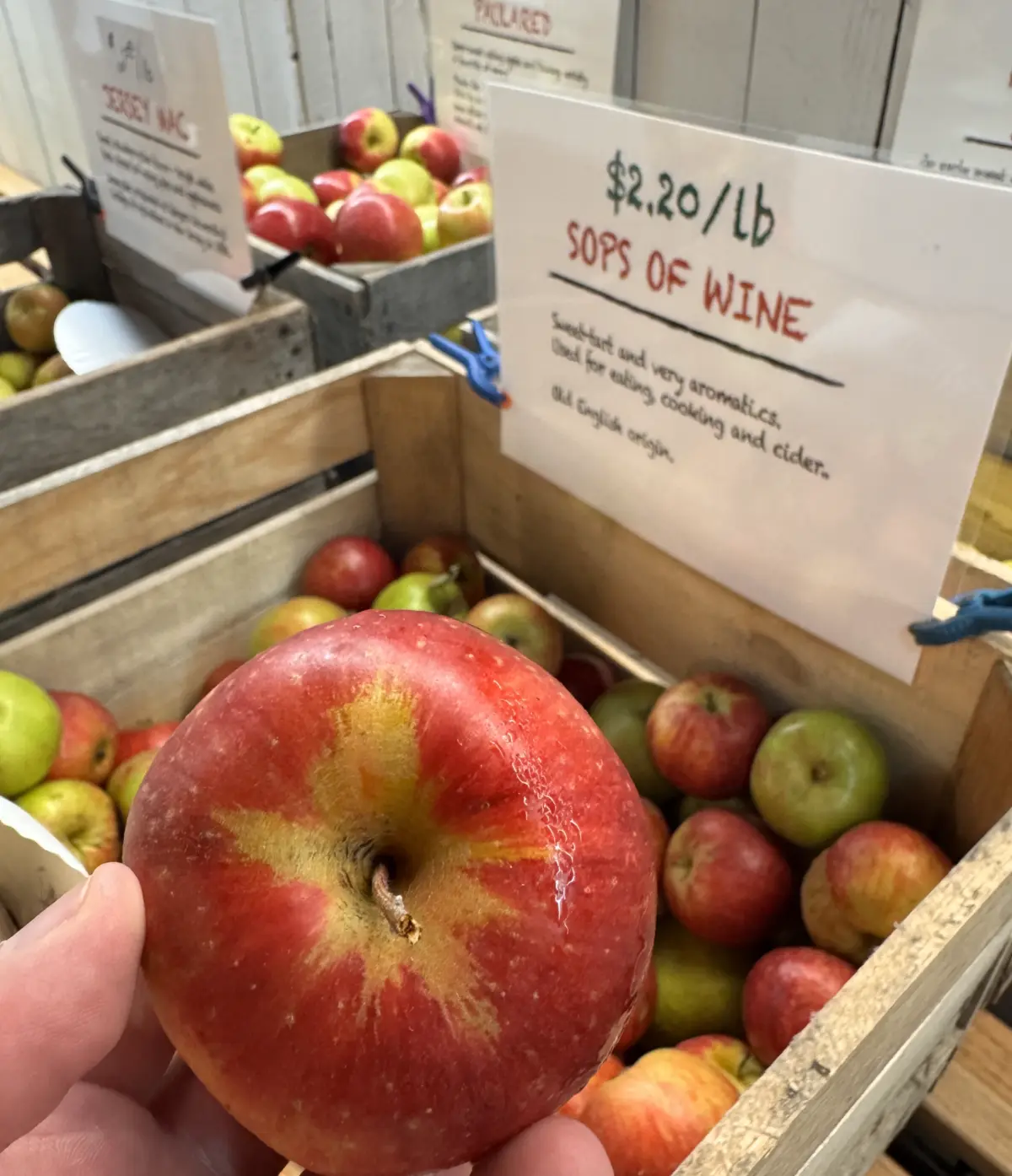
3. Sops of Wine
- Evaluated Metric Score: 3.5 / 10
- Physical Profile: Mealy, gritty texture accompanied by structural degradation indicative of prolonged shelf life post-harvest.
- Flavor Architecture: Subacid profile featuring moderate sweetness, accented by delicate notes of vanilla and assorted spices.
- Chronological Assessment: The evaluation of the Sops of Wine was marked by both texture failure and taxonomic ambiguity. While historical literature suggests red-fleshed variants or distinct regional sub-types, the tested specimen suffered from an unappealing, sandy mouthfeel. The experience prompted psychological distraction among evaluators, underscoring the unpredictable degradation rates of older heirloom varieties.
4. Fenceline Surprise
- Evaluated Metric Score: 1.0 / 10
- Physical Profile: Bland, uniform mushiness with an extreme absence of structural firmness.
- Flavor Architecture: A fleeting, muted suggestion of pear juice that rapidly dissipated, leaving an astringent, beach-sand residue on the palate.
- Chronological Assessment: Living up to its ironic nomenclature, the Fenceline Surprise proved to be a catastrophic disappointment. Despite signage indicating a firm consistency, the fruit behaved as if it had undergone advanced cellular breakdown prior to acquisition. Only its intriguing linguistic moniker and faint initial pear essence prevented a total score of absolute zero.
5. Americus Crab
- Evaluated Metric Score: 2.5 / 10
- Physical Profile: Exceptionally tough, unyielding crabapple structure high in natural tannins.
- Flavor Architecture: Savory, astringent, and sharply tart, rendering it fundamentally unsuitable for fresh, out-of-hand consumption.
- Chronological Assessment: Classified strictly as a novelty or processing fruit, the Americus Crab tested the limits of raw human consumption. While recognized for its biochemical complexity, its high tannin content and impenetrable skin relegate it strictly to the domain of adventurous eaters and cider producers.
6. Campfield (False?)
- Evaluated Metric Score: 4.1 / 10
- Physical Profile: Chewy, fibrous flesh with high resistance, exhibiting mutual mastication resistance against the human jaw.
- Flavor Architecture: Overly sweet balanced by an aggressive wave of tannins that created an astringent, mouth-drying effect.
- Chronological Assessment: Labeled cryptically with a "(false)" designation, the Campfield behaved precisely as a traditional cider apple should: hostile to the raw human palate. Historical research accompanying the specimen linked its lineage to colonial New Jersey agrarian mandates, providing a rich historical backdrop that vastly overshadowed the fruit’s immediate culinary utility.
7. Graham
- Evaluated Metric Score: 8.0 / 10
- Physical Profile: Impenetrably hard, dense structure requiring immense mechanical force to fracture.
- Flavor Architecture: Unmistakable, potent emulation of commercial Juicy Fruit bubblegum, accompanied by high juiciness once the interior was breached.
- Chronological Assessment: The Graham proved to be the ultimate paradox of the tasting cycle. Its physical durability was described as bordering on indestructible, posing genuine risks of temporomandibular joint (TMJ) strain. However, the unexpected, explosive transition from a glacial structural break to a vibrant, confectionary flavor profile secured its status as a memorable high-tier outlier.
Supporting Context & Metrics
To fully understand the variability observed in these seven cultivars, one must examine the underlying agricultural metrics that govern fruit development, harvest windows, and post-harvest physiological changes.
| Cultivar Name | Evaluated Score | Primary Texture | Dominant Flavor Notes | Intended Use / Classification |
|---|---|---|---|---|
| Kickapoo Spice | 6.9 / 10 | Dense, dry | Nutmeg, cinnamon, clove, cut grass | Fresh / Culinary |
| St Edmunds Pippin | 8.3 / 10 | Crisp, sharp-breaking, rough skin | Fennel pollen, bright herbal, sweet-tart | Fresh / Dessert |
| Sops of Wine | 3.5 / 10 | Mealy, gritty | Vanilla, mild spice, subacid | Heirlooms / Dual-use |
| Fenceline Surprise | 1.0 / 10 | Mushy, sandy | Faint pear mist | Fresh (Failed) |
| Americus Crab | 2.5 / 10 | Tough, unyielding | Savory, tart, high tannin | Crabapple / Foraging |
| Campfield (False?) | 4.1 / 10 | Chewy, fibrous | Sweet, highly astringent | Cider Processing |
| Graham | 8.0 / 10 | Extremely hard, glacier-breaking | Juicy Fruit gum, high juice | Fresh / Novelty |
The quantitative data underscores a critical reality in modern fruit evaluation: physical resilience does not automatically correlate with positive culinary outcomes. While the Graham and the St Edmunds Pippin successfully bridged the gap between structural firmness and flavor delivery, varieties like the Fenceline Surprise and Sops of Wine suffered terminal degradation due to poor shelf-life management or inherent genetic instability. Furthermore, high-tannin selections such as the Campfield and Americus Crab reinforce the division between dessert apples intended for immediate consumption and industrial cider varieties requiring secondary fermentation to neutralize their aggressive chemical compounds.

Official Statements and Historical Archives
The inclusion of heirloom cultivars frequently bridges the gap between modern agricultural consumption and deep-seated historical archives. Of particular note during the current evaluation cycle is the documentation surrounding the Campfield apple, which intersects directly with early American colonial history and agrarian policy.
Historical records, sourced via pomological documentation networks and early New England colonial registries, outline the provenance of the Campfield lineage:

"The Campfield Apple traces its origins to a family in New Jersey, namely Matthew Canfield (historical variants including Mathew and Campfield). An anti-royalist Puritan originating from Harleston, England, Canfield migrated prior to 1637 during the Great Puritan Migration. He established himself as a founding father of the New Haven Colony, Norwalk, Connecticut, and Newark, New Jersey, regions historically celebrated for the production of superior hard cider."
Colonial mandates dictated strict agricultural compliance among early "freeholders"—those individuals granted voting rights within the settlements. Records from the New Haven town administration demonstrate that civic participation was explicitly tied to arboriculture:

- Mandatory Cultivation: Freeholders were legally required to cultivate a minimum of four acres of land, the vast majority of which had to be dedicated to fruit tree orchards.
- Civic Infrastructure: Historical entries record Canfield’s financial contributions toward the erection of local corn mills, compensated via transactions involving "three barrels of good cider made of winter fruit."
- Governance and Land Allocation: Serving as a general court representative, judge, and customs collector, Canfield was appointed to committees tasked with assessing agricultural damages caused by livestock and inspecting boundary fences. His acquisition of vacant municipal land was formally contingent upon his signing of binding agreements to plant fruit trees across his holdings.
This intersection of statutory law and pomological heritage provides essential context for why varieties like the Campfield possess chemical profiles optimized for fermentation rather than immediate consumption. The historical demand for potable, stable alcohol sources in colonial settlements dictated the genetic selection of high-tannin, fibrous apples designed to endure the rigorous processes of early American cider production.
Future Outlook
As the culinary world continues its seasonal migration toward the orchards of New York, New England, and the broader Canadian agricultural belt, the trajectory of heirloom apple evaluation is poised for expansion. The volatile nature of regional pomology ensures that upcoming tasting phases will yield an entirely new spectrum of botanical surprises, ranging from exceptional dessert discoveries to structurally compromised anomalies.

Future investigations within this ongoing sensory project will focus heavily on standardizing post-harvest storage windows to mitigate the degradation rates observed in fragile varieties like the Sops of Wine and Fenceline Surprise. Additionally, researchers aim to map the chemical compounds responsible for anomalous flavor profiles—such as the startlingly accurate simulation of commercial bubblegum detected in the Graham cultivar—to better understand how volatile organic compounds develop in heirloom fruit.
Consumers, cultivators, and casual snack enthusiasts alike are advised to approach the upcoming harvest with a combination of unbridled optimism and cautious skepticism. As demonstrated by this comprehensive inquiry, the world of apples remains vast, unpredictable, and endlessly fascinating. Observers awaiting further developments are encouraged to monitor upcoming regional appearances and field reports as the modern pomological inquisition presses forward into the northeastern harvest.