

Executive Overview
In the sprawling, often stagnant landscape of contemporary franchise revivals, few prequels carry the heavy burden of deconstruction quite like Peacock’s Crystal Lake. Developed as an origin story for the foundational slasher villain of the Friday the 13th universe, the series explores the psychological unraveling of Pamela Voorhees. Long before her hockey-masked son, Jason, terrorized generations of camp counselors, it was a grieving, vengeance-driven mother who weaponized the butcher’s knife against a predatory society.
Stepping into the iconic cardigan previously worn by Betsy Palmer in the 1980 original, Linda Cardellini anchors the streaming prequel with a performance that vacillates between tragic maternal exhaustion and unhinged terror. Yet, Crystal Lake is far more than a routine exercise in nostalgic gore. It functions as a bloody, subversive cultural mirror, reflecting the quiet, simmering rage of modern women navigating systemic disenfranchisement, exhaustion, and daily micro-aggressions.
While the series stumbles through uneven writing and corporate IP expansion tropes—pivoting away from Bryan Fuller’s original creative vision toward a convoluted patriarchal-conspiracy plot—its core thesis strikes a visceral nerve. Crystal Lake captures a universal, albeit dark, cultural fantasy: the catharsis of completely dropping the burden of emotional labor, fighting back against systemic cruelty, and choosing the bear over the man.
Detailed Chronology: From Simple Grief to Patriarchal Conspiracy
To understand the cultural resonance of Peacock’s Crystal Lake, one must trace the evolutionary arc of Pamela Voorhees from a mysterious, brief cinematic twist to an over-explained, heavily serialized television protagonist.
When Sean S. Cunningham’s Friday the 13th premiered in 1980, its brilliance lay in its relative simplicity. The audience spent the runtime suspecting an anonymous, masked assailant, only to discover that the architect of the massacre was a frumpy, unassuming camp cook whose son, Jason, had drowned due to the negligence of hormone-addled teenage counselors. Pamela’s motive was direct: an agonizing, un-blunted maternal grief paired with an unforgiving desire for retribution against those who let her hydrocephalic child slip beneath the dark waters of Crystal Lake.
Decades later, the creative machinery behind Crystal Lake attempted to contextualize that singular motivation for an eight-episode streaming arc. Originally championed by visionary showrunner Bryan Fuller—whose distinct aesthetic previously elevated ABC’s Hannibal—the project underwent substantial behind-the-scenes turbulence. Fuller’s departure due to creative differences shifted the reins to It: Welcome to Derry showrunner Brad Caleb Kane, steering the narrative into wilder, more conspiratorial territory.
In the serialized prequel, Pamela’s backstory is expanded to frame her not merely as a grieving mother, but as a victim of a larger, systemic industrial plot. Before the tragedies at the lake, a younger Pamela—a former professional singer—becomes romantically entangled with Elias (played by Hamish Linklater), an employee of a shadowy corporate entity known as Bellflower. Following a near-miscarriage, Elias convinces Pamela to move into a corporate-sponsored enclave populated by pregnant women, promising safety and stability.
Instead, the enclave serves as a laboratory for corporate exploitation. Elias plies Pamela with Bellflower-manufactured TV dinners and chemical "happy pills," while subjecting her to mysterious medical interventions. When Jason is eventually born—displaying uncanny, unnatural resilience—Elias secretly subjects the boy to severe radiation exposure and mad-science experimentation. Upon discovering these abuses, Pamela executes a brutal escape, shattering the skull of her tormentor and fleeing with her son to the fateful shores of Crystal Lake.
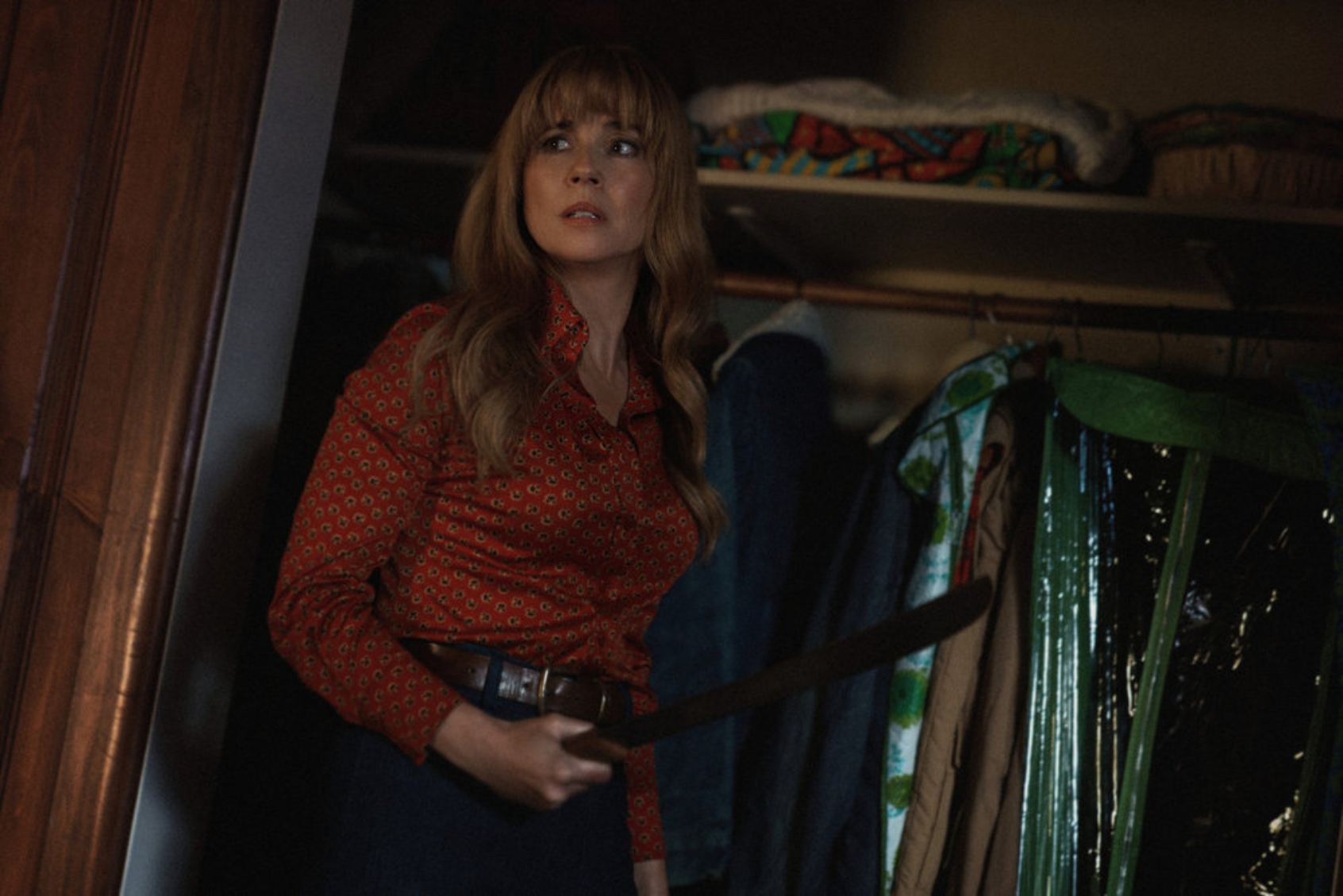
By restructuring Pamela’s origin into a sci-fi/horror thriller about corporate and patriarchal control over the female body, Crystal Lake shifts the character from a classic cinematic monster into an avatar of systemic resistance.
Supporting Context & Metrics: The Cultural Anatomy of "Rage"
The timing of Crystal Lake’s release is no accident. It arrives during a fraught cultural moment defined by heightened conversations around reproductive rights, the rise of the digital "manosphere," and an exhausted populace of women grappling with the exhaustion of emotional labor.
The Weight of Modern Womanhood
Sociological metrics and daily headlines paint a grim picture of contemporary gender relations. Women navigate a socio-political climate where convicted felons accused of sexual assault achieve ultimate political power, and high-profile allegations of sexual violence on college campuses routinely result in institutional retaliation, doxxing, and intimidation. Meanwhile, digital spaces are increasingly dominated by manosphere influencers, polarizing internet subcultures, and "tradwife" aesthetics that demand compliance and traditional subservience.
This societal pressure cooker has led to what cultural commentators term "perimenopausal and systemic rage." It is a profound, low-frequency hum of irritation that underpins daily life. Studies on emotional labor highlight that women continue to shoulder a disproportionate burden of domestic management, caregiving, and psychological heavy-lifting. When a partner leaves a crumpled sock on the floor or dishes in the sink, it is rarely just about the chores; it represents an entire hierarchy of whose time, comfort, and safety matters.
True Crime and the Fantasy of Retribution
This suppressed fury finds an outlet in the booming true-crime industrial complex. Platforms like the Oxygen network, Dateline, and Snapped command millions of viewers, predominantly women, who consume narratives of everyday people snapping under pressure.
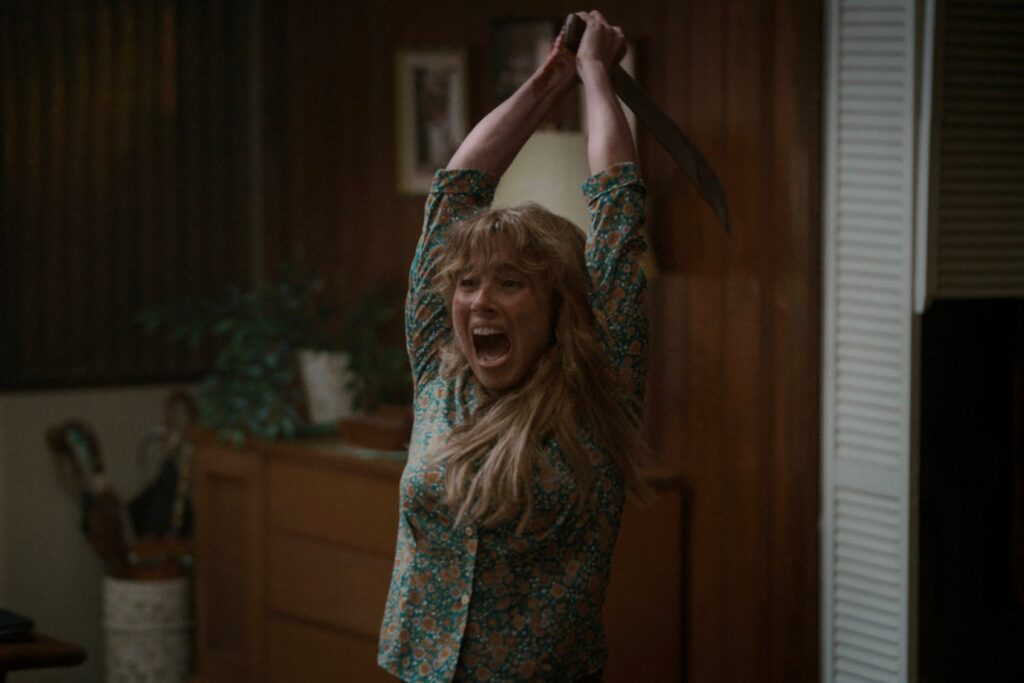
In this light, Pamela Voorhees’s violent rampages in Crystal Lake stop looking like senseless slasher tropes and start looking like a literalization of an intrusive thought. When Linda Cardellini’s Pamela dispatches two home-invading goons in the show’s chaotic opening scene—slicing a jugular and utilizing a family machete with chilling efficiency—audiences conditioned by daily systemic injustices do not recoil in pure horror. They quietly nod, muttering variations of, "Get him. Again!"
Official Statements and Behind-the-Scenes Evolution
The road to Crystal Lake was paved with high-profile creative ambitions and subsequent corporate compromises, reflecting the broader tension between auteur-driven television and franchise IP management.
When Peacock first greenlit the project, the streaming platform positioned it as a prestige psychological horror series that would finally give depth to a cinematic universe historically dominated by Jason’s hockey mask. Industry trade reports highlighted the studio’s desire to leverage recognizable intellectual property while offering a fresh, character-driven perspective.
However, the departure of original showrunner Bryan Fuller exposed deep creative fractures within the production. Known for his lush, macabre visual style and psychological depth in Hannibal, Fuller’s initial vision reportedly sought to explore the tender, complex psychological bonds of the Voorhees family without relying on excessive corporate mythology.
In statements surrounding the production shifts, network executives emphasized the necessity of expanding the lore to sustain an episodic television format. The introduction of the "Bellflower" corporate conspiracy and Elias Voorhees’s mad-science experiments was designed to modernize the narrative, appealing to audiences fluent in contemporary sci-fi and dystopian thrillers.
Despite the tonal shifts and plot contrivances, lead actress Linda Cardellini has defended the emotional core of her character. In promotional interviews, Cardellini noted the unique challenge of inhabiting a woman pushed past the absolute brink of human endurance:
"Pamela isn’t just killing for the sake of a body count; she is reacting to a world that systematically stripped away everything she loved, everything she trusted, and every ounce of bodily autonomy she possessed. Playing her meant tapping into a very real, very raw well of maternal fury that society usually tells women to bury deep down."
Future Outlook: The Legacy of Slasher Prequels and Feminine Horror
As Crystal Lake streams in its entirety on Peacock, its reception points toward a fascinating evolution in how modern horror handles legacy characters. The traditional slasher movie used to treat its killers as unknowable, supernatural forces of pure malice. Today, audiences demand psychological origin stories—even when those stories risk over-explaining the mystery that made the original monsters so terrifying in the first place.
The commercial success of Crystal Lake signals that networks will likely continue mining classic horror libraries for female-centric origin stories. Yet, the deeper cultural legacy of the series lies in its embrace of feminine rage as a narrative engine.
Whether through prestige television prequels like Crystal Lake, literary explorations like Furious and East of Eden, or the viral internet discourse surrounding the "bear vs. man" debate, contemporary culture is actively rewriting the rules of how women respond to danger, disrespect, and systemic failure.
Pamela Voorhees may have started in 1980 as a shocking twist ending in a modest summer camp slasher, but in 2026, she has been reframed as something far more potent: the patron saint of anyone who has ever stared at a broken system, picked up a weapon, and decided that civility was no longer an option.