

Executive Overview
In the volatile landscape of modern subscription video-on-demand (SVOD), high viewership metrics are no longer an impenetrable shield against cancellation. This harsh reality was recently underscored by Netflix’s decision to axe the fan-favorite western romance series Ransom Canyon just over a month after the drop of its second season.
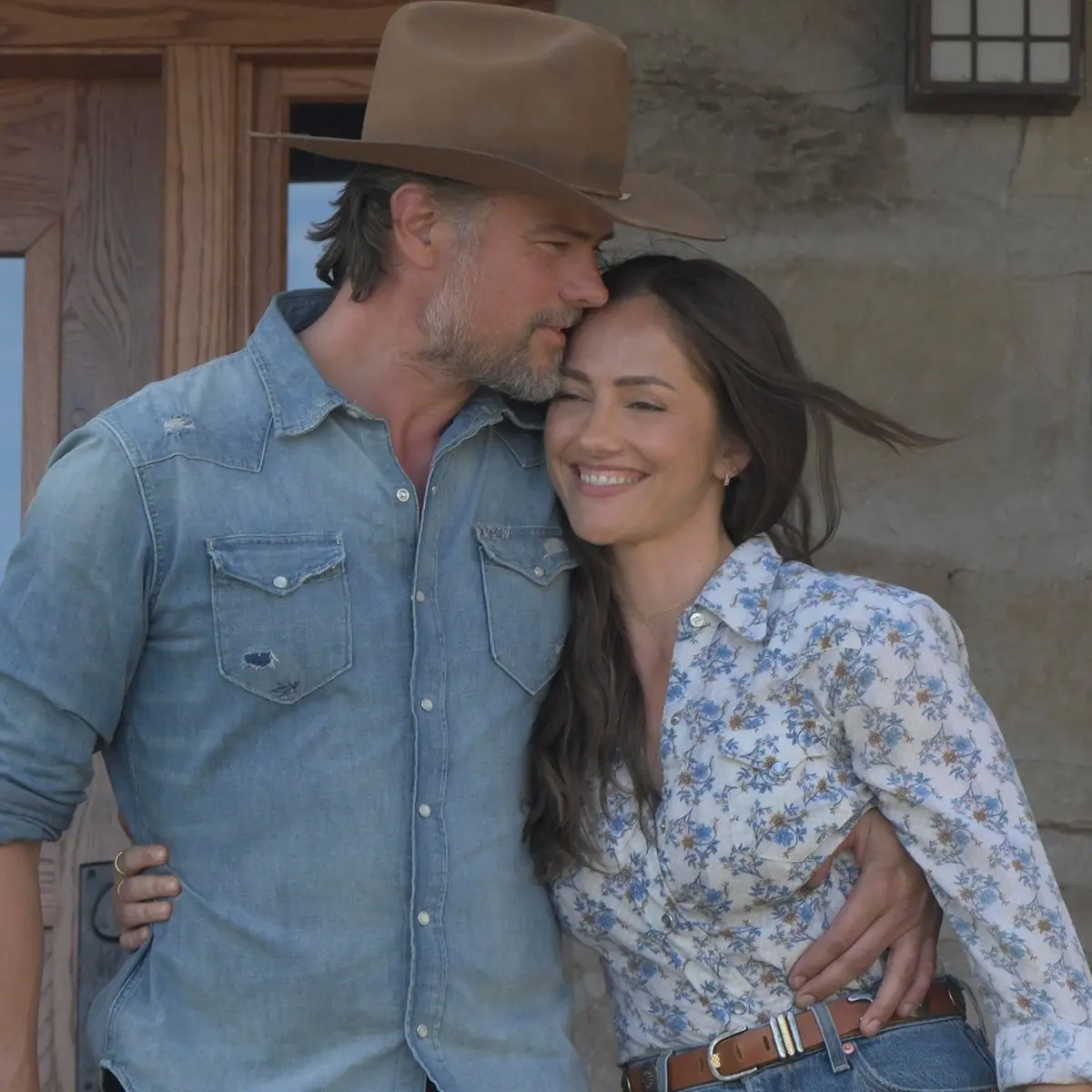
Starring Josh Duhamel as rugged rancher Staten Kirkland and Minka Kelly as Quinn O’Grady, the series had established a passionate and vocal global following. According to internal data cited by cast members, the show dominated the Netflix charts, holding the coveted No. 1 spot globally for nearly two consecutive weeks. Yet, despite robust initial engagement figures and massive social media traction, the streaming titan opted to pull the plug, leaving the narrative unresolved and its audience empty-handed.
This high-profile casualty highlights a profound philosophical disconnect between audience satisfaction and corporate ledger sheets in the streaming era. While actors like Duhamel have openly voiced their bewilderment and frustration over decisions that defy conventional broadcast logic, industry analysts recognize Ransom Canyon as a symptom of a much broader realignment.
As streaming platforms transition from an era of unbridled subscriber acquisition to a relentless focus on profitability, long-term ROI, and completion rates, even top-performing shows face an uphill battle. This comprehensive report examines the abrupt cancellation of Ransom Canyon, explores the broader landscape of television renewals and casualties, and analyzes the shifting economic forces redefining the entertainment industry.
Detailed Chronology: The Rise and Abrupt Fall of Ransom Canyon
The Premise and Early Momentum
Adapted from the bestselling book series by Jodi Thomas, Ransom Canyon was designed to fill the cultural vacuum left by sprawling, neo-western phenomena like Yellowstone. Set against the breathtaking, rugged backdrop of the Texas hill country, the series wove together multi-generational family drama, small-town politics, and sweeping romance.
Josh Duhamel’s portrayal of Staten Kirkland—a man fiercely protective of his land and deeply conflicted by his unresolved feelings for Quinn O’Grady (played by Minka Kelly)—served as the emotional anchor of the drama. When Season 1 debuted, it garnered immediate praise for its atmospheric direction, nostalgic pacing, and the undeniable chemistry between its lead actors. Viewers quickly latched onto the narrative, turning the fictional town into a digital community of dedicated fans.
Season 2 and the Global Surge
Buoyed by positive word-of-mouth, Season 2 of Ransom Canyon launched with even higher expectations. The stakes for Kirkland and O’Grady were elevated, pushing their relationship toward a narrative crossroads that fans anticipated would finally deliver a definitive "happily ever after."
Upon its release, the platform’s metrics appeared stellar. For nearly two weeks, the series sat comfortably at the summit of Netflix’s global top ten list, outperforming several high-budget genre competitors. The cast and crew celebrated the early returns, assuming the show’s clear popularity guaranteed a third-season renewal. Behind closed doors, however, algorithmic evaluators and financial controllers were parsing metrics that went far beyond mere weekly viewership rankings.
The Ax Falls
In early September, the announcement dropped with jarring finality: Netflix confirmed that Ransom Canyon would not return for a third season, rendering Season 2 the show’s swan song. The suddenness of the cancellation sent shockwaves through the fandom, triggering digital petitions and widespread social media campaigns urging the streamer to reconsider or shop the property to a rival network.
For the talent involved, the timing and reasoning felt opaque. Traditional television models relied heavily on immediate ratings and ad revenues, where a No. 1 ranking for two weeks would all but guarantee a multi-season pickup. In the realm of streaming, however, executive decision-making is dictated by proprietary metrics that weigh subscriber acquisition costs against long-term retention potential, leaving creators and cast members grappling with a landscape they no longer recognize.
Supporting Context & Metrics: The Modern Streaming Slaughterhouse
The fate of Ransom Canyon is far from an isolated incident. Across the television ecosystem—encompassing legacy cable, premium networks, and major streaming services like Apple TV+, Netflix, Peacock, Hulu, and Paramount+—the editorial climate has shifted dramatically. Networks are routinely pruning their slates, canceling programs that fail to meet hyper-specific financial thresholds regardless of critical acclaim or vocal fandoms.
To understand the broader context of this television landscape, it is helpful to examine the current slate of renewals and cancellations dominating the industry:
Notable Renewals Across the Platforms
- Netflix: The streamer continues to bank heavily on established intellectual property and high-retention genres. Guy Ritchie’s stylish underworld drama The Gentlemen secured an early third-season renewal ahead of its Season 2 premiere. Meanwhile, reality programming remains a cornerstone of engagement, with America’s Sweethearts: Dallas Cowboys Cheerleaders locked in for a fourth season.
- Apple TV+: Maintaining its reputation for prestige storytelling, Apple renewed its critically acclaimed dark comedy Maximum Pleasure Guaranteed starring Tatiana Maslany, while locking in the spy thriller Slow Horses for a staggering eighth season. Conversely, prestige staples are bowing out on their own terms; the Reese Witherspoon and Jennifer Aniston vehicle The Morning Show was confirmed to be concluding with its upcoming fifth season in 2027.
- Peacock & Hulu: Reality and serialized drama continue to drive subscriber retention on these platforms. Peacock ordered three additional seasons of the deceptive reality game show The Traitors, while Love Island USA secured a ninth season. On Hulu, reality juggernaut The Secret Lives of Mormon Wives was officially greenlit for a sixth season, surviving the turbulence of its dramatic fifth outing.
High-Profile Casualties
Despite these massive investments in returning IP, the casualty list remains steep. Alongside Ransom Canyon, platforms have ruthlessly trimmed speculative or underperforming assets:
- Hulu opted against greenlighting a second season for Mindy Kaling’s comedy series Not Suitable for Work.
- Paramount+ confirmed that its comedy Colin From Accounts is wrapping up its run, while Showtime announced that its psychological thriller Yellowjackets will officially conclude with its fourth season later this year.
This bifurcated landscape—where a select few mega-hits receive massive long-term commitments while mid-tier dramas and romances are unceremoniously pruned—highlights the underlying anxiety within Hollywood’s creative community.
Official Statements and Industry Reactions
The disconnect between corporate boardrooms and the artists who bring these stories to life has rarely been more apparent than in the public commentary surrounding Ransom Canyon’s cancellation.
Josh Duhamel Speaks Out
Speaking candidly to Us Weekly, Josh Duhamel did not mince words regarding his disappointment with the streaming giant’s calculus.
"I was pretty surprised, if I’m being honest," Duhamel admitted. “I thought [it was safe] because the show was No. 1 for almost two weeks and the numbers looked really, really good and people really loved the show. I was a little upset with Netflix for not giving the audience another season, because people really did love the show, but that’s the business. At the same time, I get it. They have their reasons for why things stay and why things go. I don’t always understand those reasons, but it’s not my job to question.”
Despite his frustrations, the actor expressed deep empathy for the audience invested in Staten and Quinn’s romance, noting that he would gladly slip back into a cowboy hat and boots should the opportunity to play a similar character arise in the future. “I really loved playing that character,” he reflected. “It was in my wheelhouse… I’m always doing ranch-y type things.”
Minka Kelly’s Graceful Exit
Co-star Minka Kelly took a more philosophical approach to the sudden end of the road. Taking to Instagram shortly after the news broke, the Friday Night Lights alum thanked the global audience for embracing the series.
"All good things must come to an end. And so it is," Kelly wrote. “Thank you all for giving us two beautiful seasons! I love you forever my Ransom Canyon family!!”
The Creative Toll of Algorithmic Management
Industry observers point out that statements like Duhamel’s reflect a growing friction in Hollywood. In the traditional television model, talent had a clear feedback loop: if ratings were high, the show continued. Today, actors and showrunners find themselves beholden to "completion rates"—the percentage of viewers who start an episode and finish the entire season within a short window. If a show generates massive initial buzz but viewers consume it sluggishly, the algorithmic score drops, leading to swift termination regardless of cultural impact.
Future Outlook: The Economics of the Modern Streaming Era
As the dust settles on the cancellation of Ransom Canyon, the broader implications for the television industry are profound. The era of unchecked content spending—famously characterized by early streaming wars where platforms prioritized subscriber volume over unit economics—is officially over.
The Shift Toward Financial Discipline
Wall Street’s shifting expectations have forced streaming executives to prioritize profitability over pure market share. For a drama like Ransom Canyon, which required extensive location shooting, a large ensemble cast, and high production values to authentically capture the Texas landscape, the cost-per-completion ratio likely did not align with Netflix’s long-term budgetary models. Even if a series captures the No. 1 spot globally for two weeks, if it fails to drive new subscriptions or retain existing users at a sustainable cost, the financial ledger outweighs the viewer demand.
What This Means for Viewers and Creators
For viewers, this environment fosters a growing sense of hesitation. Modern audiences are increasingly reluctant to invest time in serialized dramas, knowing there is a high probability that serialized narratives will be left hanging without a proper conclusion. This "cancellation fatigue" risks alienating the very base upon which streaming services rely.
For creators, the path forward requires navigating an increasingly opaque greenlight process. Writers and showrunners are adapting by leaning into closed-ended limited series or structuring multi-season arcs with tighter, faster-paced narrative payoffs designed to maximize completion rates within the critical first 14 days of release.
Conclusion
The cancellation of Ransom Canyon serves as a definitive case study in the ruthless arithmetic of modern entertainment. While Josh Duhamel hangs up his saddle as Staten Kirkland and Minka Kelly bids farewell to the Texas hills, the show’s abrupt end stands as a stark reminder that in today’s digital landscape, popularity alone is no longer enough to guarantee survival. As studios continue to streamline their portfolios, the industry marches steadily toward an era where data-driven efficiency dictates every creative frontier.