

Executive Overview
For millions of Americans, the summer of 2026 will be remembered not just for scorching temperatures or political posturing ahead of the midterm elections, but for an unprecedented crisis in the nation’s grocery baskets and fast-food drive-thrus. Dubbed "Bad Lettuce Summer," the period was defined by the largest recorded cyclospora outbreak in U.S. history, a public health disaster traced back to shredded iceberg lettuce supplied by Taylor Farms de Mexico. The contamination stretched from major supermarket chains like Walmart to fast-food giants like Taco Bell, sickening nearly 13,000 people across 21 states, resulting in 570 hospitalizations, and claiming two lives.
Yet, even as consumers nationwide united in unprecedented caution—with nearly three-quarters altering their purchasing habits to avoid suspected foods—the political consensus around federal food safety fractured entirely. According to an October 2026 Gallup poll, while Americans across the political spectrum share a heightened sense of vulnerability at the supermarket checkout line, their confidence in the government agencies tasked with keeping them safe has split along sharp partisan lines.
The data reveals a startling 64-point partisan reversal. Under the previous administration in 2024, Democrats held a 24-point advantage in trusting federal oversight. Today, following a change in administration and a summer marked by industry lobbying controversies and regulatory delays, that dynamic has inverted: Republicans now outpace Democrats by 40 points in their confidence regarding food safety oversight. As the nation barrels toward high-stakes midterm elections, this deep division underscores a troubling reality—while citizens share the same biological vulnerabilities, they inhabit radically different political realities when assessing the institutions built to protect them.
Detailed Chronology: Anatomy of a Public Health Crisis
The crisis that would eventually paralyze consumer confidence began quietly, manifesting in an array of seemingly disconnected gastrointestinal illnesses reported across multiple states in early summer. Soon, however, epidemiologists at the Centers for Disease Control and Prevention (CDC) and the Food and Drug Administration (FDA) connected the dots: a virulent wave of cyclospora—a microscopic parasite that causes severe intestinal distress—was hitching a ride on commercial supplies of shredded iceberg lettuce.
The Spread and the Scramble
The outbreak vector was quickly linked to agricultural titan Taylor Farms de Mexico, affecting products distributed to commercial food service kitchens, including Taco Bell, as well as retail items like Marketside iceberg salad sold at Walmart. While Taylor Farms maintained that its proprietary, branded salad kits remained untouched by the contamination, the distinction offered cold comfort to shoppers facing refrigerated walls of greens.
As public health advisories multiplied, consumers were forced into the unfamiliar and exhausting role of amateur food-safety inspectors. The atmosphere of suspicion birthed novel civic workarounds:
- The Barcode Revolution: Tech-savvy shoppers developed specialized smartphone applications, such as the widely circulated Taylor Detector, enabling users to scan grocery barcodes on the spot to check supply-chain connections.
- The "Mystery Meat" Panic: Feeding on a broader cultural distrust of industrial food systems, unverified rumors briefly circulated online regarding the administration’s promised bargain beef initiatives—inspiring viral internet guides instructing consumers on how to visually distinguish beef from horse meat.
Regulatory Foot-Dragging and Industry Access
Public anxiety was further exacerbated by prior policy decisions regarding food traceability. In March 2025, the FDA announced plans to push back compliance dates for its landmark Food Traceability Rule. The regulation, designed to mandate rigorous record-keeping for high-risk foods like leafy greens to speed up the removal of contaminated products during outbreaks, was delayed from January 2026 to July 2028 after congressional intervention and industry pushback. While this regulatory delay did not directly cause the summer outbreak, the juxtaposition of ordinary citizens frantically scanning produce barcodes with delayed federal transparency protocols struck many as deeply ironic.
Adding fuel to the fire, the investigation took a distinctly political turn as the summer progressed. Investigative reports revealed that representatives from Taylor Farms had engaged in private meetings with White House officials while the contamination probe was ongoing. Given that Taylor Farms and its leadership had previously contributed substantial sums to Republican-aligned political action committees—including a $1 million donation to the pro-Trump super PAC MAGA Inc.—lawmakers demanded answers.
Representative Robert Garcia, the ranking Democrat on the House Oversight Committee, formally pressed the company and the administration for transparency regarding potential undue influence on the FDA’s investigation. While the White House vehemently denied any compromise of public safety, and no definitive evidence emerged showing that political access altered the FDA’s scientific findings, the episode bridged an extraordinary gap in the public consciousness: ordinary consumers were no longer just wondering if their taco lettuce was safe; they were wondering who had the direct ear of the executive branch.
Supporting Context & Metrics: The Gallup Poll and the Partisan Chasm
The psychological fallout of Bad Lettuce Summer was rigorously captured by a Gallup poll published on October 8, 2026. The numbers paint a vivid picture of a public retreating into self-reliance while sharply dividing over institutional competence.
Key Polling Insights
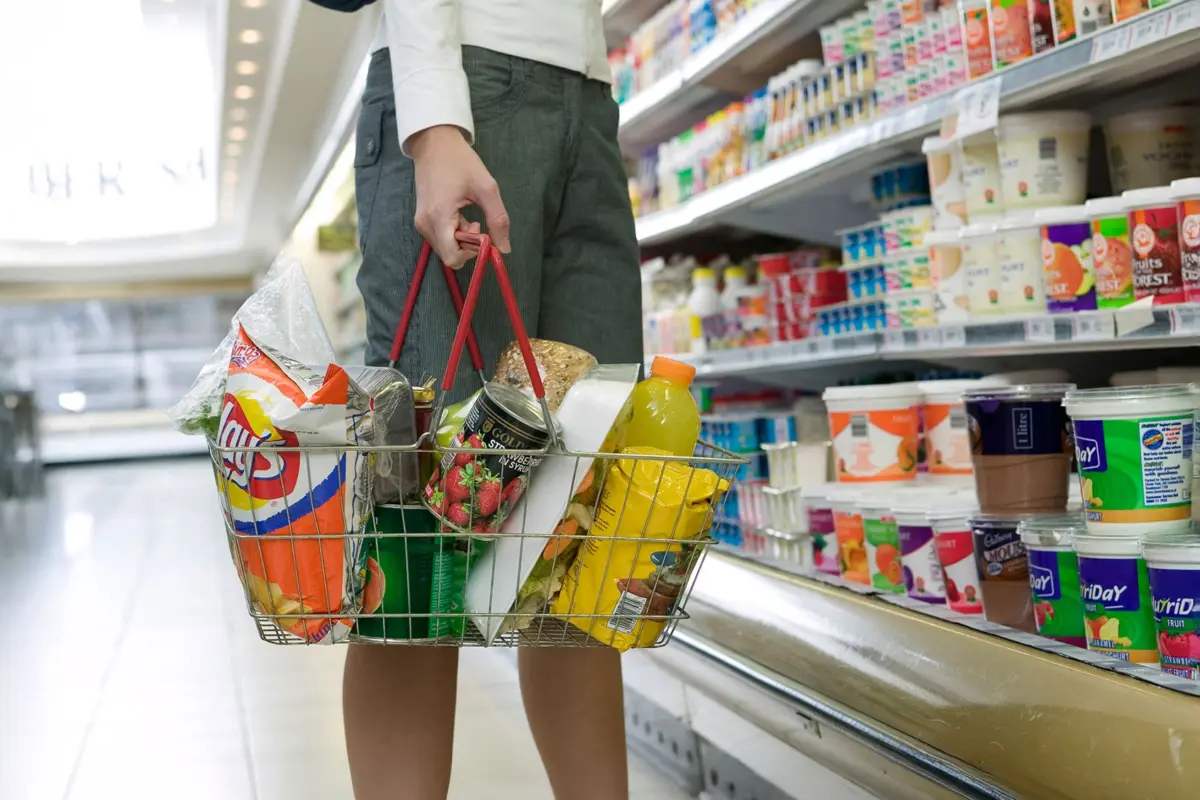
- Widespread Avoidance: Nearly 73% of American adults reported actively avoiding specific food items due to recalls or government health advisories—a dramatic leap from the 53% who reported similar behavior in 2024.
- Bipartisan Cautiousness: This behavioral shift is remarkably uniform across party lines. Eighty-one percent (81%) of Democrats and sixty-three percent (63%) of Republicans have adopted stringent avoidance behaviors at the grocery store.
- The Partisan Trust Flip: When evaluating federal oversight, however, consensus evaporates entirely:
- 2024 (Biden Administration): 74% of Democrats vs. 50% of Republicans expressed confidence in federal food-safety oversight (a 24-point Democratic advantage).
- 2026 (Current Administration): 30% of Democrats vs. 70% of Republicans express confidence (a 40-point Republican advantage).
This stunning 64-point reversal highlights the degree to which institutional trust in the United States has become entirely dependent on party alignment in the White House. Yet, this polarization exists within a broader historical decline. Gallup notes that overall public confidence in federal food safety has been eroding for decades, plummeting from 85% in 2004 to just 47% in the present day.
Furthermore, this distrust has intersected with the populist cultural movement known colloquially as the "Make America Healthy Again" (MAHA) initiative. By elevating skepticism of conventional, industrialized food production into a cornerstone of contemporary civic virtue, MAHA figures have mainstreamed dietary paranoia. This cultural shift even permeated fast-food culture during the height of the crisis, when Steak ‘n Shake triumphantly announced it had "RFK’d" its French fries by replacing vegetable oil with beef tallow—a development celebrated by Health and Human Services Secretary Robert F. Kennedy Jr. on cable news.
While frying potatoes in tallow makes for viral television segments, it highlights a profound disconnect: staging photo opportunities around traditional fats is vastly simpler than managing complex, data-driven food traceability databases.
Official Statements and Institutional Responses
As the fallout from the cyclospora outbreak intensified, federal agencies, agricultural corporations, and congressional leaders issued competing statements attempting to calm an increasingly jittery public while defending their respective positions.
The FDA and Scientific Corrections
The FDA faced severe criticism not only for the scale of the outbreak but for procedural missteps during the investigation. In July, the agency issued an early announcement stating that a specific lettuce sample had tested positive for cyclospora, only to issue a formal retraction days later as a false positive.
Taylor Farms seized upon the retraction to defend its operational integrity, emphasizing in public statements that the initial accusation was scientifically flawed. However, federal investigators pushed back, maintaining that broader epidemiological data, traceback investigations, and subsequent environmental testing at processing facilities strongly implicated the company’s shredded iceberg lines, even if the exact point of field-level contamination could not be definitively isolated.
Congressional Inquiries and Corporate Lobbying
The revelation of private meetings between Taylor Farms executives and White House officials drew sharp rebukes from Capitol Hill oversight committees. In an official statement accompanying his inquiry, Rep. Robert Garcia stressed the necessity of uncompromised regulatory independence:
"The American public deserves absolute transparency when a historic public health crisis strikes our food supply. We must ensure that regulatory integrity at the FDA remains entirely insulated from political donations, corporate lobbying, and private access to the highest levels of government."
In response, administration spokespersons and representatives for Taylor Farms defended the legitimacy of their communications, asserting that routine industry outreach is vital for managing supply-chain logistics during national emergencies and maintaining that public safety was never subordinated to political interests.
Future Outlook: The Stakes for the Upcoming Midterms
As the United States approaches the midterm elections, the echoes of Bad Lettuce Summer resonate far beyond the supermarket checkout aisle. The food safety crisis has inadvertently transformed into a central referendum on governance, regulatory capability, and political accountability.
Recalls occupy a unique psychological space in public life: they are inherently paradoxical. On one hand, a widespread recall signals a systemic failure—proof that a dangerous pathogen successfully penetrated the nation’s food supply chain. On the other hand, it signifies that monitoring systems caught the threat and issued a public warning before even greater harm was done. Depending on one’s political lens, a recall can be viewed either as evidence of an agile, functioning watchdog or proof of a compromised, sluggish bureaucracy.
The lawmakers who win election in November will immediately inherit control over the funding, statutory authority, and oversight mandates of federal agencies like the FDA and the CDC. They will dictate whether future traceability rules are implemented swiftly or delayed further to accommodate industrial lobbying.
Yet, the core challenge facing the nation transcends legislative chambers. When the next major foodborne outbreak inevitably strikes, it will not pause to check whether citizens agree on whom to trust. Until the American electorate can bridge the partisan chasm surrounding institutional competence, consumers will continue navigating the nation’s food supply alone—armed with little more than smartphone apps, institutional skepticism, and a lingering anxiety about what is hidden inside tomorrow’s salad.