

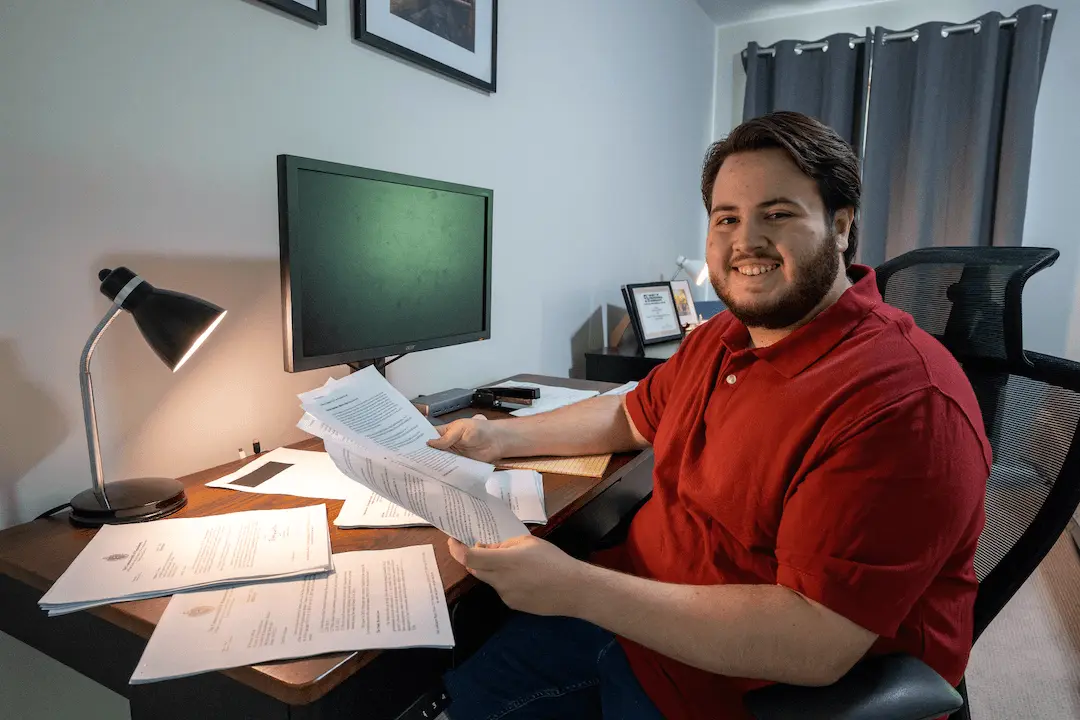
By The Student Press Report Desk
Executive Overview
In the modern landscape of public administration, government officials and institutional leaders have quietly mastered a chilling new tactic to suppress accountability. They rarely have to issue a flat, definitive "no" to public records requests. Instead, they weaponize the bureaucratic machinery itself—transforming the simple act of obtaining public documents into an exhausting, labyrinthine gauntlet designed to break the will of journalists and everyday citizens alike.
This systemic obstruction was the reality faced by student journalists at The Mass Media, the campus newspaper of the University of Massachusetts Boston, during a yearlong investigation into the university’s financial involvement with a Vatican climate initiative. What should have been a straightforward inquiry into the allocation of institutional funds quickly devolved into a masterclass in bureaucratic evasion. Administrators missed legal deadlines, invoked frivolous exemptions that state regulators repeatedly rejected, and slapped the student paper with exorbitant fees exceeding $1,000.
The ultimate goal of such tactics is rarely absolute secrecy; rather, it is exhaustion. By drowning requesters in procedural delays, astronomical costs, and legal friction, public entities create a profound "chilling effect" on investigative journalism. This administrative stonewalling undermines the First Amendment, shields powerful institutions from scrutiny, and fundamentally erodes public trust in government and higher education at a time when transparency is more critical than ever.
Detailed Chronology: The Anatomy of a Public Records Obstruction
The investigation into UMass Boston’s financial ties to a Vatican climate initiative—uncovering approximately $380,000 in summit funds sent to the Holy See—serves as a textbook case study of how public institutions exploit procedural loopholes to run out the clock on reporters.
The Request and the Initial Wall
When The Mass Media initially filed public records requests for emails and financial documentation regarding the Vatican initiative, the response from UMass Boston administrators was immediate hesitation masked as compliance. Under Massachusetts law, public entities are mandated to respond to records requests within 10 business days. However, the university routinely missed these statutory deadlines, setting the tone for a protracted battle of attrition.
The Weaponization of Exemptions and Fees
As the investigation deepened, the university began implementing classic delay tactics:
- Frivolous Exemptions: Administrators repeatedly withheld documents under broad, sweeping exemptions. When these claims were formally challenged, the state’s Supervisor of Records routinely rejected or heavily questioned the validity of the university’s withholding justifications.
- Prohibitive Financial Barriers: To deter the student paper from pushing further, the administration levied fees exceeding $1,000. For a cash-strapped campus publication operating on a tight student budget, such costs represent an existential threat to investigative projects.
- The FERPA Smokescreen: Chief among the university’s defensive maneuvers was the aggressive invocation of the Family Educational Rights and Privacy Act (FERPA). UMass Boston argued that reviewing administrators’ emails to redact potential student names justified both the exorbitant fees and extensive delays, effectively hiding institutional operations behind a federal privacy statute never intended for that purpose.
The Loophole of Administrative "Remands"
When an agency stonewalls, the nominal remedy is to appeal to the state’s Supervisor of Records. On paper, this office possesses the authority to order "timely and appropriate relief" and refer non-compliant entities to the attorney general.
In practice, however, the appeals process acts as a legally sanctioned delay engine:
- The Supervisor of Records takes 10 business days to rule on an appeal.
- The ruling invariably concludes that the agency’s response was flawed, issuing a standard order: "UMass is ordered to provide a response… within ten (10) business days."
- The custodian agency then has another 10 business days to issue a revised response—which often merely repackages the original denial without substantive changes.
- The cycle resets.
For the student journalists, this meant spending weeks tracking deadlines, consulting legal aid organizations, researching case law, drafting formal appeal arguments, and locating dozens of required email attachments—only to receive an administrative order that brought them no closer to publishing the truth.
Supporting Context & Metrics: A State and National Crisis of Transparency
The obstacles faced by The Mass Media are far from isolated incidents. Across the United States, public records laws are increasingly buckling under the weight of administrative resistance, turning what should be accessible public archives into guarded corporate-style vaults.
Massachusetts: The "Black Hole" State
The systemic failure of public transparency in the Commonwealth of Massachusetts recently earned the entire state the annual "Black Hole Award" from the Society of Professional Journalists (SPJ). The award is bestowed upon jurisdictions guilty of the most heinous violations of the public’s right to know, driven by broad statutory exemptions, weak enforcement mechanisms, and persistent, deliberate delays.
While Massachusetts boasts a robust public records law on paper—establishing a 10-day response window and a presumption of openness—the reality of enforcement is toothless. Without severe penalties for non-compliance, agencies treat statutory deadlines as mere suggestions.
Federal FOIA Degradation
The crisis of transparency extends far beyond state lines into the highest levels of the federal government. A comprehensive New York Times analysis revealed a staggering decline in federal accountability under the Freedom of Information Act (FOIA):
- In fiscal year 2025, federal agencies successfully fulfilled and released documents in response to only 47% of FOIA requests, a precipitous drop from 63% in 2010.
- Despite a statutory 20-day response window under federal law, requesters waited an average of 240 days just to receive a baseline response.
Adding to these structural vulnerabilities, the Department of Justice’s Office of Legal Counsel published a memorandum arguing that the Presidential Records Act—the post-Watergate statute designed to preserve executive records—is unconstitutional. If this legal theory gains traction, it threatens to dismantle one of the foundational pillars of federal historical and political accountability.
The FERPA Myth in Higher Education
Public universities and educational institutions have found an exceptionally convenient shield in FERPA. Documented abuses compiled by the Student Press Law Center (SPLC) date back decades. Schools have historically attempted to withhold parking tickets, public committee meeting minutes, and the names of football ticket recipients under the guise of student privacy.
In recent years, this strategy has evolved to suppress modern commercial realities in college sports, with universities citing FERPA to conceal details of Name, Image, and Likeness (NIL) athletic contracts.
However, these administrative arguments routinely collapse under judicial scrutiny. The U.S. Supreme Court has explicitly ruled (Owasso Independent School District v. Falvo) that FERPA applies strictly to educational records that are directly related to a student and maintained as part of a permanent school file. State appellate courts in California, Maryland, Michigan, North Carolina, and Ohio have consistently interpreted the statute narrowly. As one North Carolina appeals court aptly noted:
"FERPA does not provide a student with an invisible cloak so that the student can remain hidden from public view while enrolled."
Despite clear legal precedent, educational institutions continue to exploit the ambiguity to deter public inquiries.
Official Statements and Legal Perspectives
The erosion of public records access has galvanized legal experts, journalism advocates, and student press organizations, all of whom warn that procedural weaponization poses a direct threat to democratic governance.
Legal scholars frequently draw parallels between government actions that "chill" free speech—leading citizens to self-censor to avoid official retribution—and the deliberate subversion of open records laws. By weaponizing procedural red tape and prohibitive costs, state actors create an environment where the public’s right to know is systematically frozen out.
Frank LoMonte, senior legal counsel at the SPLC, has long emphasized that the misuse of privacy laws by educational institutions is an intentional strategy to avoid public embarrassment.
"When universities treat public records as proprietary secrets, they are not protecting students; they are protecting themselves from institutional accountability," legal advocates note.
State regulators, while limited by statutory constraints, have repeatedly expressed frustration over agencies treating compliance as an adversarial negotiation rather than a ministerial duty. Yet, because the Supervisor of Records lacks the direct authority to levy heavy financial fines or institute contempt charges against non-compliant public custodians, agencies calculate that the cost of delay is zero.
Future Outlook: The Human Cost and the Fight for the Public’s Right to Know
The most insidious victory of bureaucratic stonewalling is psychological. For the reporters on the front lines—particularly student journalists balancing rigorous academic coursework with investigative reporting—the constant friction takes a severe toll.
The Toll on Investigative Journalism
The author’s personal experience reflects a broader institutional resignation. Passionate journalists find themselves instinctively steering away from critical investigative stories that rely on public records. The pragmatic calculation is stark:
- Newsrooms operate on strict publishing cycles; a story requiring a year of legal battles cannot fill this week’s paper.
- By the time documents are finally pried loose, the news cycle has often moved on, rendering the reporting obsolete.
- The crushing psychological stress of ongoing administrative combat burns out young reporters before their careers even begin.
This dynamic creates a dangerous information vacuum. Investigative journalism powered by public records is the primary mechanism through which government waste, corruption, and systemic abuse are brought to light. When access to documents is choked off by administrative hostility, the public is left to evaluate governance based solely on sanitized public relations narratives supplied by the officials themselves.
The Path Forward
Restoring the integrity of public records laws requires urgent legislative intervention and cultural reform:
- Strengthening Enforcement: State legislatures must grant oversight bodies—such as Supervisors of Records—real teeth, including the power to levy mandatory, escalating financial penalties against agencies that exhibit bad-faith non-compliance.
- Strict FERPA Guardrails: Lawmakers must clarify statutory language to definitively bar public institutions from invoking student privacy laws to shield administrative correspondence, financial expenditures, and commercial contracts.
- Fee Waivers for the Public Interest: Institutional fee structures must be reformed to automatically waive search and review fees for journalists, researchers, and non-profit watchdogs operating in the public interest.
The government does not belong to the bureaucrats who administer it; it belongs to the people. By extension, public records are public property. Until policymakers force public institutions to act accordingly, the fight for transparency will remain an exhausting, uphill battle fought by reporters determined to ensure that the public’s right to know is never permanently extinguished.