

Executive Overview
For decades, the public narrative surrounding honey bees has been straightforward and urgent: save the bees. Portrayed as fragile victims of habitat loss, agricultural intensification, and pesticide use, managed honey bees (Apis mellifera) have become the poster species for ecological conservation. Urban rooftop hives, backyard apiaries, and community beekeeping initiatives have surged across the United Kingdom as well-meaning citizens try to halt the decline of these iconic insects.
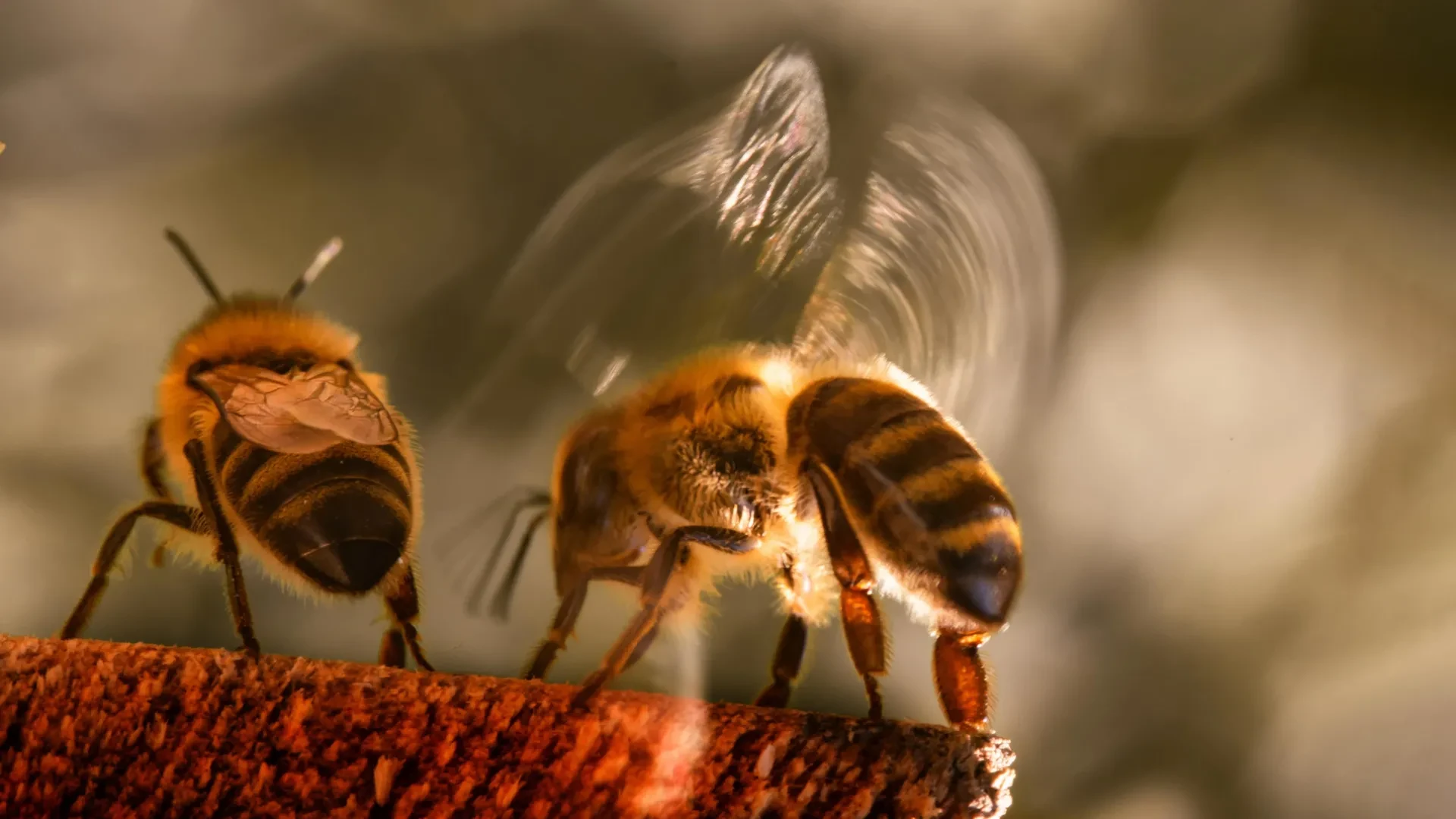
However, a groundbreaking study published in Ecological Entomology by researchers at Anglia Ruskin University (ARU) complicates this simple narrative. The research reveals that honey bees are not merely passive victims of environmental degradation; they are formidable, highly competitive foragers that actively dominate floral resources. Far from peacefully sharing blooming meadows and urban hedgerows, honey bees frequently use aggression—chasing, displacing, and intimidating rival insects—to monopolize access to nectar and pollen.
Drawing on over 93 hours of meticulous field observations across five locations in and around Cambridge, the ARU research team has documented the mechanics of this interference competition. As the popularity of beekeeping continues to soar—with registered UK beekeepers more than doubling over the last decade and a half—wild pollinators such as bumblebees, solitary bees, and hoverflies are increasingly finding themselves pushed to the margins. Compounding the issue, scientists warn that climate change and rising temperatures could supercharge this aggressive behavior, giving managed honey bees an even greater advantage over their wild counterparts.
This in-depth report explores the methodology and findings of the ARU study, analyzes the broader ecological context of the UK’s shifting pollinator dynamics, highlights unexpected exceptions among rival insects, and outlines the urgent need to balance human beekeeping practices with the conservation of native wildlife.
Detailed Chronology: Uncovering the Battlefield in the Hedgerows
To understand how honey bees interact with wild pollinators in real-world settings, the research team, led by ARU PhD student and lead author Victoria Buckle, designed a comprehensive, two-year field study. The investigation focused on tracking insect behavior at sites strategically located within 300 meters of established honey bee colonies.
The Setting and Target Species
Fieldwork was conducted across five distinct locations in and around Cambridge, England. The researchers chose to monitor two specific flowering plants: bramble (Rubus fruticosus) and ivy (Hedera helix). These perennial plants are critical ecological anchors, producing abundant supplies of nectar and pollen during their respective flowering seasons. Because they attract a wide diversity and high volume of insect life, bramble and ivy serve as ideal natural laboratories for observing direct competition for food.
To systematically categorize the competitors, the research team divided floral visitors into five distinct groups:
- Honey bees (Apis mellifera)
- Bumblebees (various Bombus species)
- Solitary bees (a diverse group of non-social native bees)
- Hoverflies (beneficial insect mimics from the family Syrphidae)
- An ‘other’ category encompassing butterflies, beetles, and wasps.
Documenting 93 Hours of Conflict
Over the course of 93 hours of direct observation, scientists watched and recorded encounters where one insect interrupted another’s feeding or outright prevented it from landing on a targeted flower. Every interaction was meticulously cataloged based on its outcome:
- Win: One insect successfully gained access to a flower at the expense of another, which suffered a direct loss of feeding opportunities.
- Loss: An insect was displaced, chased away, or forced to abandon its foraging attempt.
- Share: Both insects managed to peacefully access the flower simultaneously without physical conflict.
The accumulated data exposed a stark ecological hierarchy. Locations featuring higher concentrations of honey bees consistently hosted fewer wild pollinators overall, and the frequency of aggressive encounters spiked in tandem with honey bee density. When honey bees were present in large numbers, they emerged victorious in an overwhelming majority of competitive interactions.
On bramble flowers, the mathematical correlation was clear: doubling the local density of honey bees was associated with a direct 14% decrease in the abundance of bumblebees. On ivy flowers, similarly elevated honey bee populations were directly linked to suppressed numbers of solitary bees and hoverflies.
The Anatomy of an Attack
Crucially, the researchers noted that honey bees did not simply win through sheer speed or by arriving at flowers first. They routinely initiated aggressive encounters, actively driving other insects away to secure exclusive feeding rights.
In 28% of observed interactions on bramble and 36% on ivy, wild pollinators actively avoided honey bees before any physical contact was even made, illustrating an ingrained behavioral submission. Furthermore, in at least 20% of the encounters won by honey bees on either plant species, the bees physically shoved aside or aggressively chased away their rivals.
Aggressive behavior initiated by insects other than honey bees was found to be exceptionally rare. However, the study did record one fascinating and unexpected exception to the rule: the ivy bee.
Supporting Context & Metrics: Rising Hives and Warming Climates
To fully grasp the implications of the ARU study, one must examine the broader socio-ecological trends shaping the United Kingdom’s countryside and urban green spaces.
The Beekeeping Boom
Over the past fifteen years, recreational and sideline beekeeping has experienced a massive cultural revival in the UK. According to national registry data, the number of registered beekeepers climbed steeply from approximately 19,000 in 2010 to an impressive 47,000 last year.
While this growth reflects a commendable public desire to support the environment, it has also led to an unprecedented concentration of managed honey bee colonies (Apis mellifera)—often in urban and suburban areas where floral resources are finite. Unlike wild pollinators, which must forage independently to survive and reproduce, managed honey bees are heavily supported by human intervention, allowing their hive populations to remain high even when local food sources fluctuate.
The Climate Change Multiplier
Compounding the pressure from high hive densities is the accelerating pace of climate change. The ARU study highlights a troubling correlation: competitive encounters between honey bees and wild pollinators became significantly more frequent during warmer weather conditions.
Scientists attribute this phenomenon to two primary factors:
- Nutritional Heat Stress: When flowering plants experience elevated temperatures and drought conditions—collectively known as heat stress—their physiological output changes. Many plants respond by reducing the volume of nectar they produce. This shrinkage in the available food supply forces a higher density of insects to compete for a rapidly dwindling pool of resources.
- Physiological Asymmetry: Different pollinator species react to ambient temperatures in radically different ways. Bumblebees and hoverflies are physiologically sensitive to high heat and tend to forage more efficiently during cooler, overcast conditions. Honey bees, conversely, exhibit a sharp increase in activity as temperatures rise. Previous scientific literature notes that a mere 1.5°C increase in temperature can trigger a tenfold surge in the number of honey bees leaving their hives to forage.
When combined, these variables create a compounding advantage for honey bees. As the UK climate continues to warm, managed honey bees will likely remain active and aggressive during hot spells, while native wild pollinators struggle with heat stress and face intensified displacement from their preferred feeding grounds.
Official Statements and Expert Insights
To contextualize the findings, Victoria Buckle, lead author of the study and a PhD researcher at Anglia Ruskin University, emphasized that the research is not intended to spark an anti-beekeeping backlash, but rather to inform smarter, more targeted conservation strategies.
"The aim of our study was not to discourage beekeeping, but to better understand how competition happens between wild and managed pollinator species with the aim of helping to conserve our wild pollinators, which play such an important ecological role," Buckle explained.
Reflecting on the behavioral dynamics observed in the field, Buckle detailed how pervasive honey bee dominance truly is:
"We found that most interactions when competing for food were instigated by honey bees and they had a greater number of ‘wins’, resulting in a loss of forage for other pollinators. Bumblebees, solitary bees and hoverflies would avoid, be displaced by and on some occasions be chased off by honey bees."
However, Buckle also pointed out the single most surprising discovery of the two-year observation period: the resilience demonstrated by the ivy bee (Colletes hederae).
"An interesting exception was the ivy bee, which would win contests more often against honey bees. It is the first time, to our knowledge, such behaviors have been observed and shows ivy bees are able to ‘hold their own’ in such encounters."
Despite this tenacity shown by the non-native ivy bee, Buckle issued a stark warning regarding the future of native biodiversity under a warming climate:
"However, honey bees outcompeted all other wild pollinators and based on our findings, future predicted warming in the UK is only likely to further exacerbate interference competition from dominant honey bees. Therefore, it’s important to find ways to ensure honey bees and wild pollinators can continue to coexist, particularly in locations with a high density of hives, such as urban areas."
The Ivy Bee Exception: A Closer Look
The discovery that the ivy bee can successfully stand up to honey bees adds a layer of complexity to the research. The ivy bee is a solitary species that is not historically native to Britain; it was first officially documented in the country in 2001. Specializing heavily on ivy pollen late in the autumn season, this robust solitary bee appears to have developed competitive behaviors robust enough to challenge the collective might of managed honey bees. Whether this resilience is an evolutionary trait born of its specific ecological niche or a localized behavioral anomaly remains a vital question for future entomological research.
Future Outlook: Finding Ecological Balance
As the scientific community digests the implications of the Anglia Ruskin University study, conservationists, beekeepers, and urban planners must confront a delicate management challenge. Honey bees remain essential agricultural pollinators and culturally cherished livestock, but their unchecked proliferation in localized areas risks pushing vulnerable native wild bees and hoverflies toward local exclusion.
Moving Forward: Practical Recommendations
To foster a balanced ecosystem where both managed honey bees and wild pollinators can thrive, researchers and conservation experts suggest several actionable pathways:
- Strategic Apiary Placement: Beekeepers and local councils should carefully consider the density of existing hives before establishing new apiaries. Over-concentrating hives in urban parks, nature reserves, or rural sanctuaries creates artificial bottlenecks where competition for nectar and pollen becomes severe.
- Enhancing Floral Resources: Mitigation efforts must focus on habitat augmentation. Planting diverse, succession-blooming flora—particularly native plants that bloom across extended seasons—ensures that the total volume of available forage grows alongside pollinator populations, reducing the intensity of direct competition.
- Climate-Resilient Landscaping: As warming trends persist, urban green spaces and agricultural margins should be planted with drought-tolerant, heat-resilient flowering species that maintain stable nectar production during extreme weather events.
- Targeted Conservation for Wild Pollinators: Funding and habitat creation projects must explicitly prioritize wild pollinators—such as ground-nesting solitary bees and wild bumblebees—which lack the human logistical support enjoyed by managed honey bees.
Ultimately, the findings from Cambridge serve as a timely reminder that ecological management is rarely zero-sum. Protecting biodiversity requires looking beyond charismatic single species to understand the intricate, sometimes combative web of interactions playing out silently in our gardens and hedgerows every single day.