

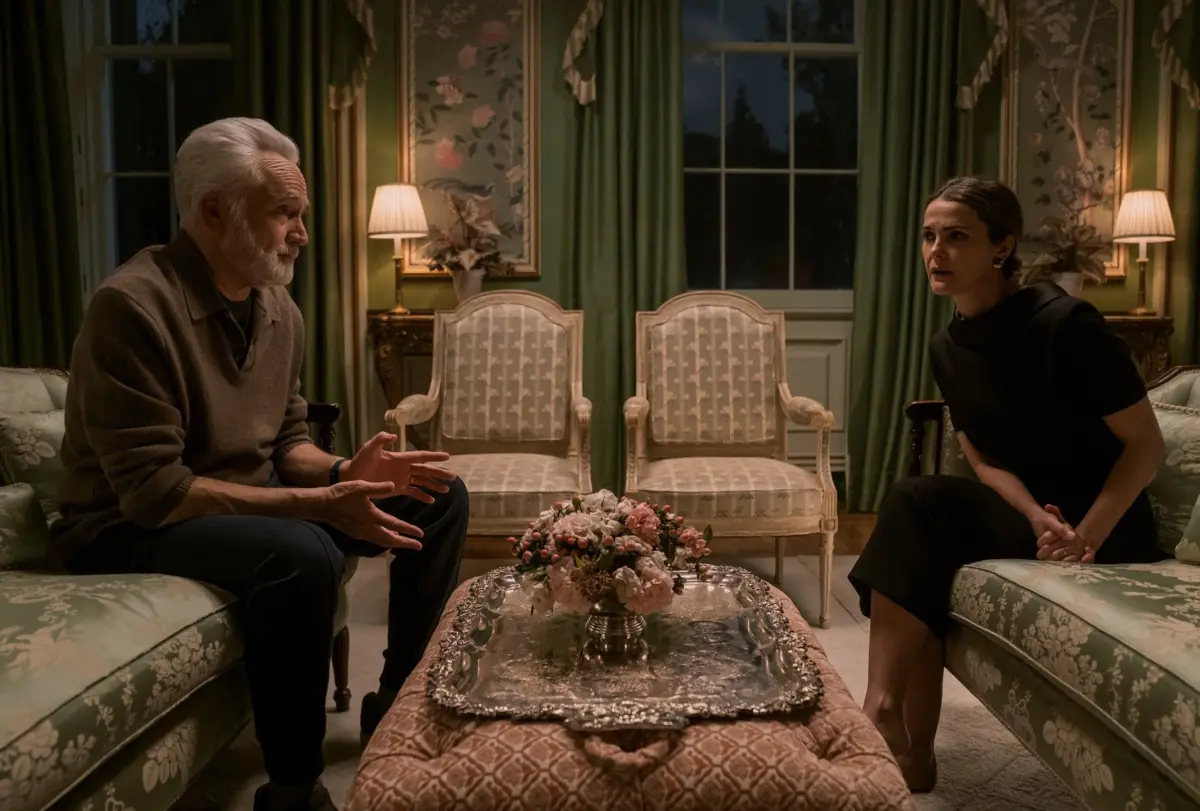
In the contemporary cultural and political landscape, few television series capture the collision of high-stakes geopolitics and messy matrimony quite like Netflix’s transatlantic hit drama, The Diplomat. Created by Debora Cahn, the series has evolved over its four seasons into a masterclass on power, partnership, and institutional strain. At its core, the show centers on the volatile marriage of U.S. Ambassador to Britain Kate Wyler (Keri Russell) and her charismatic, scheming husband, Hal Wyler (Rufus Sewell). Their union—alternately symbiotic and explosive—plays out against a backdrop of crumbling international alliances, shady backroom deals, and the shadow of a deeply controversial U.S. presidential administration led by President Grace Hagen Penn (Allison Janney) and First Gentleman Todd Penn (Bradley Whitford).
Beyond its gripping narrative and labyrinthine plot twists, The Diplomat serves as a provocative cultural mirror. It forces viewers to confront the shifting dynamics of modern political marriages, drawing an implicit contrast between eras when presidential spouses operated as formidable intellectual equals and today’s often transactional, emotionally fraught public partnerships. Whether examining the fictionalized corruption of the Penn administration, the frantic "sin-eating" diplomacy of Kate Wyler, or the stark, real-world optics of contemporary political figures, the series invites a deeper meditation on what it means to stand by a partner when the institutions they serve—and the marriages they maintain—begin to fracture.
Detailed Chronology: From Borderline Divorces to Global Chaos
The narrative architecture of The Diplomat is built on a foundation of professional ambition colliding with personal wreckage. The series famously opens with Kate and Hal Wyler on the brink of divorce. Career diplomat Kate expects a posting to Afghanistan, only to be abruptly thrust into the geopolitical pressure cooker of the U.S. Embassy in London amidst a tense international crisis. Hal, a legendary and politically seasoned operator who cannot easily surrender the spotlight, promptly manipulates Kate into remaining in the marriage—triggering a multi-season saga of strategic maneuvering, gaslighting, and forced reconciliation.
As the series progresses through its subsequent seasons, the scope widens dramatically. Kate becomes the indispensable shock absorber for the "special relationship" between the United States and Great Britain, working tirelessly to keep bilateral ties from collapsing while her own government—and her husband—seem intent on using geopolitical jackhammers. Hal’s insatiable appetite for power eventually leads to his appointment as vice president under the calculating and indubitably corrupt President Grace Hagen Penn.
Simultaneously, the inner workings of the White House are laid bare through the dynamic between President Grace Penn and First Gentleman Todd Penn. While Grace systematically sets fire to traditional American alliances and exhibits unnerving autocratic tendencies, Todd navigates his own unique form of exile and coping mechanisms. Whether screaming underwater to manage his boiling frustration or fleeing to London under the guise of examining wallpaper swatches to escape his wife’s orbit, Todd remains a tethered fixture of the administration. When Grace calls him "babe" during daily check-ins or when Todd stands stoically by her side through escalating scandals, the show illustrates a deeply compromised but fiercely enduring marital bond.
For Kate, the price of keeping this machinery running is literal physical toll. Tasked with cleaning up Hal’s relentless messes—such as blackmailing a volatile British Prime Minister or covering up a clandestine operation to swipe a Russian doomsday weapon from a sunken submarine—Kate’s stress manifests as severe acid reflux. She serves as America’s premier "sin eater," routinely retreating to embassy bathrooms to vomit up her moral guilt before returning to the negotiating table.

Supporting Context & Metrics: The Evolution of the Political Spouse
To fully appreciate the resonance of The Diplomat, one must examine how television reflects—and reacts to—real-world evolutions in the role of the presidential spouse. For decades, the archetypal first or second lady was expected to occupy a carefully curated, largely apolitical space focused on social initiatives, garden tours, and ceremonial duties. However, modern history has repeatedly challenged that paradigm.
Figures like Hillary Clinton redefined the boundaries of political partnership. When Bill Clinton assumed the presidency, Hillary famously chaired the Task Force on National Health Reform—a sprawling, ambitious policy endeavor that faced immense political headwinds and ultimate defeat. That legislative battle established a enduring template: any presidential spouse who dared to step out of the traditional ceremonial mold and wield substantive intellectual and policy-making power invited intense partisan skepticism. Right-wing critics frequently characterized such professional achievements and eloquence as threatening or emasculating, teaching generations of voters to eye politically ambitious spouses with suspicion.
Subsequent figures, such as Michelle Obama and Dr. Jill Biden, navigated these waters by refusing to dim their professional light, using their platforms to advocate for substantive causes despite relentless scrutiny. Yet, the pendulum swings vividly when contrasted with modern political optics.
The stark difference between past intellectual partnerships and contemporary transactional pairings was brought into sharp relief during high-profile public appearances, such as the joint photo-op featuring Donald Trump and Melania Trump for the signing of an executive order establishing a task force on women’s health. Against the backdrop of a rare public appearance by a first lady widely perceived as deeply detached from her husband’s political theater, the president’s own remarks—assuring reporters that "she’s not so easy, but she’s very smart" while casting doubt on the efficacy of her signature—highlighted a chilling disconnect. When a subsequent attempt at a public kiss resulted in the first lady turning her head to receive a brush against her hair, it underscored a marital dynamic lightyears away from the collaborative, albeit troubled, partnerships depicted in prestige political fiction.
Official Statements and Cultural Commentary
The thematic DNA of The Diplomat draws heavy inspiration from legendary political dramas of the past, most notably Aaron Sorkin’s The West Wing. During the George W. Bush administration, The West Wing offered liberal viewers a comforting, highly articulate vision of governance characterized by the moral idealism of Martin Sheen’s President Jed Bartlet, aided by staffers like C.J. Cregg (Allison Janney) and Josh Lyman (Bradley Whitford).
However, The Diplomat and the Penn administration represent a cynical, modern inversion of that classic formula. Allison Janney’s transition from the principled, sharp-witted press secretary of The West Wing to the brazenly corrupt, autocratic President Grace Penn in The Diplomat serves as a brilliant meta-commentary on the decay of political idealism.
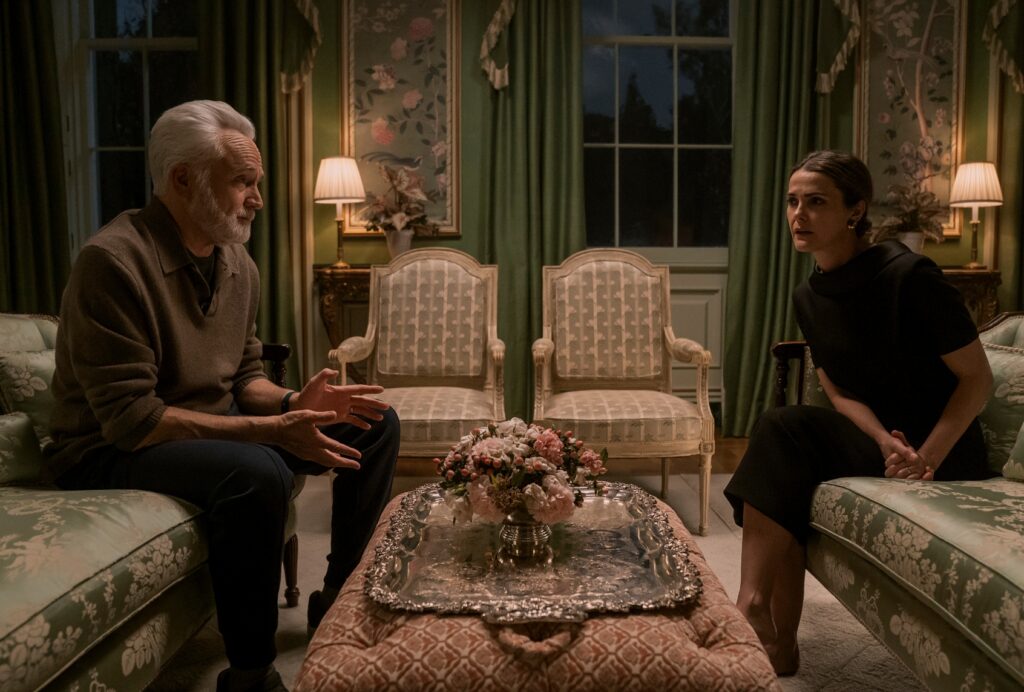
Cultural analysts and critics have noted that the appeal of these radioactive fictional relationships lies in their raw plausibility. Unlike the fairy-tale idealism of Camelot, marriages like those of the Clintons, or the tumultuous alliance of Kate and Hal Wyler, acknowledge that power is corrosive. Yet, audiences find a strange, paradoxical comfort in these depictions. As viewers watch real and fictional partnerships grapple with infidelity, ego, and ideological betrayal, the sheer resilience of the bond—however strained—offers a weirdly soothing balm.
When asked about the underlying motivations of characters like Kate and Hal, industry observers point out that the political class has historically rewarded opportunistic operators like Hal while penalizing morally grounded, hyper-competent technocrats like Kate. Yet, it is precisely Kate’s refusal to abandon her post—and her reluctant, ironclad partnership with her husband—that prevents the entire geopolitical framework from collapsing into total anarchy.
Future Outlook: Navigating the Nightmare of Modern Politics
As The Diplomat continues to captivate audiences on streaming platforms, its cultural footprint expands far beyond standard political satire. The series provides an ongoing laboratory for examining the intersection of public power and private endurance.
Looking forward, the trajectory of the Penn administration and the Wyler marriage points toward an increasingly perilous landscape. With Hal now occupying the vice presidency and Grace’s autocratic tendencies threatening to permanently dismantle America’s traditional alliances, the margin for error has evaporated. The upcoming narrative arcs promise to test whether institutional checks and balances can survive when the highest offices in the land are occupied by individuals who treat global stability as a high-stakes game of political poker.
Yet, for the average viewer navigating the unpredictable seas of contemporary real-world politics, the appeal of the show remains fundamentally therapeutic. If fictional figures like Kate and Hal Wyler can survive the dizzying nightmare of international espionage, backstabbing administrations, and a deeply fractured marriage—all while managing their professional duties with razor-sharp intellect—it offers a glimmer of reassurance. In an era defined by political instability and strained public unions, The Diplomat suggests that competence, resilience, and partnership, however messy, remain our best defenses against the dark.