

Executive Overview
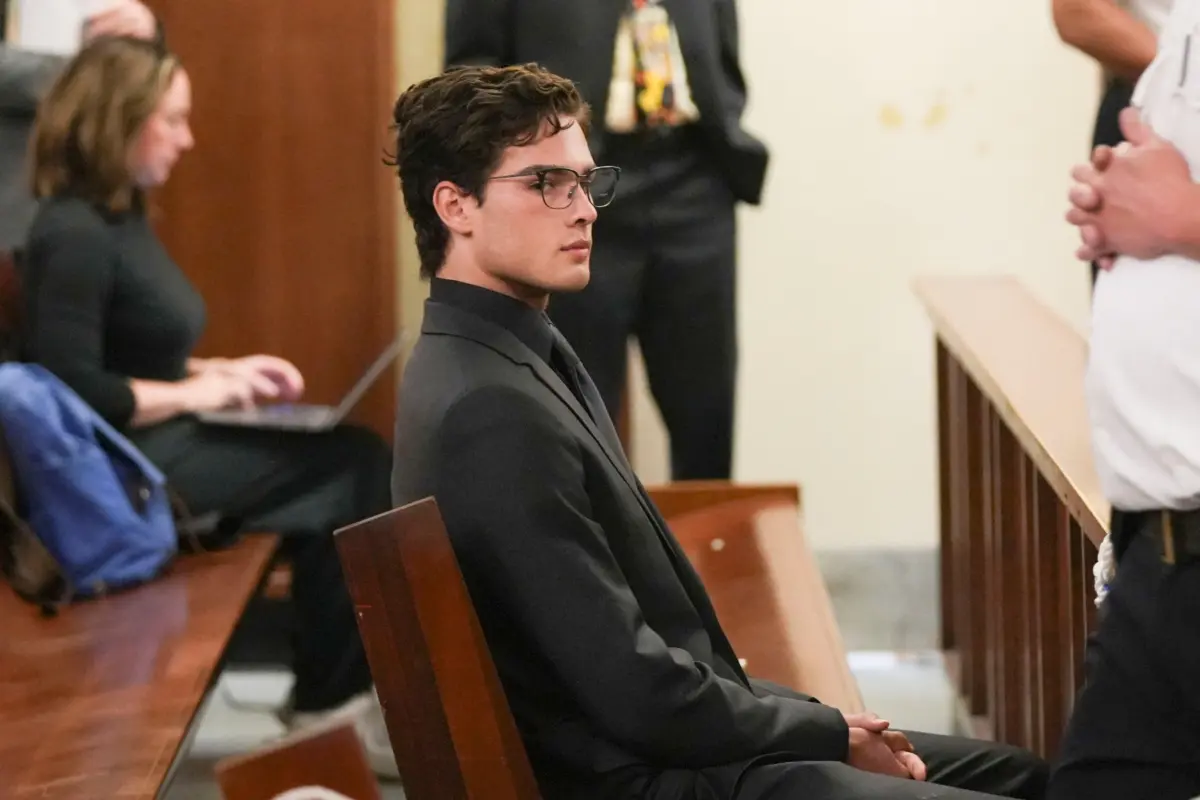
The intersection of digital fame, unregulated internet subcultures, and serious criminal allegations has once again thrust the influencer economy into an uncomfortable spotlight. Braden Peters—a prominent figure within the polarizing online ecosystem known as "Looksmaxxing" and widely recognized by his digital moniker, "Clavicular"—surrendered to authorities and pleaded not guilty in a Massachusetts courtroom to multiple felony charges, including rape.
The arraignment, which took place on a Thursday following months of escalating legal and public scrutiny, marks a pivotal escalation in a scandal that has captivated and horrified observers of modern internet culture. Peters, whose online brand is built around extreme physical self-improvement, aesthetic optimization, and the curation of hyper-masculine online personas, faces severe legal jeopardy stemming from an alleged incident in May 2025 at his family’s property on Cape Cod.
During the court appearance, a Massachusetts judge set Peters’ bail at $10,000, a sum the influencer promptly paid in cash. As part of the release conditions, Peters was mandated to surrender his passport and strictly adhere to a stay-away order preventing any contact—physical or digital—with his accuser, fellow influencer Aleksandra Vasilevna Mendoza, who performs under the handle Alorah Ziva.
While Peters’ legal representation has moved swiftly to establish a defense framework, pointing to subsequent interactions and expressions of digital loyalty from Mendoza, the gravity of the charges threatens to dismantle the career of one of the Looksmaxxing community’s most visible standard-bearers. This case transcends a simple legal dispute between internet personalities; it serves as a glaring case study in the real-world consequences of digital subcultures operating largely without institutional oversight, the complex dynamics of modern parasocial fame, and the rigorous mechanisms of the American judicial system when online allegations translate into formal indictments.
Detailed Chronology
To fully understand the current legal standing of Braden Peters, it is necessary to trace the timeline of events from the initial alleged occurrence on Cape Cod to the complex web of civil and criminal filings that followed.
May 2025: The Alleged Incident on Cape Cod
According to court documents, police reports, and concurrent legal filings, the core incidents underpinning the criminal case took place on May 23, 2025. Mendoza, who was 17 years old at the time, traveled to the Peters family home on Cape Cod. What was ostensibly framed as an influencer collaboration quickly devolved into an alleged multi-faceted assault.
Civil filings initially brought by Mendoza asserted that Peters provided her with alcohol, contributing to a state of incapacitation that rendered her unable to provide legal consent. The allegations detailed a horrifying sequence of events wherein Mendoza awoke to find Peters engaged in non-consensual sexual acts. Furthermore, the legal documents claimed that Peters administered an unapproved substance, suspected by investigators to potentially contain methamphetamine derivatives, further compromising her agency.
April to October 2025: The Civil Arena and Strategic Shifts
Before criminal charges were formally laid by the Commonwealth of Massachusetts, Mendoza pursued legal recourse through the civil court system. In April, she filed a comprehensive lawsuit against Peters detailing allegations of battery, intentional infliction of emotional distress, and fraud.
This civil complaint brought the dark underbelly of their interaction into public view, though it remained largely contained within legal circles until investigative reporting by publications such as The New York Times and NBC News brought the police reports to light. Intriguingly, by October, Mendoza refiled her civil suit, notably omitting the specific sexual assault allegations. Legal experts noted that this strategic alteration was designed to streamline the civil process without jeopardizing or interfering with the impending state-level criminal proceedings.
September 2025: The State Steps In
In September, the Commonwealth of Massachusetts formally intervened, transitioning the matter from a private civil dispute to a state prosecution. Prosecutors indicted Peters on a three-count slate:
- Rape: A primary felony charge carrying significant prison time upon conviction.
- Drug-Related Sexual Offense: A secondary felony charge associated with the administration of substances during the alleged assault.
- Procuring Liquor for a Minor: A misdemeanor charge acknowledging that Mendoza was under the age of 21 at the time alcohol was allegedly provided.
October—December 2026: Arraignment and Bail Arguments
The legal maneuvering culminated in the Thursday arraignment. In the days leading up to the hearing, Peters’ defense team submitted petitions arguing for minimal bail, asserting that their client was neither a flight risk nor a danger to the community, bolstered by the fact that Peters possesses no prior felony convictions.
During the hearing, the judge weighed these arguments against the severity of the charges, ultimately fixing bail at $10,000. Peters satisfied the financial requirement immediately, secured his release under pre-trial monitoring, surrendered his travel documents, and accepted a blanket prohibition against contacting the victim.
Supporting Context & Metrics
The case against Braden Peters cannot be examined in a vacuum; it is deeply embedded in the mechanics of the "Looksmaxxing" digital economy and broader cultural phenomena surrounding contemporary social media influence.
The Rise of "Looksmaxxing" and Clavicular’s Brand
"Looksmaxxing"—a portmanteau of "looks" and "maximizing"—is an internet subculture rooted in aesthetic self-improvement, bone-structure optimization, and physical grooming. While some aspects of the movement mirror mainstream fitness and skincare communities, its deeper digital fringes often delve into pseudoscientific anthropometry, rigid hierarchies of physical attractiveness, and hyper-masculine rhetoric.
Braden Peters ascended within this niche under the handle "Clavicular," a name referencing a specific skeletal feature (the collarbone) heavily fetishized within the community as a marker of masculine frame and genetic superiority. Through platforms like TikTok, YouTube, and X (formerly Twitter), Peters amassed a dedicated following by dispensing advice on jawline enhancement, posture, and physical styling.
The Economics of Influencer Collaborations
The ecosystem in which Peters and Mendoza operated relies heavily on cross-pollination of audiences through collaborative content. These partnerships, often arranged rapidly across digital networks, blur the lines between professional engagements and personal interactions.
The financial and social capital generated by these collaborations can be immense, translating directly into brand partnerships, merchandise sales, and platform monetization. However, the lack of corporate infrastructure, human resources departments, or professional management in many independent influencer circles frequently leaves creators vulnerable to unregulated, high-risk environments.
Emerging Defense Strategies and Digital Evidence
In their pre-arraignment filings, Peters’ defense attorneys signaled the core pillars of their courtroom strategy. Rather than relying solely on a denial of events, the defense intends to introduce digital artifacts—including collaborative social media content, complimentary statements, and direct messages—to contest the credibility and narrative put forth by the prosecution and the accuser.
Legal analysts point out that digital footprints often serve as double-edged swords in modern trials. While contemporaneous messages can be used to construct narratives of ongoing friendly relations, prosecutors frequently counter by contextualizing these communications within the trauma responses, manipulation, or coercion typical of abuse dynamics.
Official Statements and Legal Posturing
The formal positions of the involved parties reflect the high-stakes, highly guarded nature of a high-profile criminal proceeding intersecting with public-facing digital personas.
The Prosecution and Victim’s Counsel
Representatives for the Commonwealth of Massachusetts have maintained a steady, procedural approach, relying on the statutory strength of the indictments handed down in September. The decision to pursue felony rape and drug charges underscores the seriousness with which state prosecutors view the allegations compiled from police reports and medical documentation obtained during the initial 2025 investigation.
Meanwhile, counsel for Aleksandra Vasilevna Mendoza has maintained a disciplined silence regarding the specifics of Thursday’s arraignment plea. Following the strategic refiling of the civil suit to excise sexual assault claims, Mendoza’s legal team has focused on ensuring that civil maneuvering does not compromise the integrity or momentum of the state’s criminal prosecution. Through public statements made via media surrogates, Mendoza’s camp has maintained that the alterations to the civil filings were executed strictly to protect the focus of the criminal trial.
The Defense Response
Braden Peters’ legal team has mounted an aggressive pre-trial defense, focusing heavily on mitigating pre-trial detention conditions and introducing doubt regarding the consistency of the accuser’s narrative. In court filings aimed at lowering bail, Peters’ lawyers highlighted instances where Mendoza continued to publicly praise Peters and collaborate on digital content well after the date of the alleged assault.
Highlighting a piece of physical/digital evidence central to their preliminary defense strategy, attorneys pointed to a handwritten note allegedly authored by Mendoza. The note reportedly reads: "Braden, you have my loyalty 100% […] I admire the man you are." The defense intends to leverage this documentation—alongside public statements where Mendoza referred to Peters as "so nice"—to argue that subsequent interactions are fundamentally incompatible with the claims of non-consensual violence brought forth in the indictment.
Public and Social Media Posturing
Prior to the formal arraignment and subsequent legal constraints, Peters utilized his remaining digital channels to issue blanket denials of any wrongdoing. However, as the legal apparatus tightened around him—culminating in the surrender of his passport and strict gag-style compliance requirements—his digital footprint has gone largely dormant, managed by legal representatives who have universally declined to offer expanded commentary to the press beyond standard courtroom submissions.
Future Outlook
As the legal proceedings against Braden Peters transition from the arraignment phase toward pre-trial discovery and motion hearings, several critical trajectories will dictate the outcome of the case and its broader cultural footprint.
The Legal Battleground Ahead
The trial, when it eventually commences in Massachusetts state court, will likely hinge on a war of digital and forensic evidence.
- The Forensic Evidence: The prosecution’s case will rely heavily on medical reports, toxicology screens (if preserved from the initial May 2025 incident), and corroborating witness testimony to establish the state of incapacitation and the alleged administration of unapproved substances.
- The Digital Narrative: Conversely, the defense will lean heavily on the extensive paper trail of social media posts, direct messages, and physical notes to challenge the timeline, consent, and credibility of the accuser. Juries in the digital age are increasingly tasked with deciphering the complex, often contradictory realities of modern online relationships, where public affection and private trauma frequently overlap.
Fallout for the "Looksmaxxing" Community
Beyond the courtroom, the case serves as a profound cultural reckoning for the Looksmaxxing and broader manosphere digital communities. For years, these subcultures have operated on the fringes of mainstream internet culture, largely insulated from traditional accountability mechanisms. The arrest and prosecution of one of its most prominent influencers forces a public re-examination of the values, behaviors, and offline consequences fostered within these insular digital spaces.
Industry observers note that platforms hosting these communities are under mounting pressure to evaluate content moderation standards, potentially severing the pipeline that transforms niche aesthetic advice into mainstream celebrity status for unregulated creators.
Conclusion
The arraignment of Braden Peters is far more than a localized legal proceeding in Massachusetts; it is a collision between the lawless frontier of internet subcultures and the unyielding machinery of the criminal justice system. With his passport surrendered, a $10,000 cash bail paid, and a not-guilty plea entered on the record, "Clavicular" faces a grueling legal road ahead. Whether the courts will validate the severe felony indictments or whether the defense’s digital narrative will dismantle the prosecution’s claims remains to be seen. What is certain, however, is that the trial of Braden Peters will stand as a defining legal touchstone for the influencer era—a stark reminder that digital fame offers no immunity from the realities of accountability and the rule of law.