

Executive Overview
The intersection of digital fame, unregulated internet subcultures, and serious criminal allegations reached a critical juncture in Massachusetts courtrooms following the arraignment of Braden Peters—a prominent internet personality widely known by his online moniker, “Clavicular.” Peters, a central figure in the booming, male-centric online aesthetic subculture known as "looksmaxxing," appeared before a Massachusetts judge to enter a formal plea of not guilty to a series of severe felony and misdemeanor charges.
The case stems from a cascade of accusations originating from an alleged incident in May 2025 at a private family residence on Cape Cod. According to law enforcement and court documents, the charges involve allegations of sexual assault, the administration of a controlled substance during the commission of the act, and the furnishing of alcohol to an individual under the legal drinking age. The complainant, fellow social media influencer Aleksandra Vasilevna Mendoza—professionally known as Alorah Ziva—was a minor at the time of the alleged events, according to police reports obtained by mainstream investigative journalists.
The arraignment itself highlights the high-stakes legal battle now facing the young influencer. Judge and defense counsel weighed standard pretrial conditions, ultimately setting Peters’ bail at $10,000, which was paid in cash immediately following the hearing. As part of the release conditions, Peters was mandated to surrender his passport to prevent international flight and was slapped with strict stay-away orders barring any direct or indirect contact with Mendoza, as well as any commentary regarding her on his expansive digital networks.
While Peters’ legal team has mounted an aggressive defense—pointing to subsequent social media collaborations and affectionate correspondence from Mendoza as indicators of consent and post-incident amicability—the reputational and legal fallout threatens to permanently derail a lucrative online career. Beyond the immediate criminal proceedings, the case has ignited broader cultural conversations regarding the accountability of internet celebrities, the ethics of the looksmaxxing community, and the complex dynamics of relationships forged within the hyper-accelerated ecosystem of social media influence.
Detailed Chronology: From Cape Cod to the Courtroom
To understand the legal gravity of the situation facing Braden Peters, one must trace the timeline of events from the initial weekend on Cape Cod to the formal courtroom showdowns in late 2025 and 2026.
May 2025: The Cape Cod Incident
According to documents filed by both prosecutors and civil attorneys, the core events unfolded on or around May 23, 2025. Aleksandra Vasilevna Mendoza traveled to Cape Cod, Massachusetts, accepting an invitation to visit a residential property owned by Peters’ family. At the time, Peters commanded a significant following within the looksmaxxing niche, while Mendoza was establishing her own digital footprint as an independent creator.
What began as a routine cross-collaboration visit between internet personalities allegedly devolved into a severe legal transgression. According to civil suit filings initially brought by Mendoza, Peters provided alcohol to her despite her underage status. The suit detailed that Mendoza consumed enough alcohol to reach a state of incapacitation where meaningful consent was impossible. Furthermore, the complaint alleged that sexual activity occurred during this incapacitated state and continued the following morning when Mendoza woke up to Peters engaging in sexual acts without her explicit or implied consent. Compounding these harrowing claims, the initial legal filings alleged that Peters administered an unapproved drug, potentially containing methamphetamine derivatives, without her knowledge or consent. Police documentation later corroborated that Mendoza was 17 years old at the time.
April to October 2025: The Civil Arena
The legal battle first manifested in the civil courts. In April 2025, Mendoza initiated a civil lawsuit against Peters, lodging formal claims of battery, intentional infliction of emotional distress, and fraud. This initial filing laid bare the detailed allegations of non-consensual sexual acts, substance administration, and the power dynamics inherent in their digital relationship.
However, as the gravity of the accusations drew the attention of state prosecutors, the legal strategy shifted. In October 2025, Mendoza refiled her civil suit, notably omitting the specific sexual assault allegations. Legal experts noted that this procedural maneuver was designed to streamline the civil proceedings and avoid compromising or interfering with the parallel criminal investigation being conducted by the Commonwealth of Massachusetts.
September 2025: Criminal Indictments
Recognizing the severity of the allegations and reviewing evidence gathered by law enforcement, a grand jury and state prosecutors formally moved against Peters in September 2025. The Commonwealth of Massachusetts filed a three-count criminal indictment:
- Count One: Felony rape, tied directly to the alleged non-consensual sexual acts of May 2025.
- Count Two: A felony drug-related charge associated with sexual intercourse, implicating the alleged surreptitious administration of substances.
- Count Three: A misdemeanor charge for procuring and providing alcoholic beverages to a person under the age of 21.
October 2026: The Arraignment and Bail Hearing
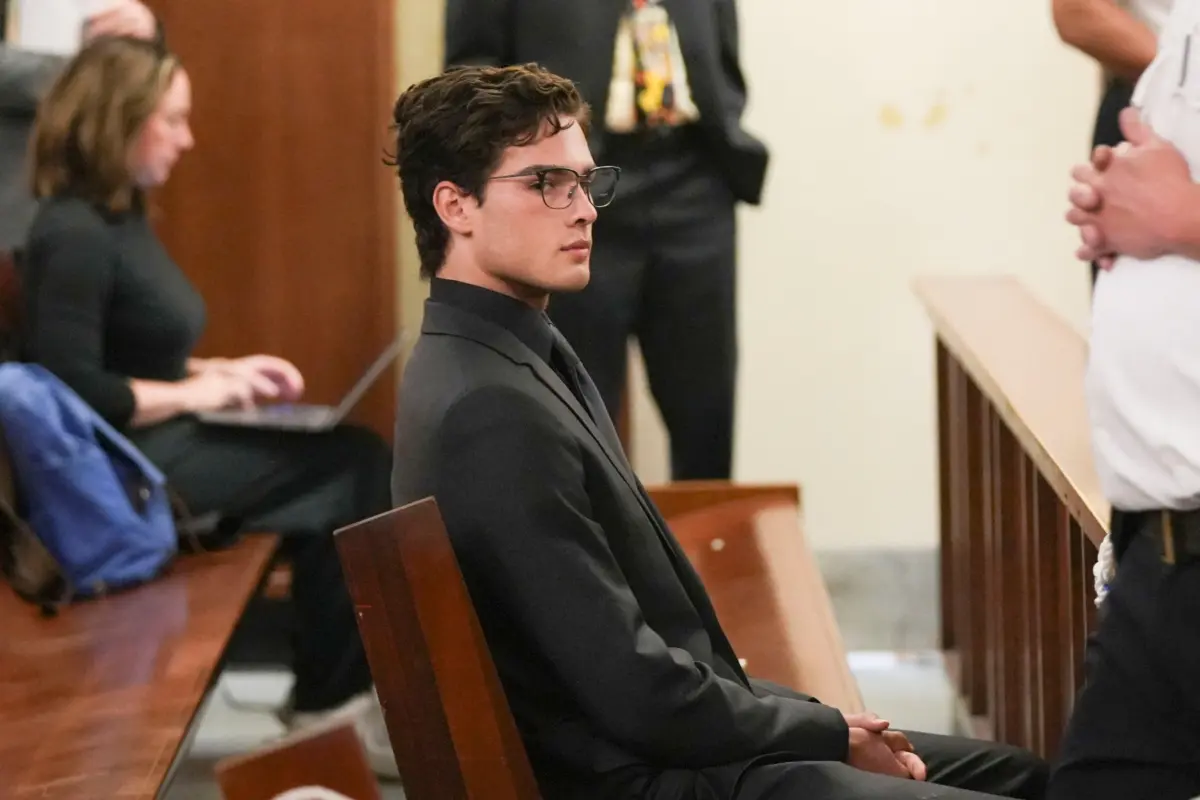
The legal timeline culminated in a tense arraignment hearing in Massachusetts. Peters, represented by a defense team seeking to mitigate both his immediate detention and long-term public exposure, entered a formal plea of not guilty to all charges.
During the pre-arraignment arguments, Peters’ attorneys pushed for minimal bail, asserting that their client possessed deep community ties, had no prior felony record, and represented neither a flight risk nor a danger to society. The prosecution, balancing the severity of the felony charges against Peters’ lack of a criminal history, did not demand exorbitant detention terms. Ultimately, the presiding judge set bail at $10,000, which Peters swiftly satisfied via a cash payment.
To secure his release, Peters was required to meet strict pre-trial conditions:
- Passport Surrender: To mitigate any theoretical flight risk given his financial capability to travel internationally.
- Strict No-Contact Orders: A legally binding prohibition against approaching, contacting, or referencing Aleksandra Vasilevna Mendoza in any capacity, both in the physical world and across all digital platforms.
Supporting Context & Metrics: The World of ‘Looksmaxxing’ and ‘Clavicular’
The charges against Braden Peters cannot be divorced from the unique digital ecosystem that birthed his fame. To millions of young internet users, Peters is not just an individual; he is "Clavicular," a prominent figurehead in the controversial subculture known as "looksmaxxing."
Defining ‘Looksmaxxing’
Looksmaxxing is a portmanteau of "looks" and "maximizing." Originating within niche online forums and rapidly expanding across mainstream platforms like TikTok, YouTube, and X (formerly Twitter), the subculture is ostensibly dedicated to self-improvement. Participants share tips, routines, and strategies to optimize their physical appearance through exercise, skincare, posture correction, dietary adjustments, and, in more extreme cases, surgical interventions or fringe medical experiments.
While proponents argue that looksmaxxing promotes health, fitness, and male grooming habits, critics and digital sociologists point out a darker, more toxic undercurrent. The subculture is frequently intertwined with hyper-fixated body dysmorphia, misogynistic rhetoric, radicalized aesthetic hierarchies (such as the "Incel" and "Blackpill" ecosystems), and the commodification of male insecurity. Influencers like Peters capitalized on this obsession, building substantial personal brands around facial bone structure, jawline optimization, and anatomical terminology (hence the moniker "Clavicular," referencing the collarbone as a marker of masculine skeletal structure).
The Economics of Niche Micro-Celebrity
Peters amassed hundreds of thousands of followers by positioning himself as an authority within this aesthetic economy. The financial metrics of such micro-celebrities often rely on a mix of algorithmic ad revenue, sponsored merchandise, digital coaching courses, and cross-platform collaborations with other rising internet personalities—such as his initial association with Mendoza.
However, this hyper-accelerated fame creates a precarious environment. When an influencer’s brand is built entirely on personal image, persona, and parasocial relationships with vulnerable audiences, legal scandals of this magnitude do not merely threaten personal liberty; they trigger immediate digital excommunication, demonetization, and relentless online scrutiny. Beyond the current rape charges, Peters has frequently courted controversy for internet stunts, including a widely publicized incident involving the alleged shooting of a dead alligator in Florida, cementing his reputation as an agent of digital shock value.
Official Statements and Legal Strategies
As the criminal case proceeds toward trial, both the defense and the prosecution are establishing the frameworks that will define their courtroom strategies.
The Defense’s Argument: Post-Incident Collaboration and Correspondence
In preliminary filings leading up to the arraignment, Peters’ legal representation outlined the contours of what is expected to be their primary trial defense. Rather than denying the physical proximity or the interactions between Peters and Mendoza on the dates in question, the defense intends to challenge the credibility of the non-consent narrative by highlighting subsequent behavior and communications.
According to court documents cited by NBC News, Peters’ attorneys argued that Mendoza continued to engage in friendly and professional collaborations with Peters long after the alleged assault date. The defense presented digital evidence showing that Mendoza described Peters as "so nice" and actively sought out joint social media ventures well after May 23, 2025.
Crucially, the defense introduced a handwritten note allegedly authored by Mendoza. The text of the note, highlighted in court petitions, reads:
"Braden, you have my loyalty 100% […] I admire the man you are."
Defense attorneys are expected to use these artifacts to argue that the sexual encounters were consensual and that the subsequent legal claims are inconsistent with Mendoza’s recorded statements, actions, and expressions of admiration following the event.
The Prosecution and Civil Counsel Stance
Conversely, prosecutors backed by the state’s investigative findings maintain that the charges are supported by forensic and testimonial evidence. The presence of a minor at the center of the allegations, combined with the felony drug charge related to sexual intercourse, elevates the case from a standard he-said-she-said dispute to a serious criminal prosecution involving potential incapacitation and chemical subjugation.
Mendoza’s legal team has maintained a measured public posture. Following Peters’ not-guilty plea and the posting of bail, Mendoza’s attorney declined to offer public commentary, adhering to a strategy designed to let the state’s criminal case proceed without public circus interference, while simultaneously managing the restructured civil litigation. Representatives for Peters have likewise maintained a strict "no comment" stance outside of formal court filings, though Peters previously utilized social media to issue blanket denials of any wrongdoing before facing severe algorithmic restrictions and legal gags.
Future Outlook: What Lies Ahead for Peters and the Digital Landscape
As Braden Peters awaits his next court appearance, the broader implications of the Commonwealth v. Peters case extend far beyond a single courtroom in Massachusetts.
Legal Ramifications
For Peters, the immediate future is dominated by strict compliance with pretrial supervision. The surrender of his passport ensures he remains within the jurisdiction of the United States, while the no-contact order shields the complainant from further digital or physical harassment. If convicted on the felony rape and drug charges, Peters faces the prospect of substantial mandatory prison sentences, effectively ending his career as a digital creator. Conversely, if the defense successfully leverages the post-incident communications and collaborative history to cast reasonable doubt on the absence of consent, Peters could secure an acquittal—though the reputational damage to his brand may prove irreversible.
Cultural and Industry Impact
The case serves as a cautionary tale regarding the dark side of the influencer economy. As regulatory bodies, digital platforms, and law enforcement agencies increasingly scrutinize the offline conduct of online personalities, the traditional shield of internet anonymity and parasocial insulation is rapidly dissolving.
The subculture of looksmaxxing, already viewed with skepticism by mainstream psychological and medical communities, faces renewed scrutiny regarding the behavior of its most prominent digital apostles. Whether this trial sets a legal precedent for how digital collaborations, power dynamics, and allegations of incapacitated consent are handled in the creator economy remains to be seen. What is certain is that the trial of Braden "Clavicular" Peters will stand as a watershed moment in the intersection of digital subcultures, influencer accountability, and the criminal justice system.