

Executive Overview
Deep beneath the sapphire-blue waters of the southern Japanese archipelago lies one of the planet’s most formidable geological sleeping giants. Thousands of years after producing a cataclysmic explosion that reshaped the region’s topography and triggered a global ecological bottleneck, Japan’s Kikai caldera is quietly showing signs of life. Groundbreaking marine geophysical research led by scientists at Kobe University, in close collaboration with the Japan Agency for Marine-Earth Science and Technology (JAMSTEC), has confirmed that fresh, molten magma is slowly refilling the colossal underground reservoir that fueled its ancient devastation.
The discovery, published in the journal Communications Earth & Environment, offers an unprecedented, high-resolution look into the secretive life cycle of supervolcanoes. Historically, the immense scale and remote, underwater locations of these titanic structures have severely limited scientists’ ability to observe how they recover from planet-altering events. By peering through the ocean floor using advanced seismic imaging techniques, researchers have mapped a massive, active magma accumulation zone beneath Kikai.
Far beyond the borders of Japan, this revelation carries profound implications for global volcanology. The mechanisms of magma re-injection observed at Kikai closely mirror those suspected beneath other world-famous supervolcanoes, including the Yellowstone caldera in the United States and the Toba supervolcano in Indonesia. While experts emphasize that this subterranean recharging process does not signal an imminent, catastrophic eruption, the findings represent a monumental step forward. By decoding how supervolcanoes slowly rebuild their lethal reserves over millennia, researchers hope to sharpen early-warning systems, ultimately bridging the gap between historical catastrophe and predictive science.
Detailed Chronology: From Ancient Cataclysm to Modern Discovery
To understand the magnitude of what is happening beneath the ocean surface today, scientists must first look back at the immense violence of Kikai’s past.
The Holocene’s Greatest Catastrophe (~7,300 Years Ago)
Approximately 7,300 years ago, Kikai was not merely a dormant depression; it was the site of the largest volcanic eruption of the Holocene epoch—the current geological period that began roughly 11,700 years ago. The eruption was staggering in its fury, expelling an astronomical volume of pyroclastic material that rushed across the sea and devastated the surrounding islands, effectively wiping out the prehistoric Jōmon culture on southern Kyushu.
The volume of magma evacuated during this single event was so immense that the structural integrity of the chamber’s roof failed completely. Deprived of its underlying support, the overlying rock collapsed inward, creating a massive, submarine depression known as a caldera. These geological scars are the calling cards of Earth’s most powerful eruptions, capable of ejecting enough material to alter global weather patterns, dim the sun, and devastate ecosystems on a continental scale.
The Post-Eruption Lull and Lava Dome Genesis (~3,900 Years Ago to Present)
Following the colossal blast, Kikai entered a prolonged period of recovery. However, nature abhorring a vacuum, the deep-seated plumbing system of the volcano did not simply switch off. Previous geological investigations established that roughly 3,900 years ago—more than three millennia after the cataclysmic blast—a new lava dome began to form near the center of the submerged caldera.
Unlike the explosive, gas-rich pyroclastic flows that characterized the main eruption, the formation of this lava dome indicated a different style of activity. Viscous, thick lava began to ooze slowly around a volcanic vent, gradually building a dome structure rather than violently scattering ash and pumice across the globe. Chemical analyses of the rocks comprising this dome and subsequent minor activity revealed a critical secret: their chemical composition differed significantly from the materials ejected during the giant eruption 7,300 years ago. This chemical divergence was the first major breadcrumb for scientists, hinting that the volcano was not merely recycling leftover, cooling magma, but was instead being systematically refilled by fresh, newly differentiated material ascending from the Earth’s mantle or deeper crust.
The Modern Breakthrough: Mapping the Seafloor Plumbing
The turning point in decoding Kikai’s current state came when researchers devised a way to bypass the obvious physical hurdles of studying an underwater volcano. Because the vast majority of Kikai lies submerged beneath the ocean, scientists turned this seemingly hostile environment into a scientific advantage. The unobstructed, uniform medium of the seafloor allowed the Kobe University and JAMSTEC teams to execute systematic, large-scale geophysical surveys that would be difficult, if not impossible, to replicate in densely populated terrestrial volcanic zones.
Utilizing powerful airgun arrays towed behind research vessels, the scientists generated controlled, high-energy seismic pulses. As these sound waves slammed into the ocean floor and propagated deep into the Earth’s crust, they were altered by the geological structures they encountered. Because seismic waves travel at drastically different speeds through solid, cold rock versus semi-molten or liquid magma chambers, researchers could use the recorded data to reconstruct a three-dimensional tomographic image of the subsurface.
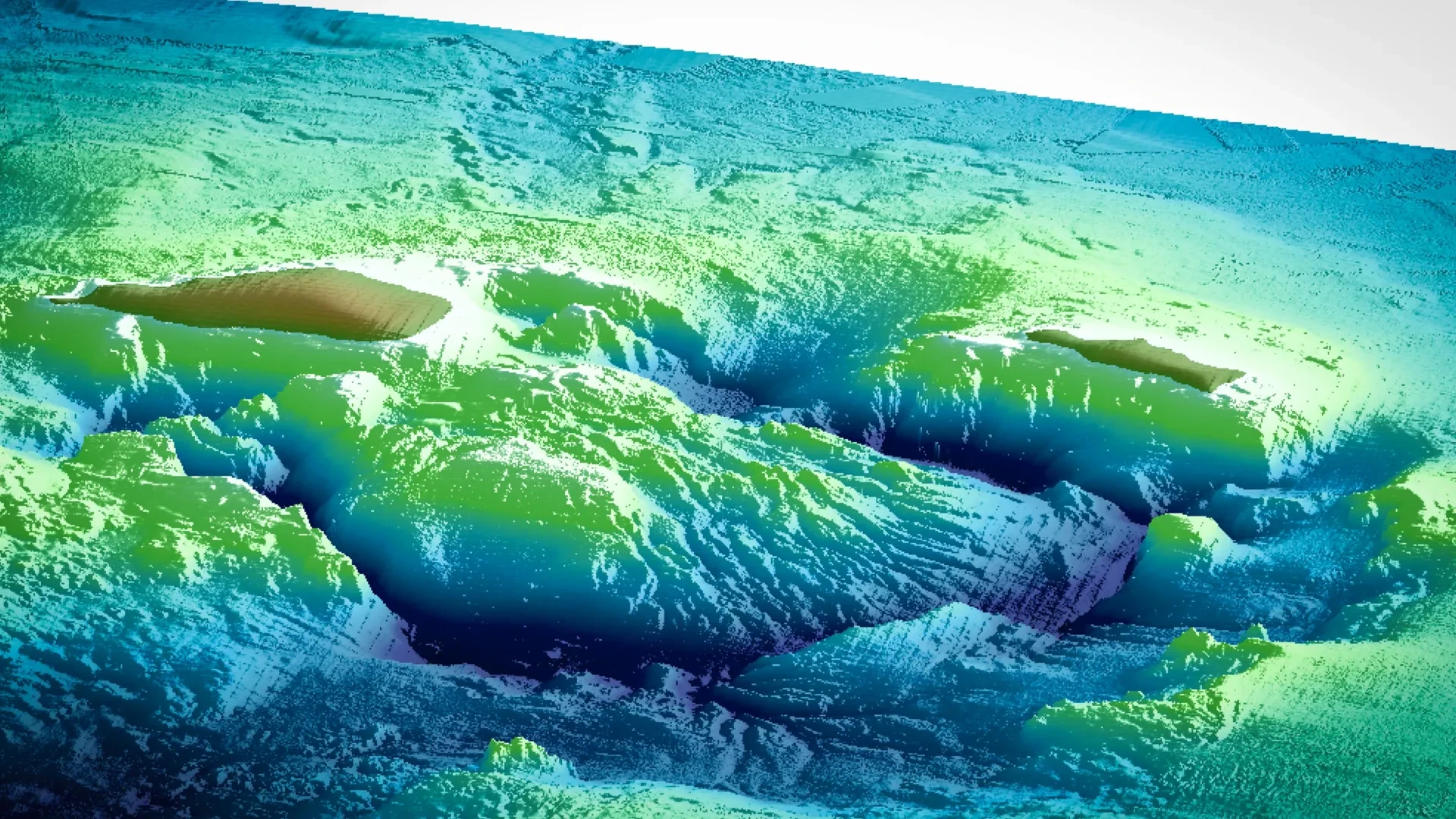
The resulting data revealed a massive, distinct region characterized by a high proportion of molten and semi-molten material located directly beneath the site of the ancient eruption. The spatial footprint and geological positioning confirmed beyond a doubt that this is the active, regenerating heart of the Kikai system—the exact same magma reservoir that emptied during the Holocene cataclysm, now waking up from a multi-millennial slumber.
Supporting Context & Metrics: The Anatomy of Supervolcanoes
To fully appreciate the scale of Kikai’s subterranean reservoir, one must contextualize the sheer physics of supervolcanoes. These systems operate on a planetary scale, demanding reservoirs of molten rock that defy human comprehension.
The Scale of Super-Eruptions
Standard volcanoes, while destructive, typically expel cubic kilometers of material. Supervolcanoes, by definition, erupt magnitudes more—often exceeding 1,000 cubic kilometers of magma in a single event. To put this into perspective, the volume of material released by a true super-volcanic eruption is staggering enough to bury a metropolis the size of New York City’s Central Park beneath a blinding, suffocating layer of ash and rock roughly 12 kilometers (7.5 miles) thick.
When such incomprehensible quantities of magma evacuate the subterranean chambers in a matter of hours or days, the physics of the Earth’s crust take over. The roof of the magma chamber loses its hydrostatic and lithostatic support, plunging downward to form a caldera. These circular or elliptical depressions can measure tens of kilometers across. Kikai’s caldera spans a massive underwater basin, acting as a sunken amphitheater hiding immense thermal and geological activity just kilometers beneath the ocean waves.
The Physics of Seismic Tomography
The methodology that unlocked Kikai’s secrets relies on the precise science of seismology. When an airgun array fires a seismic pulse into the ocean floor, the acoustic energy travels downward at speeds dictated by the density and elasticity of the rock layers.
- Solid Rock: High density and rigidity allow seismic waves to travel at high velocities.
- Magma Reservoirs: The presence of melt—even a partial melt fraction containing pockets of liquid magma—attenuates seismic waves, drastically slowing their velocity and scattering the energy.
By deploying networks of ocean-bottom seismometers (OBS) around the caldera, researchers recorded the arrival times and wave patterns of the artificial tremors. By triangulating thousands of these data points, geophysicists built a high-resolution tomographic map of Kikai’s interior. This map laid bare the extent of the magma reservoir, proving that it is not a dormant, cooling grave of an ancient eruption, but an active, partially molten storage system currently undergoing a slow-motion recharge.
Official Statements and Expert Insights
The implications of the Kikai study extend far beyond the immediate waters of Japan, offering a universal model for how Earth’s most dangerous volcanic systems behave over extended timelines.
Discussing the rationale behind the study, Kobe University geophysicist Nobukazu Seama emphasized the fundamental knowledge gap the research sought to fill. "We must understand how such large quantities of magma can accumulate to understand how giant caldera eruptions occur," Seama stated, underscoring the reality that while scientists have long known calderas can erupt more than once, the mechanisms governing their refilling phases remained shrouded in mystery.
Addressing the unique advantages of the research environment, Seama noted how marine geology facilitated the breakthrough: "The underwater location allows us to implement systematic, large-scale surveys." Without the topographical clutter, private property restrictions, and logistical roadblocks common to land-based seismic studies across active terrestrial volcanoes, the marine-based approach provided an unobstructed view of the crust.
Crucially, the chemical and seismic data together pointed unequivocally to an external source feeding the chamber. "This means that the magma that is now present in the magma reservoir under the lava dome is likely newly injected magma," Seama explained. Rather than simply lingering as a stagnant pool of cooling debris from the 7,300-year-old cataclysm, the system is actively being supplied by fresh injections of molten rock originating from deeper levels of the Earth’s crust or mantle.
Connecting these findings to global supervolcanoes, Seama pointed out that the model developed at Kikai offers a unifying explanation for similar phenomena observed across the planet. "This magma re-injection model is consistent with the existence of large shallow magma reservoirs beneath other giant calderas like Yellowstone and Toba," he noted.
Future Outlook: Implications for Global Volcanology and Safety
The revelation that Kikai is slowly refilling its magma reservoir naturally raises public anxiety: Are we on the brink of another super-eruption?
Calm Before the Storm, or Centuries of Waiting?
Scientists are quick to offer reassurance. The process of magma replenishment identified beneath Kikai is measured on a geological timescale—thousands of years. The detection of fresh magma refilling a reservoir does not mean a catastrophic explosion is imminent. A magma chamber can sit in a state of slow, intermittent recharge for millennia before reaching the critical pressures, volatile concentrations, and structural conditions required to trigger a super-eruption.
However, understanding this recharge phase is the holy grail of long-term volcanic hazard mitigation. Until now, volcanologists struggled to answer how giant systems transitioned from quiet dormancy to active preparation. By mapping the re-injection pathways at Kikai, researchers have established a baseline model for how supervolcanoes revive.
Expanding the Horizons of Predictive Science
The success of the Kobe University and JAMSTEC collaboration has laid the groundwork for the next generation of volcanic monitoring. The research team is already looking toward future campaigns aimed at refining their seismic techniques.
"We want to refine the methods that have proved to be so useful in this study to more deeply understand the re-injection processes," Seama said, outlining the team’s ambitions. "Our ultimate goal is to become better able to monitor the crucial indicators of future giant eruptions."
By enhancing the precision of marine seismic tomography and integrating it with real-time geochemical monitoring, scientists hope to develop early-warning metrics capable of detecting when a recharging supervolcano shifts from safe, gradual replenishment to dangerous, pre-eruptive over-pressurization.
While humanity cannot control the titanic forces brewing deep within the Earth’s mantle, research into systems like the Kikai caldera transforms the study of supervolcanoes from a science of retrospective autopsy into a discipline of forward-looking preparedness. As scientists continue to listen to the silent, seismic whispers echoing from the ocean floor, they move one step closer to decoding the rhythms of the planet’s most extreme geological architects.