

Executive Overview
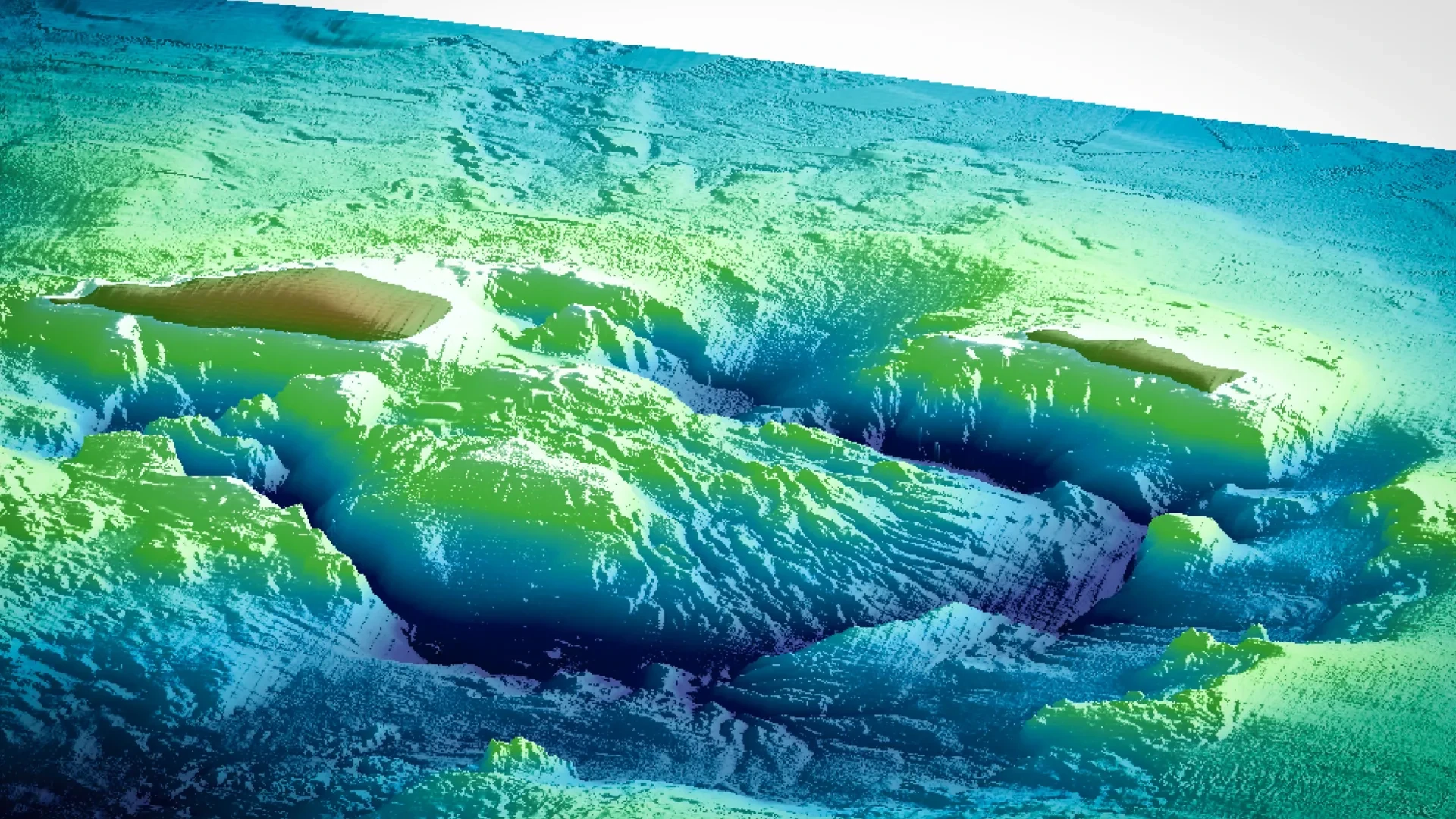
Deep beneath the sapphire-blue waters south of Kyushu, Japan, one of Earth’s most formidable geological engines is quietly stirring back to life. Millennia after unleashing an apocalyptic cataclysm that devastated the surrounding region, the colossal Kikai caldera is slowly refilling its subterranean magma chambers. Groundbreaking research conducted by a team of geophysicists at Kobe University, in collaboration with the Japan Agency for Marine-Earth Science and Technology (JAMSTEC), has confirmed the presence of a massive, actively recharging reservoir of molten rock beneath the ocean floor.
The discovery, published in the journal Communications Earth & Environment, offers an unprecedented, high-resolution look into the enigmatic lifecycle of supervolcanoes. For decades, the mechanisms by which dormant mega-calderas rebuild their volatile inventories following catastrophic eruptions have remained largely hidden behind walls of solid rock and hundreds of meters of seawater. By deploying advanced seismic imaging techniques across the marine expanse of the Kikai structure, researchers have tracked the arterial flow of fresh magma pulsing from the Earth’s mantle into shallow crustal storage systems.
While experts emphasize that this subterranean resurgence does not signal an imminent global catastrophe, the findings carry profound implications for vulcanology worldwide. The replenishment model observed at Kikai aligns closely with the structural profiles of other infamous supervolcanoes, including the Yellowstone caldera in the United States and Lake Toba in Indonesia. By decoding how these sleeping giants accumulate the colossal volumes of magma required to alter the face of the planet, scientists are moving one step closer to establishing predictive frameworks for future eruptive cycles, potentially safeguarding human civilization from events that threaten global stability.
Detailed Chronology: Unearthing the History and Resurrection of Kikai
To fully comprehend the gravity of the recent discoveries at Kikai, scientists must look far back into the geological timeline—past recorded human history, into the shifting epochs of the Earth.
The Holocene’s Greatest Cataclysm
Approximately 7,300 years ago, the Kikai caldera—situated within the volcanic arc of the Ryukyu Islands—produced the largest volcanic eruption of the Holocene epoch, the geological period that began roughly 11,700 years ago and persists to this day. Known to geologists as the Akahoya eruption, this titanic event expelled an astronomical volume of pyroclastic material and volcanic ash.
The immediate aftermath was devastating. Pyroclastic flows swept across the sea, reaching the southern shores of mainland Kyushu and utterly decimating prehistoric Jōmon cultures. Plumes of ash reached high into the stratosphere, blanketing vast swaths of East Asia and triggering a temporary, yet severe, regional climate disruption. The sheer volume of evacuated magma caused the structural roof of the subterranean chamber to collapse inward, leaving behind a massive underwater depression spanning roughly 20 kilometers (12 miles) across.
The Millennia of Silence and Renewal
For thousands of years following the Akahoya event, the supervolcano appeared deceptively quiet. However, geological processes operate on timescales vastly different from human experience. Previous stratigraphic and geochemical investigations revealed that approximately 3,900 years ago—roughly midway between the ancient cataclysm and the modern era—volcanic activity resumed on a smaller scale.
Instead of explosive, catastrophic outbursts, this later phase manifested as the extrusion of thick, highly viscous lava, gradually building a prominent underwater lava dome near the center of the caldera. Chemical analyses of the rocks comprising this dome, alongside samples from subsequent minor activities, exposed a critical anomaly: the mineral and chemical compositions of these younger lavas differed markedly from the material spewed during the Akahoya mega-eruption.
This compositional shift served as the ultimate forensic clue. It indicated that the modern lava dome was not merely expelling leftover, stagnant sludge from the ancient eruption chamber. Rather, it was being fed by fresh, newly injected magma ascending from deeper zones within the Earth’s crust or mantle.
The Modern Seismic Breakthrough
The most recent chapter in Kikai’s history unfolded through an ambitious marine geological survey. Because the vast majority of the Kikai caldera lies submerged beneath the ocean, traditional land-based monitoring instruments are insufficient for mapping its interior structures. However, this maritime setting presented a unique scientific opportunity.
To peer beneath the ocean floor, researchers utilized high-powered airgun arrays towed behind research vessels. These airguns discharged compressed air into the water, generating controlled seismic pulses that penetrated the seabed and traveled through the underlying geological strata. Simultaneously, a network of ocean bottom seismometers (OBS) deployed across the caldera floor meticulously recorded how these acoustic waves reverberated and refracted through different subterranean formations.
Because seismic waves travel at markedly different velocities through solid rock versus molten or semi-molten magma, the recorded data allowed the research team to construct a detailed three-dimensional profile of the subsurface. The results were definitive: a sprawling, high-proportion magma reservoir lies directly beneath the site of the ancient Akahoya eruption, exhibiting dimensions and positioning that confirm it is part of the continuously evolving storage system that fueled the Holocene’s greatest volcanic disaster.
Supporting Context & Metrics: Decoding the Scale of Supervolcanoes
Supervolcanoes represent an extreme end-member of planetary volcanism. Unlike typical stratovolcanoes—such as Mount Fuji or Mount St. Helens, which generally erupt modest quantities of lava and ash—supervolcanoes are classified by their capacity to eject monumental quantities of material in a single event, typically exceeding 1,000 cubic kilometers (240 cubic miles).
Quantifying the Unimaginable
To put the scale of a supervolcano eruption into perspective, geologists often rely on comparisons that stagger the imagination. The magma released during a truly massive supervolcano event is sufficient to completely bury a massive metropolitan area like New York City’s Central Park beneath a solid, suffocating layer of volcanic debris roughly 12 kilometers (7.5 miles) thick.
When chambers of this magnitude empty their contents into the atmosphere, the unsupported crust above them caves in. This catastrophic structural failure forms a caldera—a vast basin-like depression that can span tens of kilometers across. Famous global examples include:
- Yellowstone Caldera (United States): Responsible for three colossal eruptions over the past 2.1 million years, the most recent occurring approximately 630,000 years ago.
- Lake Toba (Indonesia): The site of a super-eruption roughly 74,000 years ago, which is believed to have triggered a global volcanic winter and nearly decimated the human species through a severe population bottleneck.
- Kikai Caldera (Japan): The premier example of a marine supervolcano, responsible for the Holocene’s most powerful outburst 7,300 years ago.
The Mechanics of Magma Recharging
Understanding how these titanic reservoirs are refilled is one of modern geophysics’ greatest challenges. For decades, scientists debated whether supervolcanoes simply remained dormant as cooling, sluggish remnants of past activity, or if they could actively accumulate new molten rock.
The Kikai study provides robust empirical evidence for the latter. The integration of seismic tomography and geochemical profiling demonstrates that magma reservoirs are dynamic, open systems. Fresh basaltic or intermediate melts continuously ascend from the Earth’s mantle, pooling in the lower crust before migrating upward into shallow crustal reservoirs. Here, they undergo fractional crystallization, assimilation, and volatile degassing—processes that ultimately prime the system for future activity.
However, researchers stress a vital distinction: the identification of a recharging magma reservoir does not equate to an impending eruption. The process of accumulating the vast quantities of magma necessary to breach the Earth’s crust takes millennia. The discovery at Kikai illustrates the baseline mechanics of this multi-thousand-year recharge cycle, offering a baseline against which other active volcanic systems can be measured.
Official Statements & Expert Insights
The implications of the Kikai research extend far beyond the borders of Japan, offering a unifying model for supervolcano behavior across the globe. Key figures behind the study have elaborated on the significance of their findings and the methodological advantages that made the discovery possible.
Reflecting on the unique advantages of studying a submerged caldera, Kobe University geophysicist and lead researcher Nobukazu Seama emphasized the logistical clarity provided by the ocean floor:
"The underwater location allows us to implement systematic, large-scale surveys. Because the caldera sits beneath the sea, we are able to deploy marine seismic equipment across the entire structural expanse without the topographical obstructions typically encountered on land."
Addressing the fundamental mystery of how such immense volumes of magma manage to congregate within the Earth’s crust without prematurely escaping, Seama noted:
"We must understand how such large quantities of magma can accumulate to understand how giant caldera eruptions occur."
Commenting on the chemical and seismic evidence pointing toward active magma replenishment rather than ancient stagnation, Seama summarized the team’s conclusions:
"This means that the magma that is now present in the magma reservoir under the lava dome is likely newly injected magma, supplied from deeper within the crust or mantle over thousands of years."
Crucially, Seama highlighted how the Kikai findings serve as a conceptual bridge for understanding other globally significant supervolcanoes:
"This magma re-injection model is consistent with the existence of large shallow magma reservoirs beneath other giant calderas like Yellowstone and Toba."
Looking toward the future of volcanic hazard mitigation, Seama outlined the team’s ultimate objectives:
"We want to refine the methods that have proved to be so useful in this study to more deeply understand the re-injection processes. Our ultimate goal is to become better able to monitor the crucial indicators of future giant eruptions."
Future Outlook: Toward Predictive Volcanology
The revelations emerging from the depths of the Kikai caldera mark a pivotal turning point in the study of planetary geodynamics. For generations, supervolcanoes have been viewed through the lens of sudden, unpredictable terror—geological black swans whose triggers remained entirely opaque to science. By successfully mapping an active, recharging mega-reservoir beneath the ocean, researchers have transformed the abstract concept of supervolcano replenishment into a measurable, observable reality.
Refining Seismic and Geochemical Techniques
Armed with the success of the Kobe University and JAMSTEC collaboration, the scientific community is now setting its sights on methodological refinement. Future research expeditions aim to deploy denser arrays of ocean-bottom seismometers coupled with continuous electromagnetic sounding equipment. These advanced tools will enable geophysicists to monitor changes in the density, volume, and state of the Kikai magma reservoir with unprecedented temporal resolution.
Furthermore, integrating real-time seismic data with high-precision geochemical monitoring of submarine hydrothermal vents and surface degassing will allow scientists to construct comprehensive four-dimensional models of magma ascent. Understanding the exact pathways through which mantle-derived melts feed shallow crustal chambers will help determine the physical thresholds that ultimately push a stable reservoir toward catastrophic failure.
Global Implications for Risk Mitigation
The broader impact of this research cannot be overstated. As models of magma re-injection are tested and refined at Kikai, they will be applied directly to other high-risk supervolcano systems around the world, including the Yellowstone Plateau in North America and the Campi Flegrei caldera in Italy.
While a supervolcano eruption remains an extremely low-probability event within any given human lifespan, the potential consequences are catastrophic on a civilizational scale. By identifying the subtle precursor signals of magma accumulation—such as long-term crustal deformation, seismic velocity changes, and gas emissions—researchers are laying the scientific groundwork for an early-warning system capable of detecting when a sleeping giant begins its final ascent.
Ultimately, the research at Kikai reminds humanity of the dynamic, ever-changing nature of the planet beneath our feet. By peering into the molten heart of an ancient disaster, scientists are ensuring that future generations will not be caught entirely unawares when the Earth’s greatest forces awaken once more.
Funding and institutional support for this landmark research were generously provided by the Ministry of Education, Culture, Sports, Science and Technology (MEXT) under the Third Earthquake and Volcano Hazards Observation and Research Program, as well as the Japan Society for the Promotion of Science (Grant 20H00199). Fieldwork and seismic data acquisition were conducted in close partnership with the Japan Agency for Marine-Earth Science and Technology (JAMSTEC).