

Executive Overview
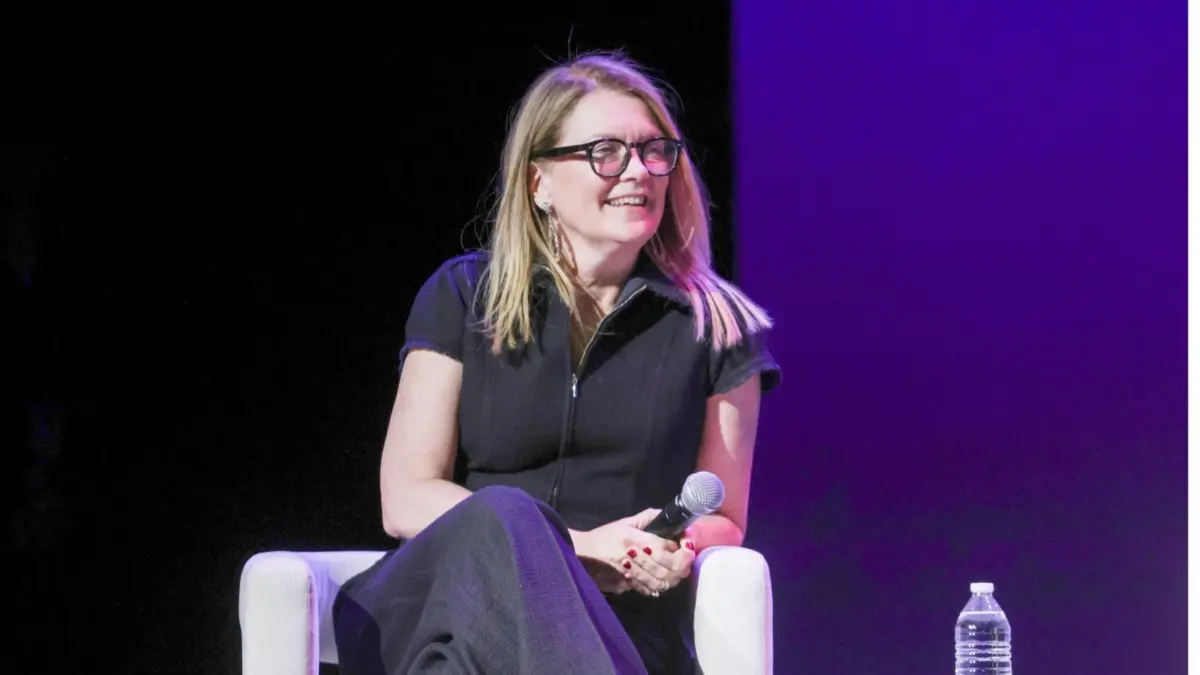
In a seismic shift for the financial services and global marketing sectors, American Express Chief Marketing Officer Elizabeth Rutledge has announced that she will retire in March 2027. Bringing to a close an extraordinary tenure spanning more than three decades within the institution, Rutledge’s departure marks the end of a definitive chapter for one of the world’s most recognizable and enduring brands.
The announcement, initially shared by Rutledge via a poignant LinkedIn post on Thursday, October 15, was subsequently confirmed by an official corporate spokesperson. American Express indicated that a successor for the high-profile CMO position will be formally announced in the coming weeks, signaling a carefully orchestrated transition period designed to maintain stability across the company’s sprawling global marketing apparatus.
Rutledge’s impending retirement closes the book on a remarkable corporate journey that began in 1990 at the iconic American Express Tower in New York City. Over the course of nearly 37 years, she ascended through the ranks, steering the brand through monumental economic shifts, the digital transformation of media, and the rapid evolution of consumer expectations. Her tenure as CMO, which began in 2018, cemented her legacy as a master strategist who successfully bridged the gap between traditional prestige marketing and modern, data-driven digital engagement. As the financial giant prepares for her departure, industry analysts, brand strategists, and corporate leaders are left to assess the profound footprint she leaves behind and the monumental task facing her eventual successor.
Detailed Chronology: A 37-Year Ascent to the C-Suite
To understand the magnitude of Elizabeth Rutledge’s retirement, one must trace the trajectory of a career that grew alongside the modern American Express brand itself. Her tenure is a rare testament to institutional longevity in an industry notoriously characterized by rapid turnover at the executive level.
The Formative Years (1990–2000s): Entering the Amex Ecosystem
When Elizabeth Rutledge first walked through the doors of the American Express Tower in Lower Manhattan in 1990, the financial services landscape looked entirely different. The internet was in its infancy, consumer spending habits were tethered to physical paper and traditional plastic, and brand loyalty was forged through print advertising, television spots, and direct mail.
Rutledge entered the company with a clear vision and a passion for brand building. Over her first decade and a half with the company, she systematically rotated through various disciplines, insulating her leadership style with a multifaceted understanding of the business. Rather than locking herself into a single silo, Rutledge immersed herself in the mechanics of card products, the psychology of consumer benefits, and the intricacies of customer acquisition. This cross-disciplinary foundation proved vital, equipping her with the holistic business acumen necessary to manage the complex ecosystem of a global financial titan.
Rising Through the Ranks (2000s–2018): Mastering Global Advertising
As the 21st century ushered in the digital age, American Express faced unprecedented challenges. The proliferation of digital media, the rise of e-commerce, and shifting demographics necessitated a radical rethink of how financial products were marketed. During this transitional period, Rutledge emerged as a stabilizing and visionary force.
She took on increasingly influential leadership roles within global advertising and brand management. Her responsibilities expanded to oversee major brand initiatives, experiential marketing, and high-profile partnerships. During an era when traditional advertising models were being upended by programmatic media, social networks, and mobile-first consumer habits, Rutledge helped guide American Express’s marketing apparatus through the digital looking glass. She championed the integration of data analytics into creative processes, ensuring that the brand’s historic prestige translated seamlessly onto digital and mobile screens without losing its aspirational luster.
The CMO Era (2018–2027): Steering the Brand Through Modern Turbulence
In 2018, American Express officially named Rutledge as its Chief Marketing Officer, placing the global brand strategy of the multi-billion-dollar enterprise squarely in her hands. Stepping into the role just prior to a decade defined by profound social, technological, and economic disruption, Rutledge faced immediate trials.
Her leadership was thoroughly tested during the global COVID-19 pandemic, a period that required an instantaneous pivot in messaging, customer service outreach, and value proposition adaptation. Under her direction, American Express successfully recalibrated its marketing communications to focus on empathy, support for small businesses through initiatives like "Shop Small," and dynamic adaptations to consumer travel and dining benefits.
Furthermore, Rutledge was instrumental in shaping the card giant’s strategy toward younger demographics, particularly Millennials and Generation Z. Recognizing that the future of financial services lay with digital-native consumers, she spearheaded campaigns that repositioned American Express cards—particularly the Platinum and Gold portfolios—as lifestyle enablers rather than mere payment instruments. Her strategic alignment with digital content creators, immersive experiential events, and strategic lifestyle partnerships ensured that the brand retained its cultural relevance in a crowded market dominated by nimble fintech competitors.
Supporting Context & Metrics: The Anatomy of a Brand Powerhouse
To fully appreciate Elizabeth Rutledge’s impact, one must examine the broader business context in which she operated. American Express is not merely a credit card issuer; it is a closed-loop global payments network that relies heavily on brand equity, customer loyalty, and premium positioning. Marketing is the lifeblood of this business model.
The Financial Weight of Amex Marketing
American Express has historically maintained one of the most robust marketing budgets in the financial services sector. In recent years, the company’s annual marketing and promotion expenses have routinely hovered in the range of $4 billion to $5 billion. Managing an investment of this scale requires a delicate balance of brand-building exercises (above-the-line advertising) and performance-driven customer acquisition (digital marketing, targeted offers, and partnership incentives).
During Rutledge’s tenure as CMO, this massive capital allocation was subjected to increasingly sophisticated measurement frameworks. She championed a culture of accountability where creative excellence met rigorous data analytics. Under her watch, the company optimized its digital acquisition channels, dramatically increasing the proportion of new card acquisitions originating from digital platforms while maintaining the high credit quality and spending power that American Express cardmembers are known for.
Redefining the Premium Value Proposition
One of Rutledge’s defining operational achievements was navigating the evolution of the premium card market. Over the past decade, competition in the high-end credit card space intensified exponentially, with competitors rolling out increasingly lucrative rewards and perks.
Rutledge played a central role in transforming the American Express value proposition from static travel rewards to dynamic, lifestyle-oriented ecosystems. By integrating digital streaming credits, Uber cash, airline fee credits, and exclusive access to dining and entertainment events (such as the American Express Platinum-sponsored experiences at major music festivals and sporting events), her marketing teams successfully justified annual fee increases while simultaneously driving record cardmember acquisition and retention rates.
Official Statements and Industry Reaction
The announcement of Rutledge’s retirement sent ripples through the advertising and financial communities, prompting an outpouring of reflections from corporate leadership and industry peers.
In her official statement shared via LinkedIn on October 15, Rutledge reflected on her nearly four decades with the company with characteristic grace and gratitude:
"Almost 37 years ago, I walked into the American Express Tower in New York City to fulfill a dream: to work for a company known for its iconic brand, marketing prowess, and extraordinary people."
Her words underscored a rare level of corporate devotion. In an era where executive longevity is frequently measured in single-digit years, Rutledge’s 37-year run stands as a monument to institutional dedication.
Corporate leadership at American Express was quick to honor her immense contributions. An official company spokesperson released a statement emphasizing her enduring legacy:
"She has made an enduring impact on the brand, and her successor is expected to be announced in the coming weeks."
Industry analysts and advertising trade publications have similarly lauded Rutledge’s career. Observers note that her ability to preserve the core heritage of the American Express brand—epitomized by the legendary "Don’t Leave Home Without It" ethos—while aggressively modernizing its digital footprint is a masterclass in modern marketing leadership. Unlike many contemporary CMOs who cycle through brands every three to five years, Rutledge’s deep institutional knowledge allowed her to make long-term strategic bets that shorter-tenured executives rarely have the runway to execute.
Future Outlook: The Next Chapter for American Express Marketing
As American Express looks toward March 2027, the impending departure of Elizabeth Rutledge initiates a critical transitional phase for the organization. The selection of her successor, slated to be announced in the coming weeks, will be one of the most closely watched executive appointments in the global business community.
The Mandate for the Next CMO
The incoming Chief Marketing Officer will inherit a powerhouse brand that is in a position of structural strength, yet facing a rapidly evolving technological and competitive landscape. Several key priorities will define the agenda for Rutledge’s successor:
- AI and Personalization at Scale: As artificial intelligence reshapes consumer interactions, the next CMO will be tasked with integrating generative AI and advanced predictive analytics into American Express’s marketing operations to deliver hyper-personalized cardmember experiences.
- Sustaining Momentum with Younger Demographics: Continuing to capture the loyalty of Millennials and Gen Z remains paramount. The incoming leadership must find innovative ways to engage digital-native consumers who view financial services through an entirely different lens than previous generations.
- Navigating Global Economic Headwinds: With macroeconomic uncertainties persisting globally, the marketing apparatus must remain agile, balancing long-term brand equity investments with performance-driven customer acquisition that protects the company’s risk profile.
- Omnichannel Integration: Blending physical experiences (such as Amex Centurion Lounges and exclusive events) with seamless digital touchpoints will continue to be a cornerstone of the brand’s retention strategy.
A Lasting Legacy
Elizabeth Rutledge leaves behind shoes that will be exceptionally difficult to fill. Her career serves as a blueprint for how a legacy brand can continuously reinvent itself without losing the soul that made it iconic in the first place.
As she prepares to step down in March 2027, Rutledge’s legacy will not merely be measured in campaigns launched, budgets managed, or awards won. Rather, it will be defined by the enduring trust and prestige she helped cultivate for a brand that touches millions of lives across the globe every single day. For American Express, the challenge ahead is clear: honor that legacy while boldly charting the next 37 years of growth.