

Executive Overview
For generations, the cultural debate surrounding evening coffee has been framed by a binary question: Does it keep you awake? Millions of people carry an anecdotal confidence regarding their personal relationship with caffeine, casually pointing to their ability to consume an espresso with dinner and fall asleep within minutes. To the casual observer, sleep is a simple digital switch—either you are awake, or you are asleep. If unconsciousness arrives on schedule, the caffeine is routinely absolved of any wrongdoing.
However, modern sleep science is rapidly dismantling this simplistic view. Contemporary neurophysiological research reveals that asking whether coffee merely delays sleep is a fundamentally flawed premise. The more critical, and far more insidious, issue lies in what happens to the human brain after sleep has officially begun.
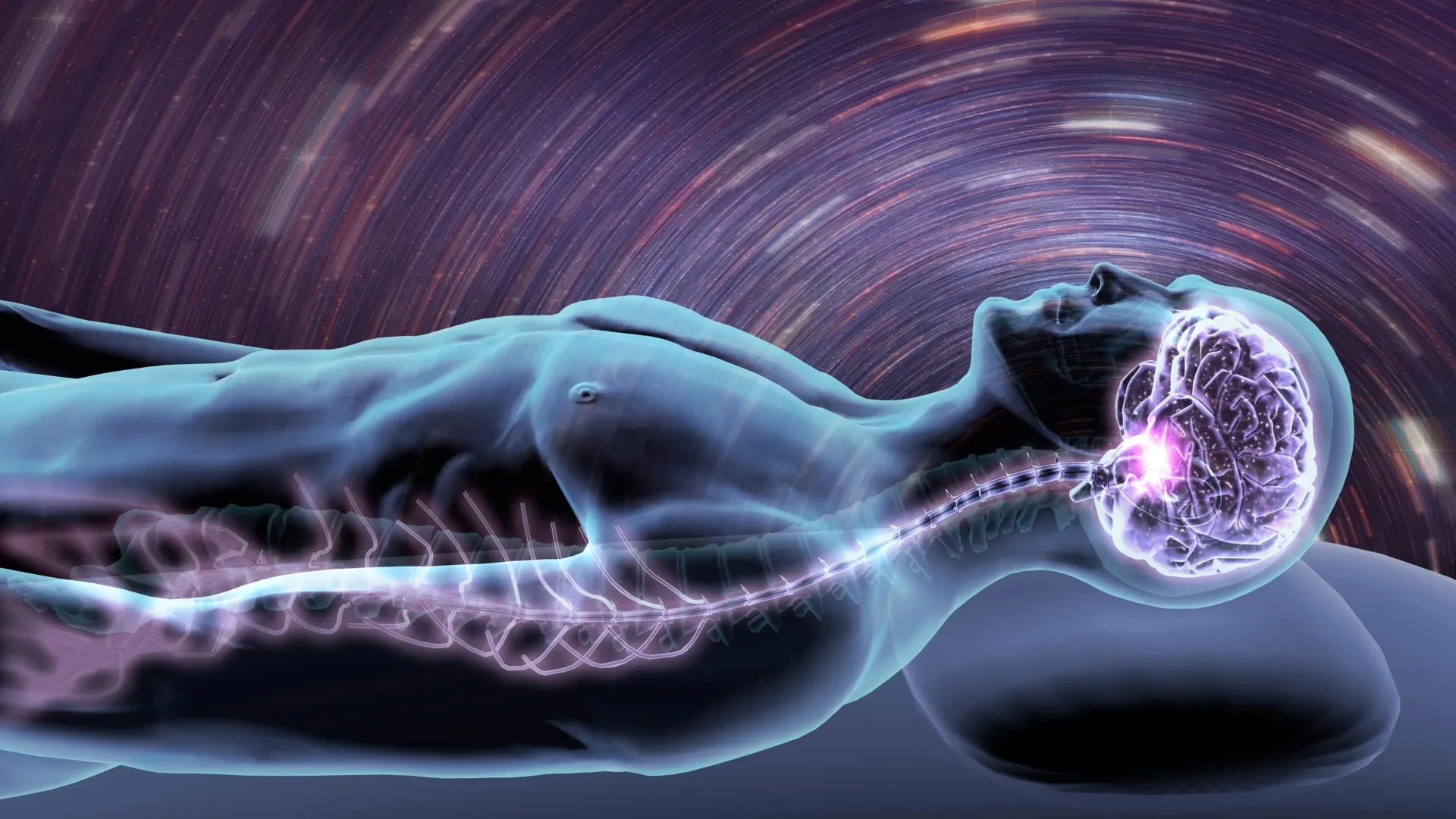
By utilizing advanced neuroimaging techniques such as electroencephalography (EEG), researchers are discovering that a person can experience a full, uninterrupted eight-hour night of sleep on paper, yet wake up neurologically depleted. Caffeine, it turns out, acts as a stealthy saboteur of sleep architecture. It can systematically strip rest of its restorative depth without ever triggering a conscious awakening.
This comprehensive investigation explores the hidden mechanisms of caffeine consumption, the science of quantitative sleep analysis, and the complex web of individual genetics and lifestyle factors that dictate how a cup of coffee influences the human brain. Furthermore, it examines the pervasive "fatigue cycle"—a self-perpetuating loop where artificial stimulation masks the very neurological deficits it creates.
Detailed Chronology: The Evolution of Sleep Science and Caffeine Research
To understand the current paradigm shift in sleep research, one must examine how the scientific community’s methodology has evolved over the past several decades.
The Era of Macro-Sleep Assessment
Historically, sleep research relied heavily on macro-level assessments. Sleep medicine pioneers categorized rest largely by duration and behavioral observation. Patients were monitored for total sleep time, the number of nocturnal awakenings, and the rough macro-structures of rapid eye movement (REM) versus non-REM sleep.
For decades, if a participant in a sleep study fell asleep within a normal latency period (typically 10 to 20 minutes) and did not report frequent nighttime disruptions, researchers concluded that the administered substance—whether it was a placebo or a dose of caffeine—had minimal impact on their nocturnal physiology. This macro-level approach reinforced the public belief that if you do not toss and turn, your sleep is inherently restorative.
The Rise of Quantitative EEG
The limitation of macro-assessment became increasingly apparent as chronic fatigue, burnout, and cognitive performance issues persisted in populations that seemingly slept eight hours a night. Enter electroencephalography (EEG)—and more specifically, quantitative EEG analysis.
By recording the brain’s electrical activity with high temporal resolution, scientists unlocked the ability to peer beneath the surface of sleep. Instead of merely asking how long a person remained unconscious, EEG allowed researchers to evaluate how the brain was sleeping. This technological leap revealed that sleep is not a monolithic state of rest, but a highly orchestrated neurological symphony characterized by distinct electrical rhythms, frequencies, and micro-structures.
Unmasking Slow-Wave Activity
As quantitative EEG became standard in advanced sleep laboratories, researchers zeroed in on slow-wave activity (SWA). Slow waves—high-amplitude, low-frequency brain waves characteristic of deep, non-REM sleep—emerged as the gold standard for measuring sleep restoration.
It was during this phase of technological refinement that contemporary researchers began systematically dosing subjects with caffeine prior to rest periods, not just to measure sleep onset latency, but to observe shifts in SWA. The resulting data exposed a profound disconnect: while participants often reported sleeping soundly, their EEG readouts told a different story. Their brains were exhibiting suppressed slow-wave activity and shifting toward patterns typically associated with lighter, more vigilant states of consciousness. This discovery marked a fundamental turning point in how pharmacologists and neuroscientists view caffeine’s interaction with the human central nervous system.
Supporting Context & Metrics: The Mechanics of Restorative Sleep
To fully grasp why evening or late-day caffeine consumption is so disruptive, one must examine the biological function of deep sleep and the specific neurophysiological metrics that define it.
The Anatomy of Deep Sleep
Deep sleep (specifically stage N3 of non-REM sleep, dominated by slow waves) is the biological anchor of human health. During this critical window, the body undergoes extensive physical repair: tissues are regenerated, muscle growth hormones are released, and the immune system is bolstered.
Simultaneously, the brain performs vital maintenance. Recent discoveries regarding the glymphatic system show that during deep sleep, the brain actively flushes out metabolic waste products accumulated during waking hours, including the amyloid-beta proteins associated with neurodegenerative diseases.
Quantitative EEG Metrics and "Wakeful" Brains
When caffeine—a potent adenosine receptor antagonist—circulates in the bloodstream, it blocks the brain’s natural sleep-promoting signals. Even as the metabolic pressure to sleep forces the body into unconsciousness, the residual neurochemical interference of caffeine alters the brain’s electrical output.
Key metrics observed via quantitative EEG in caffeine-impacted sleep include:
- Suppressed Slow-Wave Activity (SWA): A measurable reduction in the amplitude and frequency of delta waves, directly corresponding to a loss of restorative depth.
- Spectral Power Shifts: An increase in higher-frequency brain wave activity (such as alpha and beta waves) during sleep states that should be dominated by slow oscillations. This creates a physiological profile where the sleeping brain mimics the electrical activity of a more "wakeful" or hyper-vigilant state.
- Micro-Arousals and Sleep Fragmentation: Even when a subject has no conscious memory of waking up, EEG data often reveals brief bursts of neurological arousal that disrupt the smooth progression of sleep cycles.
+-----------------------------------------------------------------+
|               NORMAL VS. CAFFEINE-IMPACTED SLEEP                |
+-----------------------------------------------------------------+
| Normal Deep Sleep:                                              |
| [High Slow-Wave Activity] ---> [Deep Neurological Recovery]     |
+-----------------------------------------------------------------+
| Caffeine-Impacted Sleep:                                        |
| [Suppressed Slow Waves]   ---> [Shift Toward "Wakeful" EEG]     |
|                              ---> [Compromised Recovery]        |
+-----------------------------------------------------------------+
The Invisible Toll: Eight Hours in Bed vs. True Recovery
The divergence between subjective experience and objective neurophysiology explains why many individuals fall into a trap of chronic, low-grade fatigue. A person may spend an exact, uninterrupted eight-hour block in bed, waking up at their usual morning alarm feeling physically intact. Yet, because their slow-wave activity was chemically blunted by afternoon or evening caffeine, their brain missed out on crucial neurological housekeeping. Over weeks, months, and years, this silent deficit accumulates, eroding cognitive performance, emotional regulation, and long-term metabolic health.
Official Statements & Expert Insights
To contextualize these findings within the broader medical community, leading researchers emphasize the need for a more nuanced understanding of caffeine pharmacokinetics and individual biological variance.
Prof. Donata Kurpas from the Department of Nursing at Wroclaw Medical University offers critical perspective on the limitations of traditional sleep evaluation:
"EEG allows us to see not only whether a person is sleeping, but also how the brain is sleeping. Classical sleep assessment assesses sleep duration and its stages, whereas quantitative EEG analysis reveals more subtle changes, such as reduced slow-wave activity, which is an important marker of sleep depth and its restorative character."
Prof. Kurpas further underscores the deceptive nature of caffeine-induced sleep alterations, highlighting the gulf between perception and neurophysiological reality:
"Caffeine may shorten sleep or make it more difficult to fall asleep; however, even when sleep duration appears normal, it may reduce slow-wave activity and shift the EEG pattern toward a more ‘wakeful’ brain. The subjective feeling of having slept well does not always correspond to what we observe in neurophysiological recordings. A person may fall asleep without major difficulty and not remember awakenings, while the brain may display fewer features of deep sleep."
The Variable Human Response: Genetics and Metabolism
A major takeaway from contemporary research is that there is no universal baseline for caffeine tolerance. People process and clear caffeine from their systems at wildly different rates, driven by a complex matrix of genetic variations (such as polymorphisms in the CYP1A2 gene), liver enzyme efficiency, age, body weight, baseline stress levels, and chronic fatigue.
Prof. Kurpas points out that the timing of consumption must be viewed through this personalized lens:
"It is not only about coffee consumed just before bedtime. For some people, the total amount of caffeine consumed during the day and whether the body has enough time to metabolize it before nightfall may also be important."
This variability is particularly vital for high-performance populations—including elite athletes, surgeons, corporate executives, and shift workers—who rely heavily on caffeine to sustain cognitive stamina and physical endurance. For these individuals, a morning or early afternoon espresso can cast a long biological shadow that extends well into the nocturnal recovery window.
The Fatigue Cycle: A Self-Perpetuating Loop
The intersection of caffeine pharmacology and human behavior frequently gives rise to a destructive, self-perpetuating loop known among sleep researchers as the fatigue cycle.
"Borrowing Energy" from Tomorrow
Caffeine does not create energy; rather, it acts as a molecular mask. By binding to adenosine receptors in the central nervous system, it blocks the brain from registering the accumulation of adenosine—the chemical byproduct of cellular energy consumption that signals tiredness.
This temporary artificial alertness comes with a hidden price tag. By allowing individuals to push through natural limits of exhaustion, caffeine effectively "borrows energy" from the body’s future reserves. If that borrowed energy is not repaid through pristine, deep slow-wave sleep, the physiological debt compounds.
The Vicious Circle of Stimulation and Poor Recovery
When a person wakes up feeling unrefreshed due to the previous day’s caffeine-compromised sleep architecture, their immediate instinct is to seek relief. That relief is almost universally found in the same substance that caused the deficit: more caffeine.
       +------------------------------------+
       |       Caffeine Consumption         |
       +------------------------------------+
                         |
                         v
       +------------------------------------+
       |   Suppressed Slow-Wave Activity    |
       +------------------------------------+
                         |
                         v
       +------------------------------------+
       | Compromised Nocturnal Neurological |
       |              Recovery              |
       +------------------------------------+
                         |
                         v
       +------------------------------------+
       |     Morning Fatigue & Brain Fog    |
       +------------------------------------+
                         |
                         v
       +------------------------------------+
       |  Increased Need for Stimulation    |
       +------------------------------------+
As Prof. Kurpas describes this mechanism:
"If caffeine helps a person function during the day while simultaneously worsening the quality of nighttime recovery, a vicious circle may develop: greater fatigue, greater need for stimulation, and poorer sleep."
This loop makes it exceptionally difficult for individuals to accurately self-diagnose their caffeine sensitivity. Because the stimulant successfully masks daytime fatigue, the user attributes their sluggishness to external factors—such as a stressful job, family responsibilities, or aging—completely unaware that their evening recovery mechanism has been pharmacologically handicapped.
Future Outlook: Redefining Our Relationship with Caffeine
As sleep science continues to evolve, the cultural narrative surrounding coffee and stimulants is undergoing a necessary maturation. The days of viewing caffeine through a polarized lens of absolute nutritional good or absolute pharmacological evil are fading.
Moving Beyond Sleep Duration
The overarching paradigm shift in sleep research is a decisive move away from sleep duration as the sole metric of health. Public health campaigns have long preached the gospel of the "eight-hour rule," but scientists now recognize that quality must supersede quantity. An interrupted, shallow eight hours of sleep offers a fraction of the neurological restoration provided by a clean, deep sleep cycle.
Researchers predict that future sleep diagnostics will increasingly incorporate wearable EEG technology and personalized neuro-monitoring, allowing individuals to track not just how long their eyes were closed, but the real-time depth and restorative quality of their slow-wave sleep.
Personalized Nutritional Pharmacology
Ultimately, experts urge consumers to adopt a holistic, highly individualized approach to caffeine intake. Prof. Kurpas summarizes this balanced philosophy:
"Caffeine is neither ‘good’ nor ‘bad’. It is a biologically active substance whose effects depend on dose, time of day, age, lifestyle, sleep quality, stress burden, and individual sensitivity."
In the future, understanding one’s personal metabolic profile will be just as important as monitoring caloric intake or daily step counts. By acknowledging that a cup of coffee consumed at 3:00 PM can silently dismantle the architecture of deep sleep—even for someone who falls asleep effortlessly at midnight—individuals can make informed choices that honor both their daily need for alertness and their brain’s absolute requirement for true biological restoration.