

Executive Overview
In the theater of the cosmos, few boundaries have held as sacred a status as the Chandrasekhar limit. For nearly a century, this foundational threshold—pegged at approximately 1.4 times the mass of the Sun—has served as an unyielding ceiling for white dwarfs, the dense, glowing embers of dead stars. It is a benchmark that dictates not only the maximum weight of these stellar remnants but also triggers the catastrophic thermonuclear detonations known as Type Ia supernovae, which astronomers use as cosmic yardsticks to measure the expansion of the universe.
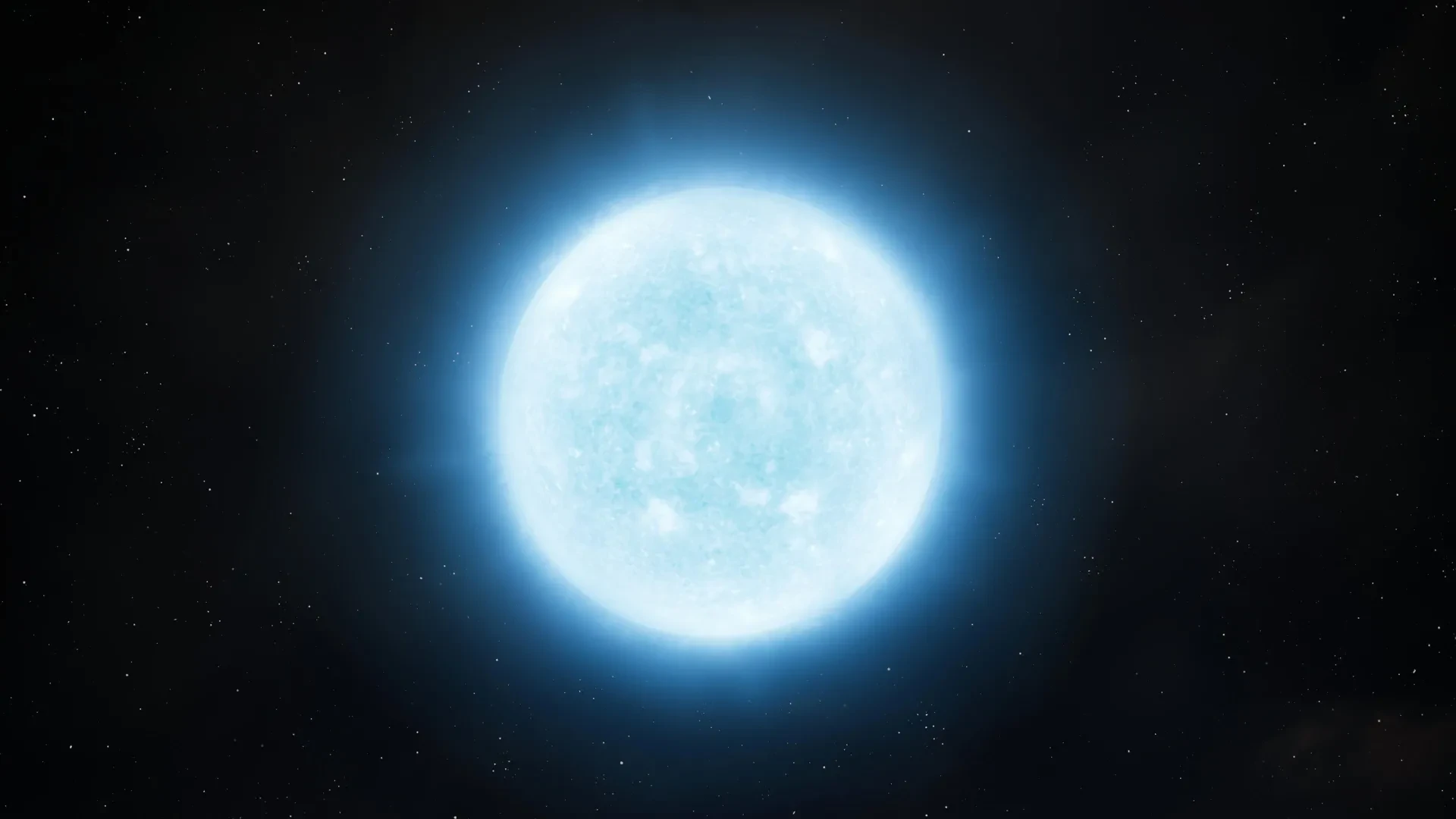
However, a groundbreaking study published in The Astrophysical Journal Letters threatens to shatter this long-standing dogma. Advanced computer simulations led by researchers at the Department of Physics of the Indian Institute of Science (IISc), in collaboration with international peers, reveal that powerful magnetic fields hidden deep within the cores of white dwarfs can fundamentally alter their structural physics. These intense internal magnetic pressures enable stellar remnants to resist crushing gravitational forces far more effectively than standard physics dictates, allowing them to swell to staggering masses—reaching up to 2.4 solar masses, and potentially as high as 2.8 solar masses in extreme scenarios.
This discovery does more than merely update a theoretical textbook formula; it ripples across multiple disciplines of astrophysics. By offering a plausible evolutionary pathway for "super-Chandrasekhar" white dwarfs, the research provides a long-sought explanation for anomalously luminous Type Ia supernovae that have long baffled observers. Furthermore, because these stellar explosions serve as the primary "standard candles" for calculating cosmological distances and the acceleration of the universe’s expansion, refining our understanding of white dwarf mass limits could force a thorough recalibration of the cosmic distance ladder itself.
Detailed Chronology: From a Casual Student Inquiry to a Paradigm-Shifting Simulation
The intellectual journey that led to this breakthrough began over a decade ago, born of a seemingly simple, almost whimsical question posed in an academic office.
The 2011 Genesis
In 2011, a summer student walked into the office of Banibrata Mukhopadhyay, a professor in the Department of Physics at the IISc. Looking for a challenging yet exploratory project, the student was handed a speculative prompt: investigate whether the sacred Chandrasekhar limit could theoretically be violated if an extreme magnetic field were introduced into the equation. What began as a casual summer inquiry planted the seeds for years of rigorous theoretical modeling. Over the subsequent decade, Mukhopadhyay and his colleagues explored the mathematical viability of magnetized, super-massive white dwarfs, publishing various theoretical frameworks that suggested such objects could mathematically exist under specific conditions.
Yet, a profound chasm remained within the astrophysical community. Theoretical physicists could pen equations demonstrating that a heavily magnetized white dwarf might sustain a mass of over two solar masses, but proving that such an object could naturally evolve from a living, breathing star was an entirely different hurdle. Skeptics argued that while the math might work on paper, nature had no evolutionary pathway to manufacture a star that could navigate the delicate physics required to reach this state.
The Breakthrough in Modeling (2023–2024)
To bridge the gap between abstract theory and stellar reality, the IISc research team—anchored by PhD student and first author Zenia Zuraiq alongside Professor Mukhopadhyay—turned to computational astrophyiscs. The team realized they needed to track a star’s entire lifecycle, from its birth on the main sequence to its eventual death and subsequent mass-gathering phase.
To achieve this, the researchers executed a massive upgrade to STARS, a renowned stellar evolution computer program originally developed at the University of Cambridge. They systematically expanded the software’s architecture to incorporate magnetohydrodynamics—specifically accounting for internal magnetic fields and the intricate cooling mechanics of white dwarfs.
Armed with this customized computational suite, the team modeled the complex, multi-stage evolution of carbon-oxygen white dwarfs. They simulated how stars generate energy during their hydrogen-burning prime, how they shed their outer layers upon exhausting their nuclear fuel, and how they subsequently interact within binary star systems. By simulating the accretion process—where a white dwarf siphons matter from a neighboring companion star—the researchers were able to watch, in real time, as the dead star ingested new material and tested the absolute limits of its own gravitational stability.
Supporting Context & Metrics: The Anatomy of a Super-Chandrasekhar White Dwarf
To understand the magnitude of the IISc team’s findings, one must first examine the conventional physics governing white dwarfs and the specific mechanics through which magnetic fields alter their fate.
The Traditional Paradigm: The Chandrasekhar Limit
When intermediate-mass stars—those roughly equivalent to or slightly heavier than our Sun—exhaust the nuclear fuel in their cores, they cannot generate enough outward thermal pressure to fight off their own inward pull of gravity. They gently expel their outer atmospheric layers into space, leaving behind an exposed, highly compressed core: a white dwarf.
These objects are cosmic oddities. Despite containing a mass comparable to an entire star, they are compressed into a volume roughly the size of Earth. A single teaspoon of white dwarf material weighs as much as an elephant on Earth. For decades, standard relativistic quantum mechanics—specifically electron degeneracy pressure (the quantum mechanical pressure exerted by tightly packed electrons)—has dictated that no non-rotating, non-magnetic white dwarf can exceed approximately 1.44 times the mass of the Sun. This threshold is the Chandrasekhar limit.
When a carbon-oxygen white dwarf in a binary system pulls enough matter from its companion to approach this 1.4-solar-mass tipping point, the internal core temperature and density skyrocket. This triggers runaway carbon fusion, resulting in a cataclysmic thermonuclear detonation: a Type Ia supernova.
The Magnetic Interloper
The new simulations demonstrate that internal magnetic fields fundamentally rewrite this script. The mechanics unfold through a precise chain of physical events:
- Initial Conditions: A main-sequence star, possessing an ordinary, modest magnetic field, evolves into a white dwarf with an initial mass of roughly 1.02 solar masses (born from a precursor star of about eight solar masses).
- Accretion and Compression: As the white dwarf steadily siphons matter from its companion star at a rate of $10^-11$ solar masses per year (equivalent to a billionth of the Sun’s mass annually), the added weight causes the star to contract under escalating gravitational forces.
- Magnetic Amplification: As the star compresses, its internal magnetic field lines are squeezed closer together. This dramatic compression significantly amplifies the internal magnetic field strength.
- The Lorentz Force Counter-Defense: The intensified magnetic field generates powerful Lorentz forces and magnetic pressure. This hidden magnetic scaffolding acts as an additional structural buffer, supplementing electron degeneracy pressure and helping the star resist the crushing weight of gravity.
[Main Sequence Star]
       │
       ▼ (Evolution & Shedding)
[Magnetized White Dwarf (1.02 Solar Masses)]
       │
       ▼ (Accretion: Siphoning Matter from Companion)
[Gravitational Compression & Core Contraction]
       │
       ▼ (Field Lines Squeezed)
[Exponential Magnetic Field Amplification]
       │
       ▼ (Lorentz Forces & Magnetic Pressure Counter-Gravity)
[Super-Chandrasekhar White Dwarf Reaches ~2.4 Solar Masses]
       │
       ▼ (Possible Thermonuclear Detonation)
[Luminous Anomalous Type Ia Supernova]
In the team’s primary simulation, this magnetic support allowed the white dwarf to bypass the 1.4-solar-mass boundary entirely, comfortably sustaining a staggering 2.4 solar masses. Furthermore, this magnetic pressure explains another long-standing astronomical puzzle: why certain well-studied white dwarfs feature unexpectedly large radii for their relatively low masses. Internal magnetic fields push outward, expanding the physical footprint of the star beyond what conventional gravity-versus-degeneracy models predict.
Official Statements and Researcher Insights
The implications of the study have reverberated across the global astrophysical community, prompting reflections from the paper’s principal architects on the journey from a chalkboard hypothesis to a robust computational reality.
Reflecting on the accidental genesis of the research, Professor Banibrata Mukhopadhyay, corresponding author of the study, noted the patience required to pursue unconventional ideas in theoretical physics:
"The idea started in 2011, when a summer student came to me and I gave him a problem quite casually: to check whether the Chandrasekhar limit can be violated by a magnetic field. Over the years, what began as a back-of-the-envelope exploration evolved into a profound mathematical and computational pursuit. We always suspected the math permitted these states, but proving that nature could actually build one was the true mountain to climb."
Detailing the computational rigor required to silence skeptics who doubted the evolutionary viability of super-Chandrasekhar remnants, Zenia Zuraiq, first author and PhD candidate in the IISc Department of Physics, emphasized the significance of tracking the star’s entire lifecycle:
"The important question was not simply whether a super-Chandrasekhar white dwarf is possible, but whether a star can actually evolve into one. Critics have long argued that even if such massive remnants are mathematically stable, no natural stellar evolution pathway would ever produce them. Our simulations allowed us to follow that evolutionary pathway from the main-sequence star to the white dwarf, and show that under certain conditions, such a pathway is not only possible—it is physically robust."
Independent astrophysicists not affiliated with the study have similarly praised the work for tackling one of the most stubborn disconnects in stellar evolution theory: reconciling theoretical mass ceilings with anomalous observational data collected by space- and ground-based telescopes over the past twenty years.
Future Outlook: Implications for Cosmology and the Cosmic Distance Ladder
While these findings are currently rooted in advanced computer modeling rather than direct, resolved imaging of a 2.4-solar-mass white dwarf in the wild, their ripple effects are poised to impact observational astronomy, stellar archaeology, and cosmology.
Recalibrating the Universe
The most profound consequence of this research touches upon cosmology. Type Ia supernovae have served as astronomy’s premier "standardizable candles" for decades. Because they were long believed to originate exclusively from carbon-oxygen white dwarfs hitting the strict, uniform 1.4-solar-mass Chandrasekhar limit, astronomers assumed that every such explosion released a roughly uniform amount of energy, making their intrinsic peak brightness predictable.
By measuring how dim these standardized explosions appear from Earth, astronomers calculated precise cosmological distances, leading to the monumental discovery that the expansion of the universe is accelerating—a phenomenon attributed to dark energy.
However, if a subset of white dwarfs can accumulate up to 2.4 or 2.8 solar masses thanks to hidden magnetic fields, their eventual thermonuclear explosions will be vastly more energetic and luminous than standard models anticipate. This variability directly accounts for the "over-luminous" Type Ia supernovae that astronomers have increasingly cataloged in deep-space surveys.
Next Steps for Research
As observational facilities—such as the Vera C. Rubin Observatory and next-generation space telescopes—come online to map billions of transient cosmic events, accounting for magnetized, super-Chandrasekhar white dwarfs will become essential.
The IISc team plans to refine their simulations further, exploring a wider parameter space of initial magnetic field configurations, rotation rates, and varied binary accretion rates. By mapping out the exact observational signatures left behind by magnetically supported explosions, researchers hope to provide astronomers with a new set of analytical tools to distinguish between standard Type Ia supernovae and their hyper-massive, magnetic cousins.
Ultimately, this research serves as a humbling reminder of the cosmos’s complexity. Even our most trusted physical laws and boundary markers are subject to revision, proving that beneath the placid surfaces of the universe’s dead stars, invisible forces are at play, quietly rewriting the rules of physics.
