

Executive Overview
In the high-stakes theater of enterprise software marketing, boundaries are typically drawn along predictable lines. Competitors like Google often lean heavily into human-centric emotion, while enterprise stalwarts like Microsoft traditionally champion feature-by-feature utility, operational reliability, and technical specifications. For years, Zoom enjoyed an enviable, frictionless rise to household-name status, driven almost entirely by a singular global phenomenon: it became a verb.
However, verbiage alone does not sustain a modern, multi-product enterprise technology ecosystem. As Zoom aggressively expanded its operational portfolio far beyond basic video conferencing—pushing into sophisticated contact center solutions, cutting-edge artificial intelligence productivity tools, and comprehensive sales and revenue intelligence products—the company faced a formidable brand paradox. Everyone knew what Zoom was, but very few understood what Zoom did.
Rather than executing a dry, feature-led B2B rebranding campaign, Zoom’s marketing leadership elected to execute a high-risk, high-reward pivot toward self-deprecating humor and cultural ubiquity. Enter No Notes, the bespoke creative production studio founded by Saturday Night Live (SNL) alumnus and “Weekend Update” anchor Colin Jost, specifically designed to bridge the gap between high-concept comedy and corporate marketing.
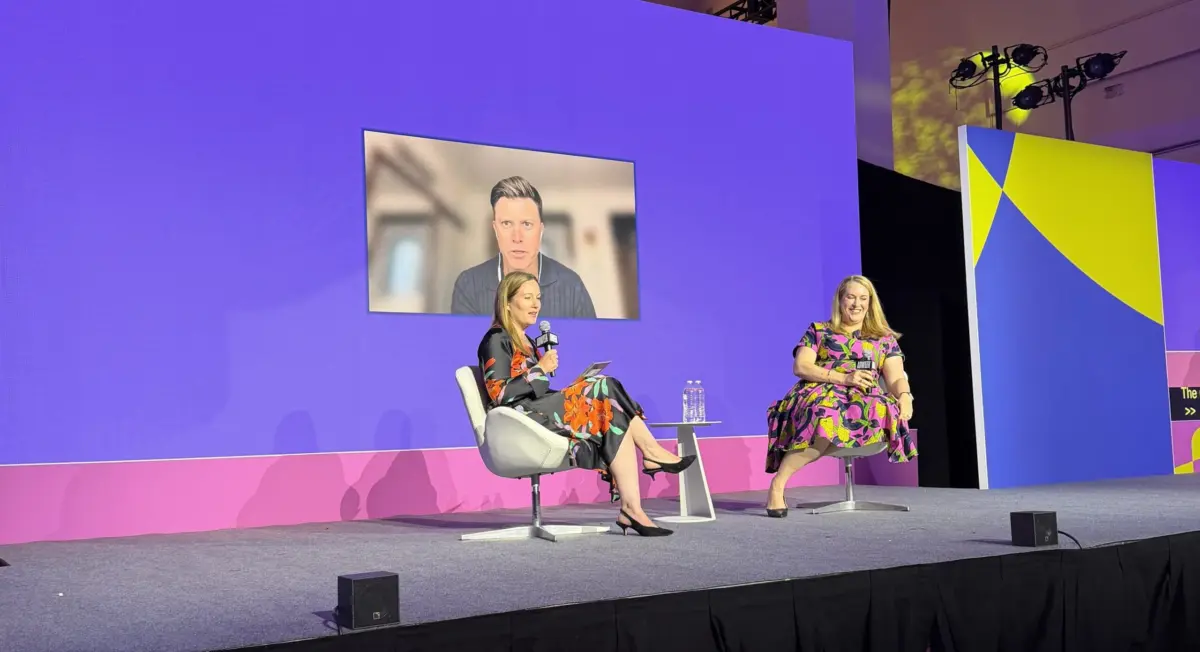
At ADWEEK’s prestigious Brandweek conference, Zoom’s Head of Brand and Activation, Whitney Magnuson, sat down with ADWEEK Chief Content Officer Zoe Ruderman to dissect the strategy behind this unconventional partnership. By leaning into the reality that Zoom is already baked into the cultural lexicon—frequently serving as an indispensable plot device in feature films and television series—the company decided to “go iconic.” The result is a bold, humorous campaign that openly pokes fun at the brand’s omnipresence, proving that enterprise software marketing can be genuinely funny, culturally resonant, and commercially effective all at once.
Detailed Chronology: From Pandemic Utility to Cultural Self-Awareness
To understand the genesis of Zoom’s comedic pivot, one must trace the company’s trajectory from an indispensable utility during a global crisis to an evolving software powerhouse attempting to redefine its enterprise identity.
The Pandemic Pinnacle and the "Verb" Trap
In the early months of 2020, Zoom transitioned overnight from a business-to-business video conferencing tool into the connective tissue of global society. Families hosted virtual birthdays, schools conducted remote classrooms, and corporations migrated their entire workforces onto the platform. “Zooming” entered dictionaries worldwide.
While this level of brand awareness is the holy grail for most chief marketing officers, it created a severe operational silo. To the average consumer and even many corporate buyers, Zoom was inextricably linked to a single function: grid-view video calls. As the world returned to physical offices and hybrid work models stabilized, Zoom’s leadership recognized that relying solely on video conferencing was a growth ceiling. The company acquired and developed cloud contact center technologies, AI-powered meeting summarizers, chat ecosystems, and customer engagement suites. Yet, breaking through the mental barrier that pigeonholed Zoom as “just a video app” required a drastic narrative shift.
The Birth of No Notes and the December "Zoom Ahead" Launch
Recognizing that traditional agency pitches often sanitized bold creative concepts through layers of corporate feedback, Colin Jost launched No Notes. Drawing from his decades of experience writing razor-sharp satirical sketches and commercial parodies at Saturday Night Live, Jost built the studio to foster direct, unvarnished creative collaborations with major brand marketers.
The partnership first materialized publicly in December with the rollout of the “Zoom Ahead” campaign. Rather than taking a cautious approach to introducing new enterprise features, the collaboration tested the waters of self-aware corporate humor. The campaign resonated with audiences tired of sterile B2B advertising, setting the stage for an even more daring follow-up.
The Self-Destruction Concept and Internal Deliberations
Buoyed by early successes, Jost and the No Notes team brought forth a concept that pushed corporate self-awareness to its absolute logical extreme: a commercial in which Zoom comically plots its own destruction.
When the pitch landed on Whitney Magnuson’s desk, it sparked intensive internal debate. The idea of a major tech corporation funding an advertisement that humorously contemplates its own demise is inherently counterintuitive.
"We had many meetings over the concept," Magnuson recalled during her Brandweek discussion with Zoe Ruderman. "But we got to a point where we said, ‘Let’s make it the way Colin envisioned it, trust the comedy, and trust that we wouldn’t get pushback internally.’"
That leap of faith paid off. The resulting spot managed to disarm viewers, generating organic social media chatter and media coverage that vastly outperformed traditional B2B product launches. By laughing at itself, Zoom established a level of authenticity that money simply cannot buy in modern advertising.
Supporting Context & Metrics: Why Humor Works in B2B Tech
The decision by Zoom and Colin Jost to inject comedy into enterprise software is part of a broader, much-needed evolution within the B2B marketing landscape. For decades, enterprise tech marketing has been characterized by an abundance of jargon, stock photography of professionals shaking hands in brightly lit boardrooms, and relentless lists of technical specifications.
Breaking the Monotony of Enterprise Marketing
According to B2B marketing analysts, corporate buyers are, first and foremost, human beings subjected to relentless marketing noise. Traditional tech marketing often assumes that because a product is purchased for business use, the buyer’s emotional and psychological responses are switched off.

Zoom’s strategy flips this assumption on its head. By partnering with a seasoned comedy writer like Jost, Zoom taps into the psychological principle of disarming familiarity. When a brand demonstrates enough confidence to laugh at its own cultural footprint, it signals high organizational maturity and self-assurance.
Leveraging Cultural Ubiquity
Magnuson noted during Brandweek that Zoom possessed a unique advantage that differentiated it from competitors like Google and Microsoft: cultural permission.
- Google frequently anchors its brand identity in emotional storytelling, connecting humanity through search queries, maps, and assistive technologies.
- Microsoft historically emphasizes deep enterprise integration, productivity features, and infrastructural reliability across the modern workplace.
- Zoom, however, occupies a rare cultural space where its product name functions simultaneously as a noun, a verb, and a cinematic trope.
Because scriptwriters routinely use characters jumping onto a Zoom call to advance movie and television plots, the brand is already a co-creator in modern pop culture. Magnuson and her team realized that this ubiquity gave them a license to lean into humor in a way that rigidly corporate brands simply could not pull off without feeling forced or disingenuous.
Official Statements and Insights
The strategic collaboration between Zoom and No Notes offers a fascinating masterclass in modern brand stewardship. Below are key insights and direct perspectives shared by the primary architects of the campaign during ADWEEK’s Brandweek conference.
Whitney Magnuson on the Mandate to "Go Iconic"
Reflecting on the overarching marketing philosophy that guided the pivot, Zoom’s Head of Brand and Activation emphasized the necessity of breaking away from convention:
"We really leaned into the value that Zoom was already part of culture, the fact that people were using Zoom as a verb, the way people relied on Zoom in movies and TV shows to advance plot points," Magnuson explained. "We felt like we had permission to lean in in a way that a lot of brands didn’t."
Magnuson also highlighted the internal organizational hurdles that must be cleared to execute genuinely disruptive creative work. Rather than diluting a bold comedic vision through endless committee reviews, Zoom’s leadership deliberately chose to trust the creative instincts of external comedy professionals.
Colin Jost on the Relentless Pursuit of Comedy
Appearing remotely via Zoom—fittingly—Colin Jost provided a behind-the-scenes look at the operational philosophy driving No Notes. Having spent decades navigating the grueling, high-pressure weekly writers’ room of Saturday Night Live, Jost understands the delicate mechanics of what makes an audience laugh rather than cringe.
"The biggest leap is making something that you think is funny," Jost noted. "That’s such a relentless process to get right."
Jost explained that No Notes was explicitly founded to eliminate the traditional bureaucratic friction that often dilutes brilliant creative ideas during long agency chains. By working directly with brand leaders who possess the appetite for risk, Jost and his studio can craft campaigns that treat consumers like intelligent, media-literate adults rather than passive targets for software specs.
Future Outlook: The Next Frontier for Brand Storytelling
As Zoom continues its evolution from a single-app phenomenon into an expansive enterprise platform encompassing AI assistants, customer care solutions, and collaboration hubs, the stakes for its marketing division will only continue to rise.
Redefining B2B Expectations
The success of the Zoom and No Notes partnership serves as a watershed moment for the software industry. It demonstrates that B2B brands do not need to hide behind sterile, overly technical language to be taken seriously by enterprise IT buyers, procurement officers, and corporate executives. In an era dominated by artificial intelligence, automated content generation, and algorithmic ad delivery, authentic human humor stands out as the ultimate differentiator.
What Lies Ahead for No Notes and Zoom
Industry watchers will be closely monitoring how Zoom sustains this comedic momentum in upcoming product cycles. Will the self-deprecating humor translate effectively as the company rolls out more advanced enterprise AI features and complex cloud migration tools? If the collaboration between Magnuson’s marketing team and Jost’s creative studio is any indication, the answer is likely a confident yes.
By treating its brand not as a static corporate logo, but as a living, breathing participant in global culture, Zoom has successfully future-proofed its marketing playbook. In doing so, they have proven an invaluable lesson for the entire tech sector: when your product becomes part of everyday life, the best way to grow is to stop taking yourself so seriously and let the comedy work its magic.