

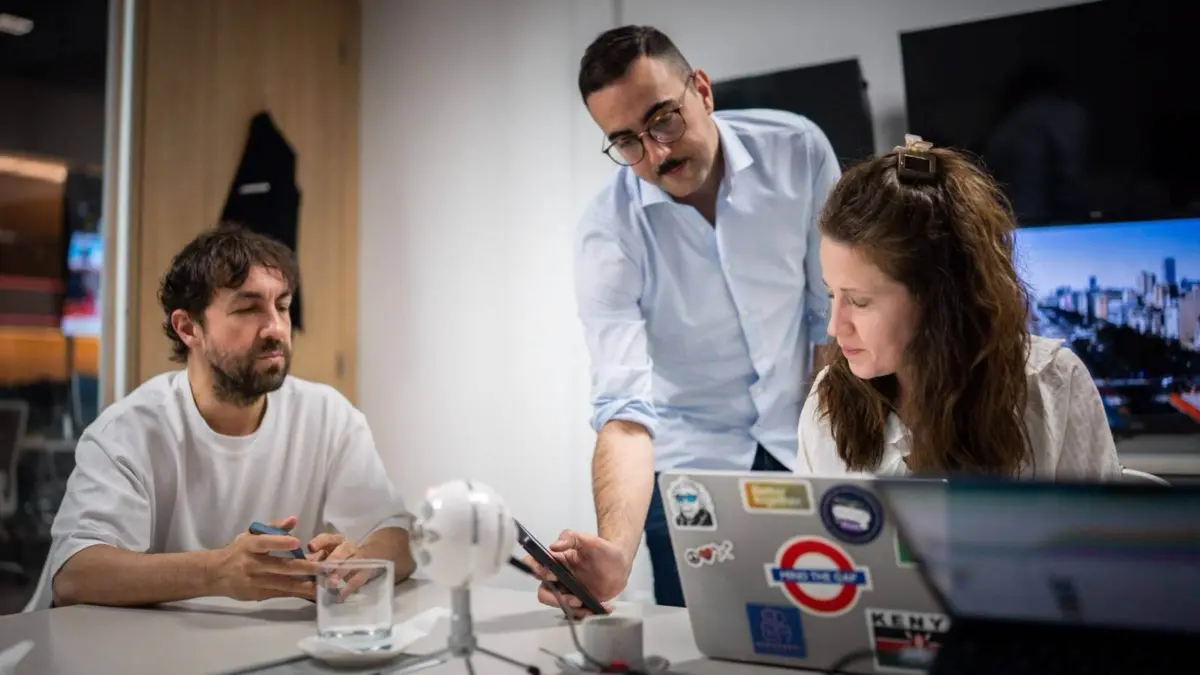
ST. PETERSBURG, Fla. — In an era defined by fractured media consumption and the relentless evolution of digital distribution, the lines separating independent content creators from institutional newsrooms are blurring. With global statistics indicating that over a quarter of the world’s population now relies, at least in part, on independent creators and social media influencers for current events and breaking news, the journalism industry faces a fundamental paradigm shift. Traditional news organizations, long accustomed to acting as the primary gatekeepers of public information, are finding themselves sharing the same digital spaces—and competing for the exact same audiences—as independent digital commentators.
To navigate this seismic shift, the nonprofit Poynter Institute’s MediaWise program, in strategic partnership with tech giant Microsoft, has officially announced the launch of the Creator + Newsroom Studio. Unveiled at the prestigious Media Party in Buenos Aires, Argentina, this ambitious global initiative is designed to forge bridges across the institutional-independent divide. By pairing five distinguished news organizations with independent content creators from across the globe, the Studio aims to co-produce cutting-edge, social-first journalism, test innovative models of content distribution, and establish rigorous frameworks for artificial intelligence (AI) literacy.
The implications of this initiative extend far beyond mere content collaboration. As generative AI reshapes the information ecosystem and public trust in media remains fragile, the Creator + Newsroom Studio seeks to answer a vital question: What happens when the rigorous reporting standards of traditional newsrooms merge with the native audience intimacy and platform savvy of independent creators?
Executive Overview: The Convergence of Institutional Journalism and Independent Media
The modern information ecosystem is characterized by rapid decentralization. Audiences—particularly younger demographics—are increasingly bypassing traditional news websites and evening broadcasts in favor of TikTok creators, YouTube analysts, and Instagram explainers. While these creators excel at community building, direct engagement, and digestible storytelling, they often lack the institutional resources, legal protections, and deep-dive verification infrastructure inherent to established newsrooms. Conversely, legacy media organizations frequently struggle to capture audience attention on fast-moving social platforms, where authenticity and personality drive engagement.
Recognizing these complementary strengths, the Creator + Newsroom Studio has brought together a geographically and culturally diverse cohort of media participants. The inaugural cohort features five distinct pairings:
- United States: Chicago Public Media
- Argentina: Todo Noticias
- Kenya: Africa Uncensored
- Australia: Indigenous Community Television (ICTV)
- Germany: Augsburger Allgemeine (in collaboration with the Guenter Holland School of Journalism)
These partnerships are not merely symbolic. Over the course of the upcoming year, each newsroom-creator pair will co-create and publish social-first video journalism. Simultaneously, they will document their operational friction points, workflow challenges, and editorial successes. The ultimate objective is to codify these lessons into a comprehensive global toolkit—scheduled for release in Spring 2027—that will serve as a blueprint for media organizations and creators worldwide seeking sustainable, ethical collaboration.
Detailed Chronology: From Concept to Global Rollout
The genesis of the Creator + Newsroom Studio reflects a methodical approach to addressing contemporary media challenges, combining international convenings, collaborative workshops, and empirical research frameworks.
The Buenos Aires Launch and Initial Workshops
The initiative was formally introduced to the international media community at Media Party in Buenos Aires, a premier gathering for journalism and technology innovators. At the event, MediaWise Deputy Director Brittani Kollar and Todo Noticias Head of Social Media Lara Krynveniuk spearheaded a joint workshop.
This session served as a crucible for dialogue, bringing together journalists and digital creators to dissect their firsthand experiences of friction and synergy. Participants explored the cultural differences between fast-paced creator workflows and methodical newsroom editing processes. The insights harvested from this Buenos Aires workshop—alongside ongoing evaluations of the five pilot partnerships—will directly inform the methodology of the 2027 global toolkit.
Ongoing Evaluation and AI Audits
Throughout the year, MediaWise will closely monitor the operational health and output of the five pilot partnerships. Evaluation metrics will capture how these relationships evolve, what journalists learn from creators regarding platform mechanics, and what creators glean from journalists regarding sourcing verification and editorial ethics.
In tandem with content production, participants will undergo structured artificial intelligence audits. These audits are designed to evaluate how creators and newsrooms currently leverage AI tools in their daily workflows, identifying capability gaps and establishing best practices for responsible AI integration. Furthermore, workshops focused specifically on media and AI literacy will ensure that all participants remain at the forefront of technological adaptation.
Audience Perception and Focus Group Research
The success of the Creator + Newsroom Studio will not be measured solely by view counts or engagement metrics; it will also be evaluated through rigorous audience research. Independent researchers will examine public reception of the co-produced social videos using targeted focus groups.
Before viewing the content, participants will complete comprehensive surveys detailing their general news consumption habits and baseline AI literacy. Following exposure to the co-produced videos, these same participants will evaluate the content, providing qualitative and quantitative feedback regarding perceived trustworthiness, clarity, and effectiveness. This data will provide invaluable insights into whether hybrid creator-journalist content can successfully rebuild or reinforce public trust in verified information.
Supporting Context & Metrics: The Broader AI and Literacy Ecosystem
The launch of the Creator + Newsroom Studio does not occur in a vacuum. It is a critical component of a broader, Microsoft-funded global initiative aimed at fortifying information integrity in the age of artificial intelligence.
Parallel to Poynter’s studio work, the United Nations Educational, Scientific and Cultural Organization (UNESCO)—also supported by Microsoft—is developing the Media and Information Literacy Handbook Supporting Content Creators in the Age of Artificial Intelligence. This upcoming handbook is designed to empower content creators with foundational media literacy and critical thinking skills as content generation, algorithmic curation, and deepfake proliferation become increasingly automated.
Recognizing the deep synergy between these two efforts, Poynter and UNESCO are actively cross-pollinating their initiatives, sharing data, expert insights, and operational lessons learned across both workstreams.
This interconnected framework moved forward significantly during Global Media and Information Literacy Week, held in Nairobi, Kenya, on October 26–27, 2026. UNESCO hosted the first official consultation workshop for the Handbook, co-facilitated by Microsoft. The Nairobi gathering convened content creators, representatives from international creator networks, and media stakeholders to review and critique the draft handbook. Feedback gathered during this session is currently shaping the next iteration of the publication, which is slated for an official global launch in June 2027.
Official Statements and Leadership Perspectives
Industry leaders behind the initiative emphasize that the Creator + Newsroom Studio represents a vital evolution in how society defends and practices journalism.
Brittani Kollar, Deputy Director of MediaWise at the Poynter Institute:
"Creators and newsrooms each have something the other needs. Creators have built direct, authentic relationships with their audiences, and newsrooms bring deep expertise in reporting and editorial standards. We want to see what happens when they work side by side, including both successes and pain points, to ensure we share practical guidance that actually works in the real world."
Kollar is co-leading the initiative alongside Chris Vazquez, an independent news creator, MediaWise ambassador, and former traditional newsroom journalist whose career trajectory bridges both worlds.
Chris Vazquez, Independent News Creator and Co-Lead:
"These collaborations provide unique opportunities to share rigorous, principled journalism in formats that reach people effectively where they already spend their time. Mapping out how to set those partnerships up for success will only make our civic information ecosystem stronger and more resilient."
Ginny Badanes, General Manager of Tech for Society at Microsoft:
"The way people find and evaluate information is changing rapidly, shaped by creators, news organizations, and AI. Through our work with Poynter and UNESCO, we’re combining complementary expertise to develop practical tools, strengthen AI and media literacy, and help people navigate today’s information environment with greater confidence."
Future Outlook: Building a Resilient Information Ecosystem
As the five pilot partnerships—spanning the urban newsrooms of Chicago and Buenos Aires, the investigative grit of Kenya, the indigenous storytelling of Australia, and the regional depth of Germany—begin publishing their collaborative social-first content, the global media landscape will be watching closely.
The challenges facing the information ecosystem are formidable. Misinformation spreads at algorithmic speeds, artificial intelligence complicates the verification of digital media, and institutional journalism continues to grapple with economic sustainability. However, initiatives like the Creator + Newsroom Studio offer a pragmatic path forward. By fostering mutual respect, operational transparency, and rigorous technological literacy between legacy institutions and independent voices, the initiative lays the groundwork for a more robust public discourse.
As Brittani Kollar noted: "This is just the beginning of the Creator + Newsroom Studio at Poynter. As audience needs and the news and information ecosystem evolves, this Studio will provide ongoing support to creators, newsrooms, and their collaborative futures."
For news organizations, creators, and researchers interested in following the progress of the Creator + Newsroom Studio or accessing the forthcoming global toolkit in Spring 2027, further information is available through the Poynter Institute and MediaWise portals.
Media Contact
Jennifer Orsi
Vice President, Publishing and Local News Initiatives
The Poynter Institute
[email protected]
About The Poynter Institute
The Poynter Institute is a global nonprofit organization dedicated to addressing society’s most pressing issues by championing journalistic excellence, advancing press freedom, and improving the sustainability and reliability of news organizations worldwide. Through convening, education, and research, Poynter serves as a bridge between journalists, newsrooms, technology corporations, and citizens.
Poynter is home to several renowned journalism and media literacy initiatives, including:
- MediaWise: Empowering citizens of all ages to critically evaluate online content and combat misinformation.
- International Fact-Checking Network (IFCN): Setting global standards for fact-checking organizations.
- PolitiFact: Providing nonpartisan fact-checking of political claims in the United States.
- The Newmark Ethics Center: Upholding core journalistic ethics and integrity.
To learn more about Poynter’s mission to support a free press and foster healthy democratic discourse, visit poynter.org.