

Executive Overview
Artificial Intelligence holds immense promise for product teams, yet AI-generated prototypes frequently fall short of production readiness. The culprit is rarely the underlying language model itself; rather, it lies in the tiny, scattered inconsistencies pervasive within modern design systems. Undocumented decisions, uncleaned hard-coded values, and an over-reliance on AI to magically interpret ambiguous mock-ups or complex design flows consistently result in visual and structural "drift."
Drawing on practical insights from Atlassian’s Hardik Pandya, product engineering and design teams are beginning to realize that achieving consistent, high-quality AI outputs requires more than advanced prompting. It requires a fundamental shift in how design systems are structured. By treating design decisions as foundational infrastructure, organizing guidelines into lightweight Markdown "spec files," enforcing strict token layers, and automating quality control with tools like FigmaLint, organizations can drastically reduce errors, maintain critical context, and elevate AI-generated prototypes to production-grade standards.
Detailed Chronology: The Evolution of AI-Driven Prototyping
The Early Promise and Pitfalls of Generative UI
When generative AI tools first entered the product design workspace, the community envisioned a frictionless utopian workflow: feed a rough wireframe or a natural language prompt into an LLM, and instantly receive a fully responsive, pixel-perfect, accessible prototype. Early adopters quickly discovered, however, that the reality was far messier.
Without explicit context, LLMs frequently hallucinated component properties, selected inappropriate color contrasts, ignored accessibility standards, and invented ad-hoc spacing values. Design systems—traditionally built as human-readable documentation sites or complex component libraries inside Figma—were fundamentally ill-equipped for machine consumption.
Recognizing the Context Gap
As product teams attempted to scale AI usage, they encountered recurring obstacles:
- The Ambiguity Tax: Forcing AI to decode design intent purely from visual layouts led to high error rates and immense token consumption.
- Drift Accumulation: Minor updates to core design systems failed to trickle down to AI prompts, resulting in outdated or contradictory code generation.
- Technical and Design Debt: Rather than resolving technical debt, AI often compounded it by generating inconsistent code variations across different prototyping sessions.
The Shift Toward "LLM-Readable" Design Systems
Recognizing these bottlenecks, forward-thinking engineers like Hardik Pandya began developing structured, programmatic approaches to bridge the gap between design systems and language models. By shifting away from purely visual documentation toward structured text-based infrastructure, the industry has unlocked a repeatable methodology for governing AI outputs. This evolution marks the transition from treating AI as an autonomous designer to treating it as an informed, rule-abiding collaborator.

Supporting Context & Metrics: The Mechanics of AI-Ready Design Systems
To achieve reliability in AI-generated prototypes, organizations must implement a robust three-layer architecture: Spec Files, a Token Layer, and automated Auditing.
1. Design Decisions as Infrastructure
A common misconception is that AI inherently understands design best practices. In reality, AI needs explicit priorities, decision-making paths, design principles, and comprehensive lists of "dos and don’ts."
Product teams must treat design decisions as critical infrastructure. Every time a team reaches a consensus—whether on spacing scales, typography hierarchies, or prioritization frameworks—that decision must be systematically codified into specification files that the AI consumes during the generation phase.

2. The Three-Layer Architecture
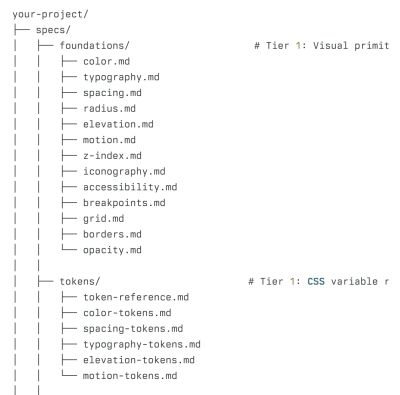
- The Spec Files Layer: Structured Markdown files housed within an organized repository folder dictate spacing rules, component usage guidelines, and styling priorities. Because these specs are pure text, they are computationally efficient for LLMs to process and vastly more accurate than forcing an AI to reverse-engineer intent from visual mock-ups.
- The Token Layer: A strictly maintained token layer ensures that the AI chooses exclusively from a closed set of named variables (e.g., semantic color tokens and spacing variables) rather than generating arbitrary, plausible-looking values on the fly.
- The Auditing Layer: Automated scripts and plugins scan generated prototypes to catch deviations. Tools like FigmaLint play an invaluable role here by auditing design tokens, validating interactive states, checking accessibility compliance, and flagging detached instances or hard-coded values before code ever reaches production review.
Official Statements & Industry Perspectives
Industry leaders emphasize that mastering AI-driven design requires a fundamental evolution in context engineering.
"To get better results, AI needs better guidance that minimizes assumptions and reduces ambiguity. Design decisions must be treated as core infrastructure."
— Hardik Pandya, Atlassian
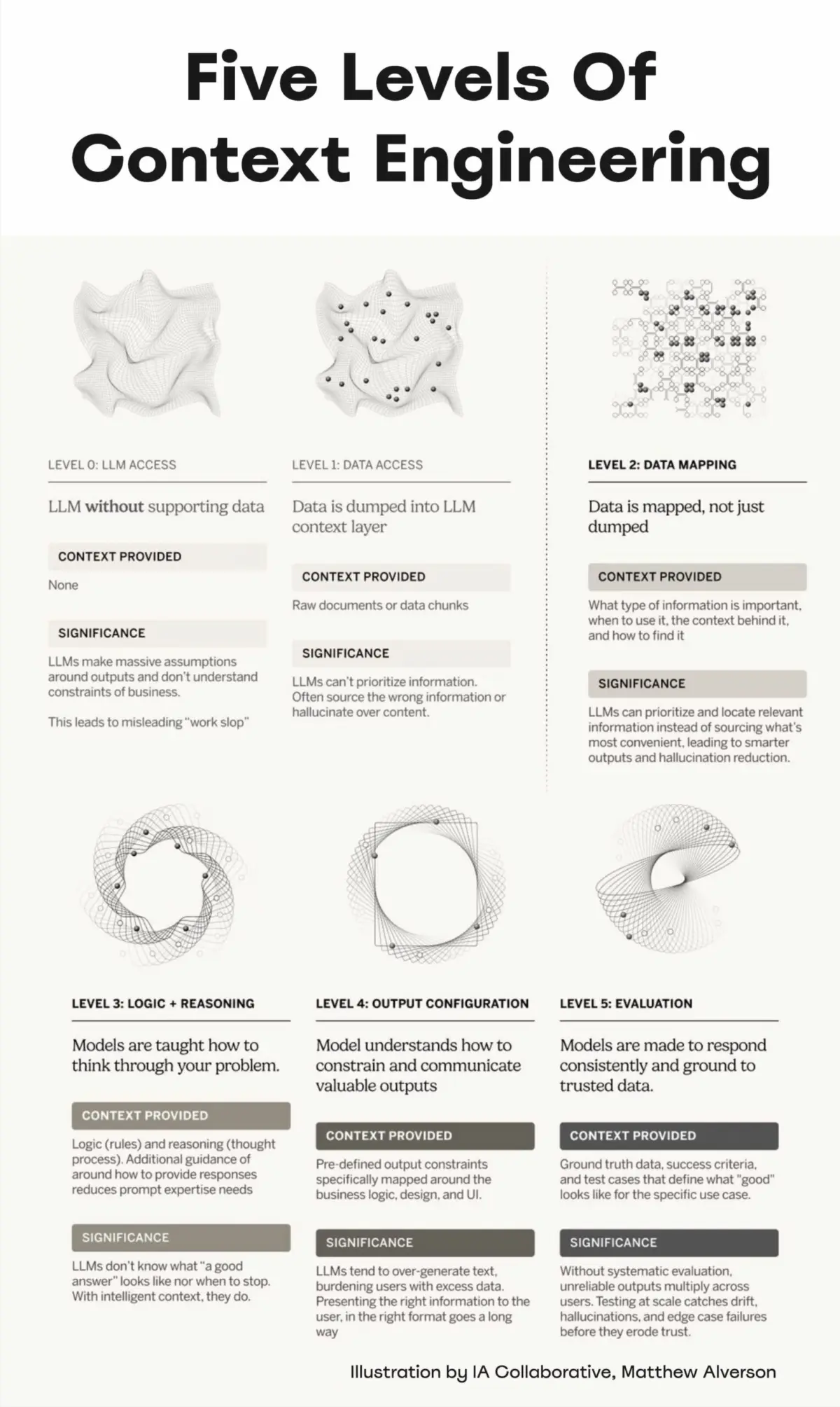
The importance of structured context is further underscored by broader engineering workflows. As highlighted in community frameworks regarding context engineering, structuring information across multiple distinct levels—ranging from global design principles down to component-specific state requirements—is the singular differentiator between erratic AI outputs and deterministic, reliable generation.
Design systems expert Vitaly Friedman reinforces this sentiment, noting that AI cannot magically resolve systemic technical or design debt without deliberate human intervention:
"The more deliberate and precise designers are in guiding AI, the better the overall outcomes will be. This requires not just cleaning up and improving design systems, but also maintaining them over time as decisions trickle down into structured files."
Future Outlook: What Lies Ahead for AI-Driven UX
As organizations continue to mature their AI integration strategies, the role of the product designer and design systems engineer will transform profoundly. Several key trends are set to define the coming years:

Continuous Sync Routines
Future design system updates will feature automated synchronization routines. When a core component is updated in Figma, automated pipelines will update the corresponding Markdown spec files, ensuring that AI models always reference the most current version rather than legacy guidelines.
The Rise of Context Engineering
Context engineering will solidify as a core discipline within product development. Rather than focusing solely on prompt engineering (how to ask a question), product teams will specialize in environment and system engineering (how to structure the entire information ecosystem so the AI cannot fail).
Vendor and Third-Party Interoperability
As enterprises increasingly rely on third-party component libraries and vendor-supplied design systems, tools like FigmaLint and standardized spec formats will become non-negotiable prerequisites. Vendors who supply "AI-ready" design systems will gain a massive competitive edge in the enterprise market.

Conclusion
The pursuit of flawless AI-generated prototypes is not a quest for a smarter algorithm; it is a mandate for better structured human systems. By viewing design systems through the lens of machine readability—leveraging Markdown spec files, strict token enforcement, and rigorous automated auditing—teams can eliminate prototype drift and unlock the true efficiency of generative AI.
Meet "Design Patterns For AI Interfaces"
For product designers looking to stay ahead of the curve, Vitaly Friedman’s new video course, Design Patterns For AI Interfaces, offers hundreds of real-life examples and practical UX guidelines to design AI features that users genuinely rely on. Featuring comprehensive training modules and upcoming live workshops, it serves as an essential resource for navigating the future of interface design. Explore the free video preview today.