

Executive Overview
For decades, the modern consumer’s relationship with nutrition has been defined by a quiet, universal surrender. We stand in grocery aisles, squinting at microscopic ingredient labels filled with polysyllabic chemical compounds, only to shrug, toss the item into our cart, and consume it anyway. We trust that regulatory bodies and food manufacturers have our best interests at heart, operating under the assumption that if an item is sold on a mainstream shelf, it must be fundamentally safe.
Yet, beneath the glossy marketing and vague nutritional panels lies a profound systemic failure: humanity is fundamentally in the dark about what it eats and how those ingredients interact with individual biology.
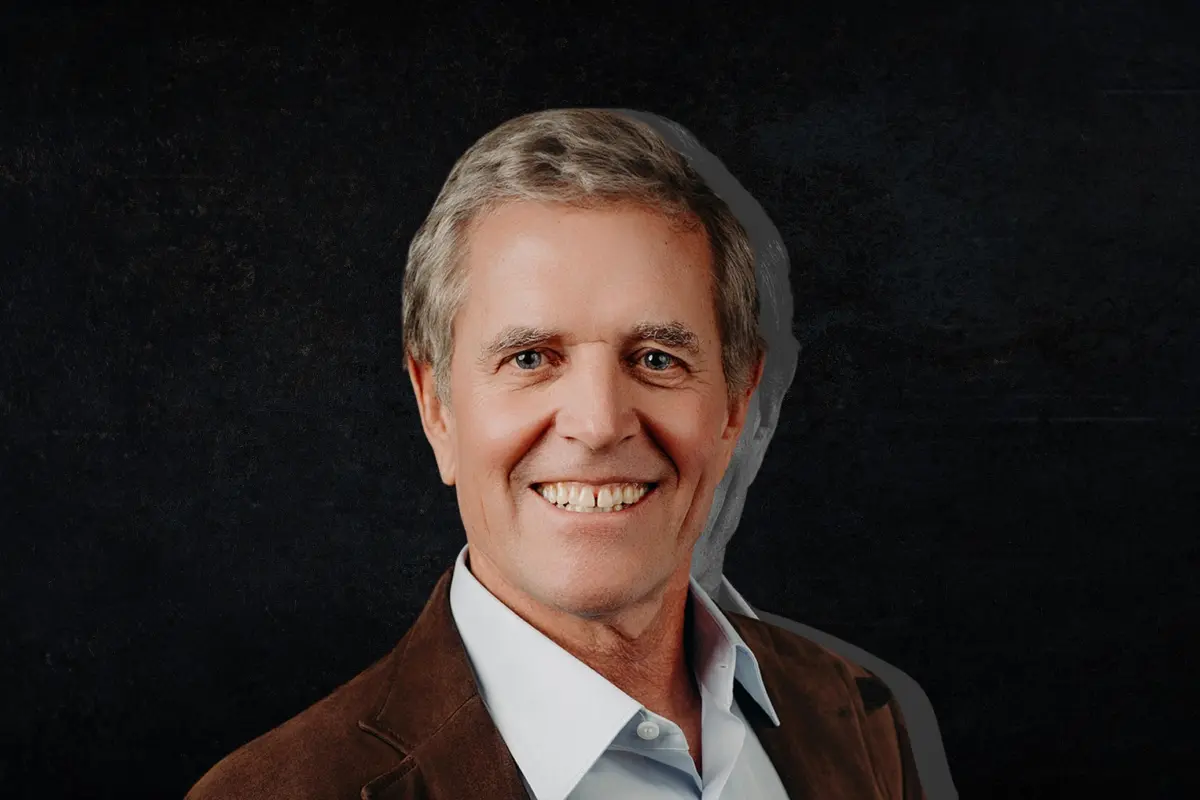
Enter Peter Castleman. A seasoned financial titan and former Chairman and Managing Partner of J.H. Whitney & Co.—where he helmed landmark investments in household brands like The North Face, Igloo, and Herbalife—Castleman could easily be spending his seventh decade enjoying a quiet retirement on a golf course. Instead, at age 70, he has stepped back into the entrepreneurial arena as the founder and CEO of WISEcode, an artificial intelligence-powered food transparency platform.
WISEcode is not merely another calorie-counting app or clean-eating blog. It is an ambitious, high-tech initiative designed to overhaul the global food supply chain. Through what Castleman and his team call the Food Genome Project, WISEcode has mapped more than 840,000 food products, establishing a massive, data-driven bridge between food composition and human health. By leveraging cutting-edge machine learning, the platform seeks to eradicate what Castleman terms the "food information crisis"—empowering consumers, policymakers, retailers, and scientists alike with absolute clarity regarding the molecular makeup of our diets.
This report explores Castleman’s remarkable transition from private equity heavyweight to health-tech crusader, examining the architecture of WISEcode, the rigorous validation frameworks required to build a generational enterprise, and the profound implications of bringing absolute transparency to the global food system.
Detailed Chronology: From Private Equity Patriarch to Food Tech Innovator
To understand the magnitude of WISEcode, one must examine the trajectory of its founder. Peter Castleman’s career has long been defined by the art of identifying value, scaling enterprises, and anticipating market shifts.
The J.H. Whitney Era and Early Foundations
During his four decades as an elite investor, Castleman sat at the helm of J.H. Whitney & Co., America’s oldest venture capital and private equity firm. Under his leadership as Chairman and Managing Partner, the firm orchestrated strategic investments that shaped the consumer landscape. Whether scaling outdoor apparel icon The North Face, building the manufacturing powerhouse Igloo, or steering wellness giant Herbalife, Castleman developed a keen eye for how products capture consumer loyalty and drive macro-trends.
Yet, even as he navigated multi-million-dollar portfolios, a parallel intellectual curiosity was taking root. Roughly twenty years ago, Castleman began noticing a troubling disconnect between modern medicine, longevity, and the everyday American diet. While advancements in pharmaceuticals and diagnostics were accelerating, the foundational fuel powering the human machine—our food—remained an unregulated black box.
Entering the "Kill Zone" of Chronic Disease
At age 50, Castleman officially stepped back from his active role at J.H. Whitney, entering what he describes as a period of reflection and personal optimization. Despite maintaining a rigorous fitness routine and eating a balanced diet, a sobering biological reality became clear to him.
"When you turn 50, you enter the kill zone for chronic disease," Castleman explains.
Medical statistics validate his urgency: chronic illnesses account for roughly 90% of all healthcare expenditures in the developed world. More critically, epidemiological data demonstrates that upwards of 80% of chronic conditions—including type 2 diabetes, cardiovascular disease, cognitive decline, and certain metabolic cancers—are driven not by immutable genetics, but by lifestyle choices, primarily nutrition.
Faced with this data, Castleman attempted to do what any high-performing executive would do: he looked for a personal data dashboard to "hack" his nutrition, optimize his cognitive longevity, and insulate himself against late-onset chronic illness.
To his astonishment, the tool did not exist.
The Genesis of WISEcode
"That hack doesn’t exist. It shocked me. It just doesn’t exist," Castleman recalls.
Realizing that individuals lacked the granular data needed to make truly informed decisions about their biological futures, Castleman transformed a personal obsession into an institutional mission. For over a decade, he poured capital, time, and strategic vision into conceptualizing what would eventually become WISEcode. What began as informal research twenty years ago evolved into a formalized, multi-year technological buildout.
By leveraging advanced artificial intelligence, natural language processing, and automated data ingestion, Castleman assembled a multidisciplinary team to decode the supermarket aisle. Today, at 70 years old, he works ten hours a day, seven days a week, spearheading WISEcode’s explosive growth. Far from winding down his career, Castleman views this chapter as his most vital and fulfilling endeavor yet.
Supporting Context & Metrics: The Anatomy of the Food Information Crisis
The modern food economy is characterized by a stark asymmetry of information. While food conglomerates possess hyper-detailed data regarding chemical formulations, supply chain provenance, and flavor enhancements, the end consumer is left navigating a labyrinth of misleading marketing terms: natural, organic, heart-healthy, low-fat, and clean.
The Food Genome Project: Mapping the Invisible
WISEcode’s primary vehicle for addressing this asymmetry is the Food Genome Project. Much like the Human Genome Project mapped the building blocks of human DNA, WISEcode’s initiative seeks to catalog, analyze, and codify every edible product within the commercial marketplace.
To date, the platform has successfully mapped more than 840,000 products. This is no small feat. Modern food products are rarely simple; a single packaged item may contain dozens of derivative ingredients, stabilizers, artificial colorings, pesticide residues, and heavy metal traces introduced during processing or agricultural cultivation.
WISEcode’s proprietary AI engine ingests ingredient labels, manufacturer disclosures, and chemical databases, translating complex chemical nomenclature into actionable, digestible metrics. The platform evaluates products across multiple dimensions:
- Nutritional Density: Assessing macro and micronutrient profiles beyond standard FDA guidelines.
- Bio-Compatibility: Determining how specific ingredients interact with human biology, inflammation pathways, and metabolic health.
- Additive and Allergen Identification: Flagging ultra-processed additives, endocrine disruptors, and hidden allergens that escape casual notice.
Democratizing Food Truth Across Sectors
Crucially, Castleman designed WISEcode not merely as a consumer-facing app, but as enterprise-grade infrastructure. The crisis of food information impacts multiple stakeholders across society:
- Consumers: Empowering individuals to filter grocery selections based on personalized health parameters—such as avoiding neurotoxins, managing insulin resistance, or optimizing athletic recovery.
- Retailers and Grocery Chains: Enabling supermarkets to curate inventory that aligns with emerging public health demands, fostering consumer trust and loyalty.
- Policymakers and Regulators: Providing governmental bodies with empirical data to draft more effective nutritional guidelines and hold manufacturers accountable for deceptive labeling practices.
- Scientists and Researchers: Offering an unprecedented dataset to study correlations between ultra-processed food consumption and chronic disease epidemics.
Official Statements and Insights from Peter Castleman
In discussions regarding his entrepreneurial philosophy, Peter Castleman offers a masterclass in modern business strategy, risk assessment, and late-career vitality. Below are key insights extracted from his executive framework:
On the Core Mission of WISEcode
"Basically, we’re trying to solve what I call the food information crisis. We literally don’t know two things: what’s in our food and what it does to us… We’ve created what we call the Food Genome Project, which is really mapping the entire food system. So we now know exactly what’s in our foods, and we can tell you what it does for you. That information didn’t exist, and now it does."
On the Entrepreneurial Discipline: The Three Tests
When evaluating whether a personal passion possesses commercial viability, Castleman rejects unbridled emotionalism. While acknowledging that founders naturally develop deep attachments to their ideas, he applies three rigorous filters before committing capital:
- The North Star Test: "Is it very clear that what you’re trying to do resonates with others? Is it going to be an aha moment or a so-what moment to the world?"
- The Sandbox Test: "How big is your sandbox? How big is your addressable market? And how crowded is your sandbox?"
- The Moat Test: "Can you build defensible business assets that prevent people from copying what you do? People will copy you in a second if you’re successful."
Castleman emphasizes that if an enterprise cannot pass all three tests with absolute clarity, an entrepreneur must walk away. "I’m better at it now than I was at 25," he notes.
On Leveraging Modern Technology for Market Research
Historically, validating a nascent business concept required retaining elite management consultancies like McKinsey or Bain for hundreds of thousands of dollars and waiting six months for a comprehensive feasibility study. Castleman argues that the digital age has democratized market intelligence.
"Social media and everything we have today are double-edged swords. But I use SurveyMonkey all the time. You can ask a question and, for not very much money, you can get 500, 1,000 really clear answers that help you evolve. You can do the same thing on social media tools. The tools out there today are so great… Now, in a day, you can get better information than they ever gave you."
On Age and the Myth of Late-Career Limitations
Addressing professionals in their 50s, 60s, and beyond who harbor entrepreneurial ambitions but feel constrained by convention, Castleman offers an unvarnished assessment of the startup reality coupled with an inspiring call to action:
"First and foremost, I think you gotta be honest with yourself. Who are you? What do you love doing, and are you good at this? Late in your career, any time, if you don’t have the energy, the drive and the staying power, don’t do it. Because building companies is hard. You’re going to get knocked on your fanny a ton of times… Most of my contemporaries are reducing their handicap on the golf course, and I’m spending 10 hours a day, seven days a week on WISEcode, and I love it. I wouldn’t change it for the world… I think the only failure in life is not trying."
Future Outlook: The Road Ahead for WISEcode and Food Transparency
As WISEcode looks toward the horizon, the macroeconomic tailwinds supporting its mission are undeniable. Public awareness surrounding the dangers of ultra-processed foods (UPFs) has reached an all-time high, fueled by landmark investigative journalism, bestselling literature, and a broader cultural shift toward preventative healthcare and biohacking.
Scaling the Genome of Food
The immediate challenge for WISEcode is scale. Having successfully mapped over 840,000 products, the platform is expanding its ingestion pipelines to keep pace with the thousands of new SKU launches introduced globally each month. By integrating advanced generative AI and computer vision, WISEcode aims to automate the cataloging process entirely, reducing friction for global manufacturers seeking to certify and transparently display their product genomes.
Corporate Partnerships and B2B Integration
Beyond individual consumers, WISEcode’s future lies in deep B2B integration. The company is actively positioning itself as the gold-standard verification engine for major supermarket chains, institutional food service providers, and corporate wellness programs. By embedding WISEcode’s APIs into online grocery platforms, retailers can automatically guide shoppers toward healthier alternatives based on their unique biometric profiles, creating a closed-loop ecosystem where health literacy directly translates into commercial sales.
Regulatory Tailwinds
Governments worldwide are beginning to crack down on deceptive food marketing and opaque labeling. As regulatory bodies in the European Union, the United States, and elsewhere contemplate stricter warning labels on ultra-processed foods, platforms like WISEcode will transition from being innovative luxuries to essential compliance utilities for food producers.
Conclusion: A Legacy Defined by Impact
Peter Castleman’s journey with WISEcode serves as a powerful reminder that innovation has no expiration date. Having conquered traditional private equity and helped build enduring consumer brands, he has chosen to dedicate his twilight years to solving humanity’s most fundamental oversight: our ignorance of what we put into our bodies.
In doing so, Castleman is not merely building a software platform; he is laying the foundational infrastructure for a healthier, more transparent global civilization. For the millions of consumers who have spent decades squinting at ingredient labels in quiet confusion, WISEcode offers a revolutionary promise: the end of guesswork, and the dawn of Food Truth.
