

Executive Overview
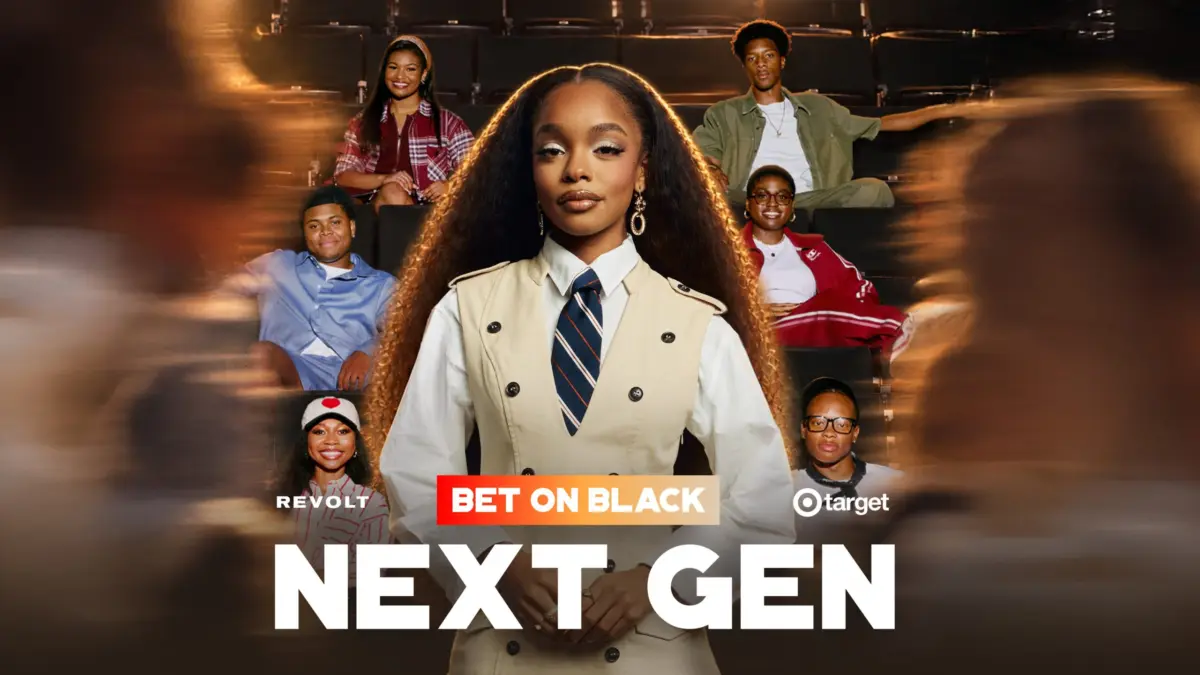
The landscape of unscripted television and corporate social responsibility is undergoing a dynamic evolution, marked by high-profile collaborations that bridge mainstream entertainment with grassroots economic empowerment. In a landmark move for both television production and Black entrepreneurship, acclaimed writer, producer, and showrunner Kenya Barris—widely recognized for his trailblazing work on hit television series such as Black-ish and Grown-ish—has officially returned to the unscripted programming arena. Barris has joined media network Revolt as an executive producer for the highly anticipated sixth season of the reality business competition series, Bet on Black.
Marking his first major project since being named vice-chair of Revolt Labs, the network’s creative studio, Barris’s involvement has introduced a refreshed, high-impact format to the show. Premiering on October 19, the sixth season of Bet on Black highlights innovative student founders from Historically Black Colleges and Universities (HBCUs). These emerging entrepreneurs receive hands-on mentorship, valuable exposure, and a share in a lucrative $500,000 growth fund. Crucially, the series empowers these founders to scale their business ventures while retaining 100% equity—a rare and transformative advantage in the often-predatory landscape of early-stage venture funding.
Beyond its production milestones, the new season underscores the enduring power of mission-driven partnerships. Longtime corporate sponsor Target has returned for its sixth consecutive year, reinforcing a relationship that has injected millions of dollars into Black-owned businesses. This alliance highlights a broader industry shift: modern consumers and top-tier brands no longer view social impact as an afterthought; instead, they treat it as an essential pillar of brand identity. With industry heavyweights like Barris at the helm, rising stars like host Marsai Martin leading the charge, and steadfast institutional backing from brands like Target, Bet on Black is redefining what purpose-driven television can achieve.
Detailed Chronology and Production Evolution
From Scripted Icons to Unscripted Innovation
Kenya Barris’s return to unscripted television is a homecoming of sorts. Long before he became a household name for shaping contemporary television comedies that dissect Black family life, modern culture, and social dynamics, Barris cut his teeth in the unscripted space, notably working on the pop-culture phenomenon America’s Next Top Model. However, his transition back to the genre via Revolt represents a calculated effort to leverage his immense industry leverage for direct community uplift.
When Revolt announced Barris as the vice-chair of Revolt Labs, industry analysts anticipated innovative cross-platform storytelling. They did not have to wait long. Almost immediately, Barris turned his attention to Bet on Black, a series designed to spotlight brilliant, under-resourced minds within the HBCU ecosystem.
When the sixth season premiered on October 19, viewers were introduced to a completely revamped format. Rather than a standard elimination-style reality competition where contestants are whittled down to a single victor, the new structure focuses on comprehensive capacity-building. Student founders from diverse HBCU campuses are immersed in an intensive environment where they receive individualized mentorship, strategic roadmap planning, and direct financial injections from the $500,000 growth fund.
By prioritizing equity preservation—allowing founders to keep 100% ownership of their enterprises—the production team actively combats historical disparities in venture capital access. Historically, Black entrepreneurs, particularly those from non-traditional academic backgrounds or regional institutions, face systemic barriers when seeking seed funding, often forced to surrender controlling stakes in their companies prematurely. Bet on Black dismantles this barrier, providing capital without strings attached.
A Historic Reunion on Set
Adding a deeply personal and emotional layer to the production is Barris’s reunion with actress Marsai Martin, who serves as the host of Bet on Black. Martin famously rose to global prominence portraying Diane Johnson, the witty and precocious youngest daughter on ABC’s Black-ish. The conclusion of Black-ish marked the end of an era for scripted television, but this new collaboration brings creator and breakout star back together in an entirely different context.
For Barris, watching Martin transition from a young, promising child actor on the Black-ish set to a poised, multi-hyphenate industry leader hosting a major network series was nothing short of profound. Describing Martin as a constant "spark of energy and a spark of light," Barris noted that her professionalism has never wavered since her earliest days in the industry. For the production, Martin’s presence provides an authentic bridge to Gen Z and millennial audiences, anchoring the show with a host who embodies the very entrepreneurial spirit and youthful brilliance the series seeks to celebrate.
Supporting Context and Metrics: The Target Partnership
Fueling Black Enterprise Through Corporate Accountability
A foundational pillar of Bet on Black’s sustained success is its enduring partnership with retail giant Target. Since the show’s inception in 2021, Target has served as a core architect of its impact, making meaningful financial commitments that extend far beyond traditional advertising placements.
Over six seasons, Target’s collaboration with Revolt has directed approximately $2.69 million to Black founders and their enterprises. This funding provides much-needed access to capital, operational resources, and high-level retail growth opportunities that help small businesses scale into national brands. For Season 6, Target has committed $500,000 directly to the show’s growth fund, ensuring that this year’s cohort of HBCU founders has the financial runway necessary to turn ambitious prototypes into viable market leaders.
However, Target’s investment is not purely financial; it is backed by an expansive, multi-channel marketing campaign. The retail giant has mobilized its considerable reach across television, digital platforms, Connected TV (CTV), YouTube, social media, on-site activations, and influencer marketing networks. This comprehensive promotional push ensures that the student founders do not just compete in a vacuum, but rather receive maximum visibility before millions of consumers nationwide.
The Rise of Mission-Driven Brands
In contemporary media and marketing circles, discussions around "purpose-driven branding" often risk slipping into corporate buzzwords. Yet, collaborations like the one between Revolt and Target demonstrate how these concepts can manifest as tangible economic realities.

Revolt CEO Detavio Samuels has been vocal about the necessity of redefining corporate success. According to Samuels, building a profitable company that merely manufactures good products is no longer sufficient in today’s socio-economic climate. Modern audiences—particularly Black consumers—expect corporations to actively contribute to the well-being and advancement of their communities.
"You also have to help create the world that your audience wants to live in," Samuels asserted during discussions surrounding the partnership.
By aligning its brand with a platform explicitly designed to dismantle systemic economic barriers for HBCU students, Target demonstrates a long-term commitment to equity. This strategy moves past performative allyship, embedding corporate responsibility directly into the core economics of a hit television franchise.
Official Statements and Industry Insights
Kenya Barris on Changing the Narrative
Reflecting on his decision to join the project, Kenya Barris admitted that he was initially drawn to the sheer strength of the show’s title. Yet, once he dove into the production process, his admiration expanded exponentially. In an interview with ADWEEK, Barris confessed that the show’s production value and execution were performed "at a higher level than I even thought that it could be done."
Barris emphasized that investing in the next generation of Black creators is a moral and cultural imperative. For too long, mainstream media has allowed negative, distorted tropes about Black culture to dominate public consciousness. By spotlighting the ingenuity, technical brilliance, and commercial viability of HBCU student founders, Bet on Black offers a corrective lens, showcasing young Black minds as global innovators and economic powerhouses.
"Their ingenuity and brilliance will better the world and make their big ideas sellable," Barris noted, drawing parallels to his early days working on reality formats like America’s Next Top Model. He recognizes that unscripted television possesses a unique, visceral power to capture raw human potential and translate it into cultural cachet.
Detavio Samuels on Creative Excellence
Revolt CEO Detavio Samuels views Kenya Barris not merely as an executive producer, but as a generational creative force. Placing Barris in the upper echelons of modern television creators, Samuels praised his ability to consistently push boundaries and identify cultural touchstones before they enter the mainstream.
Samuels emphasized that Revolt’s mission has always centered on uplifting the Black community and tackling its most complex challenges head-on. Finding corporate and creative partners who share this unyielding vision is rare, which makes the convergence of Barris, Target, and Revolt an alignment of shared values.
Future Outlook: The Next Frontier for HBCU Entrepreneurship
As Bet on Black Season 6 unfolds across Revolt’s broadcasting and digital networks, its broader implications for the media and venture capital landscapes are already coming into focus. The convergence of premium unscripted television, institutional HBCU talent, and major corporate investment points toward a sustainable model for incubating minority-owned businesses.
Scaling the Impact
The success of the show’s refreshed format—where students retain 100% equity while receiving both capital and mentorship—serves as a compelling blueprint for future entrepreneurial accelerators. Traditional venture capital firms are increasingly taking notice of the untapped market potential residing within Historically Black Colleges and Universities. HBCUs have long been incubators of cultural excellence, civil rights leadership, and academic rigor; today, they are rapidly cementing their status as powerhouses of technological and commercial innovation.
By removing the traditional hurdles of debt-heavy seed financing and exploitative equity dilution, Bet on Black ensures that its participating founders maintain complete control over their destinies. As these student-led ventures scale, the economic ripple effects will likely be felt across regional economies, local communities, and national markets alike.
A New Standard for Content and Commerce
Looking ahead, the partnership between Revolt, Kenya Barris, and Target establishes a high-water mark for brand-integrated television. It proves that audiences do not tune out when brands champion social impact—rather, they lean in. As viewers demand greater authenticity, ethical accountability, and real-world utility from the media they consume, shows like Bet on Black point the way forward.
Ultimately, Kenya Barris’s return to unscripted TV via Revolt is more than a personal career milestone; it is a strategic investment in the future architecture of Black business. Through high-level execution, unwavering institutional support, and a profound respect for the brilliance inherent in the HBCU community, Bet on Black is not just documenting success stories—it is actively manufacturing them.