

For years, the WordPress ecosystem has operated under a standardized set of assumptions. Website creation meant relying on boxed-in page builders, stacking rigid grid systems, managing a labyrinth of third-party plugins, and quietly accepting the performance trade-offs of heavy, nested DOM structures. While these tools democratized web design, they frequently introduced technical debt, bloated codebases, and unexpected licensing fragmentation.
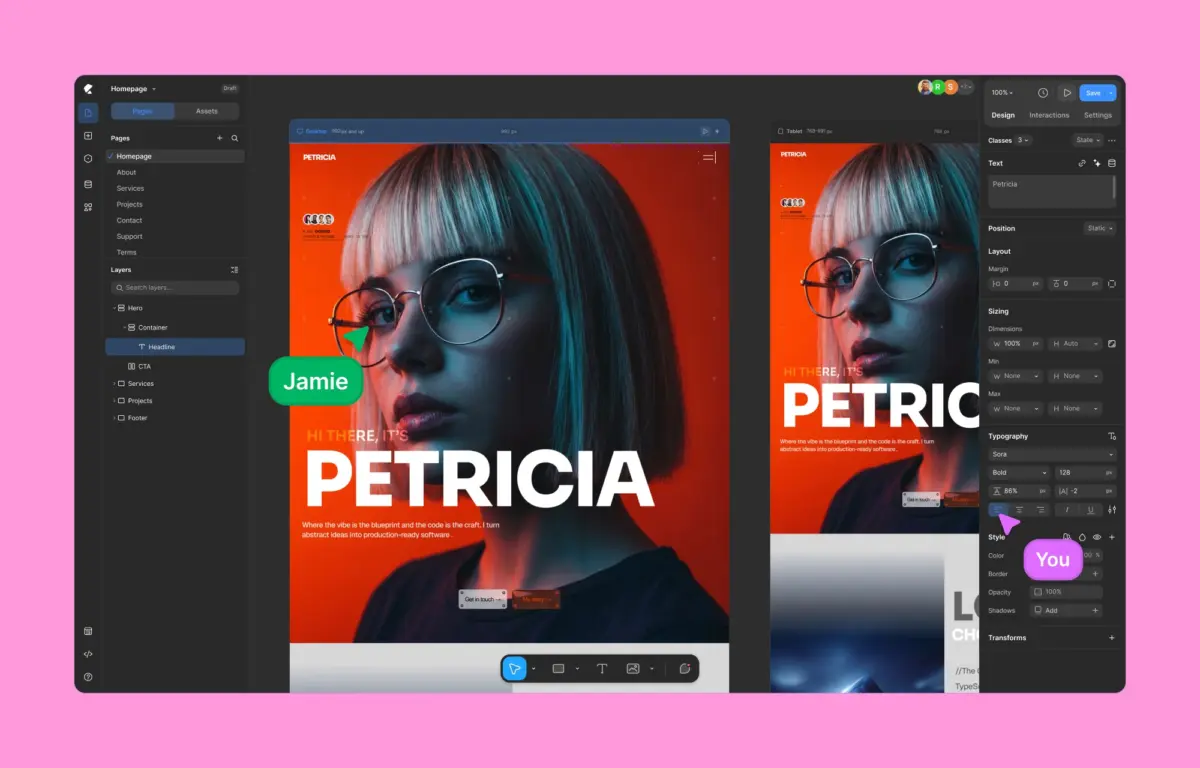
Enter Kirki, a paradigm-shifting visual website builder that looks to redefine how digital experiences are conceptualized and deployed on WordPress. Eschewing the traditional paradigm of containerized rows and rigid columns, Kirki introduces the ecosystem’s first freeform visual builder featuring an infinite canvas. By unifying design freedom, a native Content Management System, direct Figma integration, and real-time multi-user collaboration into a single zero-dependency environment, Kirki is sparking serious conversations across the developer and designer communities.

This comprehensive review examines Kirki’s core architecture, evaluates its performance benchmarking against traditional mainstays like Elementor, explores its expansive feature set, and assesses whether it truly represents the next evolutionary leap for WordPress.

Detailed Chronology of the WordPress Page Builder Evolution
To understand the disruptive nature of Kirki’s release, it is helpful to trace the chronological trajectory of WordPress site building:

- The Classic Era (Pre-2015): WordPress relied almost exclusively on static themes, custom PHP templates, and the native WYSIWYG editor. Customization required direct code editing or specialized shortcodes, presenting a steep barrier to entry for non-technical users.
- The First-Generation Page Builders (2015–2018): Tools like early iterations of Elementor, Beaver Builder, and WPBakery entered the market. They introduced drag-and-drop interfaces operating within rigid column-and-row containers, making website creation accessible to millions while quietly introducing significant DOM bloat.
- The Block Editor Revolution (2018–2023): WordPress introduced Gutenberg, pushing native modular editing to the forefront. Simultaneously, advanced third-party block frameworks and full-site editing (FSE) gained traction, though power users still frequently turned to heavy third-party builders for complex commercial layouts.
- The Design-System & Decoupled Era (2024–Present): Modern workflows increasingly draw inspiration from standalone design tools like Figma, Webflow, and Framer. Designers demand infinite canvases, class-based CSS management, and micro-interactions without performance penalties. Kirki positions itself precisely at this modern intersection, serving as the bridge between high-end design software and the world’s most popular content management system.
Supporting Context & Architectural Metrics
Performance directly impacts user retention, search engine optimization (SEO), and bottom-line conversion rates. To evaluate how Kirki’s architectural choices translate into real-world performance, rigorous benchmarking audits were conducted comparing Kirki against traditional builders under identical conditions.

Benchmarking Methodology
- Environment: Clean WordPress installations utilizing the default Twenty Twenty-Five theme.
- Layout: Identical multi-section layouts containing hero elements, typography blocks, feature grids, and interactive media modules.
- Testing Tool: Lighthouse performance audits measuring First Contentful Paint (FCP), Total Blocking Time (TBT), Cumulative Layout Shift (CLS), and overall DOM node weight.
Performance Breakdown
+------------------------+-----------------------+-----------------------+
| Metric / Feature       | Kirki Visual Builder  | Traditional Builders  |
+------------------------+-----------------------+-----------------------+
| DOM Node Count         | Exceptionally Low     | Heavily Nested        |
| Third-Party Dependency | Zero-Dependency       | High (Add-ons needed) |
| Responsive Workflow    | Concurrent / Unified  | Isolated Breakpoints  |
| Figma Integration      | Native Import Engine  | Third-Party/Manual    |
| Dynamic Content        | Built-in Native CMS   | Requires ACF / Extras |
+------------------------+-----------------------+-----------------------+
The data gathered during testing revealed a stark contrast. Kirki generated a remarkably clean Document Object Model (DOM) with minimal <div> wrapper soup. This architectural restraint translated into significantly faster load times, optimized Core Web Vitals, and flawless semantic HTML outputs. Conversely, traditional builders tested alongside Kirki produced heavily nested structural wrappers and loaded external scripts even on minimalist layouts, dragging down overall execution speeds.

Pricing Structure and Economic Impact
Beyond raw performance, economic efficiency plays a vital role for agencies and freelancers. Kirki offers a robust free version available directly via WordPress.org, providing full access to its infinite canvas without artificial handicaps.

For professional scaling, the Starter Plan is priced at $59/year for a single site, including all premium features out of the box—contrasting favorably with competitors who frequently gate advanced features or force users to purchase supplemental add-ons. For enterprises and agencies seeking long-term predictability, a Lifetime Plan is available for a one-time fee of $499, completely eliminating recurring subscription overhead.

Official Design Philosophy & Core Feature Breakdown
Kirki’s feature set is built around removing traditional workflow friction. Below is an exhaustive breakdown of its core pillars:

1. Freeform Infinite Canvas & Responsive Workflows
Breaking away from rigid box models, Kirki’s infinite canvas allows designers to pan, zoom, layer backgrounds, and position elements with absolute precision. Crucially, Kirki introduces concurrent responsive editing. Rather than toggling back and forth between isolated desktop, tablet, and mobile previews, designers can view and edit all responsive breakpoints simultaneously on the same screen. Changes cascade intelligently, ensuring a fluid adaptation across diverse viewports without redundant manual styling.

2. Instant Figma-to-WordPress Handoff
For design teams accustomed to prototyping in Figma, Kirki bridges the gap via a native import engine. Designs created in Figma can be imported directly into the builder, instantly translating into fully responsive, production-ready WordPress layouts while preserving complex styling tokens and custom breakpoints.

3. Native Dynamic Content Management
Historically, dynamic data mapping in WordPress required external plugins like Advanced Custom Fields (ACF). Kirki integrates a robust native Dynamic Content Manager. Users can connect custom post types, custom fields, and user metadata directly to visual elements on the canvas without writing a single line of PHP or managing disparate plugin dependencies.

4. Class-Based Styling & Global CSS Variables
Scaling web design efficiently requires modularity. Kirki implements a class-based CSS architecture where applied styles automatically formulate reusable classes. When paired with Global CSS Variables, designers can update global color schemes, typography rules, and spacing tokens across an entire website instantly. Advanced users retain the flexibility to inject custom CSS or page-level JavaScript.

5. Visual Interactions & Timeline-Based Animations
Moving beyond standard static templates, Kirki features a fully visual interaction builder. Users can orchestrate complex scroll-triggered effects, hover states, and multi-step animations using a visual timeline editor. Text can be animated dynamically down to the individual character or word level, rivaling the animation fidelity typically reserved for standalone motion-design tools.

6. Kirki Apps & Real-Time Co-Editing
For agency environments, Kirki introduces true multi-user real-time co-editing. Team members can work on the same page simultaneously, viewing color-coded live cursors and leaving pinned contextual comments directly on the canvas. Furthermore, Kirki Apps centralize third-party integrations—such as CRMs, analytics suites, and support widgets—directly within the editor interface.

7. Built-In Quality Control Audits
Before publishing, Kirki’s built-in Page Audit tool automatically scans pages for missing image alt text, broken hyperlinks, SEO omissions, and accessibility flags, ensuring every deployed page meets rigorous technical standards.

Future Outlook & Industry Implications
The introduction of Kirki signals a mature evolution in the WordPress ecosystem. As clients and creators increasingly demand the fluid design freedom of modern web design platforms coupled with the robust content management foundation of WordPress, tools that bridge this divide will naturally lead the market.

By eliminating plugin bloat, optimizing DOM rendering, and matching the user experience of vector-based design tools, Kirki has positioned itself not merely as an alternative to legacy page builders, but as a compelling blueprint for the future of professional WordPress development. Whether it succeeds in completely transforming developer habits remains to be seen, but its early traction points toward a faster, cleaner, and vastly more creative digital landscape.
