

The ballroom of Dancing with the Stars (DW
TS) has long captivated audiences with high-stakes competition, dazzling choreography, and glittering spectacles. However, behind the glamour of Season 35 lies a landscape marked by unexpected eliminations, intense public scrutiny, and deep psychological friction. The recent elimination of professional dancer Jenna Johnson and her celebrity partner, actor and dancer Harry Shum Jr., has brought these underlying tensions to the forefront. Despite delivering flawless, high-scoring performances in the semifinals—including twin 30-out-of-30 routines—the pair was shockingly voted out of the competition.
This unexpected exit followed hard on the heels of the elimination of Val Chmerkovskiy (Johnson’s husband and fellow DWTS pro) and his partner Jenna Dewan the week prior. In the wake of these departures, the cast and crew have opened up about the emotional toll exacted by a particularly chaotic season. Most notably, Johnson and Shum revealed that they share a "trauma bond" forged by relentless social media vitriol and toxic online bullying. Meanwhile, Chmerkovskiy offered his own candid, headline-grabbing show of support for his wife via social media, keeping the spotlight fixed on the professional dancing dynasty.
This report provides an exhaustive, investigative look into the Season 35 semifinals fallout, examining the psychological pressures faced by the cast, the realities of online harassment, and the inner mechanics of one of television’s most enduring reality competitions.
Detailed Chronology: The Road to the Semifinals Shock
The events leading up to Jenna Johnson and Harry Shum Jr.’s elimination were characterized by breathtaking artistic highs countered by severe off-screen controversy.
The Semifinal Masterclass
During the Season 35 semifinals, Johnson and Shum delivered what many critics and fans considered to be the standout performances of the night. Their first routine was a fiery, emotionally charged paso doble set to Rihanna’s "We Found Love," which earned universal praise from the judges for its precision and intensity.
Their second routine was a buoyant quickstep set to Amy Winehouse’s "Valerie." Beyond its technical merit, the dance carried profound personal significance: Shum dedicated the performance to his late Glee costar, Naya Rivera. The routine captured the hearts of the studio audience and earned a second consecutive score of 30 out of 30, bringing their cumulative night score to a flawless 60.
The Shocking Exit
Despite their technical superiority and emotional resonance on the dance floor, the combination of judges’ scores and viewer votes resulted in Shum and Johnson being sent home on November 17. The elimination sent immediate shockwaves through the fandom, with many critics arguing that the voting public had made a critical misstep by eliminating two of the season’s most capable competitors just one week shy of the grand finale.
The exit compounded an already difficult period for the Johnson-Chmerkovskiy household. Just one week earlier, Val Chmerkovskiy and his partner, Jenna Dewan, were similarly voted off the show, leaving the prominent dancing couple without a representative in the final episodes.
The Chmerkovskiy Social Media Reaction
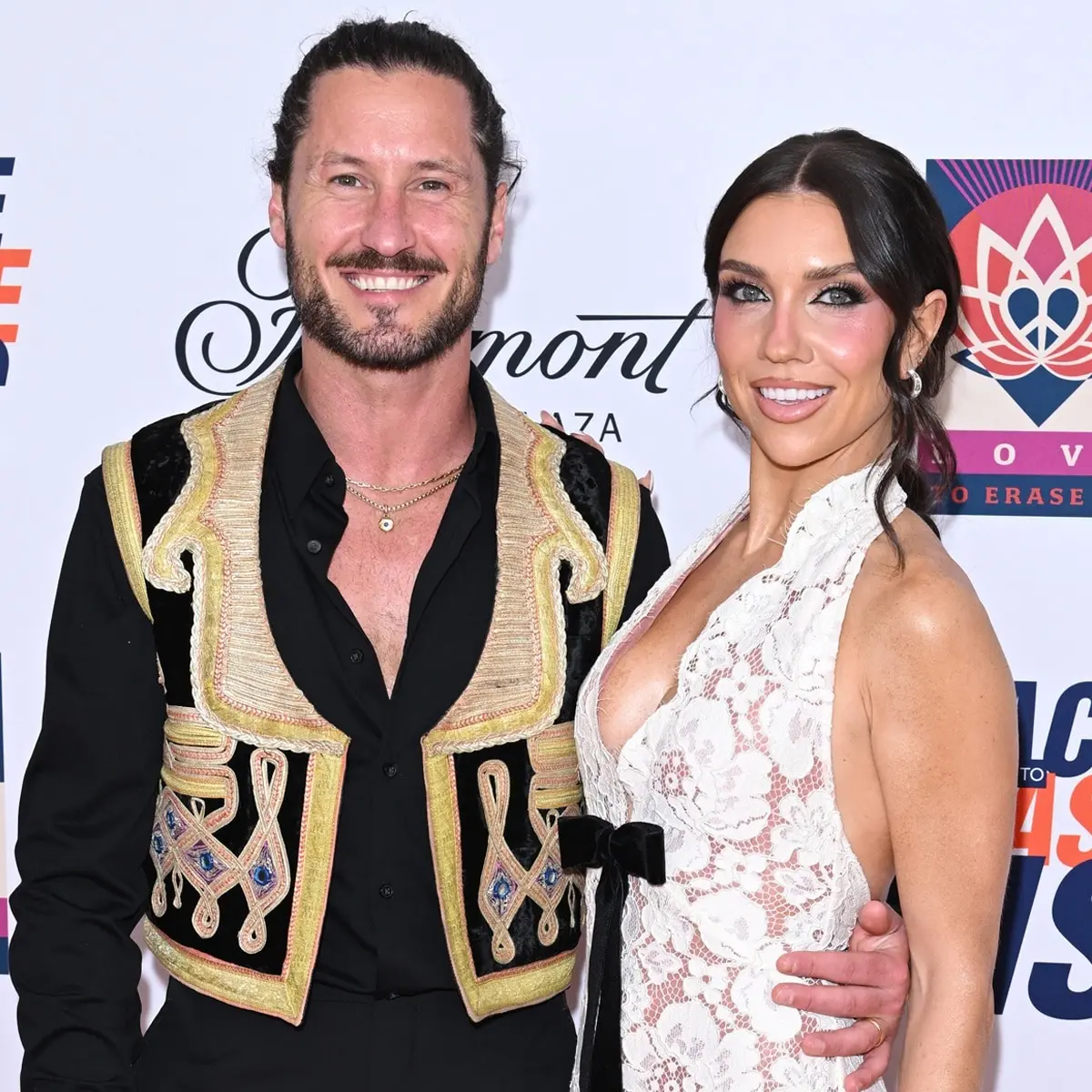
Demonstrating unwavering support for his wife amid the disappointment, Val Chmerkovskiy took to Instagram Stories on November 18 to share a lighthearted yet characteristically unfiltered tribute. Posting a photo of Johnson from a recent red carpet event, the 40-year-old professional dancer quipped:
"Keep the trophies. I get to watch this baddie brush her teeth naked every morning."
Chmerkovskiy, who shares 3-year-old son Rome with Johnson—his wife of seven years—accentuated the post with a playful drool emoji, offering a stark contrast of levity against the heavy drama unfolding within the competition.
Supporting Context & Metrics: The Anatomy of DWTS Culture
To fully understand the weight of Season 35’s turbulence, one must examine the rigorous structural, financial, and psychological realities that govern Dancing with the Stars.
The Toll of the "Trauma Bond"
Following their elimination, Johnson and Shum sat down with media outlets to unpack the unique psychological environment of the current season. Shum candidly admitted that the cast’s collective experience had been overwhelmingly chaotic, prompting Johnson to coin the term "trauma bond" to describe the relationships formed among the competitors.
"We’re a bit all trauma bonded," Johnson noted during their post-elimination interview, with Shum reinforcing the sentiment: "There’s a lot of trauma bond just because this year has been a little crazy. Social media is a little nuts. I hope they address that at a certain point, because I think there’s a good amount of bullying that doesn’t feel really good, and I think the rest of the cast feels it."
While Shum did not explicitly detail every source of the online hostility, the season had already been rattled by high-profile friction. Earlier in the run, Val Chmerkovskiy received a one-week suspension from the program following a controversial reaction to a critique delivered by judge Carrie Ann Inaba. Chmerkovskiy’s on-air response directly referenced Will Smith’s infamous 2022 Academy Awards slap, triggering a massive media firestorm and setting an intensely volatile tone for the remainder of the season.
Inside the DWTS Financial and Operational Machine
The immense pressure felt by the cast is compounded by the high-stakes, grueling nature of the production. Financial disclosures from former contestants and professional dancers shed light on the economic realities of surviving in the ballroom:
- Celebrity Compensation: According to reports by Variety and insider accounts shared on podcasts like Jason Tartick’s Trading Secrets, contestants generally receive a base payment of around $125,000 covering the rehearsal period and the first two weeks of live shows. Progressing further into the competition triggers incremental weekly bonuses, with veteran sources estimating maximum earnings reaching up to $295,000 to $400,000 for finalists.
- Professional Dancer Contracts: While exact figures remain tightly guarded, professional dancers are guaranteed baseline compensation tied to a specific number of weeks, regardless of early elimination. However, making it to the finale ensures that pros are paid for the entirety of the season alongside an additional performance bonus. Intriguingly, winning the Len Goodman Mirrorball Trophy does not yield a cash prize; champions walk away solely with the prestigious title and physical trophy.
- The Rigorous Rehearsal Schedule: Life as a DWTS professional or celebrity is all-consuming. Cast members routinely undergo four-hour daily rehearsals structured into rigid blocks (e.g., 9:00 a.m. to 1:00 p.m., or evening slots), followed by creative meetings, choreography reviews, and study sessions. A typical week leaves virtually no room for rest, transitioning seamlessly from Tuesday live shows through a relentless Wednesday-to-Sunday rehearsal cycle, concluding with Monday camera-blocking sessions.
- Behind-the-Scenes Mechanics: Pairings are orchestrated entirely by production based on height, build, personality, and compatibility, with neither pros nor celebrities receiving advance notice of their partners to capture authentic first-meet reactions on camera. Similarly, the costume department operates under breakneck pressure, generating custom-made garments for every routine within a grueling five-day turnaround window.
Official Statements & Cast Reflections
The emotional fallout of the semifinals prompted both Shum and Johnson to publicly reflect on their partnership, framing their journey not merely as a television contest, but as a transformative human experience.
During their final moments on stage, Shum addressed his partner with profound gratitude, praising her ability to insulate their creative process from external noise:
"I want to say you have been dealing with everything with grace, with the noise outside, and teaching me the things that I have only dreamed of to learn, and this has been one of the most beautiful experiences. So, thank you so much," Shum shared on air, offering a thinly veiled nod to the intense scrutiny and drama that had shadowed their journey.
Johnson, reflecting on her extensive tenure with the franchise—which includes previous victories with Adam Rippon (Season 26) and Joey Graziadei (Season 33)—emphasized that the true value of the show lies in the resilience forged during high-pressure environments rather than the final tally of trophies.
Future Outlook: The Season 35 Finale and Beyond
As Dancing with the Stars prepares to transition into its Season 35 finale, the events of the semifinals serve as a critical inflection point for the long-running franchise.
The outspoken remarks from Shum and Johnson regarding social media toxicity and online bullying have sparked wider industry conversations regarding the psychological safety of reality television participants. As social media platforms continue to amplify extreme fan reactions, networks and production houses face mounting pressure to implement more robust support systems for contestants and professional dancers alike.
For Jenna Johnson, Harry Shum Jr., and Val Chmerkovskiy, the immediate future involves stepping away from the intense choreography blocks to decompress from a turbulent autumn. Yet, as the ballroom doors close on Season 35, the legacy of this year’s "trauma-bonded" cast will undoubtedly leave a lasting impression on how participants navigate the intersection of high-artistry, public adoration, and digital hostility in modern entertainment.
