

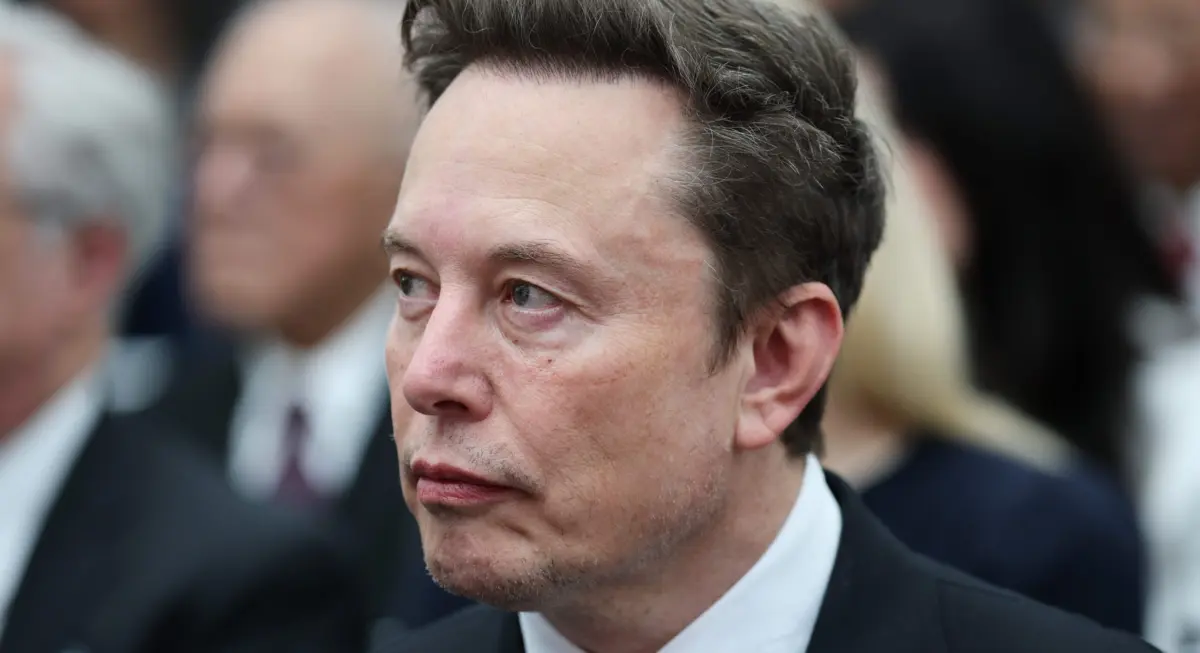
The modern convergence of Silicon Valley technology and Hollywood entertainment has entered a volatile and unprecedented new chapter. In a move that has sent shockwaves across both the financial markets and the entertainment industry, billionaire technologist Elon Musk has injected approximately $1 billion in equity into Skydance. This newly minted media powerhouse was officially forged following the monumental, highly scrutinized merger between Paramount Global and Warner Bros. Discovery—a transaction that closed on October 6, fundamentally reshaping the global cinematic and television ecosystem.
According to deep-dive reports published by Semafor and CNBC, Musk’s massive capital allocation forms a critical cornerstone of Skydance’s broader strategy to secure robust equity backing as it absorbs two historical Hollywood studios. The infusion of venture and tech-adjacent capital into a legacy media conglomerate highlights a growing industry trend: traditional studios are increasingly relying on Big Tech fortunes and billionaire benefactors to navigate the grueling transition from linear broadcasting to streaming dominance, artificial intelligence integration, and digital-first content creation.
Crucially, this transaction is far from a standard venture capital investment. It is the latest evolution in a decades-long alliance of generational wealth, technological ambition, and elite networking. Musk’s financial participation in Skydance is deeply tied to his long-standing personal and professional relationship with Larry Ellison, the billionaire co-founder of Oracle and father of Skydance co-CEO David Ellison. Larry Ellison has historically served as one of Musk’s most steadfast financial backers and defenders, famously committing $1 billion to Musk’s turbulent 2022 acquisition of social media platform X (formerly Twitter) and serving for years on the board of directors at Tesla.
The investment also validates prophetic warnings issued just days prior by veteran media mogul John Malone, who publicly predicted that Musk’s gravitational pull would inevitably draw him into the unfolding Skydance saga. As this $1 billion check clears, industry analysts are left scrambling to decipher what role, if any, the world’s most polarizing entrepreneur will play in the strategic direction of Hollywood’s newest leviathan.
Detailed Chronology: From Studio Mergers to Silicon Valley Capital Influx
To fully grasp the magnitude of Elon Musk’s $1 billion investment, it is necessary to examine the rapid succession of high-stakes corporate maneuvers that have defined the autumn of 2026. The timeline below traces the trajectory from traditional Hollywood consolidation to the ultimate convergence of tech capital and studio brass.
The Anatomy of the Paramount-Warner Bros. Discovery Merger (Early October 2026)
For months, Wall Street had been transfixed by rumors and regulatory hurdles surrounding the ultimate consolidation of two legacy studios. When the Paramount and Warner Bros. Discovery merger officially crossed the finish line on October 6, it created an unassailable behemoth possessing vast libraries of intellectual property, television networks, theatrical distribution networks, and streaming assets. However, the completion of the merger was only the beginning of the battle. The newly formed entity—operating under the Skydance banner—faced staggering debt loads, the expensive restructuring of legacy cable operations, and the existential need to scale its combined streaming infrastructure to compete with tech-native giants like Netflix and Amazon.
Skydance’s Quest for Private Equity and Strategic Capital (Mid-October 2026)
Immediately following the closing of the October 6 merger, co-CEOs David Ellison and his executive team initiated an aggressive fundraising campaign. Recognizing that traditional debt markets were volatile and public equity markets remained skeptical of legacy media turnarounds, Skydance turned its sights toward private equity, sovereign wealth funds, and ultra-high-net-worth individuals. The goal was simple: secure flexible, long-term equity partners who could provide not just capital, but strategic insulation as the studio executed its multi-year turnaround plan.
John Malone’s Industry Warning (Mid-October 2026)
Days before Musk’s involvement became public, media titan John Malone—often dubbed the "Cable Cowboy"—signaled to industry insiders that the newly formed Skydance could not operate in a vacuum insulated from Silicon Valley. Malone publicly theorized that Elon Musk’s expanding footprint in media, communications, and AI would inevitably intersect with the Ellison family’s entertainment ambitions. Malone’s prognostications were treated as industry gossip at the time, but they proved to be remarkably prescient.
The $1 Billion Revelation (October 22, 2026)
Reports surfaced simultaneously across major financial and investigative news outlets—most notably Semafor and CNBC—confirming that Elon Musk had finalized a roughly $1 billion equity investment in Skydance. The transaction positioned Musk not merely as an outside observer, but as a major stakeholder in the infrastructure of American entertainment. The timing of the leak coincided with Skydance’s ongoing secondary equity round, signaling to the market that the studio had successfully bridged the gap between traditional Hollywood moviemaking and Silicon Valley wealth.
Supporting Context & Metrics: The Ellison-Musk Nexus and the State of Media Finance
To understand why Elon Musk wrote a $1 billion check to Skydance, one must look beyond the balance sheets of Paramount and Warner Bros. Discovery and examine the intricate web of personal loyalty, ideological alignment, and financial engineering that connects Elon Musk to the Ellison family.
The Ellison-Musk Alliance: A History of Nine-Figure Backing
The relationship between Elon Musk and Larry Ellison is legendary in both Silicon Valley and Wall Street boardrooms. Larry Ellison, whose net worth places him consistently among the wealthiest individuals on the planet, has long viewed Musk as a generational disruptor worth backing unconditionally.
When Musk executed his chaotic, leveraged buyout of Twitter (now X) in 2022, Larry Ellison was among the first and most prominent members of the "shadow investor" group, wiring a cool $1 billion to help seal the transaction. Prior to that, Ellison took a deeply personal and public stance in support of Musk during Tesla’s darkest hours, purchasing significant equity and serving on Tesla’s board of directors from 2018 to 2022. Ellison famously remarked that he was close friends with Musk and that the media was often unfairly critical of the Tesla CEO’s eccentricities.
Given this unbreakable financial and personal bond, Musk’s investment in Skydance—led by Larry’s son, David Ellison—can be seen as an extension of generational trust. David Ellison has successfully transitioned from an action-movie producer and founder of Skydance Media into the chief executive of one of the largest entertainment operations in human history. By steering $1 billion into David Ellison’s enterprise, the elder Ellison’s closest ideological ally in tech is effectively cementing a financial bridge between the Oracle-Tesla axis and the newly minted Hollywood titan.
The Financial Realities of Post-Merger Hollywood
The combined entity of Paramount and Warner Bros. Discovery inherited formidable financial challenges. In the current economic climate, legacy media companies are suffering from a "double-whammy": the secular decline of the highly profitable cable television bundle and the bruising, capital-intensive war for streaming profitability.
| Metric / Factor | Pre-Merger Landscape | Post-Merger Skydance Reality |
|---|---|---|
| Content Library | Fragmented across Paramount, CBS, Warner Bros., and HBO | Consolidated under a single management umbrella |
| Debt Profile | Elevated debt across both legacy firms | Requires aggressive restructuring and equity cushion |
| Tech Integration | Minimal AI and algorithmic distribution integration | Heavy emphasis on data-driven content delivery |
| Capital Sources | Traditional debt markets, public stock offerings | Private equity, sovereign wealth, and Silicon Valley tech billionaires |
As the table illustrates, the capital injection from Musk—alongside other institutional investors—provides Skydance with the necessary runway to restructure without being entirely at the mercy of short-term quarterly earnings pressures or punitive high-interest debt refinancing.
Official Statements and Industry Reactions
While neither Elon Musk nor David Ellison has released a granular, dedicated manifesto detailing the exact operational parameters of the $1 billion investment, reactions from industry insiders, financial analysts, and corporate representatives have painted a vivid picture of a shifting paradigm.
The Silicon Valley Perspective
Representatives close to Musk have emphasized that the investment is viewed through a lens of strategic asset acquisition and entertainment-tech convergence. Musk, who has increasingly focused his attention on artificial intelligence (via xAI), autonomous transit, and satellite communications (Starlink), has long recognized the value of owning foundational media IP. While critics have questioned whether Musk’s management style—marked by rapid, disruptive restructuring—will bleed into Hollywood, supporters argue that the infusion of a tech-first mindset is the only way legacy studios can survive the next decade of digital disruption.
Hollywood’s Internal Anxiety and Optimism
Within the talent agencies, guild halls, and executive suites of Los Angeles, the reaction to Musk’s financial footprint has been a mixture of apprehension and pragmatic relief.
On one hand, Hollywood’s creative class—historically progressive and culturally sensitive—has frequently clashed with Musk’s public persona, political commentary, and his leadership of X. The prospect of Musk holding influence, however indirect, over historic cultural institutions like Warner Bros., HBO, and Paramount Pictures has caused anxiety among writers, directors, and actors.
On the other hand, the financial reality remains absolute: Hollywood needs capital. The collapse of traditional box office revenues to pre-pandemic baselines, coupled with the cooling of Wall Street’s appetite for unprofitable streaming subscribers, has left studios desperate for liquidity.
"You can love or hate the political baggage that comes with modern tech billionaires, but when a $1 billion equity check clears during a post-merger liquidity crunch, studio executives are not going to look the gift horse in the mouth," noted a prominent entertainment restructuring attorney who spoke on the condition of anonymity. "David Ellison is playing chess. He is locking in allies who have infinite balance sheets."
Future Outlook: What Musk’s Stake Means for the Future of Entertainment
As the dust settles on the initial announcements, industry analysts are projecting several long-term implications stemming from Elon Musk’s $1 billion investment in Skydance.
1. The Acceleration of AI and Tech Integration in Filmmaking
Skydance has historically prided itself on being a digitally forward studio, heavily utilizing visual effects technology and data analytics in its production pipeline. With Musk now financially tethered to the enterprise, speculation is mounting regarding potential synergies between Skydance and Musk’s artificial intelligence venture, xAI. Could generative AI tools developed by Musk’s team soon assist in script analysis, background generation, or visual effects rendering within the Skydance fold? Industry experts suggest that technological crossover is not just possible, but probable.
2. Strategic Realignment of Streaming and Distribution
As Skydance works to rationalize its combined streaming services—balancing the legacies of Paramount+ and Max (formerly HBO Max)—having access to tech-native strategic advisors could radically alter how content is delivered. Musk’s expertise in massive, global-scale data infrastructure (honed through Starlink, Tesla, and X) could inform how Skydance builds out low-latency, high-bandwidth content delivery networks, bypassing traditional telecom bottlenecks.
3. Geopolitical and Cultural Flashpoints
Perhaps the most unpredictable variable is the cultural fallout. Media conglomerates rely heavily on global brand safety, advertising dollars, and international box office receipts—particularly in markets like China and Western Europe. Musk’s status as a lightning rod for global controversy means that Skydance will inevitably face heightened scrutiny from activists, advertisers, and foreign regulators. Managing this brand friction will be one of the defining challenges for David Ellison’s leadership team in the years ahead.
Conclusion
The Skydance merger saga was already set to be one of the most significant business stories of the decade. By injecting $1 billion into the newly formed studio, Elon Musk has irrevocably tied his financial and strategic fortune to the fate of Hollywood’s most ambitious consolidation experiment. Whether this alliance of Silicon Valley tech royalty and traditional movie studio pedigree ushers in a golden age of digital entertainment or a turbulent era of corporate culture clashes remains to be seen. What is certain, however, is that the curtain has only just risen on Act Two.