

Even as the political spotlight dominated global headlines during a pivotal midterm election week, the corporate corridors of power saw an equally fierce restructuring. The executive suite of the global marketing industry underwent a dramatic realignment, proving that brand strategy, consumer engagement, and digital transformation wait for no election cycle.
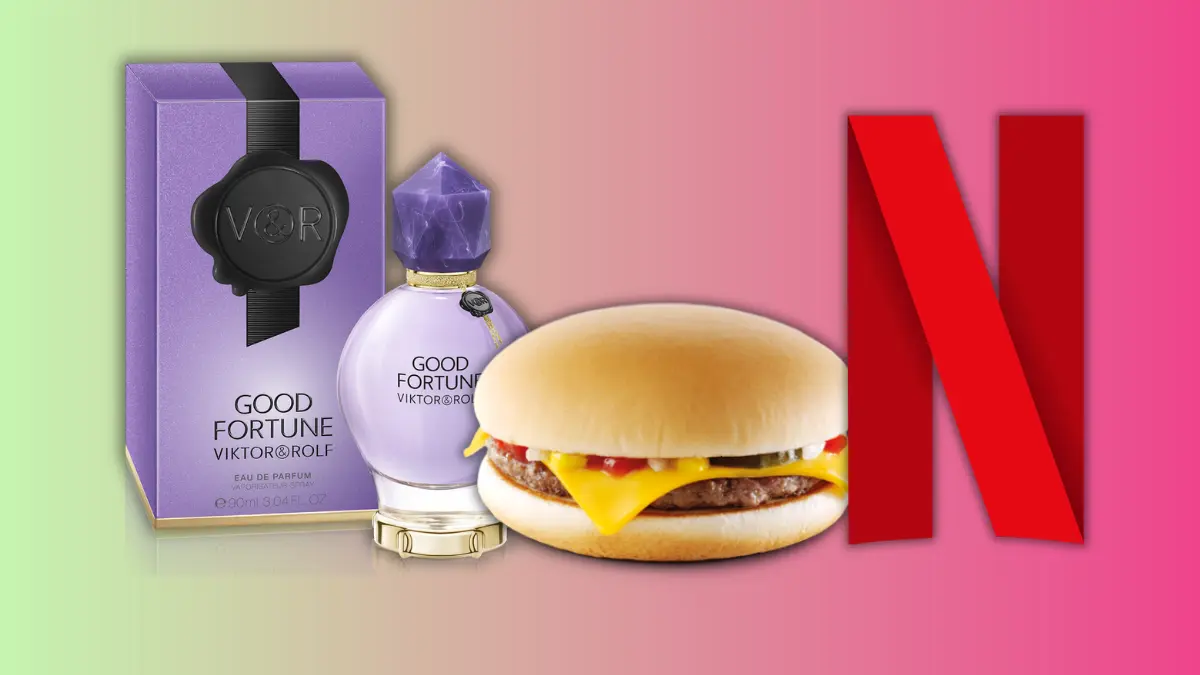
For the week ending November 6, major multinational conglomerates, quick-service restaurant giants, and streaming titans announced sweeping leadership shuffles. Chief among these developments is a structural earthquake at fast-food behemoth McDonald’s, which is splitting its top U.S. marketing post following the departure of long-standing veteran Alyssa Buetikofer. Simultaneously, industry titans such as L’Oréal Luxe and entertainment pioneer Netflix have initiated their own high-stakes executive rotations, signaling a broader recalibration of how global brands intend to capture consumer attention in an increasingly fragmented digital economy.
This report delivers a comprehensive investigative breakdown of the week’s most critical marketing personnel movements, analyzing the structural changes behind the headlines, the strategic implications for consumer brands, and the broader macroeconomic forces compelling companies to redesign their marketing hierarchies.
Detailed Chronology: Week of November 6 Leadership Shifts
The past week’s executive shuffle was characterized by a mix of unexpected departures, strategic splits of traditional roles, and rapid internal promotions designed to maintain corporate continuity. Below is the chronological tracking of the most notable moves across the global marketing landscape.
1. McDonald’s Deconstructs the Traditional U.S. CMO Model
In the most high-profile move of the week, McDonald’s announced that it is officially splitting its top U.S. marketing responsibilities following the departure of U.S. Chief Marketing Officer Alyssa Buetikofer.
Buetikofer’s exit marks the end of an influential 15-year tenure with the Golden Arches, during which she steered the brand through monumental shifts in digital ordering, loyalty programs, and culturally resonant advertising campaigns. Rather than immediately naming a direct successor to the unified CMO position, McDonald’s leadership opted for a dual-track interim structure to separate creative vision from commercial execution:
- Morgan Flatley, the company’s Global Chief Marketing Officer, will step in to assume the additional responsibilities of interim U.S. Chief Creative Officer. This move ensures that the brand’s global creative equity remains tightly aligned with its domestic storytelling.
- Charlie Newberger has been elevated to interim Senior Vice President and U.S. Chief Marketing and Commercial Officer. Newberger will oversee the day-to-day commercial operations, media, and promotional pipelines while the corporation conducts a rigorous national and international search for a permanent U.S. marketing chief.
This structural unbundling reflects a growing trend among enterprise-level brands: recognizing that the modern CMO role has grown too vast for a single individual to manage both high-level brand storytelling and complex, data-driven commercial transactions.
2. L’Oréal Luxe Restructures for Omnichannel Dominance
In the luxury beauty sector, L’Oréal Luxe rolled out a targeted reorganization of its marketing and brand management teams. As premium beauty consumers increasingly shift between high-end department store experiences, direct-to-consumer e-commerce, and social commerce platforms like TikTok Shop, L’Oréal Luxe has moved to realign its executive oversight.
While specific promotions within the Luxe division underscore the company’s commitment to digital-first storytelling, the overarching strategy focuses on empowering regional marketing directors to respond faster to localized beauty trends. The restructure aims to bridge the gap between legacy prestige marketing and hyper-personalized digital performance marketing.
3. Netflix Refines Content-to-Commerce Marketing Strategy
Streaming pioneer Netflix also adjusted its marketing ranks this week, continuing its ongoing evolution from a pure subscription-based streaming utility into a multifaceted entertainment and advertising ecosystem. With the maturation of its ad-supported tier and expanding push into live events, gaming, and consumer products, Netflix’s marketing leadership has had to pivot.
The latest adjustments see digital marketing and data analytics teams taking a more prominent role alongside traditional entertainment publicity, ensuring that subscriber acquisition and retention strategies remain tightly coupled with real-time platform engagement data.
Supporting Context & Metrics: Why the CMO Role is Fragmenting
To fully understand the weight of these executive moves—particularly the decision by McDonald’s to split its top U.S. marketing role—one must examine the systemic pressures facing modern marketing leaders.
The Shrinking Tenure of the Modern CMO
According to data from Spencer Stuart and various executive search firms, the average tenure of a Chief Marketing Officer has hovered around 3.5 to 4 years—significantly shorter than the tenures of CEOs and CFOs. The primary driver of this high turnover is the near-impossible breadth of the modern CMO mandate.
Today’s marketing chief is expected to be:

- A Creative Visionary: Crafting culturally relevant narratives that build long-term brand equity.
- A Data Scientist: Managing complex attribution models, first-party data strategies, and programmatic media investments.
- A Technologist: Overseeing customer relationship management (CRM) platforms, AI-driven personalization tools, and ecommerce infrastructure.
- A Commercial Strategist: Directly impacting revenue growth, retail partnerships, and profit margins.
When a seasoned leader like Alyssa Buetikofer departs after 15 years, corporations often find that finding a single replacement possessing elite capabilities across all four pillars is extraordinarily difficult. Splitting the role—as McDonald’s has done between creative oversight (Flatley) and commercial execution (Newberger)—is becoming a pragmatic blueprint for corporate survival.
The Macroeconomic Environment
The marketing shuffles of early November 2026 are also taking place against a backdrop of macroeconomic uncertainty. Inflationary pressures, fluctuating consumer confidence, and tightening digital privacy regulations have forced brands to scrutinize every marketing dollar.
CMOs are no longer rewarded merely for top-line brand awareness; they are aggressively measured on return on ad spend (ROAS), customer lifetime value (LTV), and operational efficiency. Consequently, corporate boards are restructuring marketing departments to ensure that creative ambition is strictly tethered to measurable commercial outcomes.
Official Statements and Industry Reaction
The corporate communications and trade circles have reacted swiftly to the week’s announcements, offering a window into how these leadership transitions will shape market dynamics.
Regarding the leadership transition at McDonald’s, corporate communications released brief statements emphasizing continuity and operational excellence. The decision to tap Global CMO Morgan Flatley for interim creative duties was praised by industry analysts as a stabilizing force. Flatley, widely credited with orchestrating some of McDonald’s most successful cultural collaborations (such as the famous celebrity meal partnerships), is uniquely positioned to maintain creative momentum.
Industry analysts from leading marketing trade publications noted:
"The splitting of the U.S. CMO role at a titan like McDonald’s is a watershed moment. It signals that the era of the ‘unicorn CMO’—one person who can master big-budget television, complex digital performance marketing, data privacy compliance, and commercial supply chain integration—is coming to an end. Brands are learning that dividing and conquering is the only way to scale in a hyper-complex media ecosystem."
Meanwhile, recruitment experts specializing in executive search pointed out that the volume of executive movement during an election week highlights the resilience of the corporate sector. Brands cannot afford to pause their strategic evolution simply because the geopolitical or macro-news cycle is volatile.
Future Outlook: What Lies Ahead for Global Marketing Leadership
As we look toward the close of 2026 and into the strategic planning horizon for 2027, several clear trends emerge from this week’s executive reshuffling:
1. The Rise of the Co-Lead and Interim Executive Structure
Expect to see more major corporations follow McDonald’s lead by unbundling legacy executive titles. As responsibilities balloon, boards will increasingly rely on specialized co-leads—pairing a Chief Brand/Creative Officer with a Chief Commercial/Growth Officer—to manage the competing demands of emotional brand-building and hard-nosed digital performance.
2. Increased Scrutiny on Digital and Retail Media Networks
With retail media networks (RMNs) becoming a dominant battleground for advertising dollars, incoming marketing leaders will be judged heavily on their ability to integrate brand marketing with closed-loop retail data. Executives who lack fluency in data architecture and commerce integrations will find it increasingly difficult to secure—or retain—top-tier CMO positions.
3. Agility as a Core Competency
The speed at which L’Oréal Luxe, Netflix, and McDonald’s executed their respective shifts demonstrates that modern corporate leadership must be hyper-agile. Long transition periods are shrinking. As consumer behavior shifts in real time due to technological innovations like generative AI, spatial computing, and evolving social commerce channels, the executive suite must adapt with equal velocity.
Conclusion
The marketing leadership shuffles of the week ending November 6, 2026, are much more than routine corporate musical chairs. They represent a fundamental structural evolution in how global enterprises organize themselves to capture consumer attention, drive commercial growth, and navigate an unforgiving digital landscape. Whether through McDonald’s calculated division of creative and commercial duties or the strategic realignments at L’Oréal Luxe and Netflix, the message to the industry is clear: adaptability, specialization, and structural innovation are the ultimate currencies of modern marketing leadership.
