

Executive Overview
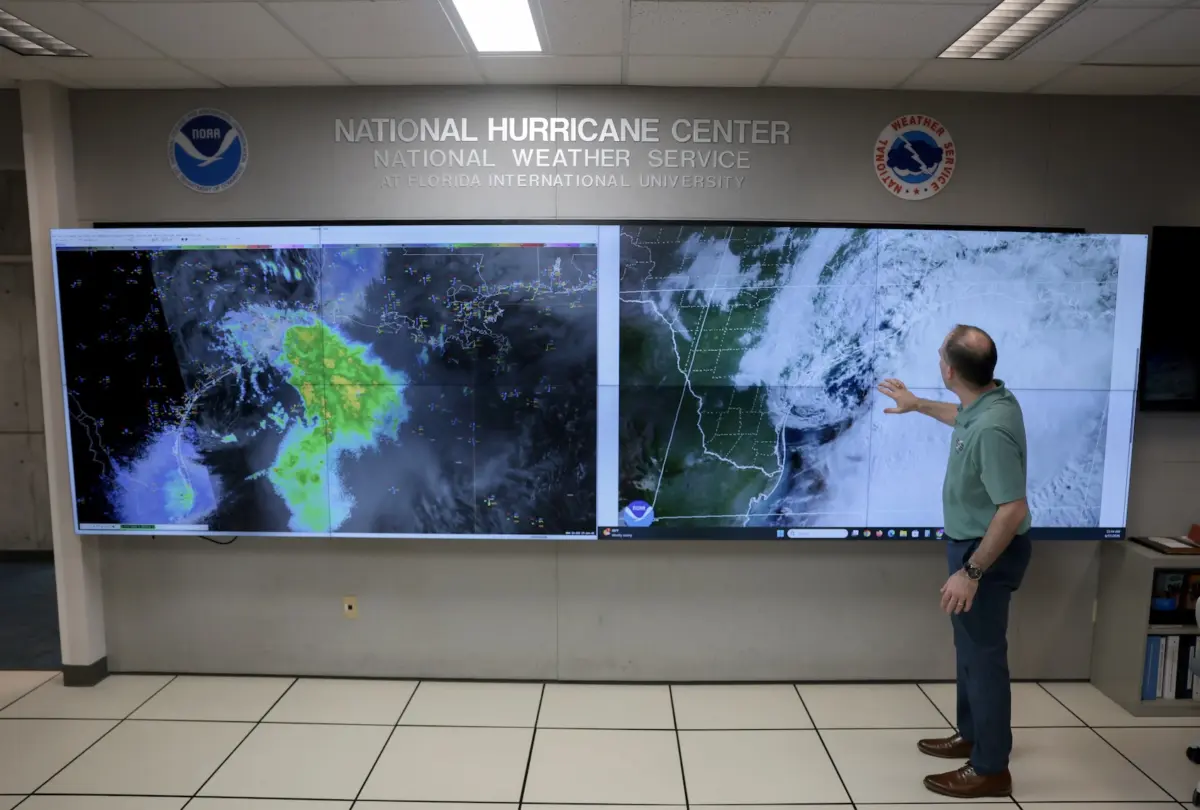
As the 2026 Atlantic hurricane season pushes past its midpoint, storm trackers at the National Hurricane Center in Miami are keeping a vigilant eye on volatile weather systems brewing off the western coast of Africa near Cape Verde. Thus far, the United States has experienced four named tropical storms—Arthur, Bertha, Cristobal, and now Dolly. While none of the earliest systems strengthened into major hurricanes, they still managed to inflict notable property damage across parts of Florida and Texas.
Yet, it is the arrival of Tropical Storm Dolly that has captured the collective imagination of social media users, sparking a viral wave of speculation over a darkly ironic possibility: Could a storm named Dolly strengthen, track toward Palm Beach, and level Mar-a-Lago?
While meteorologists stress that the statistical odds of such a direct strike are exceedingly low, the cultural fascination highlights a broader, deeper public sentiment. It points to a growing appetite for cosmic poetic justice in an era defined by extreme climate anomalies. Beneath the viral humor, however, lies an urgent and sobering reality. Driven by record-breaking oceanic temperatures and unchecked fossil fuel emissions, the planet is experiencing an unprecedented convergence of climate extremes. From the historic devastation wrought by Hurricane Lala in the Pacific to the unrelenting heatwaves pushing global temperatures to historic highs, 2026 is rapidly cementing its status as a watershed year for the climate crisis.
Detailed Chronology
The 2026 Atlantic and Pacific hurricane seasons have unfolded against a backdrop of escalating global temperatures and shifting atmospheric dynamics.
- Early June 2026: The Atlantic season registers its earliest formative movements. Tropical Storms Arthur, Bertha, and Cristobal form in rapid succession. Though failing to reach full hurricane status, these systems deliver severe coastal impacts, causing localized flooding and infrastructure strain in Florida and Texas.
- Early August 2026: In the Pacific, an unusually strong El Niño pattern precipitates rare and catastrophic activity. Hurricane Lala sweeps past Hawaii, delivering a historic blow to the Big Island. Packing record wind gusts of 140 miles per hour on the peak of Mauna Kea, Lala drops the equivalent of nearly two million Olympic-sized pools of water over a two-day period, destroying over 100 homes and claiming three lives. It marks the first time a hurricane has directly impacted the Big Island in 155 years.
- August 25, 2026: Beloved singer-songwriter, actress, and philanthropist Dolly Parton passes away at the age of 80, prompting an outpouring of national grief and retrospection regarding her legacy and her complex cultural positioning away from partisan politics.
- August 27, 2026: Global sea surface temperatures officially shatter previous records set in 2024, according to data from the European Union’s Copernicus Climate Change Service, keeping 2026 on track to become the hottest year in recorded human history.
- August 28, 2026: Tropical Storm Dolly is officially named by the World Meteorological Organization (WMO). The coincidence of the name—arriving just days after the passing of Dolly Parton and sharing a moniker with a storm that could theoretically track toward South Florida—ignites widespread internet commentary and a flurry of hypothetical scenarios regarding Mar-a-Lago.
Supporting Context & Metrics
The convergence of cultural touchstones and severe meteorological events provides a unique lens through which to examine modern public discourse and climate reality.
The Nomenclature of Storms
The naming of tropical systems is managed by the World Meteorological Organization (WMO), which utilizes pre-determined lists rotated every six years. Names are permanently retired only when a storm causes catastrophic and deadly destruction—such as Hurricane Katrina—to avoid public trauma.
Historically, the practice of naming storms has evolved significantly. Early meteorological efforts utilized numerical codes, Catholic saints, politicians, and even figures from Polynesian mythology. The U.S. military briefly experimented with alphabet-based code names in the mid-20th century—notoriously producing "Hurricane Easy" in 1950, a system indirectly responsible for two fatalities. Today’s human-style naming conventions, while standard, inevitably generate surreal cultural overlaps when major public figures pass away or when storms threaten high-profile geopolitical landmarks.
Climate Metrics and Fossil Fuel Emissions
The backdrop to the 2026 hurricane season is defined by stark environmental metrics:
- Global Temperatures: Scientific projections indicate that 2026 will surpass all prior benchmarks to become the hottest year in recorded human history.
- Ocean Heat: Daily global sea surface temperatures have broken historical records, fueling the atmospheric moisture retention necessary to supercharge tropical cyclones.
- Fossil Fuel Realities: Despite the rapid expansion of renewable energy markets, major oil and gas conglomerates continue to post tens of billions in profits amid ongoing geopolitical conflicts and climate disasters, maintaining unprecedented rates of fossil fuel extraction and carbon emissions.
Official Statements & Expert Analysis
Federal meteorologists and climate scientists have issued repeated warnings regarding the atypical behavior of tropical systems during the current cycle.
Discussing the Pacific basin anomalies earlier this summer, federal meteorologists noted via updates from the National Weather Service:
"Thanks to El Niño, the Pacific Ocean faces a higher than normal risk of hurricanes this year — increasing the likelihood that a major storm will break from its predictable path and strike California, Mexico or Hawaii."
This warning proved prophetic with the unprecedented strike of Hurricane Lala in Hawaii. Senior hurricane specialists tracking Atlantic formations have similarly emphasized that while individual storm paths cannot be predicted weeks in advance, the baseline thermodynamic energy available to fuel these storms is exceptionally high.
Regarding the public’s fascination with Tropical Storm Dolly and its potential trajectory toward Palm Beach, analysts note that no empirical meteorological evidence suggests an imminent strike on Mar-a-Lago. However, sociologists and cultural commentators view the viral commentary not merely as malicious schadenfreude, but as an expression of systemic fatigue. For many citizens navigating the compounding realities of climate deregulation and political polarization, the concept of poetic justice serves as a psychological coping mechanism against systemic impunity.
Future Outlook
As the 2026 Atlantic hurricane season progresses through upcoming designations like Edouard, Fay, and Gonzalo, the broader outlook remains deeply concerning. The ingredients for extreme weather disasters—prolonged droughts, catastrophic inland flooding, and intensified coastal hurricanes—are firmly entrenched by rising global emissions and record-warm oceans.
The freak weather events observed in both the Atlantic and Pacific basins this year signal that historical baselines are no longer reliable predictors of risk. Whether a major storm ultimately makes landfall in Palm Beach, Pittsburgh, or across international coastlines, the structural vulnerabilities of human infrastructure remain exposed to an unyielding climate reality.
Ultimately, the viral discourse surrounding Tropical Storm Dolly underscores a deeper public desire for accountability—whether directed at political figures or the corporate entities driving the climate crisis. To borrow a recurring critique from environmental activists and writers, perhaps the most honest step forward in climate communication would be to modernize storm naming conventions entirely, assigning major hurricanes after the fossil fuel corporations whose continued emissions underwrite global instability. Until then, as ocean temperatures climb and extreme weather accelerates, communities worldwide must brace for a new normal where the only certainty is greater volatility.