Unless you have spent the last three decades sequestered in a remote subterranean vault, the cultural footprint of Grand Theft Auto is impossible to ignore. What began humbly in 1997 as a top-down, sprite-based PC and PlayStation title quickly morphed into an unprecedented pop-culture behemoth. Today, Rockstar Games’ flagship franchise stands as arguably the most recognizable and lucrative entertainment property in human history.
Its latest monumental chapter, Grand Theft Auto VI, shattered every conceivable commercial ceiling upon its release. Generating a staggering $3.79 billion in day-one sales alone, the title outpaced the highest-grossing film and gaming debuts of all time, pulling in revenue comparable to the annual Gross Domestic Product (GDP) of a developing sovereign nation.
Yet, the true legacy of Grand Theft Auto extends far beyond cold, hard capital. The open-world crime saga fundamentally reshaped the architecture of interactive entertainment. It pioneered modern open-world game design, established a cinematic vocabulary rooted in gritty, neo-noir Hollywood aesthetics, and introduced a sandbox ethos of player choice that would inspire thousands of imitators across every genre imaginable.
Simultaneously, the franchise became a lightning rod for cultural debate. For years, politicians, media watchdogs, and moral crusaders have held up Grand Theft Auto as a primary symptom of societal decay—a hedonistic simulator designed to let players indulge their darkest, most anti-social impulses. However, beneath the controversial headlines, high-speed car chases, and satirical violence lies a sophisticated, razor-sharp critique of modern consumer capitalism, institutional hypocrisy, and the hollow promise of the American Dream.
To honor the monumental release of GTA VI, this comprehensive retrospective examines the entire franchise—tracing its trajectory from a crude Nineties-era novelty to an era-defining cinematic masterpiece, ranked from worst to best.
Detailed Chronology: Every Era of Grand Theft Auto Ranked
The evolution of Grand Theft Auto is, in many ways, the history of modern video game development itself. As hardware capabilities expanded from 2D pixel grids to fully rendered photorealistic environments, Rockstar Games refined its satirical lens, evolving from shock-value arcade titles into sprawling, prestige-driven crime dramas.
15. Grand Theft Auto Advance (2004)
Originally conceived as a port of Grand Theft Auto III for Nintendo’s handheld device, hardware limitations forced developer Digital Eclipse to pivot to a top-down perspective reminiscent of the 1990s originals. Unfortunately, the transition failed to capture the charm of the classics or the technological marvel of the 3D era. Clunky controls, muddy visuals, and repetitive mission structures made navigating Liberty City a chore rather than a thrill. It remains a historical footnote for completists only.
14. Grand Theft Auto (1997)
The genesis of a multi-billion-dollar empire. DMA Design’s original release was a gritty, chaotic top-down shooter where players stole cars, evaded police, and carried out hits for various mob syndicates. While revolutionary for its time—offering unprecedented freedom of movement within a virtual city—the game’s controls were notoriously slippery, and its missions often devolved into trial-and-error frustration. Nevertheless, the DNA of the franchise—the eclectic radio stations, the dark humor, and the thrill of absolute lawlessness—was planted right here.
13. Grand Theft Auto 2 (1999)
Set in the dystopian near-future of "Anywhere, USA," GTA 2 refined the top-down formula by introducing a dynamic respect system among rival gangs (the Zaibatsu, the Yakuza, and the Loonies). Players could manipulate gang alliances to unlock unique missions. While the retro-futuristic aesthetic and visual upgrades (including dynamic lighting effects on the PC version) gave it distinct flavor, the series was rapidly outgrowing its 2D roots.
12. Grand Theft Auto: London 1969 (1999)
Released as an expansion pack for the original game, London 1969 holds the distinction of being the first game in the series to step outside fictional American metropolises and utilize real-world locations. Swapping hot-wire culture for swinging sixties British slang, minicabs, and historical landmarks provided a fun stylistic diversion, but it ultimately offered nothing new mechanically.
11. Grand Theft Auto: Chinatown Wars (2009)
A technical marvel for the Nintendo DS (later ported to PlayStation Portable and mobile devices), Chinatown Wars brought the top-down perspective back with a brilliant, cel-shaded art style. Eschewing the gritty realism of its console contemporaries, it leaned into arcade sensibilities with touchscreen-based minigames—ranging from assembling sniper rifles to hot-wiring cars and dealing narcotics on a black-market supply-and-demand economy. It is arguably the best iteration of the franchise’s classic 2D formula.
10. Grand Theft Auto: Liberty City Stories (2005)
Designed to prove that fully realized 3D open worlds could fit onto a pocket-sized PlayStation Portable, Liberty City Stories successfully transported players back to 1998 Liberty City. While it impressive-for-its-time technical achievement featured solid voice acting and a competent mafia narrative starring Toni Cipriani, it played it remarkably safe, offering little innovation beyond hardware optimization.
9. Grand Theft Auto: Vice City Stories (2006)
Building upon the technical foundations of its predecessor, Vice City Stories returned to the neon-drenched, synth-heavy 1980s. Starring Victor Vance, the game introduced a rudimentary empire-building mechanic that allowed players to seize turf and establish legitimate (and illegitimate) businesses across the map. While occasionally hindered by hardware constraints, the soundtrack and atmosphere kept players hooked.
8. Grand Theft Auto IV: Episodes from Liberty City (The Lost and Damned & The Ballad of Gay Tony) (2009)
These twin expansions elevated GTA IV’s narrative framework by viewing Liberty City through vastly different cultural lenses—one exploring the gritty, loyalty-bound brotherhood of an outlaw motorcycle club, and the other diving into the decadent, high-society VIP nightlife of bisexual protagonist Luis Lopez. These expansions proved that Rockstar could tell deeply intertwined, multi-perspective stories across different strata of society.
7. Grand Theft Auto III (2001)
A seismic cultural event that permanently altered the trajectory of the medium. The transition to fully realized 3D polygons transformed GTA III from a niche cult classic into a mainstream phenomenon. Navigating the murky, fog-drenched streets of Liberty City as the silent protagonist Claude, players experienced a level of spatial freedom and emergent gameplay that had never been realized before. It birthed the modern open-world genre, inspiring an entire generation of "GTA clones" while cementing video games as a dominant, adult-oriented artistic medium.
6. Grand Theft Auto: San Andreas (2004)
An astonishing leap in sheer scope and ambition. Set in the early 1990s across the sprawling state of San Andreas—comprising three distinct cities modeled after Los Angeles, San Francisco, and Las Vegas—the game introduced deep RPG elements. Players could customize Carl "CJ" Johnson’s physical appearance, work out at the gym, gain weight by eating fast food, maintain gang territories, and pilot fixed-wing aircraft across vast countryside vistas. Despite its technical seams showing even at launch, its cultural impact, unforgettable characters (like Officer Tenpenny, brilliantly voiced by Samuel L. Jackson), and hip-hop-infused soundtrack made it an undisputed classic.
5. Grand Theft Auto (Series Overall – Contextual Placement)
(Note: As we enter the upper tier of the franchise, individual masterpieces dominate the conversation, representing the pinnacle of narrative design, technical innovation, and satirical world-building).
4. Grand Theft Auto IV (2008)
When Rockstar released GTA IV, the gaming world was stunned by its grim, unflinching deconstruction of the American Dream. Through the eyes of Niko Bellic, an Eastern European immigrant haunted by the horrors of the Yugoslav Wars, Liberty City was rendered not as a playground of unbridled fun, but as a cold, cynical metropolis defined by grit, gray concrete, and institutional decay. Powered by the proprietary Euphoria physics engine, pedestrian AI, vehicle handling, and gunplay felt heavier and more consequential than anything that came before it, anchoring a poignant, tragic immigrant story.
3. Grand Theft Auto: Vice City (2002)
More than just a video game, Vice City was an immersive, highly concentrated time capsule of 1980s pop culture. Heavily inspired by Miami Vice and Scarface, the game introduced Ray Liotta as Tommy Vercetti, a charismatic mobster carving out a criminal empire in a pastel-colored paradise of neon lights, palm trees, and synth-pop. Its licensed soundtrack remains arguably the greatest collection of music ever assembled for interactive entertainment, flawlessly capturing the excess, cocaine-fueled paranoia, and vibrant hedonism of the decade.
2. Grand Theft Auto V (2013)
A technical masterclass that managed to push aging seventh-generation console hardware (PlayStation 3 and Xbox 360) past their absolute limits, GTA V refined every mechanic Rockstar had spent two decades perfecting. Set in the sun-drenched satire of Southern California known as Los Santos, the game’s revolutionary three-protagonist structure—switching seamlessly between career criminal Michael, street hustler Franklin, and psychopathic wildcard Trevor—allowed for tightly scripted heist missions interwoven with a biting critique of modern surveillance culture, economic inequality, and digital narcissism. Its longevity, bolstered by the ongoing phenomenon of GTA Online, speaks volumes about its foundational design.
1. Grand Theft Auto VI (Current Era)
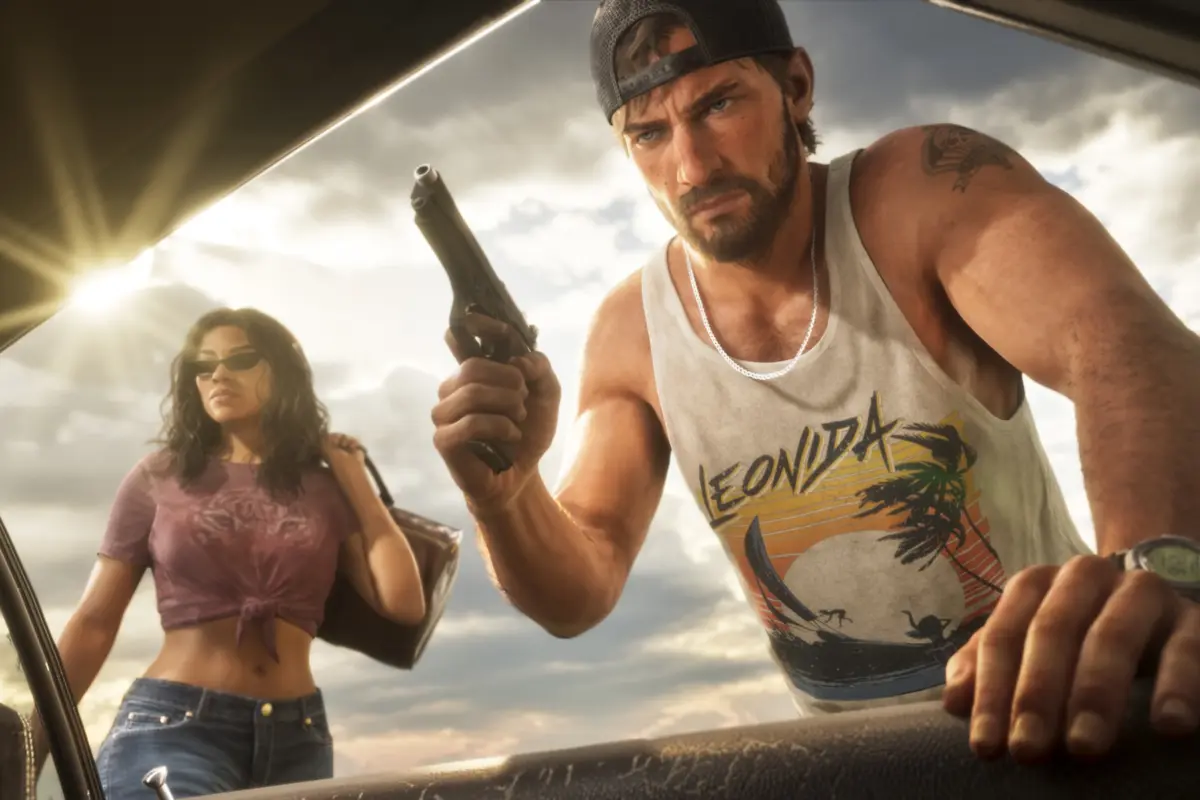
Crowned as the undisputed pinnacle of the franchise, Grand Theft Auto VI represents the absolute zenith of interactive storytelling, technical wizardry, and biting cultural commentary. Returning players to a breathtakingly realized, hyper-dense modern Leonida (Rockstar’s fictionalized Florida), the title leverages cutting-edge hardware to render a living, breathing digital ecosystem populated by astonishingly realistic physics, unprecedented AI behavior, and a cinematic Bonnie-and-Clyde narrative centered on protagonists Lucia and Jason. Surpassing all expectations, GTA VI proves that Rockstar Games remains unmatched in its ability to hold up a mirror to society while delivering the most immersive entertainment experience on Earth.
Supporting Context & Metrics: The Economic and Cultural Footprint
To fully understand Grand Theft Auto, one must examine the staggering macroeconomic indicators surrounding the property. The entertainment industry has historically measured success in box office receipts and album sales, but modern interactive blockbusters have utterly redefined these metrics.
+--------------------------------------------------------------------------+
|                        GTA VI LAUNCH COMPARISON                          |
|--------------------------------------------------------------------------|
| GTA VI Day-One Revenue:   [████████████████████] $3.79 Billion           |
| Highest-Grossing Movie:   [████████████        ] ~$2.8 Billion (Lifetime)|
| Average AAA Game Launch:  [███                 ] ~$200–$400 Million      |
+--------------------------------------------------------------------------+
When Grand Theft Auto VI secured $3.79 billion in gross revenue within its first 24 hours on the market, it achieved a milestone previously thought impossible. For context, this single-day haul exceeded the lifetime global box office earnings of numerous cinematic blockbusters. It generates the economic output of a minor nation state simply by inviting millions of players to log in, steal cars, and listen to satirical radio advertisements.
Yet, this commercial dominance has consistently placed the franchise at the center of fierce sociopolitical firestorms. For decades, moral guardians, politicians from across the political spectrum, and media commentators have targeted the series. It has been blamed for everything from youth violence to moral degradation.
However, cultural historians and literary critics argue that critics often mistake the messenger for the message. Grand Theft Auto does not glorify crime; rather, it weaponizes satire against a society that worships wealth, notoriety, and instant gratification. The games function as a hyper-exaggerated, Grand Guignol mirror reflecting the worst impulses of American consumer capitalism. Greed, hypocrisy, and systemic corruption are laid bare, wrapped in comedy so dark it frequently induces whiplash. In the world of GTA, the American Dream is not something achieved through honest labor—it is a commodity to be seized by force, exploitation, and absolute cynicism.
Official Statements and Industry Perspectives
The cultural weight of the franchise has frequently prompted reflections from the creative minds behind its development, as well as broader cultural institutions analyzing its impact.
Sam Houser, co-founder and president of Rockstar Games, addressed the philosophy driving the franchise ahead of the studio’s recent milestones:
"Our goal has always been to build living, breathing worlds that reflect the absurdity, complexity, and sheer chaos of modern life. We don’t set out to preach; we set out to provoke thought, to entertain, and to make players question the absurdities of the culture around them through hyper-stylized satire. The technology changes, the fidelity improves, but the core desire to tell compelling stories within an untamed sandbox remains our North Star."
Industry analysts point to the unique longevity of the franchise as a turning point in media consumption habits. Dr. Aris Thorne, professor of digital media sociology, notes:
"Grand Theft Auto crossed the threshold from ‘video game’ to ‘cultural town square’ long ago. When a single interactive property generates the GDP of a sovereign nation within twenty-four hours, it ceases to be a mere pastime. It becomes a reflection of how contemporary society processes power, escapism, and social critique. Whether audiences engage with it as an action sandbox or a sophisticated sociological satire, its presence in the modern cultural lexicon is permanent."
Future Outlook: Where Does the Franchise Go From Here?
As the dust settles on the earth-shattering release of Grand Theft Auto VI, the interactive entertainment landscape faces a paradigm shift. Rockstar Games has proven that a single video game launch can eclipse Hollywood, the music industry, and traditional sports leagues combined.
The immediate future of the franchise will undoubtedly be dominated by the ongoing evolution of GTA Online and its next-generation iterations within the Leonida sandbox. The integration of advanced artificial intelligence into non-player characters (NPCs), more sophisticated emergent physics, and increasingly seamless multiplayer frameworks will continue to redefine what players expect from open-world simulations.
However, the greater question facing Rockstar Games moving forward is one of artistic sustainability. How do you satirize a world that increasingly feels as though it has outpaced satire itself? In an era where real-world headlines routinely blur the lines between absurd comedy and genuine tragedy, Grand Theft Auto remains tasked with holding up a mirror to a culture running at breakneck speed.
If history is any indication, Rockstar will continue to meet that challenge head-on—delivering masterpieces that shock, delight, and remind us precisely why this franchise remains the undisputed king of interactive entertainment.