

Executive Overview
The cultural and digital footprint of British-American brothers Andrew and Tristan Tate is currently undergoing unprecedented legal and public scrutiny. Awaiting extradition to the United Kingdom to face dozens of severe charges—including rape, human trafficking, and exploitation—the brothers are at the center of a newly released, multi-part documentary series entitled Andrew Tate: Toxic Empire. Directed with an investigative eye, the four-part docuseries charts the explosive rise, ideological foundations, and alleged criminal operations of the self-proclaimed "King of Toxic Masculinity."
Premiering on ID and streaming on HBO Max, the series moves beyond the viral social media clips of tight-fitting trousers, thick cigars, and luxury sports cars that saturated the early days of the "manosphere." Instead, Toxic Empire relies on rare archival footage, interviews with former associates, insights from those who knew the family decades prior, and firsthand accounts from survivors who allege abuse.
Most notably, the documentary features a stunning disclosure from former far-right provocateur Lauren Southern, who details an alleged sexual assault by Andrew Tate. Southern’s account highlights a chilling paradox: her reluctance to report the incident stemmed from the very anti-feminist public persona she had meticulously built over the years.
By dissecting everything from their upbringing in English council flats to their pioneering yet predatory cam-girl business models in Romania, Toxic Empire provides a definitive, investigative look at how two unremarkable kickboxers weaponized digital media to build an international empire of misogyny.
Detailed Chronology: From Luton Flats to Global Infamy
To understand the cultural phenomenon of Andrew and Tristan Tate, one must trace their trajectory from obscurity to the upper echelons of digital notoriety. Toxic Empire meticulously pieces together this timeline, revealing the calculated steps and psychological drivers behind their ascent.
The Humble and Fractured Beginnings
Long before the fleet of Bugattis and the sprawling compounds in Bucharest, the Tate brothers grew up in the council flats of Luton, England. Separated from their father—the eccentric and brilliant American chess master Emory Tate Jr.—the boys experienced a childhood defined by financial struggle and emotional isolation.
Following short-lived, moderately successful stints as professional kickboxers, the brothers sought alternative avenues for wealth and power. Recognizing the impending shift in digital monetization long before platforms like OnlyFans normalized online sex work, the Tates established a sprawling webcam-girl enterprise out of Romania. According to investigators and former associates, this operation served as the literal and financial foundation of their modern empire, allegedly utilizing psychological manipulation and human trafficking to extract maximum profit from cam models.
The 2015 Genesis: Archival Insights
One of the most revealing elements of Toxic Empire is the inclusion of lost footage shot by documentarian Roberto Reid, who began filming Andrew Tate as early as 2015. Even then, the core tenets of the "Tate mindset" were fully formed.
In the archival footage, Tate pontificates on human nature with a raw, predatory candor: "Humans are nomadic people. Since we were cavemen, we’ve been wandering the planet, fighting, kicking the shit out of each other, fucking. All I’ve done is built myself a life without constraint, so I can go where I want and do what I want."
Reid observed that Tate was already cultivating a lifestyle far beyond the means of a traditional athlete, bankrolled by early digital ventures and aggressive sales tactics. In one piece of footage captured inside a luxury vehicle, Tate boasts, "I can take bitches from ghetto streets to hotel suites. That’s what I do. I make money. I’ve got a PhD — pimpin’ hoes degree." This conceptual framework eventually manifested in 2018 as his online "pimping" masterclasses, setting the stage for his later multi-level-marketing digital products like the "War Room" and "Hustlers University."
The Reality TV Interlude and the Digital Explosion
In 2016, Andrew Tate’s brief appearance on the British reality television show Big Brother introduced him to mainstream television audiences, though his run was cut short following the emergence of controversial footage. Rather than derailing his career, the exposure accelerated his transition to digital media.
Teaming up with Tristan, Andrew leveraged social media algorithms, controversial statements, and a vast network of young male followers to create a digital ecosystem. By encouraging thousands of paying subscribers to clip and repost his most inflammatory statements across TikTok, YouTube, and X (formerly Twitter), the Tates manufactured an inescapable digital tsunami, positioning themselves as modern-day philosophers for disaffected young men.
Supporting Context & Metrics: The Architecture of the Manosphere
The rise of the Tate brothers cannot be viewed in a vacuum; it represents the apex of the "manosphere"—a loose digital ecosystem of anti-feminist, hyper-masculine content creators who capitalize on the insecurities of young men. Toxic Empire contextualizes this phenomenon through historical parallels and psychological analysis.
The Emory Tate Jr. Factor
A central thesis of the documentary is the undeniable psychological inheritance passed down from their father, Emory Tate Jr. An African-American chess master and former U.S. Air Force serviceman, Tate Jr. was a towering figure in the chess world during the 1990s and early 2000s.
Chess grandmaster Jesse Kraaki, who competed alongside Emory, describes a man who projected an intimidating, untouchable persona. "Emory was all about himself and how amazing he was," Kraaki notes in the docuseries. "He had a cult of chess players who loved talking about how Emory Tate was the greatest player on Earth… The false braggadocio, the ‘I can never be wrong.’ It’s spooky when you see a resemblance as close as between Emory and his kid."
Andrew Tate frequently referenced his father as the blueprint for his worldview, openly celebrating his volatile lifestyle of gambling, drinking, and dominance. The documentary argues that Andrew’s relentless need for absolute control and his absolute rejection of accountability are direct mirrors of his father’s psychological profile.
The Lauren Southern Disclosure
Perhaps the most harrowing and culturally significant component of Toxic Empire is the testimony of Lauren Southern. As a prominent figure in the alt-right movement during the mid-2010s, Southern made a career traveling the globe arguing that "rape culture" was a myth and criticizing feminist movements for allegedly undermining traditional gender roles.
In the documentary, Southern explains that she traveled to Romania alongside British far-right activist Tommy Robinson to secure funding for a new media venture from the Tates. What began as a professional meeting devolved into a nightmare. After being plied with drinks at a local club, Southern experienced unnatural physical disorientation.
She recounts being carried back to her hotel room, where Andrew Tate allegedly ignored her explicit refusals and began choking her when she attempted to stop his advances. The following morning, Southern states, Tate sat on her bed and issued a chilling warning: "Don’t tell the press I raped you."
Southern’s response underscores the tragic irony of her ideological alignment: "I just remember telling him, ‘I can’t. Listen, my whole public reputation is literally like the girl against feminism, do you think I can say that? Are you crazy? Of course not.’"
Official Statements & Legal Standing
The release of Toxic Empire coincides with a critical juncture in the legal battles surrounding the Tate brothers.
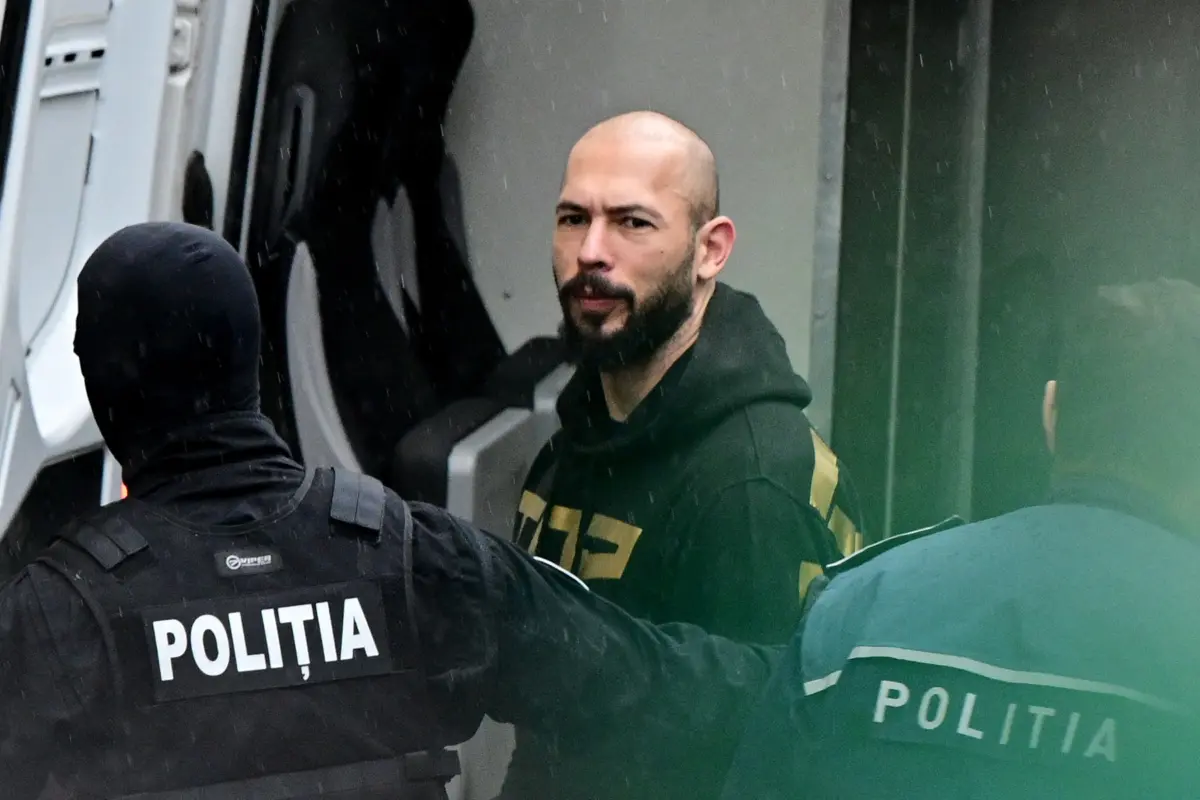
- The Charges: British-American brothers Andrew (39) and Tristan (38) Tate are currently awaiting extradition to the United Kingdom, where they face a battery of serious criminal allegations, including rape, human trafficking, and the exploitation of women.
- The Denials: Throughout their rise, and continuing through the rollout of the documentary, the Tates have consistently and vehemently denied all allegations of illegal activity, sexual assault, and human trafficking. Representatives for the brothers maintain that they are the targets of a coordinated smear campaign designed to silence their political and cultural messaging.
- Network and Production Responses: Network executives and the creative team behind Toxic Empire have defended the project as an essential piece of investigative journalism. By incorporating firsthand testimonies from survivors, former War Room insiders, and long-form archival footage, the series aims to separate internet mythmaking from documented reality.
Future Outlook: The End of the Empire?
As Toxic Empire rolls out its final episodes across ID and HBO Max, the cultural reckoning surrounding the manosphere reaches a fever pitch. The documentary serves as both a post-mortem of digital radicalization and a cautionary tale about the unchecked power of algorithmic fame.
The upcoming extradition proceedings in the U.K. will undoubtedly mark a watershed moment for the brothers. Whether the legal system dismantles the physical and financial infrastructure they spent a decade constructing remains to be seen. However, Toxic Empire successfully strips away the rented sports cars and performative bravado, laying bare the human cost left in the wake of their digital crusade.
For the millions of young men who absorbed their content, and for the survivors now speaking out against them, the documentary offers an unvarnished truth: behind the meticulously curated myth of the ultimate alpha male lies a legacy built on exploitation, intimidation, and profound psychological damage.
