

Executive Overview
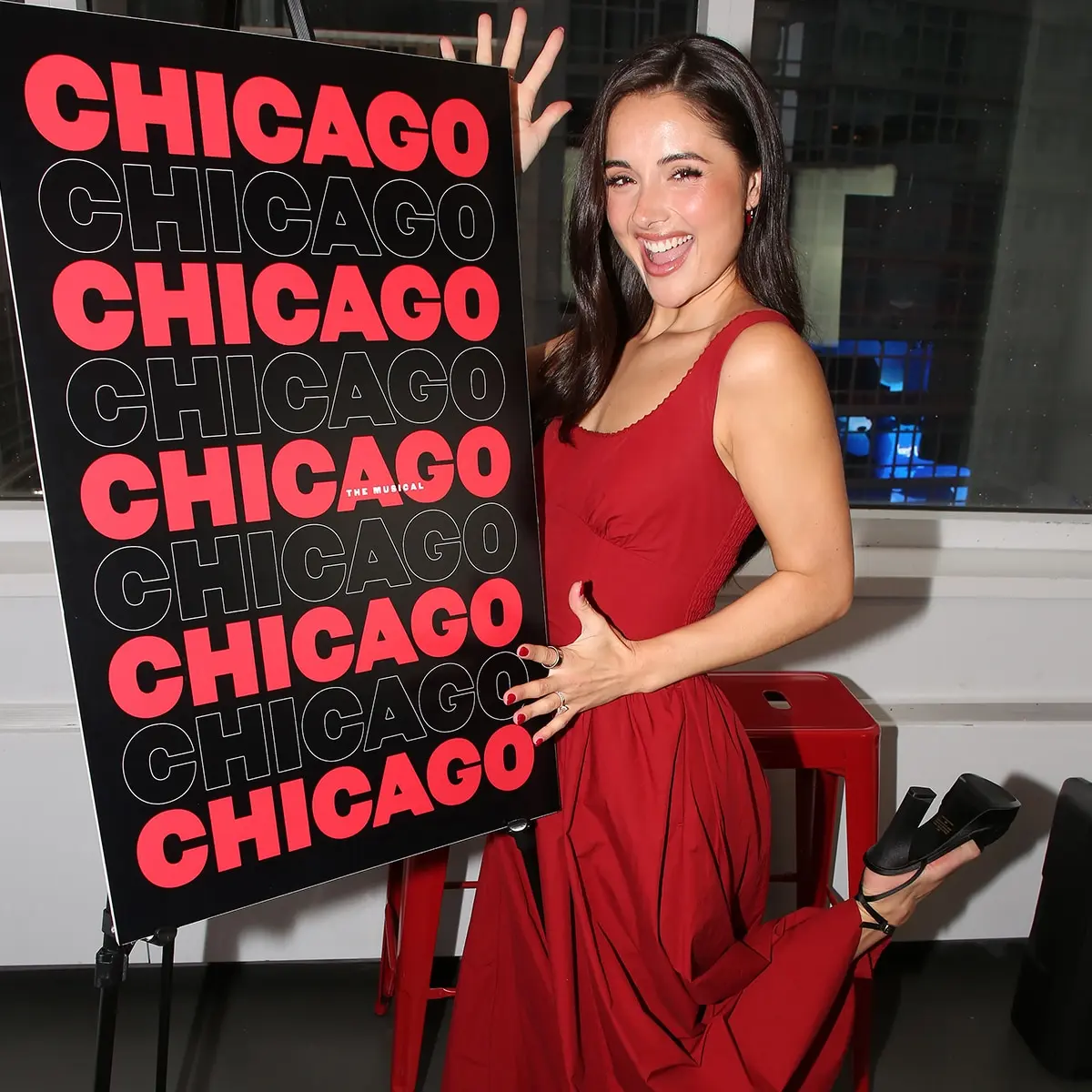
The intersection of professional sports entertainment and high-art theater has long produced compelling narratives, but few transitions match the cultural momentum of Reece Weaver’s latest career pivot. Just weeks after officially hanging up her iconic silver-and-blue uniform as a member of the Dallas Cowboys Cheerleaders (DCC), the 25-year-old Florida native and University of Alabama alumna has achieved a lifelong ambition: commanding the Great White Way as Roxie Hart in Broadway’s legendary revival of Chicago.
What makes Weaver’s theatrical debut on September 7—and her subsequent six-week residency—a media-worthy convergence of worlds is a masterclass in modern pop-culture timing. Exactly six days after Weaver’s opening-night curtain call, quarterback Dak Prescott and the Dallas Cowboys are slated to take the field at New Jersey’s MetLife Stadium against the New York Giants. This scheduling quirk has transformed a routine NFL away game into an impromptu crossing of cultural cohorts. A high-powered delegation of DCC alumni, players’ wives, girlfriends, coaching staff, and organization executives are descending upon Manhattan, bridging the worlds of Texas gridiron culture and classic Broadway razzle-dazzle.
Beyond the immediate spectacle of crossing state lines and theater aisles, Weaver’s journey highlights a broader shift in the entertainment landscape. The traditional boundaries separating reality television, professional dance squads, digital content creation, and premier theatrical stages are dissolving. Weaver represents a new archetype of multi-hyphenate performer: fiercely disciplined, digitally fluent, and capable of manifesting monumental career leaps through sheer force of will. This report examines the mechanics of Weaver’s transition, the cultural ecosystem surrounding her Broadway debut, and places her journey within the wider historical context of unexpected crossovers that have redefined modern stage performance.
Detailed Chronology: From AT&T Stadium to the Shubert Theatre
The trajectory of Reece Weaver’s career shift can be mapped across a remarkably compressed timeline, underscoring the velocity at which modern entertainment careers evolve.
The DCC Era and the Art of the Sideline
For millions of viewers, Weaver’s face became synonymous with the rigorous, highly synchronized world showcased in media profiles and docuseries highlighting America’s most famous dance team. Training at AT&T Stadium required an elite level of physical endurance, precision, and mental fortitude. For Weaver, however, the glamour of the sidelines was always a stepping stone toward a broader artistic horizon.
Growing up, her theatrical ambitions were nurtured by her parents, Susan and Larry—a tradition mirrored in her performance rituals. Just as she routinely scanned the massive sea of faces at Cowboys home games to locate her parents, her preparation for Broadway carried the same deeply personal familial anchors. Yet, the physical toll of professional cheering, coupled with the desire to explore narrative-driven performance, signaled that a change was inevitable.
The Retirement Announcement and Manifestation
The transition began in earnest when Weaver announced her retirement from the Dallas Cowboys Cheerleaders, stepping away from an institution that had defined her professional identity for years. Rather than sliding into a predictable post-retirement routine, Weaver engaged in what she describes as "pure manifestation."
In interviews leading up to her departure from the squad, Weaver openly designated Chicago—with its iconic score, Bob Fosse-inspired choreography, and razor-sharp satire—as the absolute pinnacle of her wish list. Less than two months after publicly naming the role of Roxie Hart as her ultimate dream, casting directors came calling. The convergence of her departure from the DCC and her sudden casting in one of Broadway’s longest-running revivals transformed her uncertainty about the future into a high-stakes theatrical reality.
Opening Night and the MetLife Convergence
On September 7, Weaver stepped onto the Broadway stage for her debut performance as Roxie Hart, executing choreography to legendary numbers like "Cell Block Tango," "Roxie," and "Hot Honey Rag"—songs she had studied and practiced in fragments since childhood.
The momentum surrounding her debut reached a fever pitch just days later with the arrival of the Dallas contingent in New York City. The alignment of the Cowboys’ game against the New York Giants at MetLife Stadium created an unprecedented logistical synergy. Rather than choosing between sports entertainment and theatrical arts, Weaver’s inner circle—comprising teammates, staff, and family members including her husband, Will Allman—opted for the ultimate double feature: cheering on "them Cowboys" in New Jersey before migrating into the heart of Manhattan to witness Weaver command the stage.
Supporting Context & Metrics: The Economics and Demographics of the Crossover Star
The casting of Weaver is not an isolated casting director’s whim; it reflects a calculated pivot by Broadway producers toward performers who bring built-in, highly engaged digital audiences and elite foundational training to the stage.
The Rise of the Multi-Hyphenate Performer
In the wake of shifting post-pandemic theatrical economics, marquee names and internet-era stars have proven vital in driving ticket sales. However, unlike traditional screen actors making vanity appearances, Weaver belongs to a distinct subset of crossover talent: individuals whose primary training lies in professional dance, yet whose fame was amplified through digital platforms and major sports franchises.
- Training Foundation: Like many modern stage crossovers (including fellow Chicago alumni and reality television figures), Weaver’s background is rooted in competitive, high-intensity dance choreography. This technical foundation allows production teams to fast-track rehearsal periods, bypassing the steep learning curve typically associated with non-dancer casting.
- Audience Monetization: The DCC brand, bolstered by relentless streaming and social media exposure, commands millions of hyper-engaged followers. When a performer like Weaver steps into a role historically held by seasoned musical theater veterans, the demographic overlap introduces a younger, highly active theater-going audience to the Great White Way.
Historical Precedent: The Evolution of Chicago Casting
To understand the significance of Weaver’s residency, one must look at the strategic pedigree of Chicago casting over recent years. The production has long utilized high-profile, non-traditional casting to revitalize ticket sales and inject fresh energy into the timeless Kander and Ebb musical.
+--------------------+-------------------------+----------------------------------+
| Performer          | Primary Background      | Notable Stage / Notable Run      |
+--------------------+-------------------------+----------------------------------+
| Reece Weaver       | DCC / Professional Dance| Roxie Hart (Sept 2024 / Ongoing) |
| Whitney Leavitt    | Reality TV / MomTok     | Roxie Hart (2025–2026 Extended)  |
| Pamela Anderson    | Pop Culture / Baywatch  | Roxie Hart (Spring/Summer 2022)  |
| Ariana Madix       | Reality TV / Scandoval  | Roxie Hart (2024 Multi-Stint)    |
| Charli D'Amelio    | Digital Creator / DWTS  | Charmian in '& Juliet' (2024-25) |
+--------------------+-------------------------+----------------------------------+
As detailed in the theatrical lineage above, Weaver joins an elite roster of pop-culture figures who have successfully navigated the treacherous waters of Broadway scrutiny. From Pamela Anderson finding personal catharsis in Roxie’s misunderstood public persona, to Ariana Madix leveraging a massive cultural moment into a triumphant theatrical run, these performers utilize the stage not merely as a novelty, but as a vehicle for personal and professional reinvention.
Official Statements & Personal Perspectives
The narrative of Weaver’s transition is best understood through her own reflections on the surreal nature of her success, characterized by a blend of humility, humor, and unwavering ambition.
Reflecting on the close-knit culture of her former squad and its translation to the New York theater scene, Weaver emphasized the depth of her relationships:
"This is the truest statement any one of us can say: Our sisterhood and bond is so, so close… and I know a lot of my teammates are going to come see the show. We’re all dancers, and Chicago, I mean, the soundtrack and the score is so iconic. We danced to at least one of the songs growing up. We’ve had a little bit of choreography to ‘Cell Block Tango,’ ‘Roxie’ or ‘Hot Honey Rag,’ and so all of my friends are so excited."
Balancing the demands of professional performance with personal milestones, Weaver candidly discussed the emotional weight of locating her family in the audience—a ritual dating back to her childhood days in Florida:
"I’m most excited for finding them, and not necessarily having an interaction because I don’t want to break. But, honestly, just knowing that they know that this has been a dream of mine forever, just to have that moment of, ‘Oh my gosh, we did it!’"
Describing the whiplash between her quiet, newly established domestic life in Alabama—where she and her husband recently purchased a home—and the blinding lights of Broadway, Weaver likened her existence to a modern-day pop phenomenon:
"I feel like my life is a little bit like Hannah Montana, where it’s best of both worlds. But you really don’t know what’s coming next. And I was just in a point where, well, I know I’m hanging up my uniform and stepping into this new chapter, but I had no idea what the future held."
Future Outlook: The Next Chapter and Beyond
As Weaver concludes her intensive six-week theatrical residency, the question on the minds of industry analysts and fans alike is: What comes next for a performer who treats career milestones as manifestations rather than endpoints?
For the immediate future, Weaver has opted for deliberate deceleration rather than immediate career hustle. Rejecting the temptation to immediately stack commitments, her post-show blueprint involves a much-needed period of domestic normalcy:
- The Couch Sabbatical: Weaver has humorously noted plans to "rot on the couch for about a month or two," enjoying her newly purchased Alabama home.
- Holiday Normalcy: For the first time in years, Weaver will experience a traditional Thanksgiving holiday, completely detached from the intense game-day schedules that defined her tenure as a Dallas Cowboys Cheerleader.
- Literary Horizons: Looking further down the pipeline, Weaver’s professional focus will shift toward the publishing world, culminating in the release of her upcoming book, This Is Where You Bloom, slated for May 2027. The project promises to explore themes of letting go of comparison, halting the pursuit of perfection, and living with deliberate purpose.
Ultimately, Weaver’s transition serves as a blueprint for modern performers seeking longevity beyond a single medium. By refusing to be pigeonholed by a uniform, a dance genre, or a digital platform, she has established a career trajectory defined by unpredictability and resilience. Whether she is rouging her knees for the Shubert Theatre stage or penning her literary debut, Reece Weaver has proven that when it comes to orchestrating a second act, she knows how to give audiences the old razzle-dazzle—and leave them wanting more.