

Executive Overview
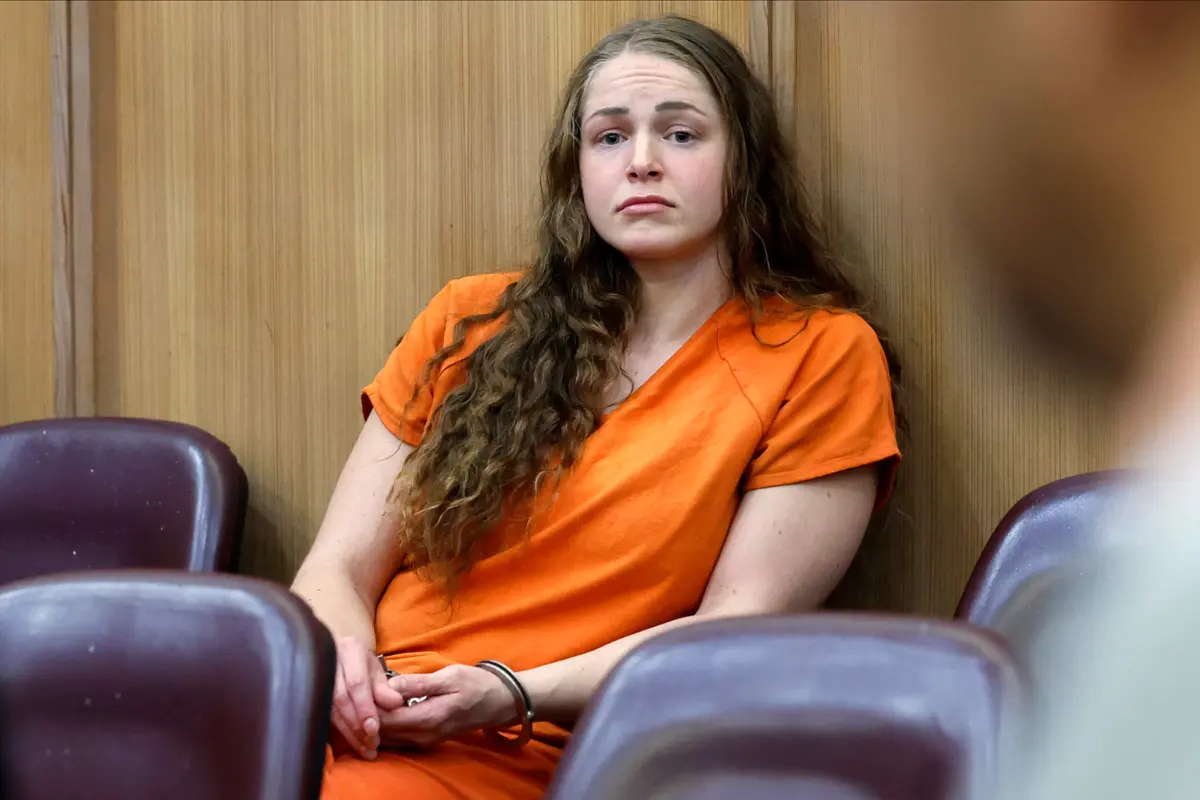
The high-profile homicide case involving social media personality and OnlyFans creator Courtney Clenney has reached a definitive legal milestone, though one that leaves lingering questions about domestic violence, systemic bias, and the limits of the American justice system. Clenney, who faced a maximum sentence of up to 30 years in prison for the second-degree murder of her boyfriend, Christian Obumseli, has formally pleaded guilty to a lesser charge of manslaughter.
The plea agreement, finalized during a court hearing in Miami, concludes years of intense legal posturing, public debate, and media scrutiny. Under the terms of the arrangement brokered by the Miami-Dade State Attorney’s Office, Clenney was sentenced to six years in prison. Crucially, because she has been incarcerated since her initial arrest in April 2022, she has accumulated significant credit for time served. Consequently, legal experts project that Clenney could be released from custody in less than two years.
Following her eventual release, she will be subjected to a five-year term of supervised probation, which includes mandatory mental-health evaluations and continuous psychological treatment.
While the reduction from second-degree murder to manslaughter—and the prospect of an expedited release—has sparked criticism from various legal observers, the resolution was reached with the explicit consultation and approval of Christian Obumseli’s grieving family. For the Obumselīs, the agreement secures something they fought tirelessly to achieve since the tragic night in 2022: a formal admission of responsibility and the establishment of a felony record for the person who took their son and brother’s life.
This comprehensive report examines the trajectory of the case, detailing the fatal night in a luxury Miami high-rise, the starkly contrasting narratives presented by the defense and the prosecution, the emotional statements released by all parties involved, and the broader implications of a plea deal that closes a chapter on one of the digital age’s most polarizing criminal trials.
Detailed Chronology: From Luxury High-Rise to the Courtroom
The Night of April 3, 2022
The tragic events that irrevocably shattered two families unfolded on the evening of April 3, 2022, inside a luxury high-rise condominium in Miami, Florida. Courtney Clenney, then 26 years old, and Christian Obumseli, then 27, were living together in what investigators and acquaintances would later describe as a deeply volatile, high-conflict relationship.
At approximately 5:00 p.m., emergency services received a frantic 911 call from Clenney reporting that Obumseli had been stabbed during a domestic dispute. Law enforcement and emergency medical personnel rushed to the scene to find Obumseli suffering from a single, catastrophic knife wound to the chest. He was rapidly transported to Jackson Memorial Hospital’s Ryder Trauma Center, where he was pronounced dead.
In the immediate aftermath of the incident, Clenney was detained by Miami police officers. According to statements later provided by her defense team, Clenney was distraught, physically covered in Obumseli’s blood, and exhibiting signs of severe psychological distress. Frank Prieto, one of Clenney’s defense attorneys, noted in subsequent interviews that his client had attempted to administer first aid and staunch the bleeding before emergency responders arrived.
Following her voluntary interview at the police station, concerns regarding Clenney’s psychological state prompted authorities to temporarily place her under the Baker Act—Florida’s emergency mental health law allowing for involuntary institutionalization—for a psychological evaluation. She was discharged from the hospital less than 48 hours later. Initially, no immediate criminal charges were filed, sparking fierce public outcry and allegations from Obumseli’s family that the digital creator was receiving preferential treatment from local law enforcement.
The Arrest and Legal Escalation
As public pressure mounted and independent investigators scrutinized the couple’s history, the Miami-Dade County Medical Examiner officially ruled Obumseli’s death a homicide. Months of forensic analysis, digital footprint reviews, and witness interviews followed.
In August 2022—nearly four months after the fatal stabbing—Clenney was formally extradited from a rehabilitation facility in Hawaii, where she had reportedly been seeking treatment for post-traumatic stress disorder and substance abuse. Upon her return to Florida, she was booked into the Miami-Dade County jail and indicted by a grand jury on a charge of second-degree murder with a deadly weapon.
For the next several years, the case worked its way through the Florida judicial system. Clenney was held without bond as her defense team prepared a vigorous self-defense strategy, asserting that she was the battered partner in a toxic dynamic and had struck out with a knife only to preserve her own life. Conversely, the State Attorney’s Office assembled a trove of evidence—including text messages, previous police call logs to the couple’s residences, and video footage—purporting to show a pattern of escalating aggression and physical violence initiated by Clenney against Obumseli.
The Plea Deal Breakthrough
The deadlock was finally broken on a Monday morning in court, when prosecutors and defense counsel presented the negotiated plea agreement to the presiding judge. By pleading guilty to manslaughter, Clenney accepted formal penal liability for Obumseli’s death, averting a high-stakes jury trial that could have resulted in a 30-year prison sentence, but also shielding her from a potential life-altering murder conviction.
Supporting Context & Metrics: Competing Narratives and Civil Fallout
The Defense Narrative: Self-Defense and Domestic Trauma
Throughout the litigation, Clenney’s legal team painted a harrowing picture of a tumultuous relationship marked by mutual toxicity, wherein Clenney allegedly suffered extensive physical and emotional abuse at the hands of Obumseli. Her attorneys argued that the OnlyFans model was a victim of battered spouse syndrome, operating under a reasonable fear of imminent bodily harm or death on the night of the stabbing.
Defense filings and statements emphasized that the couple’s lifestyle—amplified by the pressures of digital celebrity, high incomes, and substance use—exacerbated an already unstable living situation. Prieto maintained that Clenney’s actions on April 3 were a tragic, reactive response to a physical altercation rather than a premeditated or malicious act of violence.
The Prosecution Narrative: Escalating Aggression
In stark opposition to the defense’s claims, the Miami-Dade State Attorney’s Office characterized Obumseli as a victim of domestic violence rather than its perpetrator. Prosecutors built their second-degree murder case on a foundation of digital evidence—surveillance videos from elevators, audio recordings of disputes, and emergency call logs from previous residences in other states—alleging that Clenney was the primary aggressor in their frequent physical altercations.
State attorneys argued that the fatal stabbing was the tragic apex of a documented cycle of abuse, wherein Clenney routinely weaponized her physical proximity and temper against Obumseli.
Civil Litigation and Wrongful Death Settlement
Beyond the criminal proceedings, the fallout from Obumseli’s death extended into the civil courts. In 2023, the Obumseli family filed a comprehensive wrongful-death lawsuit against Clenney, seeking financial damages for their devastating loss.
According to public court records and reports from outlets such as Fox News, the civil litigation moved toward a resolution in late 2025 when the family filed a notice of settlement. By March of the following year, all civil claims against Clenney were formally dismissed with prejudice, closing the financial liability aspect of the tragedy while paving the way for the ultimate resolution in the criminal courtroom.
Official Statements: Perspectives from the Bench, the State, and the Family
The legal resolution elicited powerful statements from all principal stakeholders, reflecting the deep emotional scars left by the high-profile case.
Miami-Dade State Attorney Katherine Fernandez Rundle
In an official statement following the plea hearing, State Attorney Katherine Fernandez Rundle emphasized the significance of the defendant’s admission of guilt:
"With this plea agreement, Christian Obumseli’s family finally heard what they long sought: Courtney Clenney accepting full responsibility for his death. This plea was reached in full consultation and approval of Christian’s family.
The assistant state attorneys handling this case have remained focused on the core evidence that Clenney stabbed Christian Obumseli as part of a pattern of escalating violence toward him. While nothing can heal the wounds caused on that day in April, I hope today’s guilty plea brings his family a measure of justice too long denied."
Larry R. Handfield, Attorney for the Obumseli Family
Larry R. Handfield, who represented the Obumseli family throughout the grueling ordeal, issued a poignant statement to Rolling Stone on behalf of the grieving relatives:
"The Miami-Dade State Attorney’s Office negotiated the plea agreement with the defendant, Courtney Clenney, and her counsel. Although the family would have liked to see her receive more time, they ultimately approved the plea agreement, recognizing that no amount of prison time could ever bring Christian Obumseli back.
Clenney’s guilty plea, and the fact that she is now a convicted felon, represents the first step toward holding her accountable for taking Christian’s life. Christian’s family refused to let his death be overlooked or for the truth to go unanswered. They fought to ensure that the person responsible for taking Christian’s life would be held accountable. While no sentence can undo the loss of Christian, his family hopes that this guilty plea brings some measure of accountability and reinforces the truth: Christian’s life mattered, and his family will never stop honoring his memory."
This sentiment marked a stark evolution from the family’s initial public stances in 2022, when they openly expressed fears that Clenney’s demographic profile and digital celebrity status might insulate her from the full weight of the law. Back then, Handfield pointed out that local authorities had initially signaled the closure of preliminary inquiries within 24 hours of the incident—a timeline the family found deeply distressing and indicative of potential investigative bias. Through years of relentless advocacy, public campaigns, and civil pressure, the family ensured the case remained active, ultimately forcing the state to secure a felony conviction.
Future Outlook: Reentry, Probation, and Societal Legacy
As Courtney Clenney begins the final phase of her incarcerative sentence, attention within the legal and social spheres turns toward her eventual reentry into society and the broader cultural conversation ignited by the case.
Terms of Reentry and Supervision
Under the precise parameters of her six-year sentence—mitigated by credit for time served over the past three-and-a-half years—Clenney is positioned for release in under 24 months. Upon walking out of state custody, her movements and behavior will remain strictly monitored by the Florida Department of Corrections for five years.
Key conditions of her probation include:
- Mandatory Psychological Evaluation: Clenney must undergo comprehensive mental health assessments by licensed professionals approved by the state.
- Targeted Treatment Programs: Compliance with mandated counseling and anger management or domestic intervention therapies is a strict prerequisite of her community supervision.
- Zero Tolerance Violations: Any infraction of her probation terms could result in the revocation of her community release and the immediate imposition of remaining custodial penalties.
The Broader Cultural and Legal Impact
The Clenney-Obumseli case has left an indelible mark on discussions surrounding domestic violence, gender dynamics in the criminal justice system, and the influence of modern digital platforms.
By thrusting the realities of OnlyFans culture, high-earning digital creators, and turbulent romantic dynamics into the public spotlight, the case challenged traditional media narratives regarding victimhood and culpability. Critics of the original police response pointed to systemic disparities in how domestic violence involving male victims of female perpetrators is handled, while advocates for abuse survivors emphasized the complex, multi-directional nature of abusive relationships.
Ultimately, while the legal books are nearing their final closure with this manslaughter plea, the tragedy of April 3, 2022, remains a cautionary tale of volatile relationships exacerbated by fame, digital isolation, and unchecked conflict. For Christian Obumseli’s family, the legal battle is over, leaving them with the enduring task of honoring a young man’s memory while navigating a world forever altered by his loss.